Thursday, 30 August 2018

Jackie Hill Perry: I Loved My Girlfriend—but God Loved Me More

How an epiphany about the wages of my sin opened the door for his cleansing light.

God knew he wouldn’t get my attention in a church. Churches didn’t care too well for people like me. Me, being a gay girl. A gay girl who knew better than to let my feet take me where I didn’t feel welcomed. So God came to my house. I was having a very “unspiritual” kind of night. The TV was on. The morning was hours away. My thoughts were boring and typical until they turned on me. As suddenly and randomly as Paul was struck blind on the Damascus Road, I had the unsettling thought that my sin would be “the death of me.”

Prior to that moment, the sin I wore on my sleeve was that of a lesbian: a label I had the courage to give myself at age 17. This label described an affection I noticed before I knew how to spell my name. When it happened on the playground, I didn’t know what it was. I didn’t quite understand why girls made me feel different. I hadn’t seen any Disney movies that gave me the idea to desire sameness nor had I been challenged by some outside source to see Beauty and the Beast and wonder why Belle couldn’t have been with someone as beautiful and biologically similar as herself. Where it came from made no difference to me. I liked girls, and I knew it.

“But I don’t want to be straight,” I said to God, meaning every single word.

Laying Aside My Loves

Because I knew I liked girls, the conviction I experienced in my room was not only unexpected but also unwelcome. I’d heard more times than I cared to count that what seemed to me a natural enough expression of love was, in fact, unnatural and flat-out abominable.

I had grown up in the traditional black church, where sermons were presented in a Mount Sinai kind of way, both loud and ...

Continue reading...


from Christianity Today Magazine https://ift.tt/2Pq4aAl

Wednesday, 29 August 2018

Cover Story: Fixing Our Privacy Settings

Why Christians should worry less about protecting their information and think more about giving it away.

Alexa is my savior.

The digital voice assistant from Amazon hears me shoulder my way into the kitchen back door, arms loaded with bags and keys jangling from a pinkie. “Alexa, turn on the lights!” I command with a little desperation. Thanks, Alexa, I think as the lights blink on and I avoid a stumble with my gallon of milk. I don’t say it aloud—it’s a little crazy to thank your digital assistant, right? Plus there’s that little question of who might be listening.

I don’t actually picture a headphoned FBI operative in a van outside (and I don’t suppose he would care much about my groceries). Yet once the lights are on and our music is playing (“Alexa, play ’90s pop!”), I sometimes wonder. The new presence of digital microphones in our houses—over 20 million sold in 2017—has started a new wave of discomfort about what or who might hear what we say in our living room or kitchen. What more private moments are these microphones capturing?

The year 2013 was a wake-up call for digital privacy. Government surveillance concerns—previously the purview of spy movies and conspiracy theorists—went mainstream after Edward Snowden revealed the National Security Agency was collecting Americans’ data.

While much of the surveillance amounted to an anonymous database of call logs like the kind found on phone bills—not voice recordings—Americans started wondering what else they didn’t know about government eyes and ears.

That same Black Friday, millions stood in line to grab bargains from big-box retailers, unaware that hackers had infiltrated Target’s customer service system and were stealing credit card numbers and other data ...

Continue reading...


from Christianity Today Magazine https://ift.tt/2MFUz9Y

Preparing the Next Generation of Christian Humanitarian & Disaster Leaders

Wheaton College’s Humanitarian Disaster Institute welcomes first M.A. students to campus.

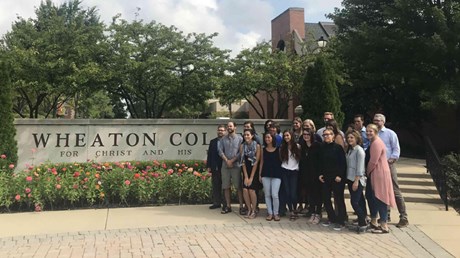
Almost a year ago, we announced the launch of our new M.A. in Humanitarian & Disaster Leadershipat Wheaton College Graduate School, and this month we were able to welcome our first cohort of students on campus.

The goal of this program is “to prepare the next generation of humanitarian and disaster professionals to lead with faith and humility, utilize evidence-based practice, and serve the most vulnerable and the Church globally.”

This program, which is part of the newly launched School of Mission, Ministry, and Leadership, comes from the Humanitarian Disaster Institute (HDI), the first faith-based academic disaster research center in the country. HDI’s mission is to help the church prepare and care for a disaster-filled world.

We could not be more excited about the 18 students who make up this first-ever cohort. They bring with them a wealth of experiences, backgrounds, passions, and dreams, and it's incredible to see just how clearly God has directed each of their paths to bring them to this program.

We look forward to sharing their stories over the coming weeks and months, and to seeing how they are shaped as they prepare to go out and serve the church and the vulnerable around the world.

“I am so impressed by the quality of this group of students,” said Kent Annan, who as Director of Humanitarian & Disaster Leadership provides leadership for the M.A. program. “From the moment they arrived on campus, it was clear that they not only are passionate about loving and serving the vulnerable, but are intellectually curious about understanding the complexity of how to do this well.”

HDI Founder and Executive Director Dr. Jamie Aten added,

The diversity of experiences that this ...

Continue reading...


from Christianity Today Magazine https://ift.tt/2BYlF89

Being Salt and Light in the Middle of a Twitter Mob

Social media can be a can be a dark and divisive place. That doesn’t mean we should simply withdraw.

Reading Jaron Lanier’s Ten Arguments for Deleting Your Social Media Accounts Right Now wasn’t the first time I’ve been advised to delete my accounts. I’ve been told this many times before, less out of concern for my emotional safety and more out of frustration and anger. The most noteworthy time, I’d attempted to inject a little bit about the nature of human dignity into a Twitterverse that was, at the time, reveling in a video of someone sucker-punching a neo-Nazi.

Of course, what was meant as a humble (okay, maybe not-so-humble) reminder of human dignity was interpreted instead as a coy defense of bigotry. My actual argument was quite the opposite: Dignity is such a crucial, fundamental quality of the human person that totally reprehensible views—even dangerous views—do not justify a unilateral act of violence.

Soon enough, Twitter at-large saw my tweet plucked away from the tweets that instigated the argument in the first place, outside the context of my own Twitter account. It was retweeted by more than a few popular activists, with frustrated and insinuating commentary. At that point, the ball was rolling, and it could not be stopped.

An Attack on Our Souls

Lanier, a pioneer in virtual reality technology, confesses to grave doubts about the world he and other Silicon Valley dreamers have created: “We have given up our connection to context. Social media mashes up meaning. Whatever you say will be contextualized and given meaning by the way algorithms, crowds, and crowds of fake people who are actually algorithms mash it up with what other people say.”

In other words, my somewhat innocent, if careless attempt to inject balance into a loaded discussion was never going to ...

Continue reading...


from Christianity Today Magazine https://ift.tt/2okElFg

Tuesday, 28 August 2018

Jackie Hill Perry: You Are Not Your Temptations

Three insights for understanding same-sex attraction and sanctification.

For born-again Christians who are still same-sex attracted, the world we find ourselves in has made sexuality central to our identity. Gayness is not just a way to act but a way to be. It is, as they say, “just who you are.” LGBT culture encourages us to find greater joy in identifying with sin rather than with the Creator.

By contrast, same-sex-attracted believers—like all believers—are called to find our identity in Christ. He begins in us a sanctification process, a beautiful miracle in which God enters in and starts turning the heart into the cathedral it was intended to be. We don’t just sit back and expect great fruitfulness to come from minimal zeal; we work alongside God to “act the miracle” (see Phil. 2:12–13) of sanctification into its grandest potential.

As someone who formerly lived in the lesbian lifestyle, I’ve experienced this transformation of the heart. But even now, when I begin to forget that I am loved, forgiven, and new, then I stop operating out of faith. I have to remind myself that the identity God has given me will always reveal the true nature of who I am.

The burden for same-sex-attracted Christians, then, is not to learn more about themselves or to “become a better you” as an entry into self-empowerment. Instead, the goal is to renew your minds so that you begin seeing yourselves in light of who God has revealed himself to be—and also so that you can glorify him in the ways he has commanded. This happens in the context of community, with much prayer, and with consistent, thoughtful internalizing of the Word of God.

Below are three frameworks for identity that I believe will help the same-sex-attracted believer as they “act ...

Continue reading...


from Christianity Today Magazine https://ift.tt/2PIc6Nc

Four Practical Steps for Recruiting a Church Plant Team

There are so many needs to fill and sometimes the enormity of it all can feel paralyzing.

Preparing to start a church plant can be a daunting task. There are so many needs to fill and sometimes the enormity of it all can feel paralyzing. One of the keys to successfully planting a church is to recruit a good launch team. (Remember, in our language today, a launch team and a core group are a little bit different. A core team is the team at the onset of the church who typically sticks around for the long term, contributing once the church has already been started. A launch team is developed before the church plant and in preparation for the core group.)

Below are four tips for recruiting launch team members for an upcoming church plant.

First, start by praying.

Where do you start? You start by praying. Pray for the upcoming church plant. Pray about it with close friends, other pastors, and other people you’ve connected with in your journey—perhaps those you’ve met through education (Bible college, seminary) if you’ve done that. God may guide others to join your launch team in the process of praying.

But more than anything, seek friends who will go to God with you as you seek direction. Establish a prayer team that helps you begin to pray for the development of your launch team and your core group.

Second, plan.

Sit down and decide what you need. How will your staff team be funded? Will they raise support or work a job themselves? What about a worship leader? Typically, I think you should start a launch team with someone who will lead worship, someone who will help with assimilation and groups (I often put those together), someone who leads the children’s ministry, someone focused on evangelism, and someone to do finances.

Notice that some things that may develop later in the church are not ...

Continue reading...


from Christianity Today Magazine https://ift.tt/2MUnYNG

Interview: Russell Moore: Family Life Isn’t Just Humbling—It’s Humiliating

But our failures as parents and spouses, as sons and daughters, ultimately point the way to something better.

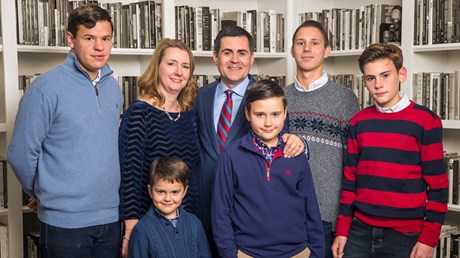
As a husband and father of five boys, Russell Moore, president of the Ethics and Religious Liberty Commission of the Southern Baptist Convention, is a bona fide family man. His latest book, The Storm-Tossed Family: How the Cross Reshapes the Home, offers a biblical vision for family that bears Christian witness in the world. Writer Jen Pollock Michel spoke with Moore about the promise and peril of family life.

Compared to previous generations, what new anxieties and challenges do today’s families experience?

Twenty or thirty years ago, many Christians worried almost exclusively about ways to protect the institutions of marriage and family from outside cultural forces like television or the sexual revolution. That anxiety is still present, but I find the biggest problem today is two-sided. First, we idealize family. Many Christians expect a family life that’s tranquil and idyllic; when they encounter struggles, it throws them off.

But at the same time we idealize family, we also diminish it. You see this in our habit of equating family with the nuclear family as if it were simply Mom, Dad, and the kids in a minivan. But everyone is facing family issues. The single Christian is not someone who doesn’t deal with family. We are all sons and daughters, and even those who don’t know their parents feel that absence acutely. And as Christians, we’re all part of the family of God’s people.

You write, “The kingdom is first; the family is not.” How does this help reshape our common perspective on the family?

When we value the family above God’s kingdom, we actually end up destroying what we think we’re upholding. If kingdom comes first, this reveals why the family matters. Family ...

Continue reading...


from Christianity Today Magazine https://ift.tt/2BVVwqk