Thursday, 27 September 2018

How Firm a Foundation for Saints of the Lord

Christians struggle with issues of identity and self-worth. Thankfully, there’s a three-step process for re-centering our identity on Christ.

As a lecturer for Houston Baptist University’s Honors College, I have the privilege of shepherding each new freshman class through the Iliad and Odyssey. In the former epic, Achilles, the greatest soldier in the history of Western literature, suffers something of an existential identity crisis as he questions who he is, what his purpose is, and whether life has any meaning. In the end, he makes peace with himself and his community, but only by returning to the narrow parameters that define the good life, the good man, and the good society in the microcosm of the epic.

Within the context of the Iliad, the resolution is both powerful and satisfying, but it does not resolve the deeper question that all people must answer: not “How do I know I have value as a Greek warrior living in the Mycenaean Bronze Age?” but “How do I know I have intrinsic value apart from my profession, my gifts, or my family relations?” After all, we can lose our jobs, become physically incapable of using our gifts, and watch helplessly as those we love are carried off by violence, disease, or inescapable old age.

Surely, an identity that rests solely upon skills, awards, or people that can be suddenly and irrevocably taken away is tenuous at best. There must be a more stable foundation on which to build. Thankfully, the Christian gospel provides just such an unshakable foundation: that the God who created us thought us of such value that he not only sent his Son to die for us but sent him at the very moment when we were the most rebellious and unlovable (Rom. 5:8).

Given this great declaration of God’s unconditional love and our inestimable value, one might think that Christians would not struggle with issues of identity ...

Continue reading...


from Christianity Today Magazine https://ift.tt/2NKoyio

Wednesday, 26 September 2018

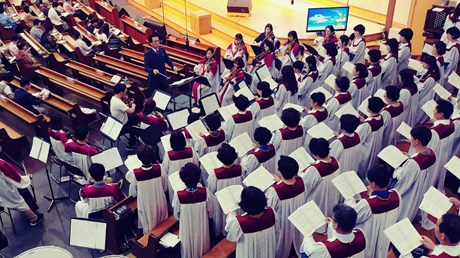
One-on-One with Keith Getty on the Sing! Conference and the Importance of Song, Part 1

Getty's five-year conference engages theology, the arts, and song.

Ed: So first, tell me how the Getty Music Worship Conference, Sing!, went a few weeks ago.

Keith: It was amazing. We had a wonderful lineup of speakers. But most importantly, it's really helping individuals, families, and churches to grow and thrive. It was year two of five for the conference and the theme was taken from the Psalms.

We had three different groups in attendance. We had those engaged in theology who were looking at really deep and rich theology. We had artists and vibrant artistry—those who are creatives, musicians, or involved in choirs and orchestras. Then, we have leaders of music in churches and in homes. We had a lot of worship leaders in that group, but we also had over 400 people who lead children's music as well.

When these three groups come together, it's an extraordinary and innovative explosion. You end up with these beautiful moments of inspiration, color, and beauty, combined with such powerful, thoughtful praise. The dissection of all that happens during the conference takes place in seminars, late at night, and over meals throughout our time together.

All of us ended up experiencing the peace of the Lord and a reassurance that this was an important event. It’s really been a privilege to be a small part of it.

Ed: For next year, you’re leading in with the theme about the life of Christ. Tell me more about this shift.

Keith: Well, I originally put together a five-year plan.

For the first year we decided to look at the congregational singing 500 years after Luther and the Reformation year. Then, we took on the Psalms, because that's the Bible's songbook. In year three, we're going through the life of Christ, and in year four we will be singing through the Scriptures. ...

Continue reading...


from Christianity Today Magazine https://ift.tt/2R2itfg

The Cost of Religious Freedom

When advocacy for persecuted Christians harms their fellow believers.

While Andrew Brunson languished under Turkish detention this year, thousands of Iranians had death sentences suspended. A factor in both was international advocacy.

Brunson, an American evangelical pastor in Izmir (biblical Smyrna) for two decades, was arrested two years ago in the aftermath of a failed military coup. The government linked him with a Sufi Muslim network allegedly behind it.

The network’s head, Fethullah Gülen, had long resided in Pennsylvania, and Turkey demanded a trade.

Many religious freedom advocates took up Brunson’s cause. But White House advocacy brought the pastor to the world’s attention.

“If Turkey does not take immediate action to free this innocent man of faith and send him home to America, the United States will impose significant sanctions on Turkey until [Brunson] is free,” said Vice President Mike Pence in July at the US State Department’s Ministerial to Advance Religious Freedom.

One day earlier, Brunson had been moved from prison to house arrest. It appeared a deal was in the works.

Whichever side reneged, Turkish President Recep Erdoğan matched President Donald Trump blow-for-blow in the acrimonious rhetoric and economic sanctions that followed, making the chances for Brunson’s near-term release appear remote.

Meanwhile, 5,000 Iranian prisoners have new leases on life. After years of pressure by the United Nations and human rights groups, Iran’s parliament amended laws demanding the death penalty for low-level narcotics trafficking.

Why did advocacy succeed for the drug dealers but not the pastor? And what should be made of Youcef Nadarkhani, the Iranian house church leader released in 2013 after much international advocacy—only to be ...

Continue reading...


from Christianity Today Magazine https://ift.tt/2xEZ23K

Being Cordial Even When We Think Differently

We must walk in the footsteps of Jesus. To do this, we will learn to love those we disagree with.

Have you noticed the trend away from thoughtful conversation, civility, and compassion? Have you been struck by the increasingly combative nature of communication in the media, the political realm, the online world of social media, and culture in general?

It seems like people have a very hard time disagreeing while still respecting and loving each other.

In a growing number of situations, it seems like people believe that if we don’t agree on specific topics, we must be angry with each other. Or when we stand on the opposite side of the aisle, we hate each other. If we have an honest disagreement, it must ignite into some kind of combat.

I grew up in a home, and a time of history, when people could disagree and still love each other. I remember a time when people could talk civilly, express divergent points of view, and still have lunch, laugh, and do life together. As a matter of fact, I watched my dad and mom disagree with strong and articulate words on many topics and still love each other deeply.

My dad was a strong and articulate Republican. He believed what he believed and would express his views with clarity and conviction. My mom was a staunch Democrat. She headed up the local teachers’ association of the public schools and expressed her convictions openly and with passion and precision. I had the honor of doing my parent’s renewal of their wedding vows at their 50-year anniversary, just a few years before my mom passed away.

I can still remember my parents heading out to vote together, hand in hand. My dad would say something like, “We’re heading out to cancel each other’s vote.” He meant it. He knew that their votes would end up being a net zero because of their antithetical ...

Continue reading...


from Christianity Today Magazine https://ift.tt/2DuLlda

Tuesday, 25 September 2018

Azusa Pacific Okays Gay Romance (But Not Sex and Marriage)

Christian university is also now hosting a formerly underground LGBT student group.

Azusa Pacific University (APU) has dropped a policy preventing students from engaging in “romanticized” same-sex relationships.

The Southern California member of the Council for Christian Colleges and Universities (CCCU) also dropped longstanding language from an eight-point statement on human sexuality which had declared: “homosexual acts” (among others) are “expressly forbidden” by Scripture; “heterosexuality is God’s design for sexually intimate relationships”; and “humans were created as gendered beings” in order to be fruitful and multiply.

The Christian school, which still requires celibacy of unmarried students, now has a shorter six-point statement that more succinctly states that marriage is between “a man and a woman, which Jesus reaffirms,” and refers to humans as created “male and female” instead of “gendered.”

The new statement drops a list of sexual behaviors prohibited by the Bible. It also drops the word sin from its concluding sentence, which previously read: “Any deviation from a biblical standard of sexual behavior is sin and therefore is an opportunity for repentance, grace, and redemption, so that as a community we might honor one another and glorify God.”

“APU believes in a biblical definition of marriage as defined as between one man and woman,” Rachel White, a school spokesperson, told CT. “All others living outside of that definition are called to abstinence.” (APU does not offer married housing.)

“A change in policy does not change practice,” the university said in a written statement, which also says the new sexuality statement “strengthened” ...

Continue reading...


from Christianity Today Magazine https://ift.tt/2Q6MwRn

How Christian Leaders Should, and Should Not, Speak in This Kavanaugh Moment

How can we spiritually lead our people struggling to respond in a culture charged by political polarization and fed a diet of cable news and social media?

We’ve all seen them. Accusations. Denials. A nation divided. Social media upheaval.

It’s not new. In fact, to some it may be getting so disturbingly ‘normal’ that they have tuned out.

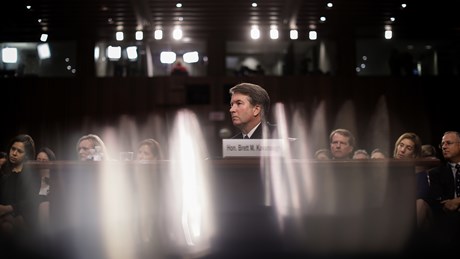
This time we are dealing with accusations against Supreme Court nominee and judge Brett Kavanaugh. At a time when the dam continues to break on decades of sexual assault and harassment allegations, the political import of the nomination has taken an already challenging issue and supercharged it with political tribalism.

The result is that many church leaders are unsure how to respond. Yet this is precisely the time when pastors and ministry leaders need to stand with courage in leading their people.

The question is: leading them to where?

So how do we respond? Or, for that matter, should we?

Scrolling through my twitter feed, I see a nation and church divided. Do we speak out on issues such as the accusations against Judge Kavanaugh or in defense of his accusers, Professor Ford or Deborah Ramirez?

Or do we keep silent?

How can we spiritually lead our people struggling to respond in a culture charged by political polarization and fed a diet of cable news and social media?

Let me share just a few considerations for church leaders navigating this issue.

First, you don't have to say anything, and that may be the right decision.

We live at a time that unless leaders instantly respond to current events on social media, they are hiding or ignoring the issue. There is a sense that we have to speak into everything. The truth is we just don't.

You are not a senator. You are a Christian leader. You have a calling to lead your congregation, not to comment on the news. Don’t demean the importance of the former in favor of an impulse ...

Continue reading...


from Christianity Today Magazine https://ift.tt/2zsOczi

Hillsong: A ‘Beautiful Name’ for a New Denomination Spanning ‘Oceans’

Influential church separates from Australia’s Assemblies of God.

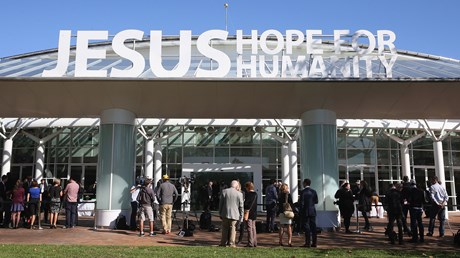
After more than three decades as the largest and best-known member of the Australian Christian Churches (ACC), Hillsong Church announced last week it would split from its parent group and form its own denomination.

The leadership of both Hillsong and the ACC, a branch of the larger World Assemblies of God Fellowship, have described the parting as amicable.

“I want to make it clear that we have no grief or dispute at all with the ACC,” wrote Hillsong Church cofounder and global senior pastor Brian Houston in a letter announcing the separation. “Instead, this decision comes after almost two years of prayerful discussion within both our global and Australian church boards.”

Founded in Sydney in 1983 by Houston and his wife Bobbie, Hillsong exploded into one of the most recognizable brands in contemporary Christianity.

With three record labels, a broadcasting network, global conferences, and its own college, Hillsong has blossomed beyond the geographical contours of its former denomination. With churches in more than 20 countries across 5 continents and 263 separate church services per weekend, the network estimates weekly attendance at Hillsong churches averages about 130,000.

A relatively small denomination in terms of attending congregants—by contrast, there are nearly 70 million Assemblies of God members worldwide, and approximately 375,000 constituents of the ACC specifically—Hillsong boasts enormous influence. Tens of millions of Christians spanning 60 languages sing Hillsong originals, such as “Beautiful Name” and “Oceans,” every Sunday. Millions more watch and listen to its programming.

In his parting letter, Houston wrote admiringly of ACC president Wayne Alcorn, ...

Continue reading...


from Christianity Today Magazine https://ift.tt/2pHnjlH