Tuesday, 30 October 2018

Why Science Can’t Tell Us How to Live

The quest to detach morality from divine revelation has only led to one dead end after another.

Can science tell us how we ought to behave? In Science and the Good, a book that crosses the boundaries of history, philosophy, and psychology, sociologist James Davison Hunter and philosopher Paul Nedelisky examine nearly 400 years of scientific attempts to discover the sources and meaning of morality. That effort, they conclude, has failed. Science can tell us the way things are but not the way things ought to be. In the language of philosophy, it can’t derive an “ought” from an “is.”

Hunter and Nedelisky define the scientific quest for morality as an attempt to use empirical methods to discover universal principles for ethical action. The scientists and ethicists engaged in it operate from the assumption that everything about life on earth can be explained by natural processes alone.

Before the dawn of the Enlightenment era, late-medieval scholastics such as Thomas Aquinas had produced moral theories based on theological, rather than naturalistic, premises. They believed that through observation of the created order, one could discover the purposes for which God had designed particular creatures or activities—and the moral laws that flowed from those purposes. But in the 17th century, the Dutchman Hugo Grotius and other political philosophers wanted to discover a moral code that could operate without invoking God.

With Christendom split into competing factions that were slaughtering each other over sectarian disagreements, Grotius and like-minded intellectuals doubted whether religion could create a universal moral consensus. Could science succeed where religion had failed? Instead of speculating about divine purposes for creation, Grotius thought, moral theorists should ask one question: ...

Continue reading...


from Christianity Today Magazine https://ift.tt/2Q6j4eV

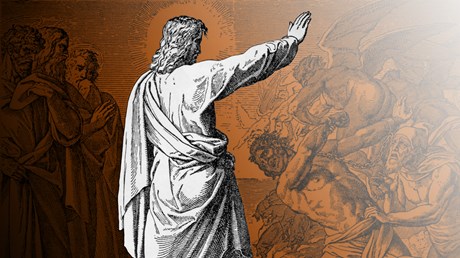
Don’t Worry, There Are More Demons Than You Think

What Halloween gets right about spirits and why Christians have nothing to be afraid of.

“That time of year thou mayst in me behold,
When yellow leaves, or none, or few, do hang,
Upon those boughs which shake against the cold,
Bare ruined choirs, where late the sweet birds sang.”
–William Shakespeare, Sonnet 73

William Shakespeare recognized that the coming of autumn was an apt time to reflect on his own mortality. We Americans don’t usually share in that impulse. We find just about any talk of death morbid and out of place. Most of the time. But then, halfway through the autumn season, we stumble across a holiday that (at least traditionally) relishes in darkness and death—Halloween.

Christians have long debated, and will continue to debate, whether they should engage in the various traditions that surround Halloween. If Halloween were only a day for little kids to dress up like their favorite princess or—for the more budget-conscious parent—ghosts (hello old bed sheet!), it’s unlikely Christians would raise much of a fuss. What bothers the anti-Halloween crowd isn’t current practice; it’s the history behind the holiday.

But what if the dark side of Halloween has something to teach us? I would go so far as to say that if the only relic left of Halloween is costumes and candy, we miss a dangerous truth—that dark powers are still at work in our world.

A Portal to the Other Side

Though the history of Halloween is a rather muddled affair, certain details are rather uncontested. We know, for instance, that commemorating October 31 is centuries old. As far back as the ninth century, Pope Gregory IV moved the “Feast of All Saints” day to November 1. The evening before this feast became known as “All Hallows’ Eve” and was, ...

Continue reading...


from Christianity Today Magazine https://ift.tt/2qkxuNc

One-on-One with Dave Deuel on Disability Concerns and the Gospel Today

"I focus very specifically on identifying and helping young disability ministry leaders."

Ed: How long have you been involved in Lausanne International and what is your current role?

Dave: Although I have been interested in Lausanne for quite a few years, I first was invited to participate in Cape Town in 2010. I joined Lausanne in 2013 by personal invitation of Joni Eareckson Tada, who had held the position of Senior Associate of Disability Concerns from the inception of the issue group. Since then, the role of Senior Associate has changed as well as the title, which is now Catalyst of Disability Concerns.

After the Lausanne Young Leaders Gathering in Jakarta in 2016, I was invited to participate on the leadership team of the YLGen Mentor Community. The focus of my participation is on training and resources.

Ed: Tell me about your current roll and what you do.

Dave: As Disability Concerns catalyst, I focus very specifically on identifying and helping young disability ministry leaders. My role as Senior Research Fellow at the Christian Institute of Joni and Friends gives me an effective platform to assist in job placement, advanced education, ministry publications, and so forth.

My more recent Lausanne role as member of the leadership team of YLGen gives me the ideal position to mentor young disability leaders as well as facilitate the discipleship and mentoring of those young leaders. God has given me just the right combination of roles in Lausanne to do my work, which focuses specifically on developing young leaders for disability ministries.

Ed: Tell me about the gospel and the church in your part of the world.

Dave: As former Academic Dean of a consortium of 17 training ministries scattered around the world and over 60 daughter-training ministries, I have made contacts in and have ongoing commitments to quite a ...

Continue reading...


from Christianity Today Magazine https://ift.tt/2F1hkSS

Monday, 29 October 2018

Gab, the Pittsburgh Shooting, and the Danger of Echo Chambers

Gab is a cesspool of racism, not a free speech cause.

On Saturday, Robert Bowers entered the Tree of Life Synagogue, killing 11 people and injuring 6. During his attack, he continually shouted anti-Semitic statements, even during a dramatic gunfight with police. He told one officer, "They're committing genocide to my people. I just want to kill Jews."

This is horrific. My heart goes out to all of my Jewish friends who are grieving today. I grieve with you.

In light of yet another act of hate, we must understand and process the events leading up to the expression of such vitriolic hate. This depraved way of thinking and acting doesn't happen overnight, and it doesn't randomly appear. This type of hate forms over time and within a supportive community that normalizes and cultivates this evil into a fever pitch.

And if we think it can never happen to us, we ought just to look to Pittsburgh.

The role of Gab

In August 2016, the social network Gab was formed in response to censorship of hateful speech on popular social media sites like Twitter and Facebook. Popular alt-right leaders were being banned for harassment and hate speech, and Gab was formed with the misnomer of "protecting free speech."

For many people, they first heard of Gab this weekend.

But, long before Bowers picked up a gun and put Gab on the front page of the news, the social network was known for being a safe haven for neo-Nazis, those posting perverse pornograhic material, and others promoting hate speech against African Americans and Jews. Gab’s domain has been threatened and moved multiple times in 2016 and 2017, and Apple and Google have denied their app both on pornographic and hate speech grounds.

This is not a place where free speech is protected. Instead, it is a social media ...

Continue reading...


from Christianity Today Magazine https://ift.tt/2OamImc

Ireland’s Blasphemy Ban Is Gone, But Dozens of Countries Still Enforce Them

Irish Christians hope the change will put pressure on places like Pakistan, where Asia Bibi faces the death penalty for remarks against Muhammad.

An Irish law that could fine individuals up to 25,000 euros (about $28,500) for “the publication or utterance of blasphemous, seditious, or indecent matter” will be amended to remove the crime of blasphemy.

In a referendum on the old blasphemy law, which came alongside the country’s presidential election last Friday, nearly two-thirds of Irish voters decided to revoke the controversial policy.

Even though no one had ever been prosecuted for blasphemy, Irish evangelicals joined religious groups and fellow nonprofits campaigning to remove the law from the books so that dozens of countries who do enforce such bans can no longer cite their homeland as an excuse.

The change is also seen as another move toward the largely post-religious context of its European neighbors. “Today’s vote is another important step towards a human rights compliant Constitution,” said Ireland’s Amnesty International executive director Colm O’Gorman. “It follows the massive support for the constitutional referenda allowing marriage equality and ending the abortion ban.”

Neither the Catholic Church nor the Church of Ireland opposed the repeal vote. The executive director of Evangelical Alliance Ireland had previously stated that blasphemy bans hurt religious dialogue and religious freedom, particularly for religious minorities. “Those who truly believe in God should realise that He is big enough to look after Himself without needing any assistance from the GardaĆ­ (Irish state police),” he wrote.

At their Autumn General Meeting, the Irish Catholic Bishops’ Conference said the law was “largely obsolete, and may give rise to concern because of the way such measures have ...

Continue reading...


from Christianity Today Magazine https://ift.tt/2qh4iGI

Is Trump Our Cyrus? The Old Testament Case for Yes and No

Christians’ eagerness to understand God’s will in real time can cause them to overlook fundamental biblical and divine principles.

Benjamin Netanyahu wasn’t the first to compare Donald Trump to the ancient Persian leader, Cyrus. But he’s probably been the most prominent. Following the 45th president’s announcement earlier this year that the US embassy in Israel would move from Tel Aviv to Jerusalem, the Israeli Prime Minister remarked, “I want to tell you that the Jewish people have a long memory, so we remember the proclamation of the great king, Cyrus the Great, Persian king 2,500 years ago. He proclaimed that the Jewish exiles in Babylon could come back and rebuild our Temple in Jerusalem.”

Netanyahu’s suggestion that Trump may be compared to Cyrus because of his specific policies affecting the Jewish community gives his analogy a unique twist. But American evangelicals have compared Trump to the Persian ruler since the Republican primaries. (This claim even made an appearance in the recently released film, TheTrump Prophecy.) They argue that just as Cyrus, scarcely a devotee of YHWH the God of Israel, served as God’s agent by authorizing Jewish exiles in Babylon to return to the Promised Land and to rebuild the temple to YHWH, so the narcissistic and morally flawed Trump can advance the causes of the evangelical community—and by extension, the country.

Who was Cyrus?

Cyrus the Great was the sixth-century B.C. emperor who made Persia great—indeed the greatest empire in history to that point—by taking over and expanding the empire of the Babylonians. Cyrus plays a critical role in the Bible’s story of YHWH’s relationship with his people Israel. All of YHWH’s covenant promises seem to have been dashed in 586 B.C., when Nebuchadnezzar and his Babylonian armies conquered Jerusalem, ...

Continue reading...


from Christianity Today Magazine https://ift.tt/2OVBRwR

Jan Peterson: My Life as a Pastor’s Wife

Eugene and I spent years serving others. Our giving often multiplied itself in unexpected ways.

When I was around 13 years old, I discovered the treasure of spiritual friendship through a woman named Gertrude Floyd. Gertrude and her husband were our back-door neighbors. I had recently been confirmed in the Presbyterian church and was involved in youth fellowship, where a lot of kind folks helped me center my life in the Lord. But a good deal of my spiritual growth came from just on the other side of our backyard fence. I often found myself walking through the back gate and knocking on Gertrude’s screen door, where I was always received with a warm welcome and a “Come in—I’ll get us some lemonade. You go on out to the porch.”

Those visits had a profound influence on my life. Even at 13, I was beginning to understand the kind of woman I wanted to be as I grew up: I wanted to be like Gertrude. Her loving friendship showed me how powerful it is to be readily available to others—to listen, to care for them, to engage with their lives.

These years later, I’m well aware that being a pastor’s wife brings with it a lot of demands and a lot of time spent serving others. But the amazing thing about service is that it rarely returns void, even if we don’t see the end results ourselves.

Eugene and I saw this happen in a beautiful way during one particular season of serving. Our friend David and his wife, Janet, were part of our church community. She was our organist. They had a blended marriage; each of them had three children. Tragically, Janet was diagnosed with cancer and passed away, leaving David with all those children to care for. He had a good job and was working in Baltimore, but before Janet died, the company moved to the West Coast. His hands were tied. He couldn’t ...

Continue reading...


from Christianity Today Magazine https://ift.tt/2RgYRmO