Tuesday, 27 November 2018

Can Christians Drink Alcohol? Here’s What 1,000 Protestant Churchgoers Think

Most say the Bible doesn’t ban booze, but they abstain anyway.

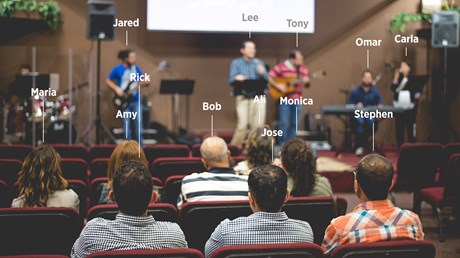
Views on Christians drinking alcohol have stayed steady among Protestant churchgoers over the past decade, according to a new study.

While 41 percent of Protestant churchgoers say they consume alcohol, 59 percent say they do not, according to a survey released today by Nashville-based LifeWay Research.

In a 2007 phone survey, LifeWay found 39 percent of Protestant churchgoers said they consume alcohol while 61 percent said they do not.

Gallup surveys over the last 75 years have typically shown that two-thirds of all American adults have occasion to drink alcoholic beverages, including 63 percent in 2018.

“While alcohol consumption continues be seen as mainstream in the United States, churchgoers’ attitudes about drinking haven’t changed much in the past decade,” said Scott McConnell, executive director of LifeWay Research.

Almost 9 in 10 of churchgoers (87%) agree that Scripture says people should never get drunk. That’s up from 82 percent in 2007.

But when it comes to total abstinence, fewer than a quarter (23%) of Protestant churchgoers believe Scripture indicates people should never drink alcohol. A majority (71%) disagree.

The share of churchgoers who say Scripture teaches against any kind of alcohol consumption has decreased six percentage points over the last decade. In 2007, 29 percent said Scripture directs people to never drink alcohol; 68 percent disagreed.

When Christians drink socially, many churchgoers believe they could cause other believers to stumble or be confused. In 2017, 60 percent agree and 32 percent disagree. (The portion who say drinking socially could cause others to stumble dropped slightly from 63 percent in 2007.)

Researchers also found slightly more than half of churchgoers ...

Continue reading...


from Christianity Today Magazine https://ift.tt/2FWTkkH

Interview: Eugene Peterson Wanted to Know Your Name

How, the late pastor asked, can you shepherd a flock you don't know?

Eugene Peterson—who died in October at age 85—is best known, perhaps, as the author of The Message, his vernacular paraphrase of the Bible. But for many pastors and church leaders, Peterson was also a mentor who taught them to be shepherds rather than CEOs—in large part by modeling that approach himself. Drew Dyck, acquisitions editor at Moody Publishers, spoke with Peterson in 2017 as one of his final books (As Kingfishers Catch Fire) was published. They spoke about recent developments across the ministry landscape, the seriousness of the pastoral calling, and how The Message sprouted from his desire to truly know and listen to the people in his ministry. Pieces of that interview appear here for the first time.

In the preface of As Kingfishers Catch Fire, you write that the Christian life is “the lifelong practice of tending to the details of congruence.” What does that look like in a pastor’s life?

As pastors we’re interested in getting people to live a life that is congruent with the gospel. One of the things I realized from day one is that I needed to listen to congregants and not just put things into their heads. This is one of the wonderful things about being a pastor. You get the time and the opportunity to make connections with the everyday lives of people in your congregation. You can’t just treat Christianity as a pile of ideas from which to add and subtract.

You grew up in farming country, and your father was a butcher. Did that environment shape you as a pastor?

By all means. People who work with the soil and with animals learn to respect what they’re doing and the subjects of their work. My dad had one man working for him who he would send to the farms or ranches. ...

Continue reading...


from Christianity Today Magazine https://ift.tt/2r7Zhkv

Preoccupied with Love: Lifting High Evangelism Again

An interview with Bill Hogg.

Ed: It’s hard to deny that we are living in challenging times culturally. The church’s influence is fading, and we are struggling to find answers to some hard questions. What’s your take on the health of the church today, especially as it relates to our witness?

Bill: These are wild, weird, and wonderful days. Life in the homeland is turbulent with bipartisan vitriol, economic disparity, immigration, refugees, and growing xenophobia, gun violence, and deepening racial division to name but a few issues that call for a gospel response.

We can celebrate a few bright spots, especially in church planting. I’m encouraged that in Quebec—the least-reached chunk of real estate in all of the Americas—that churches are being planted, the gospel is being announced and lost people are encountering Jesus.

However, we do need to wake up to our challenging times.

In Canada, there seems to be a collective loss of nerve when it comes to making much of Jesus. Canadians need to recover apostolic confidence in the gospel and step up and speak up with bold humility.

You mention that the church’s influence is fading, that’s not entirely a bad thing. The New Testament church, and the church down through the ages, has exercised the greatest redemptive influence from the margins, not when she is intent on pursuing political power.

In the U.S., it seems that evangelicals have not grasped this lesson or learned from the failed experiments of the religious right in decades past. The gospel can be subverted by partisan political agendas and this tarnishes our witness. Paul could say:

Brothers and sisters think of what you were when you were called. Not many of you were wise by human standards; not many were influential; ...

Continue reading...


from Christianity Today Magazine https://ift.tt/2E02TNI

Judge Releases Over 100 Iraqi Christians Detained by ICE

Chaldeans in Detroit celebrate the coming return of scores of community members facing deportation.

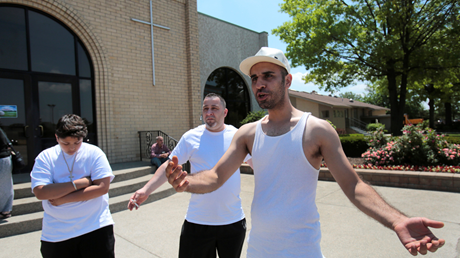
About 130 Iraqi Christians detained last year and slated for deportation will be back home with their families in Detroit for Christmas.

Last week, a federal district court in Michigan ruled that the government has a month to release the detainees still awaiting unlikely repatriation to Iraq.

Many of them are members of the Chaldean Church who were taken into custody during US Immigration and Customs Enforcement (ICE) raids in June 2017 and face persecution if they return to their homeland, where the Christian community was nearly wiped out by ISIS.

The Michigan federal judge presiding over the case, Mark Goldsmith, had previously halted deportations based on a nationwide preliminary injunction requested by the American Civil Liberties Union (ACLU), and ruled in January that the detainees had the legal right to bond hearings. About half of the detainees were released on bond, according to the ACLU, and the rest will be eligible to return home under the latest order.

“The law is clear that the Federal Government cannot indefinitely detain foreign nationals while it seeks to repatriate them, when there is no significant likelihood of repatriation in the reasonably foreseeable future,” reads the Hamama v. Adducci court order, which condemns the extended jail time as unconstitutional.

About 121,000 Chaldean Catholics live in Michigan, making it the faith tradition’s largest concentration of members outside of Iraq. More than 100 of them, who faced deportation due to criminal records dating back as far as three decades, were detained by ICE a year and a half ago, unsettling their families, communities, and churches.

“Families have been shattered,” Goldsmith wrote in the order, blaming the government for ...

Continue reading...


from Christianity Today Magazine https://ift.tt/2P5HKCS

Giving Until It Hurts

God sent his only Son. Why couldn’t I let my husband donate a kidney?

The nurse hands my husband a bag for personal belongings and a bundle that includes a hospital gown, nonskid socks, and a heavy blanket. As Mike undresses, the weightiness of the moment is almost palpable. I do not allow myself to think of our four kids still sleeping right now at my parents’ house, an hour away from us here in the University of California, San Francisco hospital surgical wing. I push back at all the what-ifs that punctuate my thoughts like the beloved freckles that dapple my husband’s face. There is no doubt in my mind that we are meant to be here, but outcomes are never assured, and I tend toward worst-case scenario thinking.

A year ago, this journey had started off with a car ride conversation on the way to a neighbor’s wedding. “What would you think if I donated a kidney?” he asked casually.

My internal reaction: What if you die?! Who would you donate to, anyway? What if one of our four young kids or our relatives needs a transplant someday? What if I do? What if you get kidney disease or get in a car accident and injure the only kidney you have left? What are you thinking?!

My audible reply: “Why would you want to do that?”

It turned out Mike had read a magazine article and, not long after, happened upon a podcast on the possible domino effect of altruistic kidney donation. He thought it would be a nice thing to do. A youth group student of his had received a donation from his brother and it had gone well. Maybe there was someone out there who could benefit from his “extra” kidney as, medically speaking, a person only needs one.

I didn’t leave that conversation convinced, but his earnest sense of calling was enough for us to research next steps. ...

Continue reading...


from Christianity Today Magazine https://ift.tt/2PVwhv0

Where We Got It Wrong

CT’s greatest essays of old still speak today. But on civil rights, we failed our readers.

In many traditions, the weeks leading up to Christmas are considered a season of self-examination and repentance. At Christianity Today, this period of reflection comes after the November online release of our complete archives, encompassing every issue of CT since the magazine first published on October 15, 1956.

This is a cause for gratefulness to God; so many articles and editorials ring true today. For example, we advocated creation care at the outset of the modern environmental movement, decades before climate change became a national conversation. Note the April 23, 1971, editorial: After arguing biblically that “to fail to respect life and all other environmental resources is to demean creation and to violate biblical principles of stewardship,” the editorial concludes with a bracing word:

The task is staggering. We are talking here of terracide, the stupid, senseless murder of the earth, man’s killing himself by killing the environment on which he depends for physical life. Were Christians of today to take on the challenge of persuading men to change, they would be performing the greatest work in the Church’s history.

Among my other favorites: a few articles on Karl Barth’s theology, many by Geoffrey Bromiley, translator of Church Dogmatics; an interview with French theologian Jacques Ellul; and a 1958 symposium, “Theologians and the Moon,” in which Barth, C. S. Lewis, Paul Tillich, F. F. Bruce, and Carl Henry, among others, weigh in on how “recent developments in astronautics” affect Christian faith.

There are also moments that make an editor in chief wince. Nine (mostly anti-communist) articles by FBI director J. Edgar Hoover, who we later learned seriously abused ...

Continue reading...


from Christianity Today Magazine https://ift.tt/2E3MqIq

My Swaddled Savior

Jesus' life began and ended in earthly fetters. Who better to understand ours?

E. B. White once lamented, “To perceive Christmas through its wrapping becomes more difficult with every year.”

I wouldn’t want to argue with the beloved author of Charlotte’s Web. Yet I have an affection for Christmas wrapping precisely because it helped me perceive Jesus through a fresh lens.

Several years ago, I decided to write a daily Christmas post on our church blog during the month of December. Saying something fresh about the Nativity every single day had me reaching far and wide for ideas. In my grasping, for one entry I decided to tackle the theology of Christmas wrapping. I vaguely recalled that some cultures use cloth instead of paper to wrap gifts, which sounded intriguing.

So I dug in. That’s when I first learned about the ancient Japanese art of furoshiki. Feudal lords needed a practical way to bundle their belongings while using the shogun bathhouse, and they displayed their family crests on the outer cloth to identify whose was whose.

Over the centuries, people adapted furoshiki into a beautiful means of presenting gifts. The cloth is folded and tied in deliberate, creative ways, inviting the recipient to pause and appreciate the thoughtfulness behind the packaging before opening it.

What’s more, unlike paper, the material can then be reused over and over again, which has made furoshiki a popular, eco-friendly alternative. When Yuriko Koike was the Japanese Minister of the Environment, she praised the benefits of furoshiki, saying, “It’s a shame for something to go to waste without having made use of its potential in full.”

I realized that Jesus came to us in furoshiki, wrapped in cloths. And while the strips of swaddling served their original purpose ...

Continue reading...


from Christianity Today Magazine https://ift.tt/2Sfk40R