Tuesday, 26 February 2019

One-on-One with Rich Nathan on Immigration and Diversity at Columbus Vineyard

“If you can bring people together in safe spaces where they get to know each other as people and not as issues, you can see a lot of change.”

Ed: Give me an example of when Christians in your community have done good things that were surprising or that undermined the perceptions unbelievers had about who Christians are and what they do.

Rich: One of the places that we've really stepped into is immigration. We set up immigration counseling services. We're one of two immigration non-profits in central Ohio. There are only a few in the state of Ohio, but we're one of them. We pay for the attorney, and we handle DACA cases through the immigration counseling services.

At a time when evangelicals are the least likely to support comprehensive immigration reform of any religious group, we've stepped in. As a result of that, we’ve been able to build relationships with the Muslim, Hispanic, and African communities here in Columbus.

We not only are doing direct legal services, but we're also helping people get citizenship, so we do citizenship classes. We have a couple hundred people coming in for English as a second language. We have an apartment that we rent out in an apartment complex that is filled with immigrants, and we do after school tutoring there as well.

Many of the folks coming in to our immigration programs are coming from the Somali community, which is a really insular community. This is their first time stepping into a church building, and they're encountering Christians. So, for the first time just this year, several Somalis have come to the Lord.

That's been the fruit of about 15 years of work. Women are wearing hijabs and walking into our community center. We're taking care of their kids in our after-school program; we have about 120 kids in the after-school program doing tutoring work, and many of the kids are Somali kids. ...

Continue reading...


from Christianity Today Magazine https://ift.tt/2BSJTyb

Monday, 25 February 2019

Seven Benefits to the Coming Opposition

The church of Jesus Christ has always resembled her King best when she was in a place, not of dominance, but of yielded weakness.

Will the church in North America face an increasing spirit of hostility to its accustomed status of cultural privilege? Absolutely. The question is not, ‘if,’ but, ‘when?’ And my suspicion is that it’s coming much sooner than most would expect. The coming cultural backlash to our unrestrained ties to political power will become a threat to the status quo that no religious PAC can foil. We have declared and unleashed our preferred weapons of battle, and it is likely that they will be used against us in full measure (Matt 26:52). In many ways, it will be a bed of our own making and we have only our pride to blame.

But will this be a bad thing?

Not entirely.

The church of Jesus Christ has always resembled her King best when she was in a place, not of dominance, but of yielded weakness. A quick glance through our history unmistakably reveals that when we become powerful, we behave in counter-kingdom ways. We baptize the world’s operating systems and use its muscle to advance our own comfort, security, and prominence with precious little thought given to the mission of our Founder. Rare indeed are history’s examples of the Church in power becoming a kingdom advancing enterprise. The power of God’s kingdom flows exclusively through yielded human weakness. It is constricted by the vanity of human might.

So, how can the coming opposition be an advantage to the mission of Jesus Christ in North America? Here are seven ways that we can anticipate finding a kingdom blessing in the loss of our earthly status:1. Opposition Reminds Us of What Matters So long as life is copasetic, we are tempted to believe that tertiary aims are worthy pursuit. Being liked. Fitting in. Having a voice. These lesser ...

Continue reading...


from Christianity Today Magazine https://ift.tt/2GKKDJK

Cuban Christians Unite Against New Constitution

Before the vote passed, evangelicals flexed unprecedented political might in a controversial campaign opposing a new definition of marriage and other national reforms.

As Cubans voted to approve a new constitution on Sunday, widespread Christian opposition may signal a shift in political tone and a new sense of unity among the island’s churches.

The grassroots campaign—formed largely over more permissive language regarding same-sex marriage—earned Christians a measure of political clout in the island nation, but for some it’s also garnered them a reputation as enemies of the state.

“I can’t vote for something that goes against my principles,” Alida Leon, a pastor and president of the Evangelical League of Cuba, told the Associated Press. “It’s sad but it’s a reality.”

“I am voting ‘no’ because taking out that marriage is between a man and a woman opens the door in the future to something that goes against our beliefs and the Bible,” another Baptist pastor in Havana told Christian Today.

In a demonstration earlier this month, at least 100 couples decked in suits and wedding dresses gathered in the capital to renew their vows and to protest redefining marriage in the constitution.

“We’re speaking out in favor of marriage as it was originally designed,” Methodist Church of Cuba bishop Ricardo Pereira said. “It’s the first time since the triumph of the revolution that evangelical churches have created a unified front. It’s historic.”

The government and its loyalists tried to turn the vote into a litmus test for patriotism, instigating a sprawling advertising campaign to promote the new constitution. But Christians’ counter-campaign proved too big to stifle.

The opposition first erupted last year when churches began to hang banners and print flyers espousing a traditional ...

Continue reading...


from Christianity Today Magazine https://ift.tt/2Eydfnf

Saturday, 23 February 2019

Surprising Places of Witness

The World Evangelical Alliance champions human rights and religious freedom within the United Nations.

As I walked into the United Nations building in New York to meet Secretary General Antonio Guterres, I recalled a preacher who predicted that this world body was the coming world government, as he said had been prophesied in The Revelation.

Added to that ominous prediction of its coming role, many view the United Nations as deeply flawed: often biased in its analyses and lacking ability to muster sufficient authority to mediate armed conflicts, such as Rwanda. Particularly disturbing is its Human Rights Council, which is comprised of representatives from countries guilty of violating human-rights such as Sudan and Saudi Arabia.

Even so, this is what national governments turn to for help in times of humanitarian crises and military debacles flowing from its mandate to promote peace, justice and human rights, even as they are doing today in Syria, Yemen, and Myanmar.

Here, the world community airs it grievances.

As a quasi-form of government that encompasses the world, it holds no executive power. Keep in mind that the five permanent members of Security Council has veto powers and can resort to the use of military force, yet the General Assembly and the Human Rights Council (HRC) work independently from the Security Council.

Because the HRC can’t resort to armed force, countries can refuse to collaborate with their investigations. Even so, the Security Council is so conflicted that it would be quite impossible for the members to join together in a world takeover as some allege is a possibility.

As influential as the UN is, it isn’t the only or ultimate source of settling human rights violations. While it does possess moral and legal authority as permitted by member countries, apart from intervention by the Security Council, ...

Continue reading...


from Christianity Today Magazine https://ift.tt/2IxtuoC

Friday, 22 February 2019

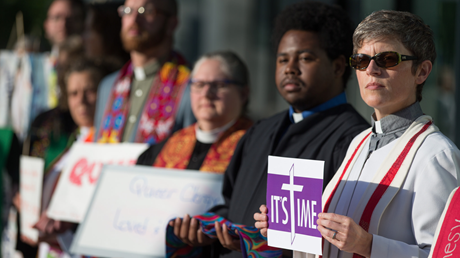
United Methodists’ LGBT Vote Will Reshape the Denomination

Pulled right and left by various factions of the global church, the UMC’s decision-making body meets this weekend to pick a path forward.

One of the world’s largest Christian denominations faces potential fracture as United Methodist leaders gather to finally decide how to navigate deep divisions over gay marriage, ordination, and ministry.

The United Methodist Church (UMC) meets Saturday through Tuesday to weigh options to address the differing convictions on the issue, including some that would lead one side or the other to leave the denomination.

This special session of its General Conference, a denominational decision-making body made of around 1,000 delegates, represents the culmination of years of passionate debate about the application of scriptural teachings, particularly when it comes to issues around sexuality.

There’s a lot at stake. Beth Ann Cook, a UMC minister and clergy delegate, said the issue comes down to “how we interpret and apply Scripture in our daily lives,” and she’s praying that “delegates fully and honestly face the depth of our divisions.”

“While this General Conference is about much more than LGBTQ justice and inclusion for the United Methodist Church, we are at this juncture because of the discrimination against LGBTQ people in the church,” said Jan Lawrence, whose Reconciling Ministries Network advocates for the UMC to change its longstanding policies and language around homosexuality.

Since its first official statement on homosexuality in 1972, the denomination has tried to mark out a middle ground of grace and traditional orthodoxy, stating that “homosexuals no less than heterosexuals are person of sacred worth” while still considering “the practice of homosexuality … incompatible with Christian teaching.”

Decades later, with half the 12.5 million-member ...

Continue reading...


from Christianity Today Magazine https://ift.tt/2GXAGrF

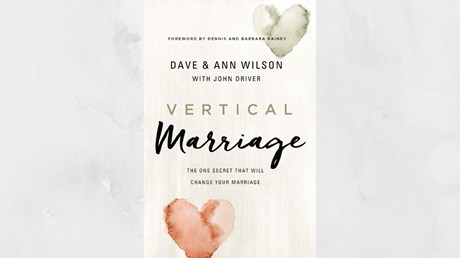
Q&A with Dave and Ann Wilson About Vertical Marriage

“Only when we “go vertical” and connect in a relationship with God through Jesus will we find the true joy that we are looking for.”

Ed: On your 10-year wedding anniversary, you two felt very differently about your marriage. Dave, you thought your relationship couldn’t get any better, and Ann, you were hanging on for dear life and told Dave you had lost your feelings for him. Can you share a little bit about that night and how it changed your relationship?

Dave: Our 10-year anniversary was a chance to celebrate our love and life away from the kids and the pressures of ministry. I was crazy busy trying to start our new church, as well as leading the Detroit Lions ministry as the team chaplain. I was never home. Ann was leading the home all by herself and overwhelmed with raising two very busy toddlers.

When she told me that she had lost her feelings for me, I knew that I had to find out why and how. As she shared her heart about moving from bitterness to numbness, I felt a strong nudge—probably more like a shove—from the Holy Spirit, that said, “Shut up and listen.”

Ed: Dave, what made you respond with prayer rather than reaching for your planner to persuade Ann that she was wrong?

Dave: I actually was about to pull out my daily planner to prove that I was home more than Ann thought when I sensed God saying to zip my lip and just let her talk. As I listened, I heard God say one more thing: “Repent.”

I knew that God was revealing to me that my relationship with Jesus had become lukewarm. I was so busy doing ministry for God that I had left God behind. God was saying that our horizontal marriage would never be what we wanted it to be unless I put Jesus back in first place.

So I got on my knees right there in the front seat of our Honda Accord and put Jesus back in control of my life. Ann did the same, and it was the start ...

Continue reading...


from Christianity Today Magazine https://ift.tt/2GXlPxb

Did George Whitefield Serve Two Masters?

A new biography helps us come to terms with the unsavory side of the great revivalist’s mission to America.

On the campus of the University of Pennsylvania, there sits a statue of one of the school’s co-founders: George Whitefield, the 18th-century British evangelist and hero of the Great Awakening. Underneath it, one finds a quote from Benjamin Franklin, the school’s other co-founder (and Whitefield’s longtime friend): “I knew him intimately upwards of thirty years. His integrity, disinterestedness and indefatigable zeal in prosecuting every good work I have never seen equaled and shall never see equaled.”

Peter Choi’s biography, George Whitefield: Evangelist for God and Empire, explores various ways that Whitefield’s zeal for good works not only put him on a pedestal but also entangled him in a war against Catholicism and the promotion of race-based slavery. By exposing less-than-uplifting facts about Whitefield, the book illuminates unhealthy aspects of 18th-century evangelicalism’s intimate relationship with the British Empire.

Choi, who is a pastor of spiritual theology at City Church, San Francisco, and director of academic programs at the Newbigin House of Studies, is not out to undermine Whitefield’s reputation for piety or drag his work as a revivalist down into mere politics. Instead, Choi offers a revealing case study of evangelicalism’s “entanglement” with its host culture. The book is a good example of the maturity of evangelicalism’s scholarship about itself. Although some prefer to emphasize the heavenly side of evangelicalism’s history, the truth is, as Jesus taught in the parable of the wheat and the tares, the heavenly and earthly grow together until the final harvest.

Encounters and Entanglements

Anglo-American evangelicalism was ...

Continue reading...


from Christianity Today Magazine https://ift.tt/2Eodxgm