Tuesday, 29 October 2019

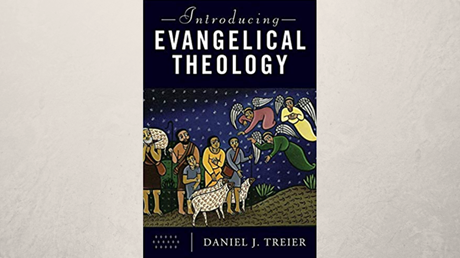
One-on-One with Daniel Treier on ‘Introducing Evangelical Theology’

“I have tried to reconnect evangelicals with a lost inheritance as well as introduce them to contemporary resources.”
Ed: Why do we need an evangelical theology?

Daniel: Faith seeks understanding. People who embrace the gospel want to know the glorious God who has saved them, and to follow Jesus as the Holy Spirit empowers them. Evangelical Protestants distinctively root such theological understanding in Scripture as God’s Word. That means trying to understand the unified teaching of the Bible in connection with the church’s witness past and present.

At our worst, we fall into individualistic faith that lacks coherent or churchly understanding—either seeking surface unity without biblical understanding, or else championing secondary truths without Christian unity. At best, though, an evangelical theology helps us to love the God of grace and to labor with fellow believers, despite some of our differences, in living out the gospel.

Ed: I’m in if you see theology as key to the future of evangelicalism. Can it help get us out of the mess we are in?

Daniel: We have to be sober about theology’s possibilities and pitfalls. There are scandals not only of the evangelical mind but also of the evangelical conscience and even of the evangelical mission. So we must not champion theology in a way that simply puffs us up with knowledge (1 Cor. 8:1).

The same passage in 1 Corinthians, though, suggests that proper theological understanding can foster Christian love. Hence, theology can help evangelicals with our current mess by calling us out of political triumphalism and tribalism. Theology should refocus us on the overarching reality of the biblical gospel. The gospel has implications for all of life insofar as it calls us, in your words, to make much of Jesus.

Continue reading...


from Christianity Today Magazine https://ift.tt/34dQvCK

A Rocha Co-Founder, CEO Killed in Crash in South Africa

Miranda Harris and Chris Naylor helped lead the organization’s groundbreaking global efforts to bring together Christian convictions and environmental concerns.

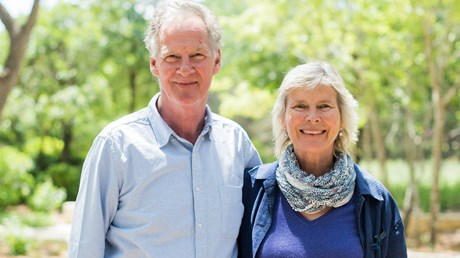
The global creation care community is grieving the loss of some of its most prominent evangelical advocates after the top leaders of A Rocha International—cofounders Peter and Miranda Harris and CEO Chris Naylor and his wife Susanna—suffered a fatal car crash on Monday.

Miranda Harris and the Naylors were killed when their car flipped over a bridge into a river in Port Elizabeth, South Africa, according to news reports. Peter Harris and the driver remain in stable condition. The team was visiting South Africa in connection with A Rocha and in hopes of future ministry opportunities there.

“We know that this comes as a profound shock to everyone in the A Rocha Family and others all around the world,” the UK-based Christian conservation organization stated.

The Harrises founded A Rocha over 35 years ago and have been credited with spreading the creation care movement among Christians around the globe. Chris Naylor joined in 1997, overseeing their conservation work in Lebanon, and has been executive director since 2010.

“Peter and Miranda are pioneers in what is now a global creation care movement, and Chris has led A Rocha brilliantly for many years. It would not be possible to overstate the significance of their contribution both personally and professionally,” said Edward R. Brown, Lausanne Catalyst for Creation Care and director of the ministry Care of Creation. “Though we rejoice in the hope of the resurrection, this is still an unspeakable tragedy for the entire global creation care community.”

Dave Bookless, A Rocha’s director of theology, said the accident “leaves a huge and irreplaceable hole in our lives and our organization.” He described Peter and Miranda ...

Continue reading...


from Christianity Today Magazine https://ift.tt/31Yrni2

Kirk Franklin Boycotts Dove Awards for Cutting His Prayers for Black Victims

This year’s broadcast wasn’t the first time TBN had edited the gospel artist’s acceptance speeches.

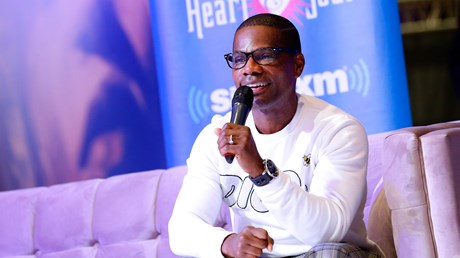
Prominent gospel musician Kirk Franklin says he will boycott the Christian music Dove Awards, citing frustrations with the Gospel Music Association (GMA) and Trinity Broadcasting Network (TBN) for editing his past acceptance speeches to remove mentions of race and police shootings.

Franklin made the announcement on Monday in a pair of videos posted to Twitter. Speaking directly into the camera, he explained that after winning a Dove Award—which is affiliated with the GMA—in 2016, he called for racial healing during his acceptance speech, noting the shooting of both police officers and black men in general.

“When we don’t say something, we’re saying something,” Franklin said during the speech, after which he received a standing ovation and led the assembly in prayer.

In his Twitter videos, Franklin said that when the speech later aired on TBN, that section of his speech was edited out of the broadcast.

“I made my disappointment and frustration known to the Dove Awards committee and to the Trinity Broadcasting Network,” he said. “I never heard from TBN, and the Dove Awards committee promised to rectify the mistake so that it wouldn’t happen again.”

Franklin won another Dove award in 2019, when he again made mention of police shootings during his acceptance speech—this time noting the death of 28-year-old Atatiana Jefferson, who was shot by a white police officer in her own home in October, according to published reports.

During the awards ceremony held October 15—which marked the 50th anniversary of the Christian music awards—Franklin asked those in the audience and those watching to pray for both Jefferson’s family and the family of the police ...

Continue reading...


from Christianity Today Magazine https://ift.tt/2NkMNR7

Latasha Morrison: Racial Reconciliation Starts at the Cross

The Be the Bridge founder’s new book gives readers a theologically rich approach to crossing racial divides.

As I sat down to work out my thoughts on Latasha Morrison’s excellent new book, Be The Bridge: Pursuing God’s Heart for Racial Reconciliation, my newsfeed overflowed with the appalling account of a young black medical student who was innocently playing video games in her own living room with her 8-year-old nephew when a white police officer shot her through the window. The officer was arrested and charged with murder. Since the event came only a few weeks after the trial of Amber Gieger for the murder of Botham Jean, weariness was the prevalent emotion all over social media.

As racial violence and division continue to overshadow the American experiment, the release of Be the Bridge seems providentially timed. Morrison’s work will surely strengthen those already engaged in the work of racial reconciliation and invite many more to enter for the first time. The book itself is an act of reconciliation, as Morrison reaches out graciously across a seemingly insurmountable divide to offer hope, gospel truth, and practical action steps.

Morrison is the founder of Be The Bridge, a Christian organization that facilitates the formation and nurture of reconciling communities and trains people one by one to supersede racial divisions, especially within the church. This book (her first) is the outflow of that work and the place where she brings her expertise and experience to a wider audience.

Morrison starts by admonishing the reader to open herself to correction and adopt a posture of humility when engaging in racial reconciliation. From there the book is divided into three parts, each concluding with a liturgical rite intended to help readers and groups of readers begin the work of bridge building. The first section ...

Continue reading...


from Christianity Today Magazine https://ift.tt/34ajKGB

Evangelism Isn’t About Results

The Parable of the Sower frees us from our desire for resolution.

How can we evangelize with integrity? As my husband and I lead our church together, this is a question we wrestle with a lot. Namely, in our enthusiasm to see people come to know Christ, how do we resist the temptation of results-driven ministry? How can we communicate the urgency of the gospel without manipulating others’ emotions or fears? How can we present the gospel in a way that is inviting without truncating the message to make it more palatable?

As we have processed these questions and temptations regarding evangelism, we have found ourselves both chastened and encouraged by the Parable of the Sower (Matt. 13). In this famous story, Jesus uses an analogy that would have been familiar to his Palestinian audience. According to Bible scholar William Barclay, farmers at the time would have sown their seed in one of two ways: either casting out the seed by hand or strapping a bag of seed to the back of a donkey, tearing a hole in the sack, and letting the seed spill out as the animal crossed the field.

In both scenarios, the seed would have been vulnerable to variables such as wind or rocky terrain, but because of these two different practices, the identity of the “sower” in this parable remains unclear. Perhaps we are the human sower, or perhaps we are the farmer’s donkey, but it is “God who gives the growth” (1 Cor. 3:7, ESV). In this way, the parable is symbolic of three “actors” who are present in the sharing of the gospel—you, the hearers, and God—and until we understand these roles properly, the work of evangelism will be much harder and more burdensome than God ever intended.

Your Role

In Matthew 13, the sower goes out to sow (v. 3), and he sows into all sorts ...

Continue reading...


from Christianity Today Magazine https://ift.tt/2ovtyfi

Monday, 28 October 2019

The Road Ahead: 10 Characteristics of a Future Church Planter, Part 1

The well-worn paths of the past can often be poor guides for missionary travelers toward the future evangelistic work in North America.

The well-worn paths of the past can often be poor guides for missionary travelers toward the future evangelistic work in North America. Future church planters that effectively engage a post-Christian mission field will look a lot more like 1st-century missionaries than they do from their 21st-century descendants. They will differ from our cultural norm in at least the following ten ways.

1 – A Different Filter: From Entrepreneurial Übermensch [1] to Apostolic Catalyst

The way we distinguish a rock star church planter is often freakishly similar to the way a successful pastor is measured—but with an additional entrepreneurial genome.

He is ostensibly a five-tool player with some bonus proficiencies that become necessary in launching and managing a successful start-up. The problem with calibrating our filtering systems to discover this unicorn is that when one is discovered, that person is often not as advertised.

The purported five-tool curriculum vitae often leans heavily toward shepherding and teaching with little natural passion directed toward the sending call of Christ’s mission. The outward multiplicative expression of the new church is often stymied from the onset.

Future movements require a new filter biased away from the ever-consolidating entrepreneurial Übermensch and toward a selfless, apostolic leader with a sending spirit. This self-sacrificing leader will form the zeitgeist for the subsequent nine shifts necessary for a future shaped by overlapping gospel movements.

2 – A Different Frame: From Sunday-centric to Christ’s Body

Church planters who have been exposed to a predominantly Christendom-ized culture often instinctively think of the assignment of church planting in terms ...

Continue reading...


from Christianity Today Magazine https://ift.tt/34a6tOg

Meet the Minnie Church

What happens when you plant a church for employees of just one company?

I saw Pluto just a few minutes earlier. Now I happen upon Wonderland’s Alice, chatting away with a clerk at the Tea Caddy in Epcot’s United Kingdom. Of course she’s in character­­—Alice, I mean—talking about her tea party experience with the March Hare and the Mad Hatter. As for the tea clerk, it’s complicated. Disney calls her a “Cast Member,” and her store is “on stage”—the parts of Walt Disney World that are visible to “guests” like me. But she’s from Bristol and her English accent is real. She plays herself, or at least a cheery, especially English version of herself. Her conversation is no more scripted than it is for retail clerks anywhere else in America, though perhaps with more discussion about Bristol.

Shortly after Alice scampers away, a man engages the clerk in conversation. It turns out her mum is coming for a visit soon. He asks her how long it’s been since she’s seen her mum, how long she’s been at Epcot, how long it’ll be before she heads back to the UK. He asks if she’s been homesick. (She is, she says with a very large smile.) The conversation ends with no reference to his large and prominent nametag: “Steven. Cast Member Church.” He’ll be back, sometimes to chat, more often to prayer-walk quietly with half a dozen or so other members of his small but growing church plant. He’s not there to evangelize; he respects both the Cast Member’s time and Disney’s rules against “solicitation.” Even if the clerk were a Cast Member Church member, he wouldn’t pray with her. “That could get them in trouble and the church in trouble,” ...

Continue reading...


from Christianity Today Magazine https://ift.tt/2phvp7G