Thursday, 30 January 2020

FBI Accuses Filipino Church of Human Trafficking, Sham Marriages for Fake Charity

Prosecutors say Kingdom of Jesus Christ’s “miracle workers” were trafficking victims. Philippines-based church says fundraising efforts for Children’s Joy Foundation were legitimate.
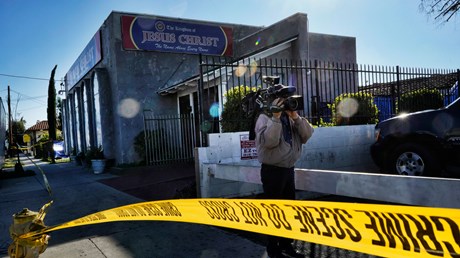
MANILA, Philippines (AP) — A Philippine religious group on Thursday denied allegations by American law enforcement agents that it was involved in a scheme to trick followers into becoming fundraisers and arrange sham marriages to keep them in the US.

FBI agents raided the Kingdom of Jesus Christ church in Los Angeles on Wednesday in a human trafficking investigation that led to the arrests of three church leaders.

A spokesman for Apollo Quiboloy, the church founder and leader, said former members who had been disciplined for wrongdoing retaliated by breaking off from his church and fabricating information they fed to the FBI in a “grand conspiracy of lies.”

“Their aim, therefore, is to exact revenge, extortion commingled with a brazen but shameless desire to put [Quiboloy] and the [church] as a whole into a quagmire of shame, blatant humiliation, and defeat through trumped-up charges,” lawyer Israelito Torreon said in a statement issued to reporters in southern Philippines’ Davao city.

The church leader ordered an internal audit last year that prompted a trusted officer and other members to leave the group and struck an alliance with “forces” jealous of Quiboloy's rise, Torreon said without elaborating.

“We will face and disprove as utter lies the charges filed against the administrators” of the church in the US, he said.

Workers who managed to escape from the church told the FBI they had been sent across the US soliciting donations for the church’s charity and were beaten and psychologically abused if they didn’t make quotas, according to an affidavit filed in support of the charges.

The immigrants essentially became full-time workers, sometimes referred ...

Continue reading...


from Christianity Today Magazine https://ift.tt/2U6Z00N

Are We Overlooking People and Areas in Need of Gospel Impact and Resources?

We now have numerous unprioritized areas that God calls us towards.

We live in an age where there are countless ways to reach people through technology, financial support, and missions work. It is common to hear about certain places and people groups that are in these resources and efforts, such as third-world nations or areas under restrictive governmental regimes.

However, certain ethnolinguistic people groups continue to be unreached, and at the same time, overlooked.

For example, we can point to Quebecois in Canada and the thousands of South Asian Indians in the western suburbs of Chicago. There are also geographical areas that are unacknowledged. Perhaps the most notable are rural areas in the United States and around the world.

Paul strategically prioritized urban centers during his missionary journeys. Think of Philippi, Ephesus, Colossae, and Thessalonica: they were all places where large numbers of people lived, worked, and worshipped.

Paul could reach the most people with the gospel by preaching and planting the gospel in these cities. Acts actually tells us “all Asia” was reached from Paul’s three years in Ephesus (Acts 19:10). While today’s cities are still vitally strategic and important, our world is different than Paul’s.

We now have numerous unprioritized areas that God calls us towards.

When thinking about these forgotten areas, as pastors in particular and Christians in general, we begin to ask questions about what we should do to improve the church’s reach: Do we travel to these places and evangelize? Do we plant churches there? Do we send money? How do we accomplish all of these things?

I believe that there are two main answers to the questions concerning outreach to overlooked peoples.

First, one of the best ways to improve the church’s ...

Continue reading...


from Christianity Today Magazine https://ift.tt/2GOuKQB

Is It Faithful to Flee an Epidemic? What Martin Luther Teaches Us About Coronavirus

The German reformer’s pastoral reflection on the plague can guide both medical students like me and Christians in China—and everywhere the Wuhan virus has spread.

From its epicenter in Wuhan, China, the current coronavirus outbreak is stoking fear and disrupting travel and business across the globe. More than 150 people have died from the virus in China alone, and about 8,000 are infected across 18 countries—exceeding the SARS epidemic in 2003.

Citizens in Wuhan, a major central city comparable to Chicago, are under lockdown by the government and public activities have come to a standstill, including annual celebrations for Chinese New Year (which began on January 25). Chinese Christians, in Wuhan and China at large, have faced difficult decisions about whether to join the millions of Chinese who return home to visit family (as is customary during the lunar holiday season), to flee from the mainland, or even to gather for regular Sunday services.

But are followers of Jesus right to flee an epidemic when people are suffering and dying?

In the 16th century, German Christians asked theologian Martin Luther for a response to this very question.

In 1527, less than 200 years after the Black Death killed about half the population of Europe, the plague re-emerged in Luther’s own town of Wittenberg and neighboring cities. In his letter “Whether One May Flee from a Deadly Plague,” the famous reformer weighs the responsibilities of ordinary citizens during contagion. His advice serves as a practical guide for Christians confronting infectious disease outbreaks today.

First, Luther argued that anyone who stands in a relationship of service to another has a vocational commitment not to flee. Those in ministry, he wrote, “must remain steadfast before the peril of death.” The sick and dying need a good shepherd who will strengthen and comfort them and administer the ...

Continue reading...


from Christianity Today Magazine https://ift.tt/2RZLuJL

Interview: What if We Don’t Have to Choose Between Evolution and Adam and Eve?

How insights from genealogy can help change the terms of a contentious debate.

Ever since Charles Darwin proposed his theory of evolution, Christians have struggled to locate Adam and Eve within an evolutionary past. According to the traditional reading of the first chapters of Genesis, God created Adam and Eve directly and all human beings descended from that first couple. Yet many Christians have discarded this belief on the basis of evolutionary science, which holds that human beings, having descended from animals, first appeared on earth as a population rather than a single, divinely created pair.

S. Joshua Swamidass, a computational biologist at Washington University in St. Louis, wants to change the terms of this contentious debate. In his book, The Genealogical Adam and Eve: The Surprising Science of Universal Ancestry, Swamidass affirms both evolution and the traditional reading of the Genesis creation account. Drawing on findings from his field of computational biology, he contends that the lineage of Adam and Eve should be traced using genealogy rather than genetics. Viewing the origins debate through a genealogical prism, Swamidass presents a scenario in which the special creation of Adam and Eve thousands of years ago happens on a parallel track with evolution.

The Genealogical Adam and Eve carries a wide range of endorsements from theologians, atheist biologists, and believing scientists from across the origins-debate spectrum. CT science editor Rebecca Randall interviewed Swamidass about how his ideas might open new avenues of conversation between science and theology.

What is your research background? How did you come to study the genealogy of Adam and Eve?

I was raised a young-Earth creationist, and I moved to understanding evolutionary science and seeing legitimacy to it. Now, I use artificial ...

Continue reading...


from Christianity Today Magazine https://ift.tt/2uNhKHS

Wednesday, 29 January 2020

Bethany Announces End to International Adoptions

Agency VP: The future of child welfare is local.

The largest Christian adoption agency in the United States announced that after 15,000 international adoptions over its 37-year history, it will no longer be bringing children into the US and will instead focus on supporting children in their home countries.

Bethany Children’s Services shared in a blog post last week that its international adoption accreditation will expire in 2021. After that, it will no longer accept new applications.

“Our decision to phase out international adoption is not a criticism of the program, but a reflection of our desire to serve children in their own communities,” wrote Kristi Gleason, the vice president for global services at Bethany. “The future of adoption is working with local governments, churches, and social services professionals around the world to recruit and support local families for children and to develop and improve effective, safe in-country child welfare systems. Through these efforts, we served more children around the world in 2019 than we previously served in a single year.”

Bethany, like fellow agencies, has seen the orphan care landscape shift and evolve over the years, particularly in the past two decades. International adoptions to the US dropped from nearly 30,000 children in 2004 to just over 4,000 in 2018, after years of historic lows.

The decline is not due to lack of interest from American families—in fact, funding to orphan care ministries has been on the rise. Instead, places like Russia, Guatemala, and Ethiopia have eliminated international adoption, and others are following suit with tighter restrictions and regulations around the practice.

Another factor is that other countries are growing their capacity to care for children in ...

Continue reading...


from Christianity Today Magazine https://ift.tt/37GCNKM

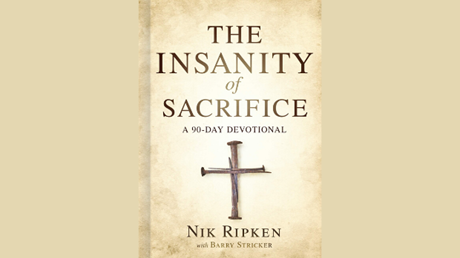
One-on-One with Nik Ripken on ‘The Insanity of Sacrifice: A 90-Day Devotional’

Sacrifice is a joy when it is framed by eternity.

Ed: What prompted you to write this devotional?

Nik: The center for worship and witness in our world is in homes. This book was written to assist families and singles as they center worship in their homes. The number one request that Ruth and I receive is to develop resources to help parents center worship in family settings. We wrote this book, praying that families will share truths from the Bible and Christ’s stories around the table as they share meals with family, friends, and their neighbors.

Ed: What has most surprised you about how God has worked your latest book?

Nik: After listening and learning from believers undergoing persecution, we knew that we had to write The Insanity of God in order to give believers in persecution their voice back. They needed to become our teachers and mentors.

Often, the persecutors will say, “Your story will die with you in this prison cell, or in this room where you are under house arrest, or in this insane asylum where we have chained you.”

More than that, we knew that believers in persecution have earned the right to be our teachers, reminding us that resurrection follows crucifixion.

Yet what has surprised us the most is the number of people who, through reading The Insanity of God, allowed the Holy Spirit to bring them to salvation through Christ’s story found in the stories of believers in persecution. It has led, often, to a greater witness. One 93-year-old man told Ruth and me that after reading the book, he vowed to God that he would share Christ with at least one person a day. He has kept that promise. The international impact of this book has been a great surprise and encouragement.

Ed: How do you hope readers grow from using it for 90 days?

Nik: Our prayer ...

Continue reading...


from Christianity Today Magazine https://ift.tt/2RFkUXv

Beth Moore: God Uses Your Mistakes for Good

In the Lord’s economy, nothing is wasted—not even rotten fruit.

Years ago, when the number of attendees at Living Proof Live events started swelling—and, consequently, scaring me half to death—I decided that God would be most honored (and I’d be most reliant on him) if I fasted from the time each conference began until after it ended. If effectiveness increased in response to a combination of fasting and praying, as Scripture indicated it did, why wouldn’t the same formula work for fasting and speaking?

It made perfect sense to me, so I kept this up for years—not one bite on an event weekend, from Friday after lunch until Saturday afternoon. Twenty-four hours or so was plenty doable. I desperately needed God to show up. The way I saw it, if I fasted at these events, God would be more likely to demonstrate favor.

Never mind that favor can’t be earned. Never mind that there’s no formula on earth for guaranteeing the outpouring of God’s Spirit. Sometimes we’re wheeling and dealing and calling it holy. The longer I live, the less I find God to be a hand shaker. Hand holder? Yes. Hand shaker? No.

God was faithful. He carried me through each of those events, especially in the last few hours when I felt shaky, and afterward, too, when the meet-and-greet would go on until I was nearly in tears. I’d already given everything I had.

Then I started seeing stars. Sometimes during the last session of an event, I’d have to steady myself at the podium for a moment until the lightheadedness passed. I was so depleted at the end that the aftereffects weren’t just physical. I’d immediately face spiritual attack, as if a hoard of demonic spider monkeys were jumping on my back.

Wait a minute, I thought. Isn’t fasting supposed to ...

Continue reading...


from Christianity Today Magazine https://ift.tt/312Vk1z