Wednesday, 29 April 2020

CT en français: Le Coronavirus et l’Église

Que dit la Bible sur le COVID-19? Comment les chrétiens et les Églises devraient-ils y répondre? Lisez ici pour en savoir plus.

Ceci est une série d’articles de CT, traduits en français, sur le Coronavirus et le rôle de l’Église pour faire face à ce défi:

Les autres articles traduits sont:

Continue reading...


from Christianity Today Magazine https://ift.tt/3aNmZXp

How I Cured My Monday Hangover and Summer Slump

Ministry leaders can benefit from paying attention to both divine timing and circadian rhythms.

I am sluggish on Mondays, yet extremely motivated on Thursdays. My thoughts are creative and clear in the mornings, but when I attempt deep thinking mid-afternoon I often feel like I’m running in sand. My soul always feels different in January than it does in August. Why is this? As a ministry leader, I’ve had the sense that timing is crucial, but I’ve never known why until recently.

I enjoy Daniel Pink’s writings, so I was eager to get my hands on his latest book, When: The Scientific Secrets of Perfect Timing. The premise: When we do things matters more than we think. Why do regularly scheduled breaks significantly increase student scores? Why should we avoid going to the hospital in the afternoon? Why do prison boards grant parole for more inmates in the morning than in the afternoon? Science proves that we function rhythmically in our 24-hour cycles.

What we do is important, but when we do it is crucial. By knowing ourselves, we can maximize our days by aligning our schedules with our circadian rhythm, that natural inner process that regulates our cycles of sleeping and being awake.

Although Pink writes primarily for a secular business audience—as far as I can tell, he has no strong religious affiliation—ministry leaders can glean much from his book. As pastors know, efficiency and ministry don’t often mix. Ministry can feel chaotic and exhausting, each day riddled with interruptions. Pastoral care issues can surface at a moment’s notice.

Years ago, I heard Saddleback Church pastor Rick Warren say church leaders should focus more on energy management than time management. We often use the clock as the marker of our days. However, since all leaders have limitations and need ...

Continue reading...


from Christianity Today Magazine https://ift.tt/2KKMfmA

Remembering Bruce Fields

The theologian, who died last week, was a reflective and humble man.

Early last week, theologian Bruce Fields lost a 21-month battle with brain cancer. I met him in the fall of 1990, near the beginning of my time as a student at Trinity Evangelical Divinity School. With the exception of Doug Moo, he was the tallest faculty member, a basketball player who knew how to play the big man’s game. I remember learning that one of his coaches had been Chuck Daly (who went on to coach NBA championship teams with the Detroit Pistons) and asking him about his experience. He did not enjoy Daly’s approach of playing mind games and other forms of manipulation. I was hoping for some anecdotes about glory days under a future celebrity coach; Bruce revealed the more complicated and unsettling truth. I discovered that Bruce would tell you the truth as it was and did not seek easy or palatable answers to questions, whether about basketball, theological questions, or the world of evangelicalism.

When I arrived at Trinity, I was stepping into a world of theological education at an institution that placed a premium on academic excellence and publication. Before long, I found myself in those conversations with other students where you admire the achievements of certain faculty members. As I recall, not many brought Bruce into this conversation. While there are reasons these conversations emphasized some professors with more publications or prominence in the evangelical debates of the day, I know now that I missed the opportunity to learn how Bruce was walking through a unique experience: that of an African-American theology professor in an evangelical institution.

The faculty of evangelical institutions of higher education in the early 1990s included few nonwhite faculty in general and hardly any professors ...

Continue reading...


from Christianity Today Magazine https://ift.tt/3cXKGOd

Asumí que la ciencia tenía todas las respuestas. Entonces empecé a hacer preguntas inconvenientes.

Mi viaje del dogma ateísta a la fe Cristiana fue pavimentado con sorpresas intelectuales y espirituales.

Tuve una infancia inusual para un estadounidense. Los miembros de mi familia extendida eran organizadores sindicales y radicales de izquierda, y mis padres incluso habían sido miembros del Partido Comunista Americano. Mi adoctrinamiento en los dogmas del comunismo y el ateísmo fue profundo y duradero. Al mismo tiempo, mi padre me enseñó a amar la ciencia y la razón, y me enseñó la importancia de hacer preguntas. Estos dones, junto con mi entrenamiento en pensamiento e investigación científica, eventualmente abrieron la celda de la prisión que mantuvo cautiva mi alma durante esos primeros años.

Liberarme fue un proceso lento, similar a tratar de raspar la puerta de un calabozo con una cuchara sin filo. Cuando era joven, mi curiosidad me llevó a hacer preguntas. Vi contradicciones en algunos aspectos de lo que me habían enseñado. Si los humanos fueran un producto ciego del azar evolutivo, sin un propósito o significado especial, entonces, ¿cómo podrían tener sentido los objetivos establecidos del socialismo: promover la dignidad y el valor humano? Y si la religión, particularmente el Cristianismo, fue realmente un mal histórico tan terrible, ¿por qué tantos miembros del clero cristiano participaron en el movimiento para conseguir derechos civiles?

Cuando estudié ciencias y comencé mi carrera de investigación en bioquímica y biología molecular, formé un apego apasionado a una vida de conocimiento arraigada en la cosmovisión científica. Encontré consuelo y alegría en la belleza, la complejidad y la sabiduría ...

Continue reading...


from Christianity Today Magazine https://ift.tt/3aON34D

Mengalahkan Kekhawatiran dengan Perjanjian Lama

Tulisan kuno yang tanpa diduga dapat menjadi sumber penopang dalam perjuangan kita melawan tekanan.

Ini adalah bagian ketiga dari enam bagian esai tulisan seorang akademisi yang terkemuka yang meninjau kembali letak "Perjanjian Pertama" dalam iman Kristen kontemporer. —Editor

Saya adalah seorang ahli statistika milenial. Dijuluki "generasi yang gelisah," kebanyakan dari kita mengalami tekanan, dan kita mengalami kecemasan yang mengganggu pekerjaan dua kali lipat dari rata-rata. Kita paling banyak mengalami masalah kesehatan mental di dunia di mana banyak orang berpikir bahwa kecemasan sedang mengalami peningkatan.

Sampai baru-baru ini, saya tidak berpikir saya adalah orang yang gelisah. Sebelumnya, dalam kurun waktu satu tahun, saya selesai menulis tesis PhD saya di Inggris, melakukan beberapa pekerjaan paruh waktu untuk membiayai kehidupan, mengalami cedera di ligamen kaki saya (dengan seorang istri yang hamil 36 minggu), menjadi ayah untuk pertama kalinya, mendapatkan pekerjaan di bidang akademik, mendapatkan visa untuk bekerja, pindah melintasi Atlantik, menemukan tempat tinggal, menyelesaikan masa tugas mengajar pertama, dan mempertahankan tesis doktoral saya. Bukan berarti semua ini buruk — beberapa di antaranya sangat bagus. Tetapi pada akhirnya, saya merasa kelelahan dan gelisah.

Kisah saya diatas bukanlah sesuatu yang istimewa. Tempat untuk kerja bisa ada dimana-mana, sehingga menimbulkan risiko terjadinya isolasi dan orang-orang bekerja melampaui batas. Orang-orang muda disuruh untuk bepergian ke mana saja dan melakukan apa saja, tetapi kesehatan mental mereka yang menjadi taruhannya. Dan belum lagi masalah lainnya seperti kecanduan, pelecehan, penyakit kronis, pengangguran, tunawisma, dan sejumlah hal lain yang menimpa pada hari-hari ini. Industri kesehatan pun mulai berkembang dengan ...

Continue reading...


from Christianity Today Magazine https://ift.tt/3bNiA8j

Tuesday, 28 April 2020

Three Ways to Reach Out in This Unique Moment in Time

In this moment, we need to reach people where they are, connect with them online or virtually, and be intentional to bring Jesus to people in creative ways.

Our world is changing rapidly. COVID-19 has brought uncertainty, economic turmoil, fear of sickness, and new realities like "sheltering at home." Six weeks ago, most of us had never heard terms like "flattening the curve.” Our world was a different place.

With this in mind, it is helpful to reflect on some practical and effective ways to continue the work of the Great Commission in the midst of a new reality that none of us asked for or saw coming.

Churches seeking to do effective Organic Outreach (evangelism) often seek to draw people onto their campus and invite the world to come to them. An invitation to a great church event will be an effective approach someday, but not this day.

In this moment, we need to reach people where they are, connect with them online or virtually, and be intentional to bring Jesus to people in creative ways.

This means we need to adapt as we share our faith and live as God’s missionary people.

For this to happen, putting on great events at a church will not be enough. The role of leaders in the church is to equip all of God’s people for works of ministry (Eph. 4: 11-13). Here are three simple and familiar ways to do outreach in this unique moment in time.

Pray with People

We should all call, text, or video chat with friends and family members who are not yet followers of Jesus. When we connect with them, we should ask the profound theological question, "How are you doing?" Then, listen. Listen well.

When they talk about a fear, anxiety, or deep sorrow, we can politely say something like, “Thanks for sharing that with me. No pressure at all, but I would be honored to pray for you right now if that is OK with you.”

I have asked non-believers that question ...

Continue reading...


from Christianity Today Magazine https://ift.tt/3d0jFKi

Report: ‘Tremendous Progress’ Ahead for Religious Freedom Worldwide

USCIRF chair Tony Perkins gives CT a behind-the-scenes look at today’s annual report on “systematic, ongoing, and egregious” violations.
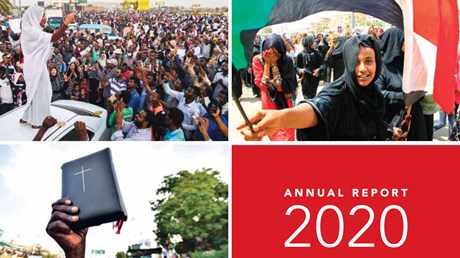
A new report aims to “unflinchingly criticize the records of US allies and adversaries alike” on religious freedom.

And there’s a lot to report, with more headlines each month confirming the Pew Research Center’s 10-year analysis that government restrictions and social hostilities involving religion have reached record levels worldwide.

Today’s 21st annual report by the US Commission on International Religious Freedom (USCIRF) identifies significant problems in 29 countries—but sees “an upward trajectory overall.”

“Our awareness is going to grow greater, and the problem will appear more pronounced,” USCIRF chair Tony Perkins told CT. “But as we continue to work on it, I think we will see tremendous progress in the next few years if we stay the present course.”

Created as an independent, bipartisan federal commission by the 1998 International Religious Freedom Act, USCIRF casts a wider net than the US State Department, which annually designates Countries of Particular Concern (CPC) for such nations’ violations of religious freedom, or places them on a Special Watch List (SWL) if less severe.

Last December, Secretary of State Mike Pompeo announced CPC status for Burma, China, Eritrea, Iran, North Korea, Pakistan, Saudi Arabia, Tajikistan, and Turkmenistan.

USCIRF now recommends adding India, Nigeria, Russia, Syria, and Vietnam.

And where the State Department put only Cuba, Nicaragua, Sudan, and Uzbekistan on the watch list, USCIRF recommends also including Afghanistan, Algeria, Azerbaijan, Bahrain, Central African Republic, Egypt, Indonesia, Iraq, Kazakhstan, Malaysia, and Turkey.

USCIRF’s mandate is to provide oversight and advice to the State Department. ...

Continue reading...


from Christianity Today Magazine https://ift.tt/2WbI1cW