Friday, 29 May 2020

The Revolution Will Not Be Videoed

What Paul and Silas might have said about George Floyd and Ahmaud Arbery and Breonna Taylor and and and…
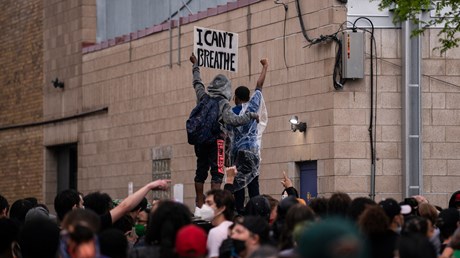
For many of us, anger, sadness, frustration, and fatigue are not episodic responses but chronic conditions. In recent days we’ve all seen, heard, and read of the lynching of Ahmaud Arbery, the shooting of Breonna Taylor, the use of the police by a white woman to threaten Christian Cooper, Minneapolis police officers executing George Floyd, and of the fact that COVID-19 disproportionately harms black and brown people. I have been a pastor in Minneapolis and my heart is heavy as people have taken to the streets to demonstrate against injustice. The videos have helped some white people to see a bit of what many black and brown people know: White America has long had its knee on our necks. I am sure that some who just read that sentence are saying, “Not all of white America.” But that’s the problem. It’s hard for people of color to feel that White America is with us and not against us. White America has not demonstrated the collective resolve to repent, rebuke, and reorient itself against racial injustice. That includes Christians. White Christians can opt out of outrage over racial injustice. The status quo works for them.

Consider, for example, the tenacious support many evangelicals give to President Trump, who told police on Long Island, New York in 2017 to “not be too nice” with suspects. He appeared to encourage heavy-handedness, if not outright brutality. His then press secretary, Sarah Huckabee Sanders, had to walk back the president’s comments, saying he was joking. Police brutality is not a laughing matter. White Christians are watching the screens, maybe shaking their heads, but largely immobile. Rather than justice overflowing (Amos 5:24), it trickles down, at best. ...

Continue reading...


from Christianity Today Magazine https://ift.tt/2ZQR0DY

Vulnerable Gulf Migrants Offered ‘God’s Karuna’ in Bible Society Outreach

In prayer, aid, and employment, Christian ministries struggle to adapt to the new coronavirus norms.

There is no social distancing in a labor camp.

Living in cramped conditions, sometimes 10 to a room, migrant workers in the Gulf are widely considered among the international communities most vulnerable to the new coronavirus.

Seeking a share of the region’s petrodollars as remittances for their poor families and communities back home, migrant laborers far outnumber the Middle Eastern region’s citizen population—as high as 80 percent in the United Arab Emirates (UAE).

And hailing primarily from Asian nations such as the Philippines, Indonesia, and India, they make up the great majority of the region’s more than 200,000 confirmed COVID-19 cases.

Yet from one of their languages emerges a homonym that may birth hope for the languishing workers.

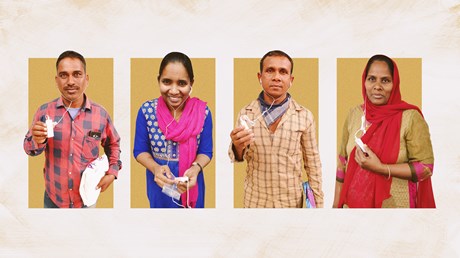
“It is not corona, but karuna, which means mercy in Telugu,” said Prasad, a migrant worker from India, to the Bible Society in the Gulf (BSG).

“God is giving us the opportunity to turn to Him.”

There are 20 million Indian migrants worldwide, and 1.5 million are Telugu speakers working in the Gulf states. Many have lost their jobs or had their salaries reduced due to the economic shutdown.

The Bible society seized on Prasad’s observation to publish a new booklet in Telugu and English, appropriately titled God’s Karuna.

Its content reflects the upside-down nature of the COVID-19 world—and of God’s kingdom. There are frequent references to “humbled nations,” “greedy people,” and “exploitation of the poor.”

Though reputable Gulf agencies exist to recruit and employ migrant labor, the BSG has been a frequent critic of the “slave-like conditions” suffered by many.

“Even the strong ...

Continue reading...


from Christianity Today Magazine https://ift.tt/3dgS6wy

Understanding, Engaging, and Deploying the Generations Present in Your Church, Part 2: Five B's of the Baby Boomers

The Boomers came in the early stages of a technological and innovation revolution, which also influenced the church.

Several things happened in the year 2000. We made it to January 1 without the fears of the Y2K bug being realized. The Millennial generation was filling up college campuses. And Tom Brokaw published a book called The Greatest Generation. He described the Builder generation who fought World War II, survived the Great Depression, and sacrificed greatly to build America. You could say the Builders made America great back then.

They also gave us the biggest generation in U.S. history following World War II, until the Millennials came along later. The Baby Boomers were named for their population boom: from 1946-1964, some 77 million Boomers were born, making up 40 percent of the U.S. population at one point.

This is the second of six articles on generations. For this one, I want to give credit to one of those Builders who influenced countless people. Elmer Towns was an early hero to me, and a friend of decades. Elmer has written over 140 books, which basically means he has no unpublished thought!

Elmer Towns and the Five B's of the Boomers

I remember attending the first of what we might consider a church growth seminar taught by Towns called “How to Reach the Baby Boomer.” I was a very young GenXer learning how to reach the then-young Boomers!

I believe it's still the best-selling church growth seminar of all time. Towns described things that shaped the Boomer generation in terms of the five B's. I want to walk you through these to think about Boomers.

First, Towns spoke of bucks. The Boom refers to its size, but this generation also experienced an incredible increase in wealth in one generation. Some Baby Boomers had parents who grew up without electricity or with dirt floors in their homes.

But Boomers’ ...

Continue reading...


from Christianity Today Magazine https://ift.tt/2ZOZIm0

When Pastors and Pews Disagree on Churches Reopening

Pastoral submission amid a pandemic: Who should Christians heed when following Romans 13 and Hebrews 13 seems to conflict?

As churches around the country begin to cautiously reopen, many parishioners may feel caught between their government’s advice and their pastor’s. As parishioners decide whether to return to reopened churches or are frustrated with a lack of movement to reopen, how should they respond? What do we do when we disagree? CT asked a variety of Christian leaders to weigh in.

Aaron Reyes, lead pastor, Hope Community Church, and dean, Vida House

Hebrews 13:17 says “have confidence in your leaders and submit to their authority.” But submission, or “yielding” (as it implies in the Greek), doesn’t mean blind obedience. Regardless of what choice pastors make about reopening churches, we must all still act according to our conscience. Respecting our leaders doesn’t mean we can’t freely choose whether or not to worship in an actual building on Sunday morning. Rather, it means choosing, for example, to stay home until we feel it’s safer to be in public, while not openly criticizing your leader’s decision. We shouldn’t reach out to fellow church members, explaining why the leadership is wrong and trying to stir up distrust. Instead, kindly express your stance to the leadership. Lovingly inform them of your decision and continue to love the church whether you’re near or far.

Daniel Patterson, executive vice president, Ethics and Religious Liberty Commission

Regardless of whether you think your church is overly eager or overly cautious, it could be that the best place to start is simply with a resolve to assume the best of one’s pastors and church leaders. There are no courses on pandemics and contagions in seminary, nor are there easy answers or one-size-fits-all ...

Continue reading...


from Christianity Today Magazine https://ift.tt/2zybTcv

Have Pentecostals Outgrown Their Name?

More than a quarter of the global church falls under new and debated label: “Spirit-empowered Christianity.”

Are you Pentecostal?”

Todd Johnson, co-director of the Center for the Study of Global Christianity at Gordon-Conwell Theological Seminary, couldn’t quite place the Chinese Christians he met at a conference in South Africa. Theologically, they seemed Pentecostal, so he asked.

They responded: “Absolutely not.”

“Do you speak in tongues?” Johnson said.

“Of course.”

“Do you believe in the baptism of the Holy Spirit?”

“Of course.”

“Do you practice gifts of the Spirit, like healing and prophecy?”

“Of course.”

Johnson said that in the United States, those were some of the distinctive marks of Pentecostals. But maybe it was different in China. Why not use the term?

“Oh, there’s an American preacher on the radio who is beamed into China,” the Chinese Christians explained. “He’s a Pentecostal, and we’re not like him.”

Names can be tricky. What do you call a Pentecostal who isn’t called a Pentecostal? The question sounds like a riddle, but it’s a real challenge for scholars. They have struggled for years to settle on the best term for the broad and diverse movement of Christians who emphasize the individual believer’s relationship to the Holy Spirit and talk about being Spirit-filled, Spirit-baptized, or Spirit-empowered.

Globally, the movement includes 644 million people, about 26 percent of all Christians, according to a new report from the Center for the Study of Global Christianity. The study was done in collaboration with Oral Roberts University, named for one of the most famous Pentecostal evangelists in the 20th century, to be shared at the Empowered21 conference, featuring 70 speakers ...

Continue reading...


from Christianity Today Magazine https://ift.tt/3cf1ks7

Thursday, 28 May 2020

George Floyd Left a Gospel Legacy in Houston

As a person of peace, “Big Floyd” opened up ministry opportunities in the Third Ward housing projects.

The rest of the country knows George Floyd from several minutes of cell phone footage captured during his final hours. But in Houston’s Third Ward, they know Floyd for how he lived for decades—a mentor to a generation of young men and a “person of peace” ushering ministries into the area.

Before moving to Minneapolis for a job opportunity through a Christian work program, the 46-year-old spent almost his entire life in the historically black Third Ward, where he was called “Big Floyd” and regarded as an “OG,” a de-facto community leader and elder statesmen, his ministry partners say.

Floyd spoke of breaking the cycle of violence he saw among young people and used his influence to bring outside ministries to the area to do discipleship and outreach, particularly in the Cuney Homes housing project, locally known as “the Bricks.”

“George Floyd was a person of peace sent from the Lord that helped the gospel go forward in a place that I never lived in,” said Patrick PT Ngwolo, pastor of Resurrection Houston, which held services at Cuney.

“The platform for us to reach that neighborhood and the hundreds of people we reached through that time and up to now was built on the backs of people like Floyd,” he told Christianity Today.

Ngwolo and fellow leaders met Floyd in 2010. He was a towering 6-foot-6 guest who showed up at a benefit concert they put on for the Third Ward. From the start, Big Floyd made his priorities clear.

“He said, ‘I love what you’re doing. The neighborhood need it, the community need it, and if y ’all about God ’s business, then that’s my business,’” said Corey Paul Davis, a Christian ...

Continue reading...


from Christianity Today Magazine https://ift.tt/2M7cGDL

What Do Pastors Need Today? Assessing Our Status in Order to Move Ahead

Pastor, you’re not doing well as you want to be… and that’s ok.

This past week we hosted our Amplify Conference and my notepad is filled with ideas not only for evangelism but also how to think through conferences and gatherings during this unique season.

One thing that particularly emerged across multiple breakouts and plenary sessions was a thankfulness among those who joined at the opportunity to be refreshed. This refreshment came in many forms: for some it was the space to be vulnerable in their questions, while for others it was the recognition that they were not alone in feelings of exhaustion or loneliness.

We knew going into Amplify that this season had been particularly difficult for pastors and ministry leaders. In a study we conducted with Exponential on the impact of COVID-19 on the church, we found 3 out of 5 have reported a significant increase in workload with over a third adding that the pace has either remained or continues to grow.

Moreover, only 22 percent reported no increase at all. This is not surprising when we consider the many hats pastors wear not only in their organization but in their community. Consider the organizational, ministry, financial, and pastoral dimensions of leading a church in this season.

Like many other organizational leaders, pastors have had to move their staff online. Many leaders have found that the challenge of learning how to hold remote meetings, manage projects while disconnected, and install operating and communication policies that are healthy and productive is far more difficult than they believed.

Just as challenging has been the transition of church ministries and the Sunday services to online. More than just creating engaging services, this transition for churches comes with many complications in learning how to reinvent small groups, ...

Continue reading...


from Christianity Today Magazine https://ift.tt/3c8KWsV