Friday, 28 August 2020

Netflix’s ‘Indian Matchmaking’ Offers Wisdom for Christians

Introducing singles can help build the local church.

Netflix’s popular reality show Indian Matchmaking follows the work of Sima Taparia, Mumbai’s top matchmaker, as she finds eligible prospects for wealthy and selective clients. But beyond the sheer entertainment value of awkward first dates and sumptuous homes, there might be another reason lying beneath the nationwide fascination with the show: a curiosity about having our own Sima Aunty, as clients call their esteemed matchmaker, in the complex world of dating. Nearly half of US adults say dating has become increasingly difficult in the past 10 years, according to a new study from the Pew Research Center. Perhaps there’s a fresh case to be made for Christian matchmaking.

It is worth clarifying the definition of matchmaking in this context. The process is voluntary: The matchmaker asks detailed questions of her clients and then seeks to introduce them to others who might be a good fit in values, expectations, and temperament. Unlike dating apps, the matchmaker’s picks are curated from the US and India and are often beholden to their parents’ opinions. It’s up to the matches and their families to meet, talk, and take things further.

Watching the show, I wondered what it would look like for the local church to take an active role in thoughtfully introducing people who are looking for partnership to each other. Singles do not have to be left alone in the dating process—the local church can walk alongside our single brothers and sisters for the good of our interconnected community. Doubtless, many of us already are involved in the lives of our single friends. But for those of us who are not, we can move forward by seeing who is looking, making thoughtful introductions, and considering ...

Continue reading...


from Christianity Today Magazine https://ift.tt/3jkCyL1

Only the Right Questions Have Answers

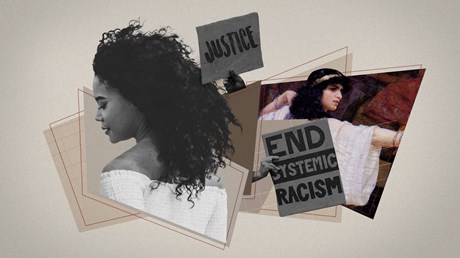
Without restitution for harm done, there will never be liberty and justice for all.

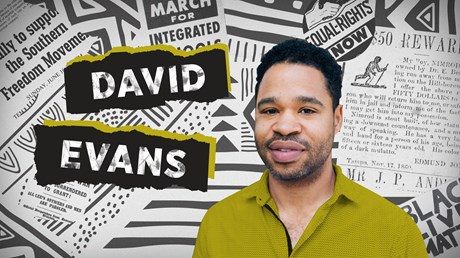
Black power advocate Kwame Ture (formerly known as Stokely Carmichael) once said, “There are answers to the right questions.” In that spirit, consider the question seven-year-old Marissa of Montpelier, Vermont, one of America’s whitest states, asked weeks into a worldwide protest to end excessive force against black people: “I thought the police were supposed to keep us safe. I thought we were supposed to call them when we needed help. Now I'm wondering, who do we call when the police are being unsafe?”

What should we do when powerful institutions misuse their power? The question strikes not only at the heart of American law enforcement, but at the heart of American institutions nationwide—from police stations to schoolhouses to houses of worship. Who do we call when institutions entrusted to care for the most vulnerable cater instead to the racially powerful while ignoring demands for justice from the racially marginalized?

Unfortunately for Marissa from Montpelier, the answer from a former Philadelphia police chief proved inadequate:

Well, first, you let a grown up know what's going on so they can take action, because we don't need police officers doing things like some that you’ve seen on some of the videos that have been shown recently … police officers are there to help … don’t hesitate to let a grown up know so people like me, that used to be a police chief, can take action and do what we need to do to make sure that we only have police officers that are there to serve and protect people, not to harm people.

The chief’s tone confirmed a serious misconception when it comes to addressing racism. Too many Americans ...

Continue reading...


from Christianity Today Magazine https://ift.tt/3gDSYw2

Interview: Your Unbelieving Friends Need More Stories Than Syllogisms

Why serving up a diet of hard, rationalistic Christianity might be counterproductive.

People tell a multitude of stories about themselves: who they are, what they believe in, what they imagine life is all about. As theologian Joshua D. Chatraw sees it, the core task of Christian apologetics today is helping nonbelievers recognize themselves in the story God tells in Scripture. Chatraw, executive director of the Center for Public Christianity and theologian-in-residence at Holy Trinity Anglican Church in Raleigh, North Carolina, is the author of Telling a Better Story: How to Talk About God in a Skeptical Age. Kristi Mair, a research fellow at Oak Hill College in London and the author of More Truth: Searching for Certainty in an Uncertain World, spoke with Chatraw about the role of imagination in gospel persuasion.

Why do you focus on the role of story in apologetics?

Reason and logic are important. However, all our reason and logic happen within a certain framework—in the book, I call it the “grand story,” the true story that Christianity tells. Story is our lingua franca. Everyone has a story. People think in stories. Rather than relying on syllogistic reasoning, we can let story serve as the common ground.

Apologetics can quickly become a monologue rather than a dialogue. When we ask people about their stories, we get some appreciation of their values, their aspirations, and their sense of what makes for a good life. And we can see where their ideals might conflict—or overlap—with the Christian story.

So rather than starting the conversation on our turf, we start it on theirs. Theologically, I know their deepest longings will never be satisfied as long as they are looking in all the wrong places. They were made to worship God, but because of sin, they are worshiping alternatives ...

Continue reading...


from Christianity Today Magazine https://ift.tt/2Ez8AEi

2020 Brought Trials for This Patient and Doctor. But Faith and Love Still Grew.

New research defines spiritual fortitude: a quality that can help us face this year's trauma.

When Julia Wattacheril, a transplant hepatologist, was redeployed to the ICU triage at her hospital in New York City this spring, she faced “pure disaster management at peak.” In the first 26 minutes of her first shift, she “had three rapid responses (acutely unstable patients before a cardiac arrest), two arrests, and one death.”

“The hardships are many,” Wattacheril says. Some of the difficulties health care providers face include “acute exacerbations of what we experience daily: chaotic work environments, being underresourced, dealing with medical consequences of social injustice,” and others.

But the most painful hardships, says Wattacheril, came from lack of human connection, as medical professionals walked down “eerily silent hallways” where it was “hard to tell who was whom, given required personal protective equipment (PPE),” she said. “We had no time to think, no time to learn, no time to prepare, no time to discuss.”

As a Christian bearing witness to ongoing suffering in the hospital, Wattacheril finds that her faith is her “bedrock.” “Through anchoring Scriptures, a rich prayer life, a community of friends struggling together, and lots of meaningful music, I have a means toward understanding suffering as a path towards greater compassion and empathy.”

Wattacheril’s story reflects a common question: In a world turned upside down by COVID-19, how does our faith sustain us, even when suffering continues?

The New Testament talks repeatedly about the idea of enduring in the face of suffering (Gal. 6:9, Rom.5:3-4, 2 Cor. 4:16-18). Endurance could also be called “spiritual fortitude,” a subject that ...

Continue reading...


from Christianity Today Magazine https://ift.tt/3gAoY4j

Thursday, 27 August 2020

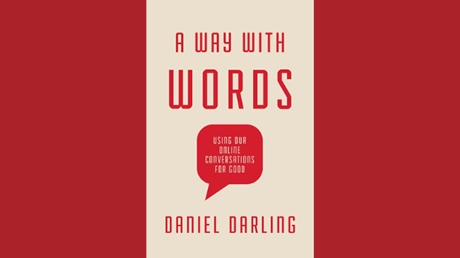
One-on-One with Daniel Darling on 'A Way With Words'

How do Christians glorify God with our words, in person and online?

Ed: Why did you write this book? What inspired you to write this book?

Daniel: I wrote this book for a few reasons. First, as someone who has been working with words my whole life, it just seemed natural to write about the shape of our words. Second, it strikes me that we pay too little attention to the way we use words in public, especially online.

The Bible talks a lot about the words we use. And it strikes me that Christians often (correctly) prioritize getting the truth right, but pay little attention to the way we communicate. It is as if being right is the only thing that matters. Scripture is pretty clear that the people of God should be distinguished by the way we speak. This is especially important for the way we speak online, where it is so easy to let our opinions or our anger get ahead of our faith.

I also think that the internet is here to stay as a regular fixture in our lives. We won’t go back to a world where there is no Twitter and no Instagram and no Facebook. We just won’t. So the question is: How do we live in this world? How do we steward our time online? How do we represent Christ online?

Ed: For whom did you write this book?

Daniel: I wrote this book for ordinary Christians who are genuinely wondering about how to think about our online engagement. I wrote it for pastors and church leaders who are trying to lead well with their online engagement. And I wrote it for those seeking, who wonder if there is a distinctly different way to engage online.

Ed: What are Christians’ biggest challenges in navigating the digital world with grace?

Daniel: I think the biggest challenge Christians face online is the temptation to forget we are Christians when we are online. We have this sense that if we ...

Continue reading...


from Christianity Today Magazine https://ift.tt/2EvaFks

The Old Testament’s Word to Police: You Answer to God’s Higher Court

How biblical law can illuminate today’s debates on law enforcement.

Years ago, my family lived in a small house outside of Glasgow, Scotland. I was completing postgraduate work, so most of my time was spent with my family or my books. But as occasion would allow, I also enjoyed hiking with friends in the nearby hills.

On one such outing, two neighbors took me to the Campsie Fells. One of my guides was a university professor; the other was a retired police officer. During our excursion, the retired officer reminisced on his years with the Scottish police force. One question that he posed has stuck with me.

“Why do American police all carry guns?” he asked. After my attempted answer, he offered his own perspective: “We would never consider arming ourselves when I was a police officer. To do so would undermine our role and would jeopardize the relationship we wanted to build with the public.”

I am not suggesting that American police should or should not carry sidearms. But in a moment when cries to reform (or abolish or “defund”) the police have reached a historic volume, this outsider’s perspective reminds us that the American policing paradigm is not the only possible model. Nor is our current system sacrosanct.

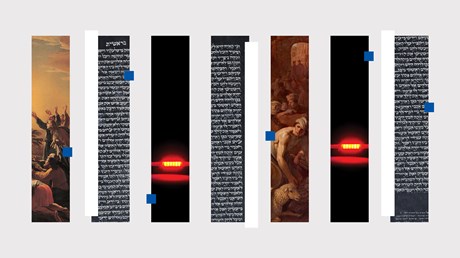
Christians should not hastily dismiss calls for change—even calls to “defund” and redesign policing from scratch. Our faith teaches that the kingdoms of this world are broken. We should not be surprised, therefore, if American policing needs transformation. But if Christians intend to contribute to this debate, they should first revisit the Bible’s lessons on policing—beginning in the Old Testament Law. (Read Esau McCaulley’s companion essay about New Testament perspectives on policing, also in CT’s September ...

Continue reading...


from Christianity Today Magazine https://ift.tt/3aC9UBN

Wednesday, 26 August 2020

What a Leading Racial Reconciliation Advocate Learned from Her Critics

Brenda Salter McNeil says she put too much faith in an approach that downplayed justice in order to seem nonthreatening.

Brenda Salter McNeil remembers the moment when everything changed. An active leader in reconciliation circles, especially within the church, she recalls feelings of uncertainty about her involvement in the Ferguson protest movement nearly six years ago. Certain that a younger generation of activists would take the lead, she traveled to Missouri not as an active participant but as someone who was there to “learn, listen, advise and consult.”

But when the young activists asked whether she and other church leaders were actually going to join in protests later that day, Salter McNeil found she could only utter a single word in response: “Yes.”

Even if her response felt reluctant at best, the celebrated theologian, author, and pastor later felt she “was compelled to take a stand against the persistent forces that continued to deny the humanity of black and brown bodies, as evidenced by the ongoing slaughter of our sons and daughters by the police.” Little did “Dr. Brenda,” as students and parishioners know her, realize how this particular moment would upend the specific type of reconciliation work she had been engaged in for nearly three decades.

In her anticipated new release, Becoming Brave: Finding the Courage to Pursue Racial Justice Now, Salter McNeil invites readers not only to learn from her as a teacher and a guide but to gird up the courage to join her in the fight against racism and systemic injustice. In a book that is both necessary and prophetic—composed of equal parts history, biblical commentary, and personal narrative—Salter McNeil offers a distinctly pastoral approach. Her book is an exhortation to storm the gates, an admonition beyond heart and into the ...

Continue reading...


from Christianity Today Magazine https://ift.tt/2YAD67z