Thursday, 26 November 2020

SCOTUS Gets It Right on Religious Liberty: Church IS Essential, a Guest Article from John Inazu

But the right outcome here doesn’t mean all restrictions are invalid or that churches should reopen."

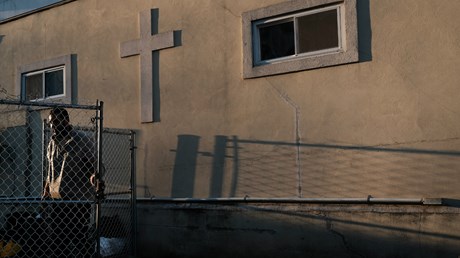
Last night, the Supreme Court issued injunctive relief to houses of worship challenging New York City’s COVID-19 restrictions on in-person gatherings, the first time it has granted such relief during the pandemic. I have mixed views about the decision and early reactions to it.

First, I don’t think this decision is as momentous as commentators are suggesting. It is fairly fact-specific injunctive relief, and the nature and scope of pandemic orders vary greatly around the country. It’s hard to generalize much from this decision, and I’m concerned that public messaging about it will fuel a broader culture wars narrative from religious leaders like John MacArthur who insist “there is no pandemic” and continue to hold services for 7,000 unmasked people. An injunction against a 25-person cap is not a green light to return to regular worship. Given the current state of the pandemic, it’s not even a yellow light.

The dire rates of transmission we’re seeing all around the country, the Thanksgiving holiday travel, and our growing awareness that indoor, in-person gatherings are a major cause of transmission all increase the likelihood that even more restrictions may be coming. That’s another reason it’s best to view this order as limited and fact-specific.

That said, I think the Court’s decision is correct and offers some important observations. One of the most important is that these shutdown orders cause irreparable harm because they restrict First Amendment freedoms—and that virtual worship is not a constitutionally sufficient alternative. In other words, worship is absolutely an “essential activity” and to say otherwise is constitutionally incorrect ...

Continue reading...


from Christianity Today Magazine https://ift.tt/2V6VRgQ

Supreme Court Blocks New York’s Worship Service Restrictions

It’s the first time during the pandemic the high court has sided with churches and synagogues challenging the new rules on religious liberty grounds.

As coronavirus cases surge again nationwide the Supreme Court late Wednesday barred New York from enforcing certain limits on attendance at churches and synagogues in areas designated as hard hit by the virus.

The justices split 5-4 with new Justice Amy Coney Barrett in the majority. It was the conservative’s first publicly discernible vote as a justice. The court’s three liberal justices and Chief Justice John Roberts dissented.

The move was a shift for the court. Earlier this year, when Barrett’s liberal predecessor, Justice Ruth Bader Ginsburg, was still on the court, the justices divided 5-4 to leave in place pandemic-related capacity restrictions affecting churches in California and Nevada.

The court’s action Wednesday could push New York to reevaluate its restrictions on houses of worship in areas designated virus hot spots, though both groups who sued are no longer in zones subject to the strictest attendance restrictions.

The justices acted on an emergency basis, temporarily barring New York from enforcing the restrictions against the groups while their lawsuits continue. In an unsigned opinion the court said the restrictions “single out houses of worship for especially harsh treatment.”

“Members of this Court are not public health experts, and we should respect the judgment of those with special expertise and responsibility in this area. But even in a pandemic, the Constitution cannot be put away and forgotten. The restrictions at issue here, by effectively barring many from attending religious services, strike at the very heart of the First Amendment’s guarantee of religious liberty,” the opinion said.

Though the decision addresses the restrictions in New York in ...

Continue reading...


from Christianity Today Magazine https://ift.tt/39hvlJP

Wednesday, 25 November 2020

Coronavirus Kills Orthodox Leader Appreciated by Protestants and Catholics

Patriarch Irinej of the Serbian Orthodox Church died after attending funeral of Montenegro counterpart who also had COVID-19.

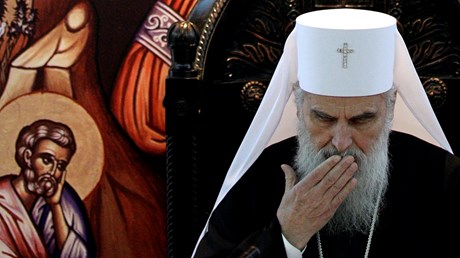
Church bells tolled and mourners flocked to light candles as the Serbian government proclaimed three days of national mourning for Patriarch Irinej. The 90-year-old leader of the Serbian Orthodox Church, who passed away November 20, became the world’s highest-ranking cleric to die from COVID-19.

Evangelical leaders in Serbia described him as “kind” and sincere in his dialogue with them.

The Orthodox lost a towering figure, who nurtured the church through the Soviet era.

“I knew the patriarch as a simple man, modest in his needs, and of strong moral character,” said Zoran Filipovic, an Orthodox priest who served on his staff.

“His greatest concern was the welfare of the church.”

It may have contributed to his death.

The patriarch was hospitalized with the coronavirus early in November, soon after attending the funeral of the head of the Serbian Orthodox Church in Montenegro, Bishop Amfilohije [profiled by CT], who also died from complications caused by COVID-19.

Thousands of mourners, most of them without masks, gathered at the November 1 funeral for Amfilohije in the Montenegrin capital, Podgorica, in violation of pandemic-fighting measures proclaimed by the small Adriatic state’s authorities. The burial turned out to be a superspreader event, with several high-ranking church officials and other attendees later testing positive.

After Amfilohije’s death and Irinej’s hospitalization, Serbian priests have started to appeal for their parishioners to take the deadly virus seriously. They had previously downplayed the threat from the global pandemic and largely ignored bans on large gatherings and preventive measures during prayers and other church services.

Irinej was buried ...

Continue reading...


from Christianity Today Magazine https://ift.tt/377x2qH

How a Pastor Got Fired Over Cranberries

Worry about present hardships and trouble distorts our faith in God’s future.

Much has been made among Christians in 2020 about systemic sin—the collective fault of institutions, societies, and their norms and laws to engender injustice and cause harm. Most evident in heated debates over race, politics, policing, education, and the economy, systemic sin implies a capacity for wrong on the part of structures that individuals could not accomplish on their own.

But racism still requires racists; unjust institutions and arrogant corporations require people who are corrupt and arrogant. Systemic sin implicates individual sinners whether we realize it or not. In a previous era, inhabited by those Pilgrims whose gratitude we emulate every Thanksgiving, sin was understood as chronic, spiritual corruption solved by salvation alone. Once saved, redemption pressed the saved sinner into obedience, a good tree bearing good fruit (Matt. 12:33).

Jesus taught his disciples how a wise man built his house on a rock before the rains fell and the flood came, the rock being obedience to Christ in every aspect of life (Matt. 7:24–25). As the Pilgrims courageously crossed the Atlantic for the sake of religious liberty, their courage derived from their conviction that not even a sparrow “will fall to the ground outside your Father’s care” (Matt. 10:29). Shaped by what they long held in their hearts, they viewed their journey’s ultimate end as a heavenly country, a city God had prepared for them (Rev. 21:2). When stalked by exposure and starvation in the New World, they recalled the words of Jesus: If “God clothes the grass of the field, which is here today, and tomorrow is thrown into the fire, how much more will he clothe you—you of little faith!” (Luke 12:28).

They would ...

Continue reading...


from Christianity Today Magazine https://ift.tt/39ahN2O

Despite COVID-19, Evangelicals Mobilize for Mission in Europe

In challenging circumstances, European evangelicals share a message of hope.

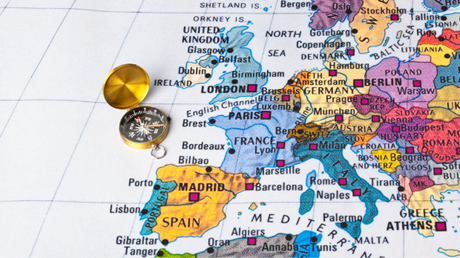
As the coronavirus pandemic continues its relentless march across the world, Europe battles a frightening second wave. New lockdowns, overwhelmed hospitals, and social unrest are increasingly the norm across the continent.

But as a dark winter looms, European evangelicals can look back with gratitude and look ahead with expectation, thanks to a renewed rediscovery of fervent prayer, fresh creativity, and resilient hope in this trying year.

Fervent prayer

When churches were prevented from meeting in the spring, small communities scrambled to minister to people online while larger congregations grieved the loss of members who had weak links to the faith and attended church sporadically before the pandemic. “Not since the Second World War has something so profoundly affected the lives of all Europeans simultaneously,” explained Jim Memory, leader of the process team for Lausanne Europe 20/21.

The pandemic’s effects were also felt by continent-wide gatherings of evangelical leaders, such as Lausanne Europe 20/21 and the annual European Leadership Forum. “Not being able to come together was like not being with your family at Christmas,” explained Greg Pritchard, director of the European Leadership Forum.

But as the discouraging news mounted, intercession initiatives sprung up across the continent. Local churches launched virtual prayer rooms, Evangelical Alliances hosted National Days of Prayer, and student movements such as IFES hosted prayer meetings for people across the continent. “The pandemic brought the European church to our knees,” reports Sarah Breuel, director of Revive Europe. “We have never seen so many calls to prayer and fasting like this before.”

Fresh creativity

Continue reading...


from Christianity Today Magazine https://ift.tt/3l61LJA

God Pops Up: India

Following the miraculous healing of his mother, Anil seeks out the man he is convinced saved his mother.

Anil’s life took a sudden turn after his mother was miraculously healed following a woman’s simple prayer to Jesus. In this episode of God Pops Up, follow Anil’s journey to learn more about the man, he is convinced, saved his mother.

After watching this episode of God Pops Up, read more about Apilang Apum’s call to Christ in a remote corner of India.

Through God Pops Up, Christianity Today brings stories to you from some of the world’s most dangerous locations. We tell of people risking their lives in hard places to share the Good News. While we have confirmed these stories’ accuracy, unlike most of our journalism, we cannot cite sources, show photos, or name names. God Pops Up tells true stories through animation to encourage the global church while protecting these heroes.

Continue reading...


from Christianity Today Magazine https://ift.tt/39a8xM6

God Pops Up: Southeast Asia

When the government blocked his Christian radio station, Chanda had to find another way to spread the good news of Jesus. His answer came on a microchip.

This strategic work in Southeast Asia faces continued pressure from the government and yet it continues to spread. Drawing on new technologies, the leaders have equipped hundreds of “hubs” across their region. In some places, they have brought the Gospel to tribes who have never heard. They’ve even translated the Bible, for the first time, into the language of some of these people. Their video ministry is even reaching untold numbers of deaf people, helping them learn sign language, and the language of God’s love. For security reasons, we don’t divulge the identity of these brothers and sisters.

After watching this episode of God Pops Up, read the story of missionaries in the mountains of Papua, who face life and death in “The Land of the Clouds.”

Through God Pops Up, Christianity Today brings stories to you from some of the world’s most dangerous locations. We tell of people risking their lives in hard places to share the Good News. While we have confirmed these stories’ accuracy, unlike most of our journalism, we cannot cite sources, show photos, or name names. God Pops Up tells true stories through animation to encourage the global church while protecting these heroes.

Continue reading...


from Christianity Today Magazine https://ift.tt/3m5hp9f