Thursday, 28 January 2021

For Churchgoing Families, More Kids Aren't a Burden

Researchers find big families don't deter child outcomes, but our theology defines flourishing differently.
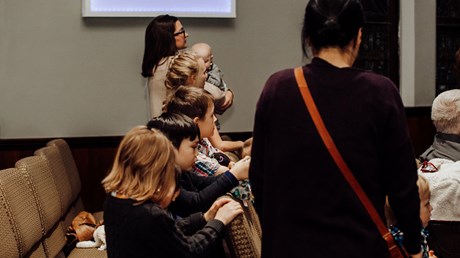
The more children you have, the less you can give each one, and the worse they do. Right? Parents in pandemic isolation without the usual supports from schools, churches, and extended family will certainly resonate with the idea that their time, energy, and attention are split into ever-smaller slices with each child.

It’s also the tradeoff anthropologists and economists have assumed when studying modern fertility patterns. But when John Shaver came across projections during his graduate studies that Hispanic Catholics and Muslims were on track to surpass white Christian subgroups and Jews, respectively, by the midcentury, he was perplexed.

“It struck me as a puzzle,” said Shaver, who now teaches anthropology and religion at the University of Otago in New Zealand. “These groups may be growing rapidly, but if there’s not something there to mitigate the negative effects of large family size, these could be populations where the children in these groups are not functioning as well.”

But when Shaver investigated himself, he found that when families had support from religious communities, like churches, this negative scenario didn’t always play out.

Shaver and his colleagues recently published a paper exploring the effects of religious support on fertility and child development. They used ten years of data from the Avon Longitudinal Study of Parents and Children, which recruited over 14,000 pregnant women in England in the early 1990s to track ever since—on measures such as children’s lead exposure to number of illnesses to developmental ups and downs. From this data they tested how church attendance and social support affected family size and child development.

Unsurprisingly, ...

Continue reading...


from Christianity Today Magazine https://ift.tt/2M5nsOF

How to Fix the Asian American Female Pastor Dilemma

New “PastoraLab” equips women in ministry who feel torn between their culture’s churches and their calling to lead.

When Janette Ok was growing up in Michigan, her family’s Korean church hired a woman to lead its English-speaking ministries. Seeing pastor Mary Paik administer the sacraments and send her congregation off with a benediction each week offered Ok “tangible evidence that despite what people said, women could and should preach and pastor.”

“It was this image that I really clung to during the drought of exposure to Asian American female preachers that I experienced for years afterwards,” said Ok, now a pastor and New Testament professor at Fuller Theological Seminary. “I did not see another one for years after we moved to California.”

Whether in California—home to the largest Asian American population in the country—or elsewhere in the US, few churchgoers see Asian American women behind the pulpit; less than 5 percent of American churches are led by women of color, according to the 2018 National Congregations Study. And even fewer see Asian American women pastors in predominantly Asian congregations.

Ok is one of the organizers of a new program aiming to change that. She wants to see more women like her lead in Asian American church contexts, especially if they didn’t have a role model like she did growing up.

The PastoraLab for Asian American Women Ministers, a partnership between Innovative Space for Asian American Christianity (ISAAC) and Fuller’s Center for Asian American Theology and Ministry, officially launches in March thanks to a $1 million grant from the Lilly Endowment.

The two-year cohort, designed to support Asian American women who have been called to the pulpit in Asian American spaces, was conceptualized by ISAAC cofounder and executive director Young ...

Continue reading...


from Christianity Today Magazine https://ift.tt/3oqe9WA

Interview: Our Attraction to Idols Remains the Same, Even When the Names Change

How false worship today resembles false worship in the Old Testament.

As modern evangelicals, it is tempting to treat idolatry as a relic from the ancient past. Who, after all, bows down before golden calves or worships images of Nebuchadnezzar anymore? In “Here Are Your Gods”: Faithful Discipleship in Idolatrous Times, Bible scholar and Langham Partnership international director Christopher J. H. Wright stresses that idolatry is alive and well, even if it often operates outside our conscious awareness. Freelance writer and editor of The Worldview Bulletin Christopher Reese spoke with Wright about idolatry in the Old Testament and resisting its lure today.

How did the authors of Scripture understand pagan gods and idols? Did they believe other deities existed?

In one sense, the answer is clearly no. Compared with Yahweh, the only true and living God, all other so-called gods are actually “not-gods.” That is the clear teaching of Isaiah 40–55 and some psalms. And yet, for all who worshiped them (whether pagans or Israelites themselves), those other “gods” clearly affected the whole world of personal, social, economic, and political life. So yes, they exist—but not as God, only as human constructs to which people attribute power and authority.

You trace all human idolatry back to the events of Genesis 3. Can you elaborate on that connection?

Genesis 3 portrays a moment when human beings choose to distrust God’s goodness, disbelieve his warnings, and disobey his instructions, instead defining for themselves what counts as good and evil. Having dethroned God, they end up submitting to entities, either material or spiritual, within the created order—or else they assert their own moral autonomy.

And it all ends in tears, as Paul makes clear ...

Continue reading...


from Christianity Today Magazine https://ift.tt/3opUN3S

Wednesday, 27 January 2021

The Possibilities for Pastors with PhDs

Why a pastor or local church staff member might consider earning a Ph.D.

"What good is a PhD in the pastorate?" is a question I received multiple times while working on my PhD in Theology.

The question came from well-intentioned church members and also fellow staff members. To be fair, this is a legitimate question, at least as far as I see it, and one I was happy to answer. From many of my colleagues' experiences, they also received this question, though not directly about the ministry, as they worked their respective PhDs. Being curious about a PhD's practicality is certainly understandable; the degree requires tremendous study and rigorous examinations in fields that are not often covered by most higher education institutions.

Most churches, particularly within the free church traditions in North America, are content for their pastor to hold a Master's of Divinity. For some churches, the Doctor of Ministry provides a practical doctorate which is more applicable for their context. When it comes to the PhD, there is a little more consternation. PhDs are considered a research-focused degree with little application in real-world contexts. It is thought that PhDs provide little practical outcomes in real life and too often those with them have their heads in the clouds and little concern for real life outside an ivory tower.

However, if we consider the PhD for its possibilities, we might see it as a degree with wide application for the local church setting. To do so, we can begin by seeing the pastoral application of a PhD beyond the traditional Old Testament, New Testament, Theology, and a few other specified tracks of study. This isn't to say that PhDs in these fields aren't useful for local churches; they most certainly can be wonderful pastors. Yet, if we expand our ...

Continue reading...


from Christianity Today Magazine https://ift.tt/2MahTyi

Life’s Darkest Moments Call for Prayers We’d Never Choose to Pray

When words fail, says Tish Harrison Warren, we can rely on ancient liturgy to supply them.

The first year of our marriage, I found a full pill case pushed behind some bottles of shampoo under the bathroom sink. They belonged to my husband’s first wife, Danielle, from years earlier, before her fight with cancer ended in death. My husband, Evan, apologized—not because he had done anything wrong but because he could not prevent these reminders of grief from occasionally falling out of closets and drawers. This is where they had lived together. Where she baked, laughed, and lost her hair.

Since then we have moved into a house of our own, one with high ceilings, a creaky old staircase, and lots of “character.” From time to time, I post pictures of our home and our joy—usually when Evan is wearing his tan, thrift-store blazer and I have taken the time to put on lipstick. Each time, someone inevitably comments, “You two look so happy,” or “I hope to have a love like that someday.” And we are so happy. This love is a gift, one of the kindest God has ever given me.

But what Instagram and Twitter don’t show is something that author and Anglican priest Tish Harrison Warren expresses in her new book Prayer in the Night: For Those Who Work or Watch or Weep: that “our bright and shining lives, our explosions of joy, good work, and love, are always silhouetted by the shadow of death.”

As she began writing, Warren couldn’t have known how much we would need her book in these pandemic times. Now, almost a year in, a nurse friend of mine tells me about performing last rites for COVID patients who would otherwise die alone. I give “air hugs” to the widows at church instead of holding them close. Christians tear one another apart on social media ...

Continue reading...


from Christianity Today Magazine https://ift.tt/3r0YWN5

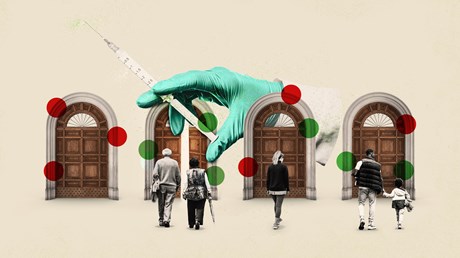
Where Two or More Are Vaccinated: Advice for Churches in 2021

Five science-based suggestions to gather and worship safely as COVID-19 vaccines rollout.

After 10 months of limited in-person gatherings or online programming, church congregants—like the rest of society—feel pandemic fatigue. We are hopeful that the availability of COVID-19 vaccines will allow our society and churches to return to normal. But a return to normalcy will take time.

Unfortunately, many of our Christian brothers and sisters living in low- and middle-income countries, where I have worked for more than 25 years to stop the spread of infectious diseases, will not receive vaccines until 2022 or later. In countries like the US where the rollout of COVID-19 vaccines began last December, experts predict it will be fall before vaccination coverage reaches 70–90 percent and herd immunity can hopefully be achieved. Only then can society begin to resume more normal activities. The next several months will be a transition period when vaccinated and unvaccinated individuals mingle in our communities, but it is not yet safe to return to normal life.

During this transition period in the US, how should church leaders decide on in-person gatherings for their churches? Because vaccination will proceed at different rates in different communities and vaccination of church congregants will vary even among churches within the same community, there is no single approach to regathering.

In consulting with four churches in my home city of Seattle to plan for this transition, I've seen leaders struggle with the complex issues before them. James Broughton, the senior pastor of a predominantly African American congregation said, “This is such a complicated situation—with so many moving parts. We really need godly wisdom, which includes scientific knowledge, to know what to do.” All those ...

Continue reading...


from Christianity Today Magazine https://ift.tt/3iV7iTY

Pew: How COVID-19 Changed Faith in 14 Countries

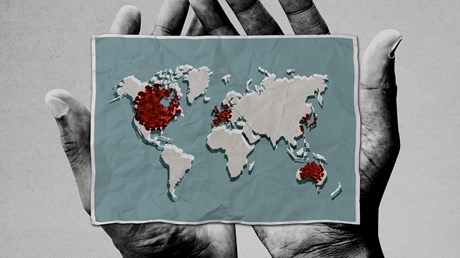
According to survey of 14,000 people, the pandemic has strengthened religious belief most in US, Spain, and Italy, while South Korea leads in lost faith.

“Consider it pure joy, my brothers and sisters, whenever you face trials of many kinds, because you know that the testing of your faith produces perseverance.”

James, the brother of Jesus, didn’t have a global pandemic in mind when he wrote these words in the opening chapter of his biblical epistle to “the 12 tribes scattered among the nations.” But as the coronavirus closed churches worldwide, a global survey of more than 14,000 people has found that few lost faith while many of the most faithful gained.

Today, the Pew Research Center released a study on how COVID-19 affected levels of religious faith this past summer in 14 countries with advanced economies: Australia, Belgium, Canada, Denmark, France, Germany, Italy, Japan, the Netherlands, Spain, South Korea, Sweden, the United Kingdom, and the United States.

“In 11 of 14 countries surveyed, the share who say their religious faith has strengthened is higher than the share who say it has weakened,” noted Pew researchers. “But generally, people in developed countries don’t see much change in their own religious faith as a result of the pandemic.”

Overall, a median of 4 out of 5 of each country’s citizens said their faith was more or less unchanged.

But leading the pack in strengthened faith: the United States.

And leading the pack in weakened faith: South Korea.

Americans were three times more likely to report their religious faith had become stronger due to the pandemic: 28 percent, vs. a global median of 10 percent. Next came Spaniards (16%) and Italians (15%), whose nations were two of the worst hit during the coronavirus’s deadly outbreak in the spring. About 1 in 10 Canadians, French, ...

Continue reading...


from Christianity Today Magazine https://ift.tt/3qX5Oex