Tuesday, 30 March 2021

German Pastor Hopeful in Fight to Remain in Turkey

Wave of Christian expat expulsions leaves many churches without leaders.

A German pastor fighting expulsion from Turkey is hopeful that he may be the exception to a wave of foreign Christian leaders expelled from the country as “threats to national security.”

Though Turkey’s National Intelligence Organization (MIT) has applied the label to pastor Michael Feulner, he told Morning Star News that a hearing last week gave him hope that a court will strike the “security threat” designation and allow him to stay.

Feulner said the three judges in the March 22 hearing in Ankara were much more open to reviewing evidence his attorney presented than judges were at a February hearing in Istanbul.

“I felt I was heard by the judges,” he said. “They asked the police department in Ankara if there was anything against me, and there was nothing. For this reason, I am hopeful they will hear our claim.”

One of the judges seemed to have a genuine interest in the merits of the case, he said. In the February hearing, judges gave the pastor’s attorney only 10 minutes to present his case. Then the court decided to withhold ruling on the deportation order until the Ankara court decided if the security designation was justified.

Advocacy group Middle East Concern (MEC) reported that Feulner’s attorney was able to present evidence that Turkey has long been aware of his ministry without objection, and that the security threat designation is a violation of religious freedom.

The judges then demanded that MIT produce “reasonable grounds” for the designation, according to MEC. Feulner is asking the court to strike down MIT’s claim that, without publicly issuing evidence, his existence in Turkey is a threat to the country’s national security.

Continue reading...


from Christianity Today Magazine https://ift.tt/2PdeuAs

Is Religious Liberty Really a Dance With the Devil?

Tertullian, Roger Williams, and John MacArthur debate the perils of freedom.

Until recently I would’ve been surprised to see that question raised at CT. We might disagree about what religious liberty entails or how it should be acquired or used, but the value of free religious exercise has long been assumed across political lines in American evangelicalism and the United States as a whole.

But a series of recent comments from pastor and theologian John MacArthur reject that value in vehement terms. It’s an about-face for MacArthur personally, but the more pressing question to me is whether his new perspective will spread. The view he outlines includes some truth, but it recklessly jettisons longstanding and important Christian convictions.

Last summer, when lawsuits proliferated over California’s unusually strict pandemic limits on in-person worship, MacArthur and his Grace Community Church (GCC) in Los Angeles were all about religious liberty. An August statement from Jenna Ellis, an attorney defending GCC, decried LA County’s “[clear defiance of] the Constitution’s mandate to protect religious liberty.” MacArthur himself cited the First Amendment in an interview on Fox News. And a July statement from GCC elders, though explicitly declining to make the constitutional argument, still embraced religious liberty and argued any church closure order is an “illegitimate intrusion of state authority.”

Half a year later, MacArthur was adamantly opposing religious freedom from the pulpit. His first sermon to include this theme came on January 17:

I don’t even support religious freedom. Religious freedom is what sends people to hell. To say I support religious freedom is to say, “I support idolatry.” It’s to say, “I support lies; ...

Continue reading...


from Christianity Today Magazine https://ift.tt/3wfSGF0

Sudan Confirms Religious Freedom with Nuba Mountains Rebels

First agreed between SPLM-N rebel group and civilian prime minister, peace deal provision to separate religion and state gets cemented with military signature.

Sudan has taken another step toward religious freedom.

This time, it is a confirmation.

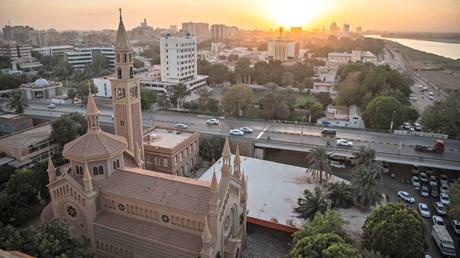
On Sunday, the joint military-civilian Sovereign Council signed a peace agreement with the rebel Sudan People’s Liberation Movement-North (SPLM-N), based in the Nuba Mountains, where there is a significant Christian population.

“Freedom of belief and religious practices and worship shall be guaranteed to all Sudanese people,” stated the Declaration of Principles, “by separating the identities of culture, religion, ethnicity, and religion from the state.”

Prior to the revolution which overthrew 30-year dictator Omar al-Bashir in April 2019, Sudan was governed by sharia law. It also imposed an Arab identity on its multiethnic population, contributing to longstanding conflict in Darfur.

The region’s Sudan Liberation Army (SLA), led by Abdel Wahed el-Nur, is now the last remaining rebel holdout.

Three other armed groups signed a peace deal last September. In February, these were integrated into an expanded Sovereign Council and afforded places in the still to be formed parliament.

Abdelaziz al-Hilu, leader of the SPLM-N, refused to join without a religious freedom guarantee. But he did commit himself to peace, and won a promise from the civilian prime minister, Abdullah Hamdok, that Sudan’s constitution would separate religion and state.

The three rebel factions, however, signed their agreements with General Abdel Fattah al-Burhan, head of the Sovereign Council.

“This is an excellent step forward for comprehensive peace in the country,” said Ezekiel Kondo, Anglican archbishop of Sudan. “And of religious freedom, having the general [Burhan] sign is confirmation.”

Kondo previously told ...

Continue reading...


from Christianity Today Magazine https://ift.tt/39rle4z

Monday, 29 March 2021

Gallup: Fewer Than Half of Americans Belong to a Church

Coupled with the rise of religious nones, even people of faith are less likely to join a house of worship.

Ask Americans if they believe in God and most will say yes. But a growing number have lost faith in organized religion.

For the first time since the late 1930s, fewer than half of Americans say they belong to a church, synagogue, or mosque, according to a new report from Gallup.

Forty-seven percent of Americans now say they belong to a house of worship, down from 70 percent in the mid-1990s and 50 percent in 2019. The decline is part of a continued drop in membership over the past 20 years, according to Gallup data.

The polling giant has been measuring church membership since 1937 when nearly three-quarters of the population (73%) reported membership in a house of worship.

For much of that time, membership remained at about 70 percent but began to decline after 1999. By the late 2000s, membership had dropped to about 62 percent and has continued to fall.

Pollsters at Gallup looked at survey data from more than 6,000 Americans and compared data from 2018 to 2020 with two other time frames: 2008 to 2020 and 1998 to 2000.

The decline in membership coincides with the rise of the so-called “nones”—those who claim no religious affiliation. Gallup reports about one in five Americans (21%) is a none—making them as large a group as evangelicals or Catholics. Other polls put the number at closer to 30 percent.

Few nones belong to a house of worship, Gallup found.

“As would be expected, Americans without a religious preference are highly unlikely to belong to a church, synagogue or mosque, although a small proportion—4 percent in the 2018–2020 (survey)—say they do,” the report from Gallup states. “That figure is down from 10 percent between 1998 and 2000.”

Gallup also found ...

Continue reading...


from Christianity Today Magazine https://ift.tt/3ua6hMb

To Further Muslim Faith in Religious Freedom, Can Women Succeed Where Men Have Not?

Films, courses, and dialogue groups invite—rather than confront—Islamic societies toward greater openness. But will accompanying “intersectionality” undercut support?

Sitting around a dinner table in a fancy restaurant, Talia is uncomfortably nervous. Her two colleagues in pristine attire anticipate a delicious meal—and then exult in the immaculate but meager portions provided them.

Earlier in the evening, the disappointed Talia had noticed a confused villager with a picnic basket ushered out of the establishment. Later, she peeks outside. Beckoned to join a family gathering, Talia discovers all the delight of nature on offer.

A new world had opened, wide and wild.

The fictional scene is a compelling metaphor for religious freedom.

“The idea was to move people from an awareness of scarcity to a desire for abundance,” said Shirin Taber, director of Empower Women Media (EWM), of the nine-minute Portions, produced by fellow Iranian American Naji Hendrix and Nancy Sawyer Schraeder.

“Short films can shift hearts, and after only a few minutes, rigid opinions begin to thaw.”

The key lies in storytelling, which Taber believes is a better method than the declarations and sanctions that have traditionally been tried to advance religious freedom in the Muslim world.

Rigid opinions thrive in confrontation.

“Many people are singing to the choir, but few come up with strategies that can actually move the needle,” she said. “And notably, they don’t include women.”

Her own story proves the difference.

Taber’s commitment to religious freedom was developed early. Her Muslim father, raised in pre-revolutionary Iran, permitted both mother and daughter to follow the Christian faith.

“Sharing our personal story is the best way to hook an audience,” said Taber. “After my father passed away, I realized the best gift he ever gave me was ...

Continue reading...


from Christianity Today Magazine https://ift.tt/31whzxK

From the Empty Tomb to Today’s Abuse: Believe Women

I was an RZIM apologist. Trusting female sources is key to Christian witness.

The central facts of the Christian faith were all primarily witnessed by women.

Jesus was “conceived by the Holy Spirit, born of the Virgin Mary,” as the Apostles’ Creed says, and the Incarnation was witnessed first and foremost by Mary, his mother. Jesus “suffered under Pontius Pilate, was crucified, died, and was buried.” The Atonement was witnessed in all four Gospels primarily by Jesus’ female followers. Then, “on the third day he rose again.” The resurrection of Christ was also witnessed in all four Gospels by women.

If we don’t believe women, then we have to dismiss the eyewitnesses to the Incarnation, Atonement, and Resurrection. If we won’t listen, we don’t have access to the evidence for the central truths of the Christian faith.

“Believe women” has become the contested slogan of the Me Too movement. I know what happens if we don’t. In the past few months I have been living in the eye of a storm of trauma, dismay, and profound grief as new allegations of abuse have battered the apologetics organization I previously served with, Ravi Zacharias International Ministries. Revelations of Ravi Zacharias’ abuse of multiple women are horrendous, and the catastrophic fallout of his wretched duplicity has impacted so many.

But back in 2017, when Lori Anne Thompson came forward with her testimony about sexual abuse at Ravi’s hands, she was not believed. I could rehearse in detail what happened internally, in the global organization, including how some women in the organization did raise serious questions about Ravi’s explanations and were misled, pressured, and persuaded to accept the official narrative. I have apologized unreservedly ...

Continue reading...


from Christianity Today Magazine https://ift.tt/3m0z56V

Four Reasons for a Pandemic Funeral

Don't distance from mourning. You need the power of worship to usher your loved ones to glory.

When my husband, Rob, asked me to marry him, I seriously entertained the idea of elopement. Young, penniless, and impatient, I reasoned, “Who needs a big church service to express our commitment to each other?” A short legal ceremony and a picture on the courthouse steps would allow us to eschew the pomp and circumstance (and cost) of a wedding and jump right into the thing we wanted most—a life spent together.

As our engagement progressed, Rob convinced me that we should opt for a traditional Christian ceremony. “Later, you’ll wish you did it,” he told me. So we rented a church, invited our friends and family, and hired the organist. When it was all over, I had to agree that Rob was right. We needed to start our life together with worship as the context for our marriage.

Waiting to marry, waiting to bury

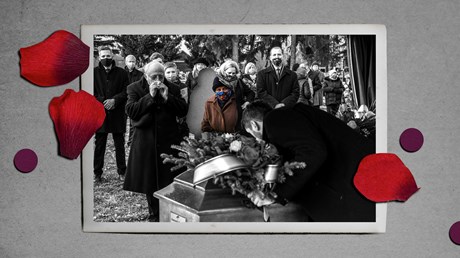
For the past year, state restrictions have prohibited large gatherings in most states across the US, a burden felt particularly by those who hoped to wed. But starry-eyed lovers aren’t the only ones who’ve had to give up ceremonies; grieving people have too. Restrictions on large gatherings have required families to re-envision their early days of bereavement as church services switched online and funerals were delayed. For many, the waiting further complicates their grief.

With all of the challenges of grief in a pandemic, many bereaved families have chosen to delay or omit funeral worship. Behavioral health and hospice organizations have worked hard to help people find alternative, meaningful ways to say goodbye, but for Christians, none can replace funeral worship amid the gathered congregation. Death-defying worship defines the Christian life. As it should mark the beginning ...

Continue reading...


from Christianity Today Magazine https://ift.tt/3w8hJtg