Tuesday, 27 April 2021

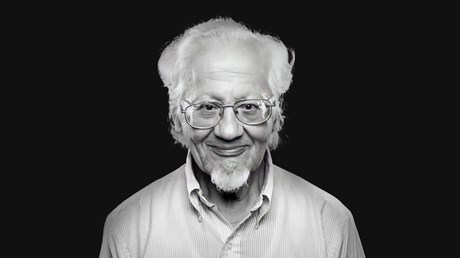
Leaders and Friends Remember C. René Padilla

Theologians and pastors from Latin America and around the world mourn the theologian who helped integrate social action and evangelism.
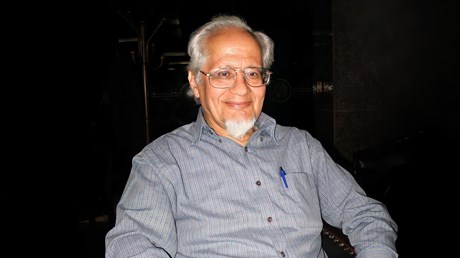
CT asked Christian leaders who knew René Padilla, who died today at age 88, about his legacy among the Latin American evangelical community, how he changed the Western evangelical world, and how he personally impacted their lives.

Valdir Steuernagel, Brazilian pastor and theologian:

Padilla was a church person. The church was not something he spoke about but that he belonged to. His life and his theology can’t be understood outside an ecclesiological frame. As a continuous traveler and minister at large, Padilla knew the church—especially in Latin America—quite well. Many evangelical leaders in the continent went into the avenue of prosperity theology, quantitative church growth, and a populist right-wing political approach. Padilla was a critic of a model that was more concerned with numerical growth than with the ethical consequences of the gospel, and a church that was more concerned with having an impact in society instead of transforming that society toward a more just, horizontal, and transparent one. Padilla always committed himself to a church that wanted to be a sign of the kingdom of God.

The North American missionary enterprise had come to Latin America with a strong critical tone toward a more “liberal theology” and a so-called “social gospel.” Padilla could not accept a gospel that was not able to provide an answer to the deep problems of poverty and injustice in this continent. Padilla was, somehow, an “evangelical outsider” be it in Latin America or in North America. An outsider building bridges with other “outsiders” without denying himself to sit at the table—as can be seen at his deep, critical involvement in the Lausanne movement. ...

Continue reading...


from Christianity Today Magazine https://ift.tt/3tXmN2o

Died: C. René Padilla, Father of Integral Mission

He pushed evangelicals to see social action and evangelism as “two wings of a plane.”

C. René Padilla, theologian, pastor, publisher, and longtime staff member with the International Fellowship of Evangelical Students, died Tuesday, April 27, at the age of 88.

Padilla was best known as the father of integral mission, a theological framework that has been adopted by over 500 Christian missions and relief organizations, including Compassion International and World Vision. Integral mission pushed evangelicals around the world to widen their Christian mission, arguing that social action and evangelism were essential and indivisible components—in Padilla’s words, “two wings of a plane.”

Padilla’s influence surfaced most prominently at the Lausanne Congress of 1974, where he gave a rousing plenary speech. Nearly 2,500 Protestant evangelical leaders from over 150 countries and 135 denominations gathered in Lausanne, Switzerland, at a meeting funded primarily by the Billy Graham Evangelistic Association (BGEA). One influential magazine called Lausanne “a formidable forum, possibly the widest-ranging meeting of Christians ever held.” When Padilla ascended the stage, he carried the hopes and dreams of many evangelicals from the Global South who sought equal footing in the decision-making of worldwide churches and mission organizations. Padilla specifically called American evangelicals to repent for exporting the “American way of life” to mission fields around the world, devoid of social responsibility and care for the poor, making the case for misión integral.

A term drawn from his homemade whole-wheat bread (pan integral), it referred to a synthesized spiritual and structural approach to Christian mission, originally translated as “a comprehensive ...

Continue reading...


from Christianity Today Magazine https://ift.tt/3gJHxqE

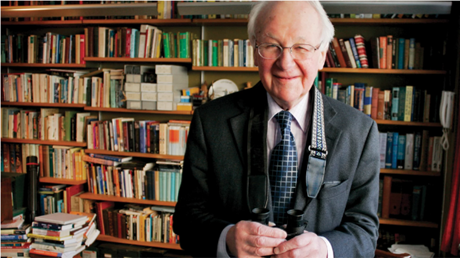
John Stott Is Still a Hero Every Christian Should Know About

On what would have been John Stott’s 100th birthday, we celebrate his life and legacy.

April 27th sees the hundredth anniversary of the birth of the great Christian leader John Stott, a man who helped and encouraged so many people across the world, including me.

John Stott was born in 1921 in London. He was naturally gifted, possessing a brilliant mind, an amazing memory and an extraordinary self-discipline. John was brought to a living faith in Christ at public school through the preaching of Eric Nash, and applied himself to his new faith with great commitment. At Cambridge, where he studied modern languages, John became deeply involved with the Christian Union.

He trained as an Anglican minister before becoming a curate at All Souls Langham Place, London, the church he had attended as a child. Throughout his ministry John remained based at All Souls; he spent thirty years there as curate and rector and then for over thirty years was based there as a writer, preacher and leader. John’s passion for evangelism transformed All Souls and it became a focus for evangelical ministry in London and beyond. One notable emphasis of John’s preaching from the start was the way that he didn’t simply preach the historic gospel but also the need for Christians to apply it in their daily lives.

John had many talents and his ministry and influence soon spread beyond central London. Always having a strong interest in student evangelism John preached at university missions across the world for a quarter of a century. He wrote extensively, producing Bible commentaries, practical guides to Christian living and also important texts on how Christians should relate to the world. He wrote over fifty books and many articles, all distinguished by his scholarship, precise language, a solid biblical basis and a contemporary ...

Continue reading...


from Christianity Today Magazine https://ift.tt/3tZ0sl0

Log Off and Know that I Am God

With all our faith talk online, we're in danger of losing sight of the Lord himself.

If an alien life form visited Earth to learn about the American church and only read so-called Christian Twitter, I’m not sure they would have any idea that we believe in something called the Incarnation, or the Resurrection, or the Ascension. They would, however, know a lot about evangelical voting tendencies, the women’s ordination debate, abortion politics, and whatever controversy is currently trending.

Our habitual online discourse often trains us to undervalue the vast mystery of God—with all the wonder and worship it inspires—by immersing ourselves in sociological and theological commentary and debate. These conversations matter, of course. But we are in peril of replacing transcendence with immanence. We miss the deeper things of God for the Christian controversy du jour.

There’s a term for this temptation that I’ve only heard among priests: “altar burn.” It refers to a particular hazard of our trade. Pastors regularly handle sacred things—chalices and consecrated bread, but also the Scriptures and the tender moments of people’s lives.

There is an inherent danger in this frequent exposure. We come to treat sacred things profanely. We regard holy things too cavalierly. Amid the noise of a mundane workweek, we forget the complete miracle we are proclaiming.

Resisting altar burn used to be the special struggle of people who regularly preach, teach, and lead congregations. But now, anyone with a keyboard can speak, teach, or argue about God every day, sunup to sundown.

With this newfound ability, we’re all at risk of collective altar burn. The transcendent and utterly overwhelming triune God becomes flattened to a sociological or theological abstraction. Many ...

Continue reading...


from Christianity Today Magazine https://ift.tt/3np5jtj

Monday, 26 April 2021

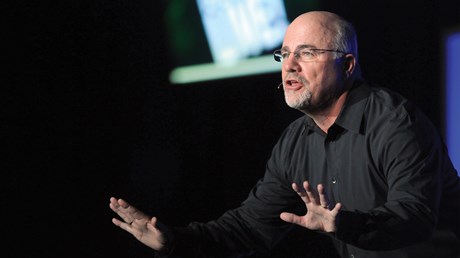
Dave Ramsey’s Bestseller Slips from Top 10 List

Sales of “The Total Money Makeover” suffer after reports of abusive workplace.

Dave Ramsey’s perennial bestseller, The Total Money Makeover, has dropped off evangelical publishers’ top 10 list for the first time since the book’s fourth edition was published in 2013.

Sales have fallen steadily since January, when Religion News Service (RNS) reported allegations of controlling leadership and a “cultlike” environment at Ramsey Solutions, which have resulted in a string of lawsuits against the company.

The book dropped from third to fourth on the Evangelical Christian Publishers Association (ECPA) bestsellers list in February, then to seventh in March, and then out of the top 10 at the end of April. It is currently ranked No. 11.

Ramsey Solutions, a for-profit company that offers financial advice through books, radio programs, and church workshops across the country, had been labeled one of the best places to work in America. But some of its roughly 1,000 employees didn’t want to return to the Nashville office during the COVID-19 pandemic, and a whistleblower told the federal government about health and safety violations at the Nashville-area workplace.

“I will fire you instantaneously for your lack of loyalty, your lack of class, and the fact that you are a moron and you snuck through our hiring process,” Ramsey told his staff, according to a recording obtained by RNS. “I’m so tired of being falsely accused of being a jerk when all I’m doing is trying to help people stay in line.”

Ramsey pushed back against the dissent, and his company contests the facts of the RNS reporting.

The Total Money Makeover was the No. 3 book on the ECPA list in January. The book was the fourth highest bestseller in 2020, the fourth in 2019, and in the top 10 every ...

Continue reading...


from Christianity Today Magazine https://ift.tt/3viuxMw

John Stott Would Want Us to Stop, Study, and Struggle

As his study assistant, I saw how the steadfast suffering of careful thinking resulted in balanced biblical Christianity.

It was a bitterly cold January afternoon and rain was pinging sideways off the windows when John Stott emerged from his study. It was teatime and a large pot was brewing on the small counter of the kitchenette of The Hermitage, Uncle John’s cozy living quarters in one of the old farm buildings at the Hookses, his rural retreat in Wales.

“Oh JY,” John said to me, wearily, rubbing his temples, “I have a terrible case of PIM.” His acronym stood for pain in the mind. It was his way of describing what it felt like to wrestle over a difficult writing project or a seemingly intractable problem, and it was a phrase I knew well after 18 months working as John’s study assistant.

Between the years 1977 and 2007, 14 young men—mostly Americans—served Uncle John (as we called him) in this capacity. Our work was as wide-ranging as John’s own life, which was delightfully multifaceted.

During my years as his study assistant, I completed research for several books, ran errands, served as bodyguard, driver, and traveling companion, in addition to cooking, cleaning, and waiting on tables. Working hand in hand with Frances Whitehead, his incomparable secretary, John referred to us as “the happy triumvirate.”

Frances was in London on that cold January afternoon when John and I were at Hookses. John had spent the day working through revisions for a new edition of his well-known book, Issues Facing Christians Today. Apart from a short break for lunch and his regular afternoon nap, he had been at his desk since 5:30 that morning. After a 15-minute tea break, he would return to his desk until 7 p.m. No wonder he was weary.

Over tea, we discussed the progress he had made that day and the ...

Continue reading...


from Christianity Today Magazine https://ift.tt/2S6cQl6

Saturday, 24 April 2021

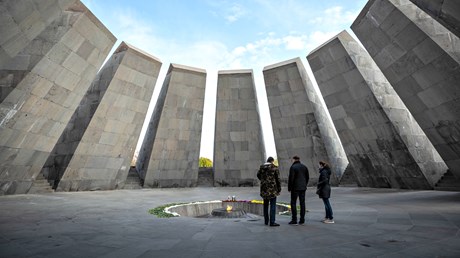
Biden’s Armenian Genocide Statement Pleases Christians, Angers Turkey

He is the first US president to use the word to describe the 1915 massacre of Armenian Christians by Ottoman Turks.

The systematic killing and deportation of hundreds of thousands of Armenians by Ottoman Empire forces in the early 20th century was “genocide,” the United States formally declared on Saturday, as President Joe Biden used that precise word after the White House had avoided it for decades for fear of alienating ally Turkey.

Turkey reacted with furor, with the foreign minister saying his country “will not be given lessons on our history from anyone.” A grateful Armenia said it appreciated Biden’s “principled position” as a step toward “the restoration of truth and historical justice.”

Biden was following through on a campaign promise he made a year ago Saturday — the annual commemoration of Armenian Genocide Remembrance Day — to recognize that the events that began in 1915 were a deliberate effort to wipe out Armenians.

While previous presidents have offered somber reflections of the dark moment in history, they have studiously avoided using the term genocide out of concern that it would complicate relations with Turkey, a NATO ally and important power in the Middle East.

But Biden campaigned on a promise to make human rights a central guidepost of his foreign policy. He argued last year that failing to call the atrocities against the Armenian people a genocide would pave the way for future mass atrocities. An estimated 2 million Armenians were deported and 1.5 million were killed in the events known as Metz Yeghern.

“The American people honor all those Armenians who perished in the genocide that began 106 years ago today,” Biden said in a statement. “We affirm the history. We do this not to cast blame but to ensure that what happened is never repeated.” ...

Continue reading...


from Christianity Today Magazine https://ift.tt/3vgLoiJ