Friday, 28 May 2021

The Neglected Tools of Evangelism, Part 2

Useful tools for the ongoing task of witness into the world; prayer, listening, and thanksgiving.

In the first part of this three-part series, we considered prayer as being a neglected tool for evangelism. In this second part, we will explore another practice all too often neglected in our witness to the world: listening.

Neglected Tool Two: Listening

Have you ever been in conversation with someone where you couldn’t get a word in edgeways?

In You’re Not Listening Kate Murphy recounts a story about Richard ‘Dick’ Bass, known for going on ambitious expeditions and talking about them at length with any in earshot. On one particular flight, he chatted for the duration to a gentleman next to him about his exploits climbing Everest and his plan to do so again. As the flight was landing Bass realized he hadn ’t made time for his new travel companion to introduce himself. “That ’s okay,” the man said, “I’m Neil Armstrong. Nice to meet you.”

Dick Bass missed out on a great conversation, however, when we fail to listen to those we speak with we are likely to miss more than an interesting anecdote or two— we risk missing the person themselves.

It can be deeply frustrating to feel spoken at rather than with; to be the recipient of a monologue versus the partner in a dialogue. For most of us, to not be heard is worse than being misunderstood, it is tantamount to not being seen or valued.

Unfortunately, evangelism can too often be expressed as a one-way communique. There will always be a place for public evangelism from the platform, stage, or pulpit; but when it comes to personal evangelism (the daily opportunity for most Christians), a one-way communique is a poor practice on a number of levels, especially as it positions those we speak to as evangelistic targets ...

Continue reading...


from Christianity Today Magazine https://ift.tt/3uwqueT

Thursday, 27 May 2021

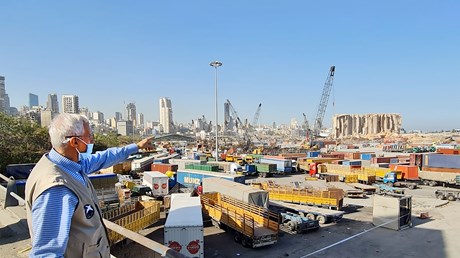
Delivered Twice from Death in Lebanon, Retiree Keeps Serving After Explosion

From an orphanage to Beirut’s fanciest hotel to World Vision’s top ranks, Jean Bouchebel has seen how God does not forsake his church.

When Jean Bouchebel retired at age 70, he was not ready to simply relax.

Instead, he still works full time, and wakes at 2 a.m. for prayer and meditation.

From an orphanage in Lebanon to leadership at World Vision, God’s faithfulness saved Bouchebel multiple times from death during the worst days of civil war. Through his service, thousands of refugees have received the food, clothes, and shelter they needed to stay alive.

But his morning discipline is not monastic piety. The daily hour-long prayer at his home in Texas precedes meetings with pastors and partner organizations 10 time zones ahead in Lebanon.

With his son Patrick, in 2012 Bouchebel founded Witness as Ministry after working 27 years with World Vision International, first in Lebanon and then at its headquarters in California. During the height of the war in Syria, when more than 2 million refugees flooded across the border into Lebanon, he could not contemplate the leisure of retirement.

Refugees were living in tents in the snow.

Children lacked adequate footwear.

People were hungry.

Drawing on skills he had learned at World Vision, Bouchebel shipped 40-foot containers to Lebanon, filled with medical equipment, clothing, hygiene kits, and food. Over 1,000 meals a day were provided to needy refugees.

And amid an economic collapse exacerbated by last summer’s explosion in Beirut’s harbor, relief work has extended to the Lebanese. Church partners have served Muslim and Christian without discrimination, giving out nearly 3,000 food parcels to families, providing medical services for 3,600 people, and repairing 168 neighboring homes.

Born in 1942 in the mountain town of Bikfaiya, Bouchebel shared a home with his five siblings, grandparents, aunts, and uncles. ...

Continue reading...


from Christianity Today Magazine https://ift.tt/3fOBj6L

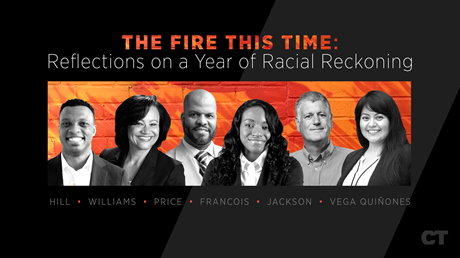
The Fire This Time: Reflections on a Year of Racial Reckoning

A webinar on how it has changed us, and where the church should go from here.

On May 25, 2020, the brutal murder of George Floyd by officer Derek Chauvin shocked a global community and served as one of the primary catalysts, along with the killings of Breonna Taylor and Ahmaud Arbery, behind the racial reckoning that has dominated our society over the past year.

A day after the one-year anniversary of George Floyd's death, six Christian scholars, ministers, and activists gathered to ponder, lament, and assess the meaning of a transformative year of revolution and introspection. How has it changed us, and where does the church go from here?

Our goal for this wide-ranging one-hour webinar was to highlight the diverse voices of Christian leaders who were intimately engaged in the church's pursuit of racial justice and reconciliation. We're pleased to share this recording of the event.

Our Panelists

THEON HILL (moderator) is associate professor of communication at Wheaton College where he researches and teaches on the intersections of race, politics, and popular culture. Currently, he is in the final stages of completing his first scholarly book, an extended study of the future of Black political rhetoric in the 21st century. He was recently named a Civil Society Fellow with the Aspen Institute. In this two-year fellowship, Theon will study community-based strategies for promoting civic dialogue in an age of division. Theon is also a cohost of From the Underside, a new podcast coming soon from Christianity Today.

REV. CECILIA J. WILLIAMS is president and CEO of the Christian Community Development Association (CCDA). She is passionate about connecting the ministry of local churches and neighboring community organizations with the physical, social, structural, and spiritual needs of the communities ...

Continue reading...


from Christianity Today Magazine https://ift.tt/3eTPKqX

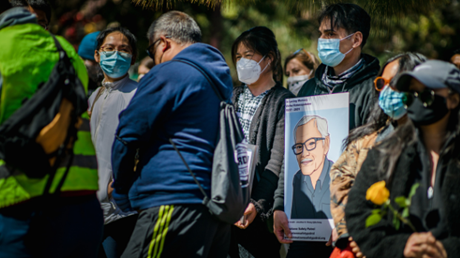
How the Rise of Anti-Asian Hate, Covid and Cancel Culture All Meet at the Foot of the Cross

Covid is a microcosm revealing our worst impulses and how we are governed by them.

In the summer of 1994, the coolest kid in school wrote seven words in my yearbook that in many ways capture the essence of the Asian American experience, then and today.

In dark blue ink and perfect cursive he wrote: “You are the coolest slanty I know.”

His words actually made me laugh out loud at first but saddened me an instant later because of their inherent tragedy. The real somatic element of the Asian American experience is not the ongoing incendiary slights, or even the projection of the model minority myth, but rather how we are systemically limited by our ethnicity.

I know my friend’s intention wasn’t to ostracize me or denigrate me, but when your ethnicity is continually used to diminish your accomplishments, it has a way of really getting into your head. Did my friend really think I was cool or was he just humoring me? As Asian Americans, we thus develop this chronic neurosis about even the most inconsequential versions of ourselves presented by others and the broader culture.

If America criminalizes black lives, it euphemizes Asian lives. If the black myth is that black lives are dangerous, angry, and desperate, then the Asian myth is that Asians are all harmless, subservient, and goody-two-shoes to the last. Perhaps this explains in part why bystanders are attacking Asian lives in broad daylight unprovoked while law enforcement at times uses excessive force with black lives.

This homogenization of Asian Americans by the dominant culture categorizes Asian lives as a prosaic uniformity, stripping us of our ingenuity and individuality as if we are all somehow made at the same remote factory in an unmarked location in Asia.

As the Harvard poet and abolitionist Henry David Thoreau once warned, there ...

Continue reading...


from Christianity Today Magazine https://ift.tt/3fmDr6x

China Sanctions Evangelical Leader Who Called Out Religious Freedom Violations

Johnnie Moore, an outgoing USCIRF commissioner, spoke up to ask governments to stop ignoring Chinese treatment of Uighur Muslims, Christians, and Tibetan Buddhists.

Johnnie Moore called China’s recent decision to bar him from entering the country a “publicity stunt” and a sign that Americans’ continued advocacy on behalf of religious minorities is having an effect.

After concluding his second term serving on the US Commission on International Religious Freedom (USCIRF) earlier this month, the evangelical leader was sanctioned by the Chinese government Wednesday for his outspoken criticism toward what he deemed “the world’s foremost violator of human rights and religious freedom.”

USCIRF’s annual report, released in April, condemned China’s religious freedom violations and designated the country’s abuse of the Uighur Muslim population as genocide. Moore—head of the PR firm Kairos Group and a faith adviser to former president Donald Trump—has addressed those issues and stood by pro-democracy advocates in Hong Kong, including Catholic businessman Jimmy Lai. Lai was sentenced to prison last month for his role in the 2019 protests.

In a Beijing press conference, Chinese foreign ministry spokesman Zhao Lijian claimed Moore’s advocacy and the recent USCIRF report adopts the “guise” of religious freedom concerns to interfere with Chinese affairs, but really “ignores facts” and is “based on lies,” the state-backed Global Times reported.

The decision to block Moore and his family from entering China, Hong Kong, or Macau was a countermeasure to recent State Department sanctions against a former Chinese official involved in detaining members of the Falun Gong movement, a minority faith which China designates as a cult.

In this year’s USCIRF report, the commission recommended the US ...

Continue reading...


from Christianity Today Magazine https://ift.tt/3fO67Ex

Wednesday, 26 May 2021

Died: Eilat Mazar, Archaeologist Who Believed the Bible

In 50 years of excavation, she connected modern Israel to Hebrew kings and prophets.

Eilat Mazar, a nonreligious archaeologist who embraced the unfashionable idea of digging with a shovel in one hand and a Bible in the other, died Tuesday at 64.

In her five decades excavating the Holy Land, Mazar discovered the remains of a palace believed to belong to King David, a gate identified with King Solomon, a wall thought to have been built by Nehemiah, two clay seals that name the captors of the prophet Jeremiah, seals that name King Hezekiah, and a seal that may have belonged to the prophet Isaiah.

Once called the “queen of Jerusalem archaeology,” Mazar took the Bible seriously as a historical text and quarreled with scholars who thought it was unscientific to pay too much attention to Scripture.

“Look,” she told Christianity Today in 2011, “when I’m excavating Jerusalem, and when I’m excavating at the city of David, and when I’m excavating near the Kidron Valley and near the Gihon Spring and at the Ophel—these are all biblical terms. So it’s not like I’m here because it’s some anonymous place. This is Jerusalem, which we know best from the Bible.”

Mazar said she was not religious but would pore over the Bible, reading it repeatedly, “for it contains within it descriptions of genuine historical reality.”

Mazar sometimes literally took directions from the sacred text. In 1997, she wrote about how 2 Samuel 5:17 describes David going down from his palace to a fortification. Assuming that was an accurate description and looking at the topography of Jerusalem, she identified the place where David’s palace should be. In 2005, she was able to start excavation at the site, and almost immediately discovered evidence she was right—and ...

Continue reading...


from Christianity Today Magazine https://ift.tt/2Sv39wy

Southern Baptists Prep for Biggest Convention in 24 Years

President J. D. Greear calls for prayers for gospel unity ahead of the Nashville gathering.

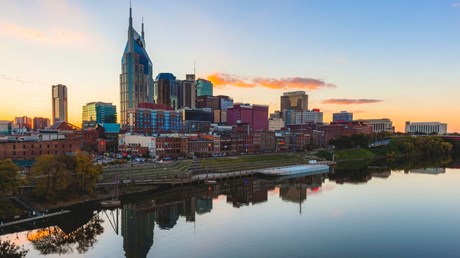
A year after calling off their annual meeting due to COVID-19, more than 12,600 Southern Baptists plan to attend this year’s in Nashville, the convention’s biggest turnout since 1997.

Ronnie Floyd, president of the Southern Baptist Convention (SBC) Executive Committee, tweeted the pre-registration figures this week, ahead of the June 15–16 event.

Registration will be open through the meeting itself, but the number of messengers planning to attend has already surpassed the 8,200 who went to the previous annual meeting in Birmingham in 2019. The SBC hasn’t brought together a crowd over 10,000 in over a decade, according to its own records.

The Southern Baptist annual meeting tends to draw bigger crowds when held in southern cities, and Nashville, home to the denominational headquarters, is a major hub already.

It’s also a belated election year for the SBC, with a full slate of presidential hopefuls gunning for the position J. D. Greear held for a third year due to the 2020 meeting being cancelled.

And the SBC has been hashing out ideological divisions around hot topics like race, politics, abuse, and women in ministry, as a newly vocal conservative wing—the Conservative Baptist Network—warns the denomination about drifting leftward and getting entangled with critical race theory.

Greear has called for three days of prayer and fasting leading up to the annual meeting, held on Wednesdays starting this week.

One of the areas of prayer is around gospel unity, asking that God would bring churches together for their sake of their mission. Earlier this year, Greear told the SBC Executive Committee that denominational disputes over secondary issues and their failure to adequately address racism in ...

Continue reading...


from Christianity Today Magazine https://ift.tt/34i4VE2