Tuesday, 28 September 2021

Martha: Busy Hostess or Dragon Slayer?

The Gospel of John and medieval legend show Mary’s sister to value theology and hospitality.

The summer before my senior year of high school, a new book came out called Having a Mary Heart in a Martha World. This book articulated what I had heard around the halls of my church growing up. I remember women vocally identifying as either a “Martha” or a “Mary” with the ultimate goal of becoming more like the disciple Mary who sat at Jesus’ feet, while bemoaning our Martha-like overworking tendencies. (Ironically, the “Marthas” were the ones responsible for running most of the church programs.)

As medieval historian Beth Allison Barr points out in The Making of Biblical Womanhood, Martha continues to be used as a prototype of doers and homemakers in books written for women. And while this caricature of Martha is good for selling books on biblical womanhood, is it too simplistic?

The prevailing impression we have of Martha is shaped by a thin reading of Luke 10. It includes the episode near the beginning of Jesus’ ministry, where, while teaching, he exhorts Martha for being overly worried with housework: “Martha, Martha …”

While the meaning of this story is debated by scholars, it has dominated the North American church’s image of Martha. Too often the Martha described elsewhere in the Gospels has been forgotten. The result is a strawman of the real Martha.

In early church history and during the Reformation, Martha and her sister Mary were viewed as a yin-and-yang representation of action versus contemplation. They were “as two parts of the same life rather than as two opposed ways of life,” writes Episcopal priest and scholar Margaret Arnold.

During this period, Martha’s action was not separated from the life of the church but was viewed ...

Continue reading...


from Christianity Today Magazine https://ift.tt/3m7Uews

Monday, 27 September 2021

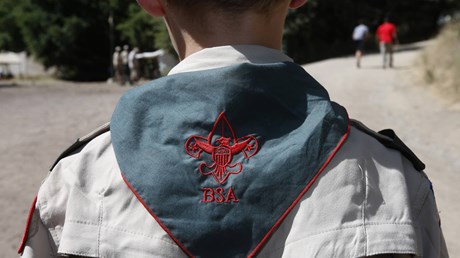
Boy Scouts’ Bankruptcy Leaves Churches Liable for Abuse Suits

Top denominations and thousands of churches are reconsidering whether to keep hosting scout units.

Amid the Boy Scouts of America’s complex bankruptcy case, there is worsening friction between the BSA and the major religious groups that help it run thousands of scout units. At issue: the churches’ fears that an eventual settlement—while protecting the BSA from future sex-abuse lawsuits—could leave many churches unprotected.

The Boy Scouts sought bankruptcy protection in February 2020 in an effort to halt individual lawsuits and create a huge compensation fund for thousands of men who say they were molested as youngsters by scoutmasters or other leaders. At the time, the national organization estimated it might face 5,000 cases; it now faces 82,500.

In July, the BSA proposed an $850 million deal that would bar further lawsuits against it and its local councils. The deal did not cover the more than 40,000 organizations that have charters with the BSA to sponsor scout units, including many churches from major religious denominations that are now questioning their future involvement in scouting.

The United Methodist Church—which says up to 5,000 of its US congregations could be affected by future lawsuits—recently advised those churches not to extend their charters with the BSA beyond the end of this year. The UMC said these congregations were “disappointed and very concerned” that they weren’t included in the July deal.

Everett Cygal, a lawyer for Catholic churches monitoring the case, said it is unfair that parishes now face liability “solely as a result of misconduct by Boy Scout troop leaders who frequently had no connection to the parish.”

“Scouting can only be delivered with help of their chartered organizations,” Cygal told The Associated Press. ...

Continue reading...


from Christianity Today Magazine https://ift.tt/3CQoVgq

My Coparent in Heaven

As a single parent, I’m responsible for a job I’m not strong enough to navigate by myself. Prayer reminds me that I’m not on my own.

Most days, I wake up behind schedule from the moment my feet touch the floor. As I rush off to my job, I make sure my two teenagers are where they need to be. Then, like many single parents, my boys and I occupy two different worlds, in contact only by the occasional text or phone call. This is not what I had planned when, from the halls of Bible college, I’d imagined my future Christian home. I envisioned myself as a wife and stay-at-home mom, volunteering in my kids’ school and ministering in our church. In real life, for several years I was able to stay at home, volunteer at my children’s school, and carpool kids to soccer and playgrounds. But when my boys were nine and eleven years old, a divorce I did not want put me in a situation I hadn’t foreseen for myself. It turned my life sideways, and I had to get my bearings to function in this new life.

Parenting Alone

Single parents are often overwhelmed by their inability to be and do all they think they should for their children. I feel overwhelmed carrying the financial weight for my family alone. I feel overwhelmed figuring out education and extracurricular activities by myself. Most of all, I feel overwhelmed as the sole person in my immediate home influencing my children toward Christ.

Day in and day out, I feel responsible for a job I am not strong enough to navigate by myself. I often think of Jesus’ sweet promise to his disciples before his return to heaven: “I will not leave you as orphans” (John 14:18). If anyone was ever left with a job too big for them, it was Jesus’ disciples! But Jesus promised he would not abandon them to figure it out by themselves.

My divorce made me feel like an orphan, left alone to navigate ...

Continue reading...


from Christianity Today Magazine https://ift.tt/3ued5JG

Saturday, 25 September 2021

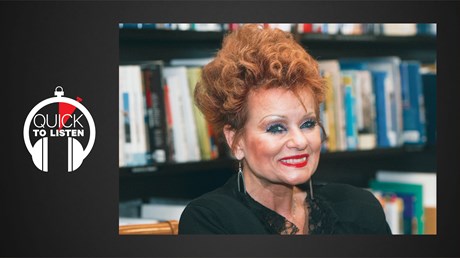
Did We Get Tammy Faye Wrong?

The late televangelist gets a Hollywood reassessment.

In this third decade of the 21st century, we’ve seen a lot of religious scandals, with Christian leaders abusing their power and position. Too many. Nevertheless, still to this day when you say the words religious scandal—more often than not folks will think of two television personalities of the 1970s and ’80s: Jim and Tammy Faye Bakker.

The “Jim and Tammy” show was the basis of what became a massive ministry and theme park in Fort Mill, South Carolina. It was called PTL, an abbreviation that stood both for Praise the Lord and for People That Love. Then came revelations that PTL had been massively and illegally misusing funds, diverting church funds to pay for their extravagant lifestyle and selling more lifetime vacations at the theme park than the theme park could possibly support. At about the same time, The Charlotte Observer also revealed that Jim Bakker had been engaging in extramarital sex and that ministry funds had been used for hush money. The Assemblies of God kicked them out of the denomination. Jim Bakker went to jail.

During Jim’s imprisonment, the couple divorced. Tammy Faye, meanwhile, became a kind of campy celebrity, appearing in a VH1 reality TV show, hosting a syndicated talk show, and becoming a kind of gay icon. In the year 2000, seven years before her death, a documentary came out called The Eyes of Tammy Faye, narrated by drag queen superstar RuPaul.

Last week, a biopic based on that documentary came out with the same title: The Eyes of Tammy Faye. It’s directed by Michael Showalter, stars Jessica Chastain, and is getting a fair bit of buzz for its highly sympathetic portrayal of Tammy Faye as a misunderstood and maligned Christian woman.

Christianity Today’s ...

Continue reading...


from Christianity Today Magazine https://ift.tt/3ETKdLZ

Friday, 24 September 2021

Why LuLaRoe Belongs in the Faith and Work Conversation

Multilevel marketing isn’t a hobby. And its workers need discipleship.

When LuLaRoe leggings showed up in my small community a few years ago, a farmer in our church dubbed them “tight britches.” Colorful and comfortable, the style quickly became de rigueur for women and girls in our area. But the trend took off for a much simpler reason too: network marketing. Sometimes known as direct or multilevel marketing, network marketing leverages established social circles to sell directly to consumers through local representatives. Companies like LuLaRoe do particularly well in communities that have thick relational networks, which is likely why they flourish in churches, homeschooling co-ops, and mommy groups. But despite its growing presence (and generating over $40 billion annually), network marketing rarely shows up in evangelical theologies of faith and work. We might address the toll it takes on relationships, how it affects women’s formation, or whether it makes good financial sense, but few of our conversations take multilevel marketing sales seriously as work. And if we don’t, we won’t take the motives, questions, and dilemmas of those involved in this work seriously either. This was especially clear to me as I viewed the recent Amazon documentary LuLaRich, which chronicles the woes of the aforementioned apparel company. Following a meteoric rise, LuLaRoe became the object of a spate of lawsuits, claiming damages for everything from poorly crafted merchandise to an incentive program that looked a lot like a pyramid scheme. Independent representatives were left with mounting debt, and some even found their relationships and marriages—the very things that had propelled them into the work in the first place—collapsing. While watching the docuseries, ...

Continue reading...


from Christianity Today Magazine https://ift.tt/3zDXIeP

Most Kenyan Churches Ban Politicians from Pulpits, Except for Methodists

Evangelicals join Anglicans, Catholics, and Presbyterians in restricting campaigning during worship services.

Some churches in Kenya have barred politicians from addressing their congregations, saying campaigning during services disrespects the sanctity of worship.

The national Anglican, Presbyterian, Roman Catholic, and evangelical churches have all issued bans, as many politicians have begun early stumping for next year’s general elections and as COVID-19 public health measures have restricted how and where campaigning can take place.

The Methodists, however, are keeping the church doors open for all.

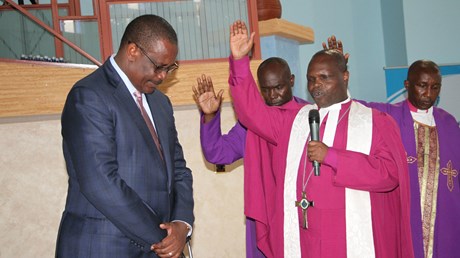
Joseph Ntombura, presiding bishop of the Methodist Church in Kenya, has said his church is not dissenting from the effort, but is taking a different approach. The bishop said shutting the doors to politicians would mean discriminating against some of its members.

“The church is for all people,” Ntombura told RNS in a telephone interview. “Human beings are political, so there is nothing wrong with inviting the politicians in church.”

According to the bishop, congregations need to hear the views of politicians on issues of national interest, such as the sharing of resources. In the past, Ntombura said, the church has invited other experts to speak to congregations on important matters, and politicians are no different.

“Some of the politicians are our pastors,” said Ntombura.

Kenya is about 85 percent Christian. About 33 percent of that group are from historic Protestant denominations and about 21 percent are Catholic. The rest belong to evangelical, Pentecostal, and African denominations. Muslims make up 11 percent of the population.

In issuing the bans on politicking in church, denominations have said they feared that church services would become campaign rallies and that candidates would use language ...

Continue reading...


from Christianity Today Magazine https://ift.tt/3uaM4XJ

Thursday, 23 September 2021

How the Umbrella Movement Spurred Hong Kong’s Digital Witness

Faced with political division and government oversight, the church began to develop richer and wider-reaching online public theology.

This month marks the seventh anniversary of the Umbrella Movement and the second anniversary of the Hong Kong government’s official withdrawal of its controversial extradition bill.

For many Hong Kongese, these are bittersweet memories. On the one hand, the series of pro-democratic movements since 2014 show the Hong Kongese’s urge for a better society that goes beyond the capitalistic ethos of the city; on the other, those movements became a Pandora’s box of civil unrest. Two years ago, 2 million people protested against the extradition law in June, and the implementation of the national security law the year after led to mass arrests and a crackdown on democratic parties.

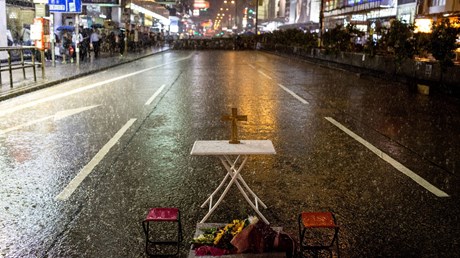
Hong Kong Christians famously took to the streets in prayer and in song as part of the demonstrations. But what international audiences may have not seen is how the political developments in Hong Kong launched the church into the digital public sphere too. Facing tighter religious freedoms, Christian leaders have grown their presence online and on social media.

Even as the Hong Kong diaspora has scattered across the globe, leaders have taken to the digital space as a platform to show solidarity to the persecuted and to instruct followers to persevere through difficult times. The digital public theology they’ve developed over the past seven years has grown into a witness for the global church.

Writing on the Mid-Autumn Festival, the day Hong Kong families tend to reunite (tuan yuan) to see the full moon (yue yuan, a play on words for “reunion”), I think of the persistent prayers for our brothers and sisters are suffering on the other side of the world and our compassion for those who cannot see their families due to exile ...

Continue reading...


from Christianity Today Magazine https://ift.tt/3kwrVIl