Thursday, 28 October 2021

Jesus Loves the Brown Pop-Eyed Atewa Slippery Frog

In Ghana, the church is at the center of a bold new conservation effort.

Caleb Ofori-Boateng, a 39-year-old Ghanaian herpetologist, laughs at the idea that he might be a modern-day Noah.

But his life’s purpose has something in common with the famous figure from the Book of Genesis.

Take the new species of small, brown, pop-eyed frog with tiny teeth and a shrill voice that he and some colleagues just described in a scientific journal.

The entire population of the Atewa slippery frog is thought to live in just five clear-running streams in Atewa, a wildlife-rich evergreen forest on a mountain range north of the Ghanaian capital Accra.

But the area is threatened by government-backed plans to mine for bauxite, used to make aluminum. Should they go ahead, mining will likely destroy the forest and kill off the frogs.

Ofori-Boateng and his colleagues at Herp Conservation Ghana, a group he founded, plan to remove some of the frogs and breed them in captivity—in an “amphibian ark”—until it’s safe for them to return to their natural habitat.

“I feel that God is in what I do. And saving species is a godly thing to do,” he said.

Saving species, especially frogs, is what Ofori-Boateng has been doing for the past 15 years, with the support of the church and a strategy he calls “conservation evangelism.” It started among communities near the Atewa Forest.

As a new science graduate and the country’s first locally trained herpetologist working in Atewa in 2006, Ofori-Boateng yearned to share his experiences and discoveries with communities living at the foot of the hills. With no funds to organize meetings, and as a Christian
himself, he turned to the churches.

Ofori-Boateng was not a public speaker, but he trusted God would help him. He made a commitment ...

Continue reading...


from Christianity Today Magazine https://ift.tt/3jJSSHI

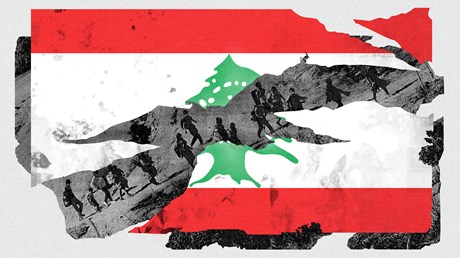
Lebanon’s Christians Resist Exodus from Worst Economic Collapse in 150 Years

Their middle-class salaries now worth peanuts, evangelicals struggle to maintain a faithful presence amid debate over serving God elsewhere.

In 2019, as Lebanon witnessed an unprecedented uprising against its entire political class, evangelical sermons grappled with applied theology:

Whether to join in for justice or honor the king.

Two years later, amid an economic collapse the World Bank says is the worst in 150 years, Lebanese Christians face an even greater pastoral challenge:

Whether to stay and help or escape abroad.

The nation has largely made up its mind.

Estimates indicate as many as 380,000 people have left Lebanon. Every day witnesses another 8,000 passport applications. Food prices have increased 557 percent since the uprising, as the inflation rate has now surged past perennial basket cases Venezuela and Zimbabwe.

Once featuring an economically vibrant middle-class, Lebanon now has a poverty rate of 78 percent. The minimum wage of $450 per month has devalued to a mere $33.

“Ask first: Where can I love the Lord, obey the Lord, and serve the Lord—me and my family?” Hikmat Kashouh, pastor of Resurrection Church Beirut, preached in his recent sermon.

“Praying faithfully, we may come up with different decisions.”

Kashouh urged people not to emigrate easily, to seek counsel with church leaders, and to help the suffering whether they stay or leave.

Fellow evangelical pastor Walid Zailaa, however, was blunt in his assessment.

“Your presence is important. How can we enact God’s will if you are not here?” preached the pastor of Faith Baptist Church in Mansourieh. “If you want to search for a better life for yourself and your children, it is your right.

“But it says to God: You are not able to provide for me in Lebanon.”

Even the lions and tigers are leaving.

“Lebanon is not ...

Continue reading...


from Christianity Today Magazine https://ift.tt/3mm45Qn

Wednesday, 27 October 2021

Religious Freedom Ambassador Nominee Goes Before Senate

Rashad Hussain, who would be the first Muslim to hold the position, is seen as a defender of religious minorities including Christians around the world.

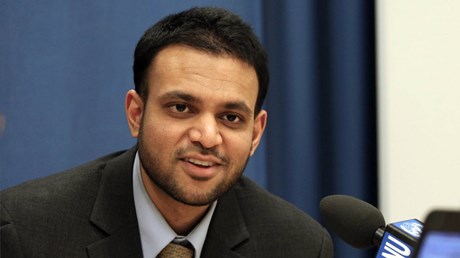
A Senate Foreign Relations Committee hearing on Tuesday considered the nomination of Rashad Hussain to be President Joe Biden’s ambassador-at-large for international religious freedom. Hussain’s confirmation would make him the first Muslim to hold the position.

Hussain held a number of roles in the Obama administration, serving on the National Security Council, as an associate White House counsel, and as special envoy for strategic counterterrorism communications and special envoy to the Organization of Islamic Cooperation (OIC). The OIC is an intergovernmental organization representing 57 member states, most of them with a Muslim majority.

The 42-year-old lawyer was one of five nominees who took part in the virtual confirmation hearing on Tuesday.

“(A)s a Muslim American, I have seen the impact of bigotry and guilt by association tactics used against minority communities, including the message it sends and dangers it poses to young people,” Hussain said during his prepared remarks to the committee.

Hussain, born in Wyoming to Indian parents and raised in Texas, is a Hafiz, or person who has memorized the entire Qur’an.

Hussain vowed to ensure that religious freedom issues would never be sacrificed in diplomatic or economic negotiations with China.

“China is one of the worst abusers of religious freedom in the world,” Hussain said in response to a question about America’s response to the Uyghur genocide. Hussain called for increased US pressure on China to alleviate the suffering of not only the Uyghurs but Tibetan Buddhists, Chinese Christians, and members of the Falun Gong religious movement.

He suggested that America should encourage Muslim-majority nations to protest China’s ...

Continue reading...


from Christianity Today Magazine https://ift.tt/3BljPY8

A Court Win for One Pro-Life Med Student Raises Concerns for Others

In Canada, Christians who want to be doctors have questions about religious liberty and their right to express unpopular opinions on social media.

Evangelical med students and pro-life physicians across Canada celebrated with Rafael Zaki when the Coptic Christian won a Manitoba court appeal that quashed his university’s decision to expel him over Facebook posts.

But that doesn’t mean they’re ready to start broadcasting their own personal beliefs about abortion, euthanasia, or the value of human life on social media.

“I think it’s fair to say that students are not comfortable disclosing their faith perspective,” said Larry Worthen, executive director of the Christian Medical and Dental Association of Canada (CMDA).

The CMDA regularly hears from students concerned about their rights to hold minority opinions on abortion, which is legal in all stages of pregnancy, and medical assistance in dying, which the Canadian government recently expanded to sick and disabled people without terminal illnesses. Though few students are actually expelled, several every year come into conflict with school administrators because of their faith.

The Canadian Charter of Rights and Freedoms guarantees the “fundamental freedom” of conscience and religion, as well as “thought, belief, opinion, and expression,” but that didn’t keep the University of Manitoba from expelling Zaki over what he shared on Facebook.

Worthen describes Zaki’s situation as “extreme” but says it does raise concerns.

“This seems to us to be quite disturbing and appalling in this day and age, that the Charter rights that were guaranteed under our national constitution were not considered by the medical school in the processing of this concern and issue,” he said.

Zaki, who emigrated to Canada from Egypt as a child, enrolled in the ...

Continue reading...


from Christianity Today Magazine https://ift.tt/3vORnwT

Tuesday, 26 October 2021

Worried Christians ‘Wait and See’ After Sudan Coup

With believers unable to communicate by phone or internet, international advocates weigh in on how the Sudanese church—buoyed by recent religious freedom gains—considers the military seizure of power.

Amid a near complete phone and internet blackout, Sudan’s Christians are on high alert following a military coup.

Yesterday the head of the North African nation’s transitional Sovereign Council, Gen. Abdel-Fattah Burhan, arrested its civilian prime minister, Abdalla Hamdok, his wife, and other officials.

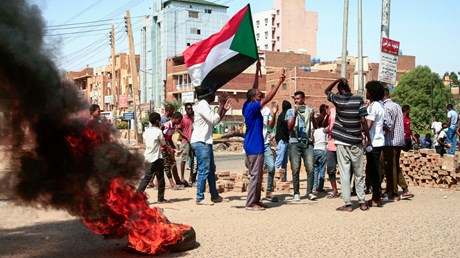
Hamdok, who called the arrests a “complete coup,” called for protests. The Forces of Freedom and Change alliance, which organized the original 2018 revolution that ousted 30-year dictator Omar al-Bashir, called for civil disobedience.

Thousands have filled the streets and were met with repression. Reports say 10 people have been killed and 80 injured.

CT spoke with an American ministry leader who was able to contact a Christian source in Sudan. The leader requested anonymity to preserve their ability to travel. The source was very careful in communication.

“All I can really say is that it is very important to pray for peace and security for all in Sudan,” said the leader, “and that the voice of the people would be heard.”

Meanwhile, a Sudanese Catholic leader felt secure enough to be specific.

“The international community should put their pressure on the junta to value the life of their citizens,” stated Yunan Tombe Trille, president of the Sudan Catholic Bishops’ Conference, “and hand back the power to civil government.”

The military eventually supported the revolutionary movement, and in July 2019 agreed to share power in the Sovereign Council. The arrangement: The initial 21 months would be led by a military figure, then 18 months of civilian leadership, followed by elections.

Peace deals with rebels in Darfur and the Nuba Mountains reset the calendar ...

Continue reading...


from Christianity Today Magazine https://ift.tt/3bdbQln

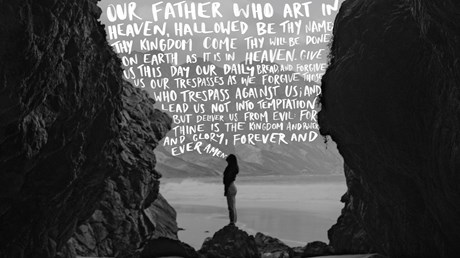
Christ’s Prayers Can Transform Ours

When we look closely at how Jesus’ prayer life is depicted in Luke, we discover how essential prayer is for us.

Alongside Jesus’ astonishing miracles and teachings, the Gospels depict something just as compelling: Jesus—who is himself fully God—prayed. In fact, he prayed a lot. Luke, the go-to
Gospel for a theology of prayer, includes more descriptions of Jesus’ own prayer habits than any other Gospel. When we look closely at how Jesus’ prayer life is depicted in Luke, we discover how essential prayer is for the life of faith and our participation in God’s kingdom.

Jesus’ Baptism Prayer (Luke 3:21–22)

For Luke, this isn’t just a story about Jesus’ baptism; it is a story about the power of prayer. Jesus’ baptism prayer launches his ministry, initiating his anointing, commissioning, and empowerment for ministry. Luke replaces the phrases about Jesus coming up out of the water in Matthew and Mark with “and was praying” (3:21, NRSV throughout), making the prayer and not the baptism itself the point of focus.

Immediately, we see Jesus’ prayers inviting God to act. God speaks from heaven, anointing Jesus for ministry. Jesus’ prayer initiates the arrival of the Spirit, who descends on Jesus “in bodily form” (3:22), granted for the fulfillment of Jesus’ mission. Luke goes on to describe Jesus as “full of the Holy Spirit” (4:1) and “filled with the power of the Spirit” (4:14). In 4:18, Jesus announces, “The Spirit of the Lord is upon me” and interprets his ministry as a fulfillment of the Scriptures.

Luke draws a vital connection between Jesus’ faithfulness in prayer and the inauguration of and empowerment for his earthly ministry. If we want to be used by God for God’s kingdom work, the ...

Continue reading...


from Christianity Today Magazine https://ift.tt/3EmnXZM

The Paradox of Playfulness

Christians can engage in whimsy not because life is easy, but because life is difficult.

In the early 1980s, my grandfather was diagnosed with a brain tumor. The surgeons told my grandparents that they were confident in their skill, but it was still brain surgery (in the early 80s!) and not without risk. Still, if he didn’t have the procedure, he would lose his eyesight.

The night before he went under the knife, his nurses were surprised to hear music coming from his hospital room. His four adult children had driven from far and wide and gathered with their mother by his bedside. Instead of worrying or weeping, they were singing hymns.

Were they nervous? Of course. But on the eve of what could be their last morning together, they chose to express their love through play. There were tears, but there was also the joy of voices lifted together—the very same voices that had been blending since my grandparents first set their tots around the piano decades earlier. My grandfather has always espoused the words of one of my favorite hymns: “Heart of my own heart, whatever befall / Still be my vision, O ruler of all.”

I wasn’t at that bedside; I hadn’t even been born yet. But the story has echoed down through our family for decades and changed the way we live, even on the cusp of potential tragedy.

While the influence of play can scarcely be overstated, its importance is commonly overlooked. We are often far too focused on completing the necessary tasks of life to spend time pursuing frivolity. Put another way, who has time to play when the challenges facing us are so very, very serious?

As Thomas Hobbes famously wrote, life can be “solitary, poor, nasty, brutish, and short.” Scripture describes our lives as fading as quickly as “the flowers of the field” (1 Pet. ...

Continue reading...


from Christianity Today Magazine https://ift.tt/3mibEYC