Tuesday, 28 December 2021

The Secret to Deradicalizing Militants Might be Found in Middle Eastern Churches

A bold new thesis proposed in extremist studies is based in testimony of Middle Eastern Christian pastors.
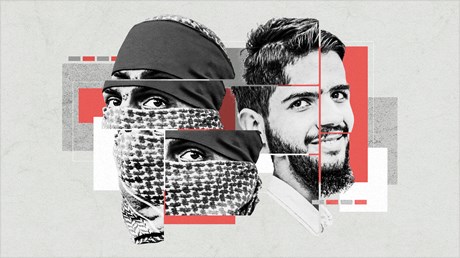
A Muslim man walked into the offices of a Christian pastor whose congregation in Lebanon’s Bekaa Valley has been serving Syrian refugees since the outbreak of civil war.

“I’ve hated you for the past eight years,” the Muslim said, “and I’ve tried to turn my community against you. But three months ago, it was your American doctors who treated me and paid for my hospital stay.

“We hate these people,” he continued, “yet they come here and show us love. Tell me the time of your services; I want to follow Jesus. How great is your Christianity!”

This story, told to CT in October by the pastor, who asked that their names not be used for security reasons, is remarkable. But it is not unique. Evangelical ministers in the Middle East readily recount conversion narratives of the most militant, radicalized Muslims. A second pastor has described how a Syrian confessed that he started coming to church to kill him. Now a believer, the man serves other refugees as a member of the congregation. A third says his once-small Christian fellowship has grown to more than 1,500 largely due to converted refugees. Perhaps as many as 10 percent of them are former extremists.

These accounts and others like them have led Scott Gustafson, a PhD candidate with Vrije Universiteit Amsterdam’s Extreme Beliefs program in Amsterdam, to a realization: Evangelical Arab ministry succeeds where millions of dollars of security-based solutions have failed in turning militant Muslims away from violence.

“No one strategizes: Let’s deradicalize the extremists,” he said. “But it is a demonstrable side effect.”

In the diverse academic field trying to find secular pathways out of ...

Continue reading...


from Christianity Today Magazine https://ift.tt/32yykfR

13 CT News Stories That Made Us Happy in 2021

It was another hard year on many fronts, but it wasn’t all bad news.

2021 brought more headlines about COVID-19, religious persecution, division, and spiritual abuse. Amid the heaviness, we saw God at work through his people in big ways and small, from signs of hope for Christians in the Middle East to a surprise worship leader at a church in California.

Here are 13 of our favorite good-news stories covered by CT this year, listed in chronological order.

Read all of our year-end lists here.

Continue reading...


from Christianity Today Magazine https://ift.tt/3mFD0rk

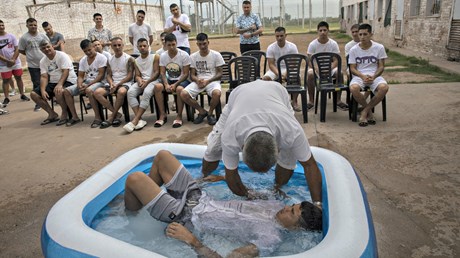
Evangelicals a Rising Force Inside Argentina’s Prisons

Authorities have allowed the creation of prison units effectively run by evangelical inmates.

The loud noise from the opening of an iron door marks Jorge Anguilante’s exit from the Pinero prison every Saturday. He heads home for 24 hours to minister at a small evangelical church he started in a garage in Argentina’s most violent city.

Before he walks through the door, guards remove handcuffs from “Tachuela”—Spanish for “Tack,” as he was known in the criminal world. In silence, they stare at the hit-man-turned-pastor who greets them with a single word: “Blessings.”

The burly, 6-foot-1 man whose tattoos are remnants of another time in his life—back when he says he used to kill—must return by 8 a.m. to a prison cellblock known by inmates as “the church.”

His story, of a convicted murderer embracing an evangelical faith behind bars, is common in the lockups of Argentina’s Santa Fe province and its capital city of Rosario. Many here began peddling drugs as teenagers and got stuck in a spiral of violence that led some to their graves and others to overcrowded prisons divided between two forces: drug lords and preachers.

Over the past 20 years, Argentine prison authorities have encouraged, to one extent or another, the creation of units effectively run by evangelical inmates—sometimes granting them a few extra special privileges, such as more time in fresh air.

The cellblocks are much like those in the rest of the prison—clean and painted in pastel colors, light blue or green. They have kitchens, televisions and audio equipment—here used for prayer services.

But they are safer and calmer than the regular units.

Violating rules against fighting, smoking, using alcohol or drugs can get an inmate kicked back into the normal prison. ...

Continue reading...


from Christianity Today Magazine https://ift.tt/3JoJBA9

Monday, 27 December 2021

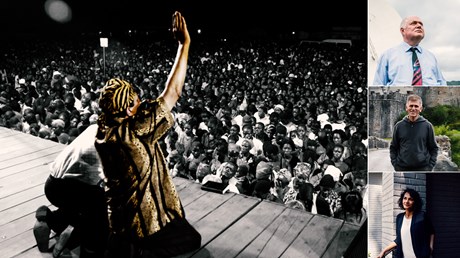
Christianity Today’s Top Testimonies of 2021

The Christian conversion stories that CT readers shared most.

In each print issue, Christianity Today devotes the back page to stories of Christian conversion—from the quiet to the highly dramatic. If you missed any, here are CT’s top testimonies of 2021, including some online exclusives, ranked in reverse order of what people read most.

12.
11.
10.
9.
8.
7.
6.
5.
4.
3.
2.
1.

Check out the rest of our 2021 year-end lists here.

Continue reading...


from Christianity Today Magazine https://ift.tt/3z2NSob

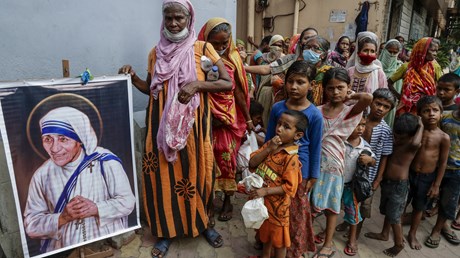
India Blocks Foreign Funds for Mother Teresa’s Charity on Christmas

Kolkata order’s troubles come in the wake of a string of attacks on Christians by Hindu right-wing groups, who accuse pastors and churches of forced conversions.

India’s government has blocked Mother Teresa’s charity from receiving foreign funds, saying the Catholic organization did not meet conditions under local laws, dealing a blow to one of the most prominent groups running shelters for the poor.

The Home Ministry said in a statement Monday that the Missionaries of Charity’s application for renewing a license that allows it to get funds from abroad was rejected on Christmas.

The ministry said it came across “adverse inputs” while considering the charity’s renewal application. It did not elaborate.

Its troubles come in the wake of a string of attacks on Christians in some parts of India by Hindu right-wing groups, who accuse pastors and churches of forced conversions. The attacks have especially been prominent in the southern state of Karnataka, which has seen nearly 40 cases of threats or violence against Christians this year, according to a report from the Evangelical Fellowship of India.

Earlier on Monday, the chief minister of West Bengal state, Mamata Banerjee, sparked outrage when she tweeted that the government had frozen the bank accounts of the charity. But the government soon clarified that it had not frozen any accounts.

The charity confirmed in a statement that the government had not frozen its accounts but added that its Foreign Contribution Regulation Act (FCRA) renewal application had not been approved.

“Therefore … we have asked our centers not to operate any of the (foreign contribution) accounts until the matter is resolved,” it said.

Earlier this month, the Missionaries of Charity, which Mother Teresa started in Kolkata in 1950, found itself under investigation in the western state of Gujarat following complaints ...

Continue reading...


from Christianity Today Magazine https://ift.tt/3qsTyUy

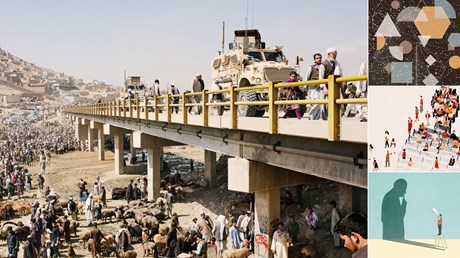
CT’s 2021 Cover Stories, Ranked

Our online readers’ favorite cover stories from last year.

Christianity Today’s print magazine cover stories represented many themes of the past year—topics that are not new but reached a fresh urgency or climactic moment in 2021. From Christians in Afghanistan to multiethnic churches to empty pews, we hoped to remind readers of gospel hope in the midst of difficult times. Here are CT’s cover stories ranked in reverse order of popularity online.

9. December
8. January/February
7. July/August

6. October

5. April

4. May/June

3. November

2. March

1. September

Continue reading...


from Christianity Today Magazine https://ift.tt/3FALbMP

Sunday, 26 December 2021

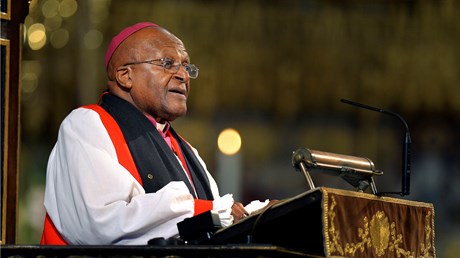
Desmond Tutu, Archbishop and Apartheid Foe, Dies at 90

South African activist said a disciplined prayer life sustained him.

Retired Anglican Archbishop Desmond Mpilo Tutu, the man who became synonymous with South Africa’s nonviolent struggle against apartheid, died Sunday at the age of 90.

Tutu was diagnosed with prostate cancer almost two decades ago.

The feisty spiritual leader of millions of Black and white South Africans seized every opportunity at home and abroad to rail against the racially oppressive regime that stifled his country for decades. His struggles earned him the Nobel Peace Prize and appointment to the leadership of a commission that sought to reveal the truth of apartheid’s atrocities.

In later years, Tutu carried his work for justice into other areas beyond racial reconciliation—from AIDS to poverty to gay rights.

“All, all are God’s children and none, none is ever to be dismissed as rubbish,” he said in 1999 to the “God and Us” class he taught as a visiting professor at Emory University’s Candler School of Theology. “And that’s why you have to be so passionate in your opposition to injustice of any kind.”

Long before South Africa elected its first democratic government in 1994, Tutu dreamed of and spoke fervently about “what it will be like when apartheid goes.”

But there were times in public speeches and in interviews when the cleric doubted whether, after decades of agitating for social justice, he would live to witness the decay of apartheid.

During the 1970s and ’80s, when other Black leaders critical of white majority rule were being violently snuffed out or silenced, Tutu’s prominence in the church made his one of the few Black voices strong enough to resonate around the world.

But at times, not even his stature in the church or ...

Continue reading...


from Christianity Today Magazine https://ift.tt/3qp4Itm