Friday, 28 January 2022

Died: Robert Shine Sr., Black Baptist Leader in Philadelphia

The pastor was “not a kingmaker” but called Christians to see social issues as God testing the church.
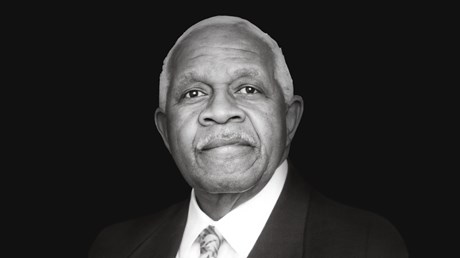
A conservative commentator on Fox News once dismissed Robert Shine Sr. and the impact of the group of Black Christian clergy he led in Philadelphia with a wave of his hand.

“They’re not kingmakers,” he said. “They probably lose more than they win.”

But that wasn’t how Shine measured the ministers’ witness. That wasn’t how he understood the job.

“We represent the kingdom of God,” he told a Philadelphia newspaper in 2002. “We are the voice calling for conscience, appealing to do the right thing.”

Shine, who spoke out for “the least and the last and the lost” for more than 40 years, pastored a Black Baptist church in the East Germantown neighborhood for more than 30, and taught pastors and deacons at a Bible institute for more than 20, died at home on January 4. He was 82.

“He was truly a man of God who loved doing what God called him to do, and that was pastoring, teaching and working for social justice,” Michael W. Couch, a fellow pastor, told ThePhiladelphia Inquirer.

Shine was born on August 4, 1939. His parents, Benjamin and Estelle Shine, raised him and his 15 siblings in Germantown, the historic Philadelphia neighborhood that gave birth to the American antislavery movement.

He knew early on that he wanted to be a preacher. At 8, he climbed up on a milk crate on a street corner and delivered his first sermon. He was baptized at a Baptist church at 11 and ordained a deacon at 20.

After high school, Shine took classes at La Salle University’s business college and worked as an evangelist with a group he helped organization called Christians United Reaching Everyone.

Shine earned a degree from Manna Bible Institute in 1971. The unaccredited ...

Continue reading...


from Christianity Today Magazine https://ift.tt/32I9ASG

Thursday, 27 January 2022

How Bible Scholars and Treasure Hunters Unearthed Modern Jerusalem

They were looking for the past. They created the present.

Modern Israeli leaders are unequivocal about the importance of Jerusalem to the state of Israel.

“It has been proved without a doubt that Jerusalem is the main artery of our national consciousness,” former Israeli prime minister Benjamin Netanyahu said in 2017. “The root of Zionism is in Zion.”

This wasn’t always the case. In the early years of the Zionist movement, the Jewish diaspora considered recreating a homeland in many places, from the United States to Uganda. Palestine was on the list, but many Zionists, who tended to be secular, viewed Jerusalem as a backward and superstitious place—exactly the opposite of the forward-thinking socialist nation they envisioned.

The story of how that changed starts, oddly enough, with a 19th-century Congregationalist minister from Connecticut named Edward Robinson.

When Robinson visited Germany in the 1830s, he was shocked by the discipline of biblical criticism then flourishing in Protestant universities there. Instead of treating Scripture as divine revelation, German academics subjected the Bible to the same textual criticism as other ancient documents.

Robinson was deeply concerned these scholars were calling into question what he cherished as the revealed truth of Scripture. He was worried the theological disease would spread from Germany to liberal-minded Harvard University and from there infect American Christians.

To combat this trend, Robinson hit on the novel idea of proving the veracity of places, names, and events described in Scripture. He would use the tools of science to oppose what he saw as a dire threat to the Christian faith. So in 1838, he arrived in Jerusalem armed with a compass, measuring tape, telescope, and the Good Book as his ...

Continue reading...


from Christianity Today Magazine https://ift.tt/3G6OE5r

Jerry Falwell Jr. Isn’t a Hypocrite

But the former Liberty president is a cautionary tale for cultural Christianity.

This piece was adapted from Russell Moore’s newsletter. Subscribe here.

Over the past week, countless friends texted me a Vanity Fair profile of former Liberty University chancellor Jerry Falwell Jr., featuring an extended interview with the man who went from being a kingmaker in the 2016 presidential election to resigning after a series of scandals.

What most people highlighted was not the salacious recounting of the stories but one particular quote from Falwell: “Because of my last name, people think I’m a religious person. But I’m not. My goal was to make them realize I’m not my dad.”

For some, this shows the problem: hypocrisy. If only it were.

When I say that Jerry Falwell Jr. is no hypocrite, I mean it in only one sense. Obviously, Falwell was hypocritical in, among other things, allegedly engaging in behavior that, for even the smallest of the offenses, would have led to fines or expulsions for his students.

In that sense, the scandal is similar to the revelations that British prime minister Boris Johnson attended Downing Street cocktail parties while the public was forbidden by law to gather due to COVID-19 public health measures. And, of course, beyond that is the much more fundamental matter: How can the chancellor of one of the world’s largest Christian universities justify his behavior by saying he’s not religious?

That’s precisely the point, though. Hypocrisy is an ongoing and always-present danger in the church. Jesus warned us to beware of hypocrisy—charging the religious leaders of his day with maintaining piety out of pretense.

For Jesus, the congruence between the inner and the outer—the heart and the mouth, the motivations ...

Continue reading...


from Christianity Today Magazine https://ift.tt/3u229B3

Grand Canyon University Sells $1.2 Million Debt

Arizona school aims to continue expanding campus and increasing in-person enrollments.

Three years and five months after transitioning to nonprofit status, Grand Canyon University (GCU) has successfully sold off $1.2 billion of debt. The milestone marks a major step in a very unusual journey for a Christian school.

One of the nation’s largest Christian universities, GCU was founded as a nonprofit in 1949 but turned into a for-profit entity in 2004 during a period of financial distress. After a decade of increasing its earnings and enrollment, the university returned to nonprofit status. The debt sale, finalized in December, completes GCU’s transition and positions the university for its next phase of growth, GCU president Brian Mueller told CT.

“It was not an easy process, but it ended up being an exhilarating one,” he said. “It’s been described as the largest real-estate-related financing in the state of Arizona history, and so it wasn’t without its complexity; it took some time.”

As a for-profit college, GCU was able to invest $1.6 billion into its academic infrastructure over the last decade, according to Mueller, without significant tuition increases. GCU renovated and expanded its campus, building new classrooms, a dorm, a recreation center, and a 7,000-seat arena.

With the money from the junk bond sale, GCU will refinance the remaining debt on a $875 million loan it took out in 2018 as part of the arrangement to separate from Grand Canyon Education (GCE), which remains a for-profit institution. That loan, due in 2025, allowed GCU to buy its assets from GCE.

GCU will also continue freezing on-campus tuition costs and work to grow enrollment, Mueller said. In 2008, the school had around 1,000 on-campus students. Today it has about 23,000—with another 90,000 ...

Continue reading...


from Christianity Today Magazine https://ift.tt/3u30mM3

Wednesday, 26 January 2022

Anti-Trafficking Ministries Now Fight QAnon Conspiracies Too

Online myths and misinformation are becoming more of a distraction from their work.

When Alia Dewees conducts seminars about the scourge of sex trafficking and its prevention, there’s one group of people more likely than others to quiz her about the furniture and décor company Wayfair selling missing children or kids being smuggled through tunnels under New York City: Christians.

These stories are among the conspiracies that were popularized by the QAnon movement and have captured the imaginations of countless Americans and more than a quarter of Christians.

What myth-believing Christians don’t want to hear is Dewees’s experience as a trafficking survivor. When her experiences don’t match what they’ve read on the internet, some trust the internet rather than the survivor in front of them.

“My voice is invalidated; my experience is invalidated,” said Dewees, who now works as the after care development director for Safe House Project, an anti-trafficking organization based in Alexandria, Virginia. “That was so true for me in my trafficking experience for so many years that it’s a triggering experience. It triggers a trauma response of feeling like I want to shut down.”

January is National Slavery and Human Trafficking Prevention Month, and anti-trafficking groups are struggling to combat not just an international multibillion-dollar industry but also misinformation that distracts from real survivors.

Anti-trafficking advocates have always encountered misconceptions, often formed from media portrayals of trafficking like the film Taken. It’s common for people who know nothing about trafficking to assume traffickers work by kidnapping unsuspecting victims off the street. And Dewees said that most people will abandon their misconceptions when ...

Continue reading...


from Christianity Today Magazine https://ift.tt/3H5Q55o

Ian Cron Answers Your Enneagram Questions

How the popular personality typing system finds its place in Christianity.

Is the Enneagram compatible with Christianity? Ian Cron, author of The Road Back to You and The Story of You says yes.

On this episode of The Russell Moore Show, Cron and Moore talk about the Christian roots of the personality typing system known as the Enneagram. They discuss how helpful the Enneagram can be as a tool for spiritual formation. And they talk about the power of digging into our personal stories—false messages and all—so that we can learn how to rewrite them according to the truth, love, and kindness of God.

“The Russell Moore Show” is a production of Christianity Today

Chief Creative Officer: Erik Petrik

Executive Producer and Host: Russell Moore

Director of Podcasts: Mike Cosper

Production Assistance: CoreMedia

Coordinator: Beth Grabenkort

Producer and Audio Mixing: Kevin Duthu

Associate Producer: Abby Perry

Theme Song: “Dusty Delta Day” by Lennon Hutton

Continue reading...


from Christianity Today Magazine https://ift.tt/3fVmaku

Tuesday, 25 January 2022

The Poet Who Prepared the Ground for the Sexual Revolution

Percy Shelley’s 19th-century attacks on marriage, monogamy, and Christianity foreshadowed progressive attitudes today.

Percy Bysshe Shelley, a leading figure in the 19th-century English Romantic movement, once described poets like himself as “the unacknowledged legislators of the world.” And indeed, despite living a comparatively short life (he died before age 30), his influence has endured to the present day, most notably in his emphasis on sex as the central element of individual authenticity.

Shelley, together with contemporaries like the poet William Blake, was known for his attacks on organized Christianity and his understanding that sexual liberation is central to political liberation. For Shelley, as for many in our own day, these concerns are closely linked because one of the most obvious ways religion historically exerted its power was through the policing of sexual behavior and sexual relationships.

To better understand the roots of the sexual revolution gripping the contemporary West, it pays to consider an era well before the 1960s, when many of its “unacknowledged legislators,” like Shelley, were preparing the ground for the upheavals to come.

‘The most odious of all monopolies’

Shelley’s disdain for religion, or, more specifically, Christianity and Judaism, is evident from his earliest writings, indeed, from the moment when, as an undergraduate, he and his friend Thomas Jefferson Hogg authored the pamphlet The Necessity of Atheism and were expelled from Oxford for their pains. In his early poem Queen Mab, the fairy guide launches a powerful attack on the Jews as they howl “hideous praises to their Demon-God.”

For Shelley, religion is a means of manipulation by which the powerful keep others subjugated. God himself is the very prototype of human tyranny, ...

Continue reading...


from Christianity Today Magazine https://ift.tt/3472DLk