Wednesday, 27 April 2022

The Church Should Ask Two Questions About the Current Drug Crisis

Where do we find it? And more importantly, are we really prepared for what we’ll find?

The evidence of the US drug crisis is all around us, every single day. But because it is a lonely crisis, we often need someone to show us where to look. Having covered the opioid crisis as a reporter for the past seven years, part of my job was asking the “where” question to other people involved in the crisis.

This has given me new eyes in my own city, New York. I’ve noticed more people shooting up, and one night on my way home I saw two people sprawled unconscious on the floor of the subway platform after overdosing. Emergency medical personnel came quickly and saved them. I now carry naloxone (also known by its brand name Narcan), the overdose reversal drug, which looks like a little bottle of nasal spray.

In addition to seeing the crisis all around me, I have begun noticing Christians working in these places. I remember sitting in a car on a main drag in Camden, New Jersey, one night in 2015, watching prostitutes shiver in the snow trying to find work to pay for drugs. The Christian woman sitting next to me in the car, Brenda Antinore, had at one time been addicted to drugs herself and was a friend to these women. She checked in on them daily, brought them toiletries and snacks, knew them all by name, and had a recovery home within walking distance where they could come when they were ready.

One of the women from the street I met and interviewed died of a drug overdose later. Antinore was one of the few people checking in on these women besides police, drug dealers, and johns. She was their emergency contact. Some of the women Antinore has loved went into recovery.

These are the imperfect examples and testimonies that deserve greater attention from the American church. But to know the testimonies, we need ...

Continue reading...


from Christianity Today Magazine https://ift.tt/TaDoEFy

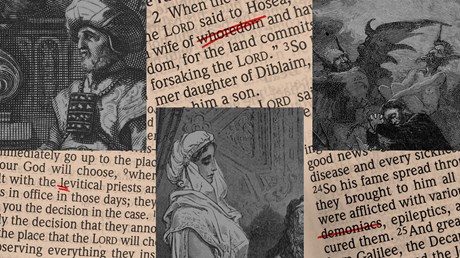
Levites, Whores, and Demoniacs: Here’s How the New NRSV Has Changed

A look at five updates to the New Revised Standard Version of the Bible.

The official Bible translation of the National Council of Churches, commonly used by academics and mainline Presbyterians, Lutherans, and Episcopalians, has been revised for the first time since the fall of the Berlin Wall. The NRSVue—which stands for New Revised Standard Version updated edition—has about 20,000 edits. The changes incorporate new scholarship on the Dead Sea Scrolls as well as stylistic changes to keep up with the evolution of English.

Continue reading...


from Christianity Today Magazine https://ift.tt/YLEdPCJ

Tuesday, 26 April 2022

As for Me and My Household, We’ll Resist Mammon

Money promises autonomous abundance. But we need someplace where we cannot hide.

Several friends helped my wife, Catherine, and me move into our first apartment, down and then up two steep and narrow sets of stairs. Three items seemed almost impossible to get up those stairs: a fragile old chest of drawers my wife had inherited from her grandmother, a queen-sized box spring, and an unfathomably heavy sofa bed.

We christened them the Ordeal of Delicacy, the Ordeal of Dimension, and the Ordeal of Strength. Twenty years later we remember those ordeals; the friends who cheerfully endured them with us, sweating and swearing on a hot June day; and the sense of relief when we managed to overcome each one.

A few years later, it was time to move again when my wife took the job she has held ever since. This time, the college that hired her covered the moving costs.

The professional movers went through the same ordeals on our behalf that our friends had gone through a few years before—sweating and likely swearing as well—but I certainly cannot remember their names, or even a hint of their faces. They were paid, fairly, to do a fair job. And once the job was done, they were gone.

This is the power of money: It allows us to get things done, often by means of other people, without the entanglements of friendship.

To this day, I owe my friends something for the move early in our marriage—at the very least, my thanks and my affection. Indeed, I already owed them something before the move. To be a friend is to be intertwined with someone else in a loose but permanent way.

But our relationship, such as it was, with the professional movers was different. It began and ended with a modern form of magic—a transaction that, without the slightest actual effort on our part, transported all our possessions from ...

Continue reading...


from Christianity Today Magazine https://ift.tt/XqcI0jz

As Pastoral Credibility Erodes, How Can We Respond?

Perhaps God wants to reshape our view of authority.

I squeeze into the middle airplane seat, politely apologizing to the person who got up from his aisle seat for me to get in. As I set my backpack down, trying to decide whether to grab my noise-canceling headphones, I greet the older woman in the window seat next to me. I opt for my book, kicking my backpack under the seat in front of me. Seat belt buckled, I settle in for my final flight of the day, hoping to making a dent in the chapter that awaits me.

“You from Nashville?” the woman asks.

“No, ma’am,” I reply. “I’m from Colorado Springs. I’m heading to Nashville for
a conference.”

She smiles and nods. We both look away. I fiddle with my book; she returns to her crossword. I feel like I should return serve and ask her about where she’s from. She fills in the requested details, and I’m quite sure all the required talking is now complete.

Then she asks the question. “So, what do you do?”

I sigh, not audibly, but certainly in my heart. I should have grabbed my headphones, not my book, I think.

I briefly contemplate a generic answer, knowing the mere mention of my vocation can be a real conversation-stopper, but opt instead for the truth.

“I’m a pastor.”

She breaks out into a grin. “I knew it!”

“Really?” I am genuinely surprised.

“Yes!” she says with a knowing nod and a confident smile.

“How … ?”

“You just have the look.”

I laugh, briefly considering my wardrobe selection: blue jeans, high-tops, a black T-shirt, and an olive bomber jacket. Yeah, maybe I am a bit of a cliché at the moment.

As the smiles fade, I can’t help but wonder: I look like a pastor? Should ...

Continue reading...


from Christianity Today Magazine https://ift.tt/Fk0HM9a

Monday, 25 April 2022

Grove City College Condemns ‘Alleged Drift into CRT Advocacy’

A new report from the Christian school says Jemar Tisby's chapel talk was a “mistake” and critiques diversity teachings in an elective class and in resident assistant trainings.

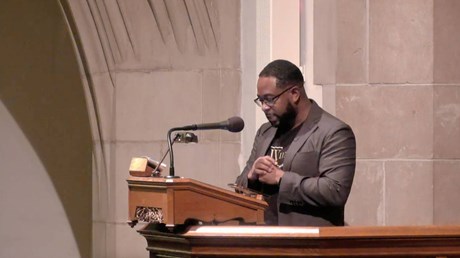
Grove City College insists it’s not “going woke.” A new report from the conservative Christian college in Pennsylvania denounced school-sponsored courses and trainings they say promoted “CRT concepts” and characterized inviting historian Jemar Tisby to speak at a 2020 chapel service as a “mistake.”

“Grove City College has not changed,” a committee composed largely of Grove City board members said in the report released last week. “It remains a Christ-centered, conservative institution.”

The report, a product of the committee’s assignment to ascertain any “mission drift” at the college, recommends re-adding the word “conservative” to the school’s mission statement after it was removed in 2021 and lists “remedial actions” to curb the promotion of critical race theory at the school.

These actions include replacing an education course accused of promoting “pop-CRT,” rebranding the school’s Office of Multicultural Education and Initiatives, and exercising increased scrutiny of guest speakers and student trainings.

Tisby, The New York Times bestselling author of The Color of Compromise and How to Fight Racism, told Religion News Service the report uses CRT as “a junk drawer for anything about race or justice that makes a certain type of person feel uncomfortable.”

Because of the rhetoric around CRT, he said, “much needed conversations about racial justice are being muted in the environments where they are needed most, such as Christian colleges and universities.”

Others found the report encouraging. Megan Basham, an author at conservative news outlet The Daily Wire, tweeted that ...

Continue reading...


from Christianity Today Magazine https://ift.tt/P2u87Wh

SCOTUS Tackles Arguments over Prayer at the 50-Yard Line

Justices pepper lawyers with possible scenarios and questions about coercing high school players.

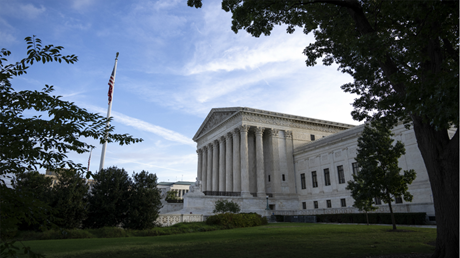
The US Supreme Court justices spun more than a dozen hypothetical prayer scenarios during oral arguments in Kennedy v. Bremerton School District on Monday.

They asked the lawyers arguing for their respective sides if a teacher could pray before class or after, silently or out loud, in a clear voice or a low mumble.

They asked if coaches could pray on the sidelines, in a press box, or a huddle. If they could pray with a prefatory statement that player participation wasn’t required. Or with the sign of the cross, the words of the Our Father, or hands lifted high. Could they pray with a crowd, into a mic, into a camera, with a group of players gathered around, or if no one was there and they were alone?

Justice Stephen Breyer, pointing out that the court has ruled on prayer in schools several times before, said, “This doesn’t seem like a new problem; it seems like a line-drawing problem.”

And then one of the justices even asked about literal lines drawn on the ground. Justice Sonya Sotomayor wanted to know why Washington state high school coach Joseph Kennedy insisted on praying in the center of the field, at the 50-yard line.

“He had to thank God,” she said. “But why there?”

The real line the court was trying to find, though, wasn’t marked with field paint. The justices tried to push the lawyers and each other to agree to a point where prayers protected by the First Amendment could be separated from prayers prohibited by the protections of the First Amendment.

Everyone agreed that the coach has a right to pray, but only as an individual and not as a representative of the public school, and not in a way that would coerce students into a religious practice.

“You’re not ...

Continue reading...


from Christianity Today Magazine https://ift.tt/8YWhDI3

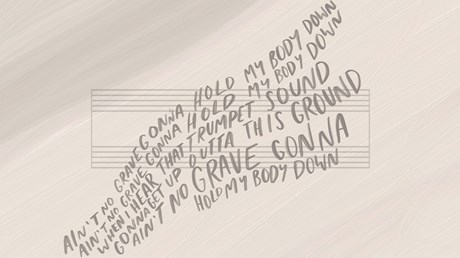
Ain’t No Grave Gonna Hold Our Bodies Down

What does the Resurrection tell us about God’s plans for us?

1934

Twelve-year-old Claude Ely was dying in Virginia, stricken with tuberculosis. As his family huddled in prayer around his bedside, the boy began to sing:

Ain’t no grave
Gonna hold my body down
Ain’t no grave
Gonna hold my body down
When I hear that trumpet sound
Gonna get up outta this ground
Ain’t no grave
Gonna hold my body down

Claude eventually recovered. And the healing in his lungs was so complete that he grew up to become a singer and preacher known for his freight-train volume and Pentecostal gusto. In adulthood, he traveled the South as the “Gospel Ranger,” proclaiming the resurrection power of Jesus in one righteously raucous revival meeting after another.

On October 12, 1953, almost 20 years after Brother Ely’s boyhood healing, King Records captured him in a “live worship” recording session at the Letcher County courthouse in Kentucky. The audio for “Ain’t No Grave” has been preserved, and listening to it is a visceral experience. “Ain’t no ...” Claude sings, like he’s pulling a boulder back in a slingshot. “Graaaaaaaaaaaave,” he hollers, like he’s letting the boulder fly. Other worshipers join him, shout-singing and clapping on off beats in a Spirit-fueled Pentecostal Holiness style, overpowering the microphones with gloriously distorted exuberance.

If Ely delivered “Ain’t No Grave” like a sonic earthquake, perhaps it’s because he could trace the song’s conviction back to a literal earthquake. Consider how Matthew describes the moment in history that makes the song true: “After the Sabbath, at dawn on the first day of the week, Mary Magdalene and the other ...

Continue reading...


from Christianity Today Magazine https://ift.tt/61JTW9X