Wednesday, 17 August 2022

Doubt Be Not Proud

Frederick Buechner diffused the power of disbelief and brought hope to wandering hearts.
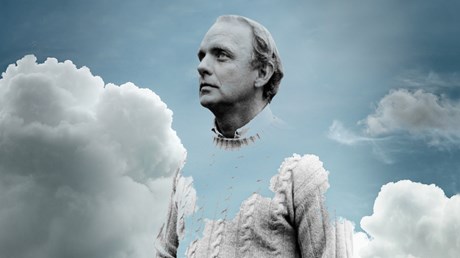
In The Alphabet of Grace, the late writer Frederick Buechner gave an account of his conversion. He was agnostic at the time but had been attending a church because he liked the preacher, George Buttrick.

Queen Elizabeth had recently been crowned, and Buttrick made a connection to those events by saying that unlike the queen, Jesus has been crowned again and again in the hearts of those who trust him. Here’s how Buechner describes it:

He said in his odd, sandy voice, the voice of an old nurse, that the coronation of Jesus took place among confession and tears and then, as God was and is my witness, great laughter, he said. … At the phrase great laughter, for reasons that I have never satisfactorily understood, the great wall of China crumbled and Atlantis rose up out of the sea, and on Madison Avenue, at 73rd Street, tears leapt from my eyes as though I had been struck across the face.

I study apologetics, especially the dynamics of faith and doubt, so Buechner’s testimony is doubly significant to me. I can hardly read that passage without tears of my own. I confess that the gospel often feels too good to be true, even as I long for it to be true with every fiber of my being.

But if I find myself with faith, it’s at least in part because I know the feeling of being claimed by “tears and great laughter” while hearing the gospel or receiving Communion. I know of no writer other than Buechner who captures what I might call the incredulity of joy—a doubt-tinged hope that insists on “whistling in the dark,” as he put it.

I was raised in a religious context that emphasized certainty, moments of decision, and the clarity of Scripture over experience. Those ...

Continue reading...


from Christianity Today Magazine https://ift.tt/Q9vASCB

A Seminary Room of Her Own

Historically, evangelicals have been ahead of the curve in women’s education and also way behind it. My pursuit of an MDiv is now part of that mixed legacy.

This week I’m packing up my 18-year-old daughter as she heads off to college. In a twist of providence, I’m also returning to the classroom after 21 years away. While she’s navigating the firsts of freshman year, I’ll be navigating the firsts of a master of divinity.

These last few months of applying to schools, securing funding, and planning out our schedules have been a sweet time for us. In God’s wisdom, he’s decided that we’ll share these milestones. But this time has also made me wrestle with how the evangelical church both facilitates and impedes women’s academic development.

My education story doesn’t begin with me and my daughter. It starts with my maternal grandmother, who left home at 16 to attend college—not because she was drawn by academics or a career but because she felt called to a life of Christian service.

She came of age during the post–World War II years, when a great youth revival was sweeping the nation. As my grandmother’s best friends settled into lives of factory work and marriage, she moved 800 miles away to study for church work. There she eventually met my grandfather, who was funding his own ministerial training through the GI Bill.

Ironically, my grandmother never considered herself much of a student and even decades later carried a sense of “imposter syndrome,” despite her college degree. But her brave steps established a norm for her daughters, who all pursued higher education—at least higher Christian education.

The same evangelical culture that called my grandmother, mother, and aunts to higher education also reminded them of the importance of home and family, and the balancing ...

Continue reading...


from Christianity Today Magazine https://ift.tt/bHYErLw

Tuesday, 16 August 2022

Indian National Day of Prayer Raises Tricolor and Red Flags

Hundreds of churches bless the world’s largest democracy as India celebrates 75 years of independence amid its many growing pains.

After 75 years of independence, Christians in India are proud to be part of the world’s largest democracy. But they also know it could use lots of prayer.

So on Sunday, hundreds of Protestant and Orthodox churches dedicated 30 minutes of their worship services to 40 prayer points, seeking God’s blessing for their nation as well as peace and prosperity in Indian society.

The Evangelical Fellowship of India (EFI) launched the National Day of Prayer (NDOP) six years ago, joined by the National Council of Churches in India (NCCI) two years later. The event is observed on the Sunday closest to India’s Independence Day, thus this year it fell the day before the August 15 holiday.

Denominational leaders told CT this year’s NDOP was different and significant, taking place during the Indian government’s 75-week initiative called Azadi Ka Amrit Mahotsav (Elixir of Freedom) “to celebrate and commemorate 75 years of independence and the glorious history of its people, culture, and achievements” from March 12, 2021, to August 15, 2023.

“God loves the nation of India and is at work in it,” stated EFI and NCCI in their joint call to prayer. “The Church has been called to pray and work for the peace, prosperity, and stability of the nation. The state of our nation and the challenges it faces stirs us to look to the face of the Almighty God and to pray for His unceasing blessings on India.”

The two umbrella bodies appealed to Indian Christians to “earnestly intercede for our country, our leaders, and our fellow citizens.”

Churches in India “pray for the nation and its needs every Sunday and in our various weekday prayer meetings,” said EFI general secretary ...

Continue reading...


from Christianity Today Magazine https://ift.tt/TWuYeC9

Mission Schools Sexual Abuse Suit Dismissed on Technicality

A North Carolina judge says the Nigerian statute of limitations prevents the case from going forward.

A North Carolina judge has dismissed a lawsuit alleging a missionary agency was responsible for abuse at a boarding school in Nigeria, ruling the statute of limitations in Nigeria prevents him from hearing the case.

“It was a gut punch—building yourself up for things, hoping, hoping, hoping, then having the rug pulled out from under you at the very last moment,” plaintiff Daniel Robinson, the son of Canadian missionaries, told CT.

The suit against SIM—formerly known as Soudan Interior Mission, Sudan Interior Mission, and Society for International Ministries—claims that seven employees at two schools in Jos and Miango, Nigeria, sexually abused children as young as five. The abuse reportedly went on from 1962 to 1981.

Six of those former missionary kids filed suit in December 2021, arguing the North Carolina–based missionary agency “breached its duty in hiring, retaining and supervising” staff at the schools. The missionary organization counters that, in fact, the schools were not under its supervision.

“We were surprised to have been named in litigation,” SIM said in an official statement sent to CT. “While some SIM USA staff children attended these schools, SIM USA did not manage either school. Both schools were run by local, independent entities in Nigeria, without operational input or oversight by SIM USA.”

One of the schools, however, was named for SIM founder Thomas Kent. Both were started by SIM-affiliated missionaries.

The question of oversight didn’t get argued in court, though, because Superior Court Judge Robert C. Ervin ruled last week that a North Carolina law lifting the statute of limitations on sexual abuse cases for a two-year period does ...

Continue reading...


from Christianity Today Magazine https://ift.tt/Qh94Z0k

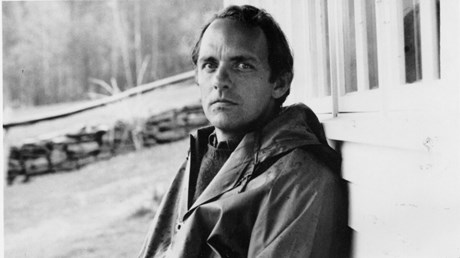
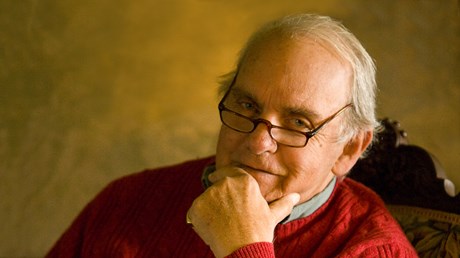
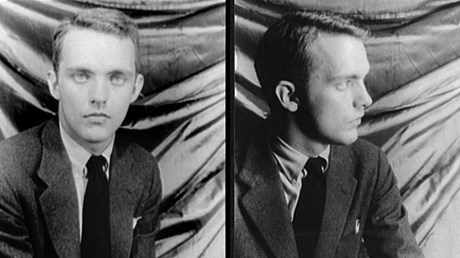
Died: Frederick Buechner, Popular Christian ‘Writer’s Writer’ and ‘Minister’s Minister’

Buechner died peacefully in his sleep on Monday at age 96, according to his family.

Frederick Buechner was asked on numerous occasions how he would sum up everything he had preached and written in both his fiction and nonfiction.

The answer, he said, was simply this: “Listen to your life.”

That theme was constant across more than six decades in his career as a “writer’s writer” and “minister’s minister” — an ordained evangelist in the Presbyterian Church (USA) who inspired Christians across conservative and progressive divides with his books and sermons.

Buechner died peacefully in his sleep on Monday (Aug. 15) at age 96, according to his family.

Born Carl Frederick Buechner on July 11, 1926, in New York City, he moved frequently with his family in his early childhood as his father searched for work, settling in Bermuda after his father’s death by suicide when he was 10.

His studies at Princeton University were interrupted by World War II, but he completed his bachelor’s degree in English in 1948. He quickly achieved fame with the 1950 publication of his first novel, “A Long Day’s Dying.”

When his second novel, in his own words, “fared as badly as the first one had fared well,” he moved to New York City to lecture at New York University and focus on his writing.

It was in New York City that he had an experience that changed the course of his life and work: He began attending Madison Avenue Presbyterian Church. Growing up, neither side of his family had a “church connection of any kind,” as he put it, but he went because he happened to live next door and “because I had nothing else to do on a Sunday,” he recounted in a video posted on YouTube by the Frederick Buechner Center.

Continue reading...


from Christianity Today Magazine https://ift.tt/MQDFlxi

Monday, 15 August 2022

A Shelf Called Remember: How Frederick Buechner Built Up My Faith

The late writer’s books upended the way I think about almost everything.

After I heard the news of the death of Frederick Buechner this week, I walked over to a bookcase in my study that I visit more than any other.

These shelves are filled with what seems too small to say are my “favorite” authors. These are the ones who kept me Christian, who upended the way I think or feel about everything. The Buechner section of that bookcase seems like a disorganized chaos. There’s no coherent genre. Here’s a novel, there’s a Bible study; here’s a dictionary, there’s not just one but several autobiographies.

And there’s no coherent chronology, either. They are stacked not in the order they were written but in the order that I found them. That’s because, when I look at each one, I am re-telling myself a story—of when I discovered each one of them, and what it was like to read each for the first time.

When I stand in front of those shelves, I’m doing what Buechner asked us all to do. I am listening to his life, and to my own.

The first book on the shelf is an old copy of A Room Called Remember, a collection of essays that I discovered as a teenager while rifling through the discard table of a public library. When I started reading, what caught my attention was a serious Christian who seemed to see what I could feel but couldn’t really articulate: that life is a mystery, a mystery that’s a plotline, a plotline that connects us with the story of Jesus.

These stories, he wrote, “meet as well as diverge, our stories and his, and even when they diverge, it is his they diverge from, so that even by his absence as well as by is presence in our lives, we know who he is and who we are and who we are not.”

Continue reading...


from Christianity Today Magazine https://ift.tt/5rXiqYB

Frederick Buechner, the Reverend of Oz

At 70, Frederick Buechner looks back on his ministry in letters. (From 1997)

Frederick Buechner died today (August 15, 2022) at age 96. Christianity Today has covered his books extensively over the years, and published several profiles of the beloved writer. Our sister publication Books and Culture was also enthusiastic; among its many reviews and pieces on Buechner was this 1997 profile by Philip Yancey.

Frederick Buechner has met Christians who remind him of American tourists in Europe: Not knowing the language of their listeners, they speak the language of Zion loudly and forcefully, hoping the natives will somehow comprehend. They seem cocky with faith, voluble with their theology, and content with a God who resembles a cosmic Good Buddy. Their certitude both fascinates and alarms him. “I was astonished to hear students at one Christian college shift casually from small talk about the weather and movies to a discussion of what God was doing in their lives. If anybody said anything like that in my part of the world, the ceiling would fall in, the house would catch fire, and people's eyes would roll up in their heads.”

Buechner himself has gained a reputation as a writer who speaks of his faith in more muted tones. Apart from a few childhood encounters, he hardly gave church a thought until he wandered into one in Manhattan as a young novelist whose star had flared brightly but briefly on the New York literary scene.

For him, faith was a pilgrimage undertaken voluntarily as an adult, a journey fraught with risk. Buechner’s chronicles of that journey have, almost uniquely among modern writings, managed to attract readers from two polarized worlds, the Eastern elite and conservative evangelicals. His work divides evenly between fiction (14 books) and nonfiction (13 books), and ...

Continue reading...


from Christianity Today Magazine https://ift.tt/eWn0BKI