Friday, 7 October 2022

Should Hispanic Churches in the US Preserve Spanish in Their Services?

Worship flows in the language of your heart.
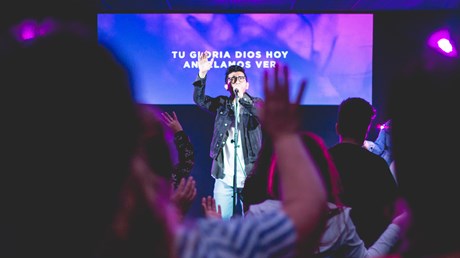
When Job González was 21, he felt God’s calling to dedicate his life to worship ministry. Raised in a Spanish-speaking family and church in Texas, he thought he would always sing the praises of the Lord in Spanish.

Since 1980, more Christians have spoken Spanish than any other language. Thanks to the growth of the church in Latin America, over 413 million believers have Spanish as their mother tongue today, compared to 250 million with English, according to the World Christian Database.

But Hispanics born in America have continued to prefer English over Spanish for worship. To González’s surprise, he ended up serving at a Hispanic Baptist church that moved away from the language.

In his hometown in Texas’s Rio Grande Valley, “Baptist Temple McAllen is a Hispanic church that, with the passing of generations, transitioned to have all its services only in English,” said González. “When the Lord called me to serve there it was pretty scary, because I had never led worship in English before.”

In Southern states with established Hispanic populations, spanning four or more generations of descendants born in the US, it’s more common to see Hispanic churches like the one in McAllen hold services in English only. Among newer arrivals, congregations stick to Spanish. Other churches offer a spectrum of bilingual, multilingual, and multiethnic worship, either with simultaneous translation or separate English and Spanish services.

Hispanic church leaders differ on whether the church has a role to play in preserving Spanish worship as a distinctive of their culture. Some believe worshiping in Spanish is central to their faith and services, while others believe it’s a ...

Continue reading...


from Christianity Today Magazine https://ift.tt/iU2yjL3

Moral Middle Candidates Want to Save America (But They Keep Losing)

Christians concerned about division, disinformation, and democratic norms are straining to reestablish the political center.

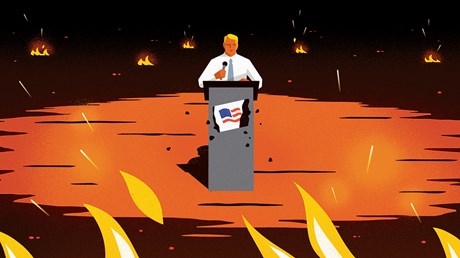
Phil Heimlich didn’t throw a party the night of the primary election. The Republican candidate didn’t gather his volunteers to watch the results come in, toast each other’s hard work, and crack inside jokes one last time as they waited to see how badly they’d lose to the incumbent congressman who props up election conspiracies.

He just went home.

He watched a movie with his kids and checked the vote tally on his phone as the ballots in Ohio’s Eighth Congressional District were counted.

His defeat didn’t surprise him. That didn’t make it taste less bitter.

“The problem, frankly, is that most evangelicals are on the wrong side,” Heimlich told CT.

Heimlich, a former Cincinnati city councilman and the son of the doctor who invented the Heimlich maneuver, was once a proud representative of the Religious Right. He still considers himself a conservative. And he’s still an evangelical. He attends Crossroads, a multisite megachurch.

But he’s not part of the Religious Right anymore.

Heimlich—along with a mostly unorganized group of candidates, activists, and operatives across the country—is straining to establish a religious middle. He likes the phrase “radical middle,” a term he learned from a Vineyard pastor.

Whatever it’s called, these are Christians who want to defend democratic norms against the partisanship that warps people into election deniers. They’re against the polarization that helps politicians win gerrymandered districts but doesn’t prioritize solving problems. They want the country to work. And they’re tired of toxic, trolling, apocalyptic politics.

Heimlich ran on support for Ukraine and the January 6 hearings and ...

Continue reading...


from Christianity Today Magazine https://ift.tt/aWZADz4

Thursday, 6 October 2022

No Doctrine of the Trinity Is an Island

As a new introduction emphasizes, the deep mysteries of Father, Son, and Spirit can’t be grasped in isolation.

Historically speaking, theological debates over the Trinity have been a major factor in the denominational breakdown of the church. Moreover, the extent to which these debates have influenced—and continue to influence—our individual conceptions of the Father, Son, and Holy Spirit cannot be overstated.

Take, for instance, the Filioque—the notion that the Spirit proceeds from the Father and the Son, as the Nicene Creed has it. The Filioque has been debated for over 1,400 years, heavily contributing to the church’s 1054 split into the Latin West (Catholicism) and the Greek-Byzantine East (Orthodoxy).

As those who reject the Filioque often argue, if the Spirit proceeds from the Father and the Son, then the Father’s unique role in the Trinity is undermined and the Spirit is made subordinate. Those in favor may retort: If the Spirit proceeds from only the Father, the Son’s divinity and salvific work are threatened. In short, acceptance or rejection of the Filioque affects how we define and distinguish the divine persons—and how we worship them, too.

This is true of the many other Trinitarian issues as well. And so, wrestling with how and why we think what we think about the Father, Son, and Spirit—how they relate, work, and reveal themselves to us—is an essential task. This task requires serious biblical, historical, and theological investigation.

Theologian D. Glenn Butner’s Trinitarian Dogmatics, an introduction to the doctrine of the Trinity, is a roadmap for just that. His approach to the Filioque is like that of the many other Trinitarian topics he tackles—ecumenical, fair, and nuanced. He distinguishes between hills to die on and hills to build bridges to, demonstrating ...

Continue reading...


from Christianity Today Magazine https://ift.tt/WwYnCtz

Wednesday, 5 October 2022

Bring Back Altar Calls

They could foster the worst in evangelical spirituality. But the best of it, too.

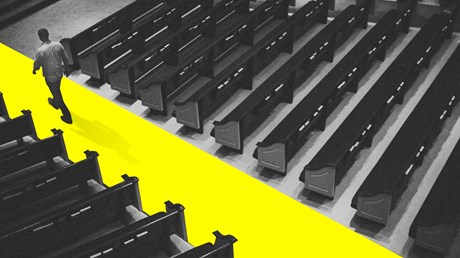
“Every head bowed and every eye closed.” If you recognize those words, you probably grew up in a church much like the one I did, where every worship service ended with an altar call or an invitation hymn. The pianist or organist played “Just As I Am” or “Softly and Tenderly” while those wanting to profess faith in Christ, rededicate their lives, or seek prayer could slip out of their pews and walk down the aisle to the front of the sanctuary.

The altar call is out of step with almost every sector of American Christianity right now, and it’s easy to see why. After all, an altar call can, at its worst, represent our key vulnerabilities as evangelicals, such as the confusion of an emotional experience with the gospel. How many nominal Christians in America, with hearts just as once-born as ever, have reassured themselves that they “prayed the sinner’s prayer”?

These practices also can appeal to our weakness for the quest of bigness, with pastors judged each week by how many people went forward. And an altar call can represent our tendency to be drawn toward novelty and away from the history and liturgy of the church.

Growing up, I almost assumed that altar calls were happening at the Council of Nicaea, or that Augustine of Hippo filled out a card noting his profession of faith (though he kind of did). I was a bit startled to learn that the invitation hymn the way I knew it—though rooted in older forms of revivalism—was mostly influenced by the Billy Graham crusades of the startlingly recent mid-20th century.

And yet.

In this publication a generation ago, historian Martin Marty argued that evangelical churches of that day were growing at least in part because ...

Continue reading...


from Christianity Today Magazine https://ift.tt/LqCZs60

Tuesday, 4 October 2022

Evangelical School Strikes Deal with Chick-fil-A

And other news briefs from Christians around the world.

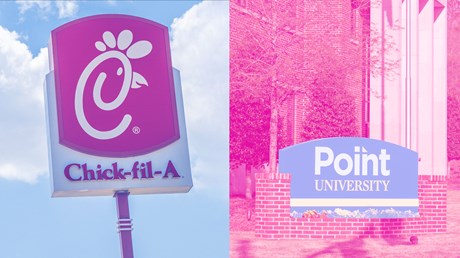
An evangelical school in Georgia has seen a dramatic increase in online enrollment from a cooperative agreement with Chick-fil-A. The owners of the fast-food chicken franchises pay a flat fee that allows all their employees to attend online classes for college credit at Point University. Chick-fil-A then uses that as an incentive to recruit and retain workers. Chick-fil-A CEO Andrew Cathy is on Point’s board, but the arrangement is not with corporate. When the program launched this fall, Point’s online enrollment increased from about 500 to more than 1,200. Sixty-five percent of evangelical colleges have seen enrollment numbers drop since 2014.

United States: Religious objectors to COVID-19 vaccine get $10 million

An Illinois health care system is settling a lawsuit with employees who were denied religious exemptions to COVID-19 vaccines. More than 500 employees requested religious exemptions but were told NorthShore University HealthSystem did not grant them, per a university policy. Nearly 300 resigned or were fired. If the terms of the $10.3 million agreement are approved by a federal court, those who complied with the vaccination requirement to keep their jobs will receive about $3,000 each, while those who lost their jobs will get around $25,000. This is the first class action settlement for health care workers claiming discrimination in COVID-19 mandates.

Chile: Problems raised with proposed constitution

A group of evangelical leaders and pastors objected to the proposal of a new constitution in Chile. They say it includes “extreme ideology” and increases division by recognizing 11 different groups while not acknowledging evangelicals. The new constitution would guarantee seats in parliament to ...

Continue reading...


from Christianity Today Magazine https://ift.tt/PVhJ4nq

The Woman Who Gave the World a Thousand Names for God

How a British linguist and a failed Nigerian coup changed everything about Bible translation.

In July of 2007, Bible translators from a dozen Nigerian languages came together in the rural town of Bayara, Nigeria, for a three-week workshop to begin translating the Gospel of Luke. They gathered in a steel-roofed school building with a number of outside consultants—some Nigerian, others American and British.

At the end of Friday, July 27, they had wrapped up their first week of work and made plans to unwind. Multilingual collaboration is taxing, and everyone was eager to eat dinner and watch a movie.

The translators gathered their papers, books, and laptops into bags and slung them over their shoulders. One of them grabbed a USB thumb drive attached to a lanyard, which they used to pass files back and forth and store backups of their work.

They walked half a kilometer through the warm evening air to a guest house where they were staying near the local hospital. The cooler rainy season had just begun, but this day had been neither cool nor rainy.

The group finished eating around 7:30, and Veronica Gambo, the wife of one of the translation consultants, made popcorn. She filled a bowl and was carrying it out to join the others in front of the television when men with automatic rifles burst through a door into the kitchen.

Gambo froze. A man put a gun barrel between her shoulder blades and marched her, still bearing the popcorn, into the living room.

“Get down!” Danjuma Gambo, Veronica’s husband, remembers the men yelling. They fired shots into the walls and ceiling. They forced everybody to the ground, including the translation project’s leader, a silver-haired British woman in her late 60s.

Andy Kellogg, an American working as a Bible translation consultant, was lying on the floor and wondering: ...

Continue reading...


from Christianity Today Magazine https://ift.tt/zfOplHh

Monday, 3 October 2022

‘Two Taels of Bread’ and Other East Asian Heresies

Misconceptions about Jesus, Scripture, and salvation prevail.

American evangelicals are moving away from orthodox understandings of God and Scripture. This year’s State of Theology survey revealed the top five misconceptions that US evangelicals hold, as follows:

  • Jesus isn’t the only way to God.
  • Jesus was created by God.
  • Jesus is not God.
  • The Holy Spirit is not a personal being.
  • Humans aren’t sinful by nature.

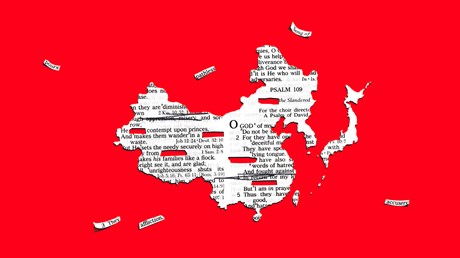
CT polled five Christian leaders in China, Hong Kong, Japan, South Korea, and Taiwan to find out whether these modern heresies are also widespread in their respective regions, how believers can address them, and what heresies may be more common in their contexts.

Aaron Chau (name changed for security reasons), a house church pastor in Hubei, China

Heresies in China are quite different from America. Based on this study, American evangelical heresies are greatly influenced by liberalism. In contrast, Chinese heresies are greatly influenced by fundamentalism and superstition.

Most Chinese Christians will accept the authority of the Bible to the point that they have turned the Reformation motto sola Scriptura into “Read the Bible alone.” Unlike how American evangelicals do not believe the Bible is literally true, some Chinese Christians are too devoted to the belief that the Bible is indeed so.

American heresies arise because Christians are highly educated. Chinese heresies occur due to a lack of theological education, which is why heresies are more widespread in rural areas than in cities.

The most influential Chinese Christian heresy is the belief that Christ was born in China and his second coming has literally happened. Eastern Lightning is the cult that created this heresy based on their reading of Matthew 24:27. Another popular heresy, “Two taels of ...

Continue reading...


from Christianity Today Magazine https://ift.tt/PyA0z9H