Wednesday, 9 November 2022

Will Elon Musk Welcome The Babylon Bee Back to Twitter?

The increasingly political Christian satire site hasn’t been able to tweet since March, but the platform’s new owner is a fan of the Bee and free speech.

There may be a lesson in the recent troubles of the social giant Twitter.

Don’t mess with The Babylon Bee.

Started as a site to poke fun at Christian subculture, the Bee’s political satire has come to overshadow its more kindhearted Christian humor in recent years, landing the site in hot water with fact-checkers and social media gatekeepers—including Twitter.

Twitter suspended The Babylon Bee’s account on March 22, after labeling a post about transgender Biden administration official Rachel Levine as hateful content. Not long afterward, billionaire Elon Musk, a fan of the site, got a text from his former wife, Talulah Jane Riley.

“The Babylon Bee got suspension is crazy!” read the text, which was made public earlier this year. “Why has everyone become so puritanical?” Then Riley suggested Musk buy Twitter and either delete it or “make it radically free-speech.”

Musk, who recently bought Twitter for $44 billion and instituted mass layoffs, was a critic of censorship on social media long before the Bee’s troubles. But the satire site’s connection to one of the most powerful men in the world is the latest example of the Bee’s rise from a would-be pastor’s side project to a conservative powerhouse.

The Bee, modeled similarly to secular satire site The Onion, began as the brainchild of Adam Ford, who quit his day job in the mid-2010s to start creating web content. Ford’s dreams of becoming a pastor had been derailed by panic and depression, he told The Washington Post in 2016.

With the help of medication, Ford got better and began writing about faith, first for a webcomic and then in 2016 for the Bee. From the beginning, the site was a hit, especially ...

Continue reading...


from Christianity Today Magazine https://ift.tt/aO86XPW

If You See Something Unjust, Say Something

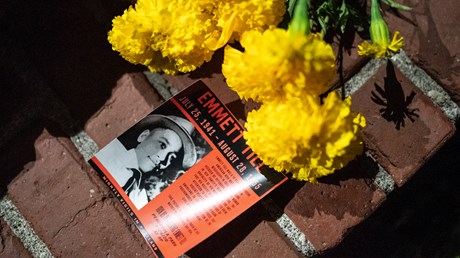
The new Emmett Till film tells a story of racial apathy that still haunts the church today.

I remember watching with great interest as President Biden signed the Emmett Till Antilynching Act into law on March 29, 2022. After 200 failed attempts over a 100-year span, legislators finally succeeded in outlawing lynching as a federal crime.

My interest in the bill centered on legislators’ decision to name it in honor of Emmett Till, the 14-year-old Black youth from Chicago’s South Side. His 1955 lynching inspired a generation of activists for racial justice.

Till ran afoul of revered Southern traditions when he whistled at a white woman, Carolyn Bryant, while visiting family in Mississippi. In response, Bryant’s husband, Roy, and his half-brother John William Milam abducted Emmett from his family’s home, tortured him, cut his life tragically short by a single gunshot to the head, and then discarded his lifeless body in a nearby river.

He was so disfigured after their vicious assault that his family was able to identify him only by the ring he wore on his hand. Despite overwhelming evidence and even confessions, Bryant and Milam were never held accountable for Till’s lynching.

His mother, Mamie Till-Mobley, brought his mutilated body back to Chicago. Against the wishes of local city officials, she made the courageous choice to hold an open-casket funeral for her son, deciding to “let the world see what they did to my boy.”

The outcry following his death provided a catalyst for the civil rights movement. Rosa Parks would later explain, “I thought about Emmett Till, and I couldn't go back [to the rear of the bus].”

Almost 70 years later, we continue to retell Till’s story in the face of racial controversy.

The recent feature-length film Till, starring Danielle ...

Continue reading...


from Christianity Today Magazine https://ift.tt/JxuNmLX

Tuesday, 8 November 2022

With a Small Shift in Evangelical Votes, Brazil Elects Lula

Left-wing challenger directly addressed Christian concerns in final days of runoff.

Brazil president Jair Bolsonaro and his surrogates worked to win evangelical voters up to the final hour of the runoff election on October 30.

Christian influencers posted pictures with him on Instagram, proudly announcing they would be supporting Bolsonaro’s bid for a second term. And First Lady Michelle Bolsonaro rallied women at Rio de Janeiro’s Assembleia de Deus Vitória em Cristo (Assembly of God Victory in Christ), one of the largest churches in the country.

“Beloved, it would have been nice if we had won in the first round,” she said. “But we needed this second round for the awakening of the church.”

To Christian voters not persuaded by the president’s own faith—though the Catholic former military officer was rebaptized six years ago in the Jordan River—Michelle offered her own evangelical bona fides.

“Don’t look at my husband, look at me,” she said. “I’m a servant of God.”

But these efforts ultimately proved insufficient. One trusted poll released days before the election showed evangelical support shifting slightly—just four points—from Bolsonaro to his Workers’ Party challenger Luiz Inácio Lula da Silva. But when the votes were counted, “Lula,” as he is universally known, won the election by less than 2 percent.

Some observers credit the swing to Lula’s decision to directly appeal to some of evangelicals’ core concerns.

Lula, a former president, became eligible to run for office in March 2021 when the corruption convictions that had sentenced him to 12 years in jail were annulled. Running for president, though, his primary outreach came through biblical references in campaign ...

Continue reading...


from Christianity Today Magazine https://ift.tt/MiGjRDy

The Demise of Jerry Falwell Jr. Makes for Great Media Fodder

But how should Christians be engaging it?

There’s no sanitary way to recount the downfall of Jerry Falwell Jr. How could there be? The saga hinges on an illicit relationship between the former president of Liberty University; his wife, Becki; and a young pool attendant at Miami’s Fontainebleau hotel. Not a great start, and it gets worse.

In 2012 Jerry and Becki seduced the 20-year-old Giancarlo Granda and, over the next seven years, kept him in their thrall with promises of financial success, implicit threats of exposure, and assistance from a well-placed fixer. All this while Falwell presided over one of the largest Christian universities in the world.

It’s no surprise the story would spark all manner of exposés. Rolling Stone, Vanity Fair, The New Yorker, and others have all covered it. More recently, Granda himself has published his side in Off the Deep End. Granda also speaks out in Hulu’s new documentary God Forbid.

Predictably, other sordid tales have surfaced as well, of Becki aggressively pursuing a Liberty student and Jerry regularly showing up to work drunk. The more we learn, the more we cringe. And the hits keep coming.

Pulling back the curtain yet more, the Gangster Capitalism podcast uncovered even deeper levels of corruption at Liberty. That series in turn paved the way for a ProPublica investigation into the school’s mishandling of Title IX complaints, where numerous Liberty students and staff charged the school with indifference and bullying after they reported being sexually assaulted. This alleged institutional misconduct spurred a lawsuit against Liberty that was settled this May.

But that’s far from the last we’ll hear of this tragedy. At least two other television productions about Liberty are underway: ...

Continue reading...


from Christianity Today Magazine https://ift.tt/ZQ6VIfh

150 Weeks of Composing Psalms Reaches Its Finale

After nearly three years, Poor Bishop Hooper’s accidental pandemic project concludes with a new psalter for the church.

The singing of psalms spans thousands of years of church tradition. Today’s songwriters and worship leaders mine these texts for words and inspiration as they craft new songs for the church.

For the past three years, Jesse and Leah Roberts—who perform as the duo Poor Bishop Hooper—have sung every word of every psalm and are hoping to help revive widespread interest in the singing of Scripture.

Their project joins a history of singing psalms that spans centuries, from monastic recitation to contemporary songwriters and worship leaders who mine these texts for words and inspiration.

“We should have songs that are not only upright but holy, that will spur us to pray to God and praise Him, to meditate on His works so as to love Him, to fear Him, to honor Him, and glorify Him,” wrote John Calvin in his preface to the 1543 Geneva Psalter, which guided Reformed churches in the practice of singing unaccompanied metrical psalms.

“Though we look far and wide we will find no better songs nor songs more suitable to that purpose than the Psalms of David.”

For the monk in the medieval monastery, chanting all 150 psalms each week, the psalms “were his daily bread, words always on his lips, the foundation of his life of prayer,” wrote musicologist James Dyer.

Chanting the entire Book of Psalms each week required total devotion, a rhythm of life built for prayer. Releasing an original song based on a chapter in Psalms each week—as Jesse and Leah Roberts did with their recent EveryPsalm project—required its own kind of creative focus and commitment.

For the past three years, the Psalms have been musical and spiritual sustenance for the Robertses, who perform and write as Poor Bishop ...

Continue reading...


from Christianity Today Magazine https://ift.tt/CfwYqTS

Monday, 7 November 2022

Why Do Chinese People See Christianity as a Cultural Invasion?

“Buddha rode into China on a white elephant, while Jesus rode in on a cannonball.”

Since Christianity (or at least some form of it, the Nestorian Church) arrived on the shores of China in A.D. 635, it has been perceived as a foreign religion and hence irrelevant for the culturally Chinese. The “One more Christian, one fewer Chinese” chant in the 1919 May Fourth Movement further reinforced and perpetuated the misconception that when one chooses to follow Jesus, one has denounced one’s Chinese identity to go after a foreign or Western god and ideology. A Chinese commits a great offense against his ancestor and nation when he pledges allegiance to Jesus.

According to historian Wu Xiaoxin, the propaganda that impacted the Chinese the most is the claim that “religion is the opium of the people.” One of the main contributing factors to the hostile reaction to Christianity is nationalism. Anyone familiar with the events in this part of the world during the mid-1800s would realize the baggage this statement bears.

Connection to Western imperialism

Since the 19th century, Christianity has been associated with Western imperialism in the minds of Chinese people. Both Catholics and Protestants came to China together with Western imperialists.

In fact, many of the Western missionaries of that generation rode on the coattails of the European opium traders to bring the gospel to the Chinese.

For example, Karl Gützlaff, an early Protestant missionary to China, joined the Jardine Matheson opium fleet as an interpreter in order to reach more Chinese with the gospel. Former Peking University president Jiang Menglin aptly described this historical baggage when he compared the arrivals of Buddhism and Christianity in China: “Buddha rode into China on a white elephant, while Jesus rode in ...

Continue reading...


from Christianity Today Magazine https://ift.tt/KpgiEPb

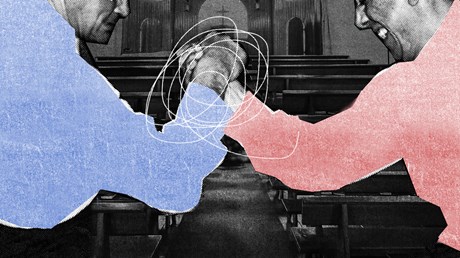
3 Principles for Settling Political Spats in the Church

When we see civic engagement as a limited strategy rather than a source of moral identity, we’re better equipped to reach across the partisan aisle.

Every election season, some Christians remind us that “Jesus is not a Republican or a Democrat.”

But every election season, other Christians tell us that it’s wrong to vote for a candidate who supports abortion, or that Christians should vote only for candidates who will fight racial injustice.

With issues of grave moral import on the ballot—human life, religious liberty, marriage, economic and racial justice, and health care for the vulnerable—surely God must care how we vote. Yet it’s also clear that Christians can’t agree on how to vote, even when issues related to biblical teachings are at stake.

Some Christians proudly wear MAGA hats, fly large Trump flags, and cheer Republican politicians when they visit their churches, partly because they believe the GOP is the only party that will stop abortion or defend the right of conservative Christians to act on their convictions regarding sexual ethics.

Other Christians write editorials arguing that support for Trump is a surrender of evangelical values, because they believe his actions and rhetoric (echoed by other Republican politicians) cannot be squared with the Bible’s injunctions to love the stranger, care for the poor, or treat other people as divine image-bearers.

How, then, should Christians relate to other Christians with whom they disagree politically? Is there a way for us to find common ground in the gospel, even while being open with each other about our political differences?

There is, but doing so will require us to move beyond an idea that has become pervasive in the United States: the assumption that our morality is defined by our political choices.

One 2020 poll showed that 38 percent of Americans would be “upset” ...

Continue reading...


from Christianity Today Magazine https://ift.tt/OS7B2U1