Wednesday, 30 November 2022

Amid China’s Rare Protests, Christians Wrestle With Their Role

Chinese church leaders hold differing views on political participation but stress the need for prayer and evangelism 
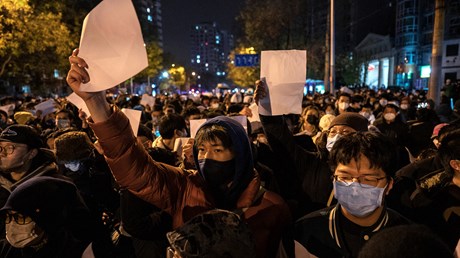
During the unexpected protests in China last weekend, a student approached Zhu Jianshe with concerns that a classmate who had posted a protest slogan on campus would be severely punished. Zhu, a professor at a university in Shanghai and a church elder, comforted her and vowed to do his best to protect the student.

“I have been preparing in my mind for the past two days that I may have to sacrifice something to protect the students if the situation calls for it,” said Zhu. (CT has changed all of the names in this article for their security)

As demonstrations in several cities around the country have made international news, Zhu has been thinking through how Christians can engage with the current moment. One area where he knows he can help: using his position to help those unable to speak for themselves.

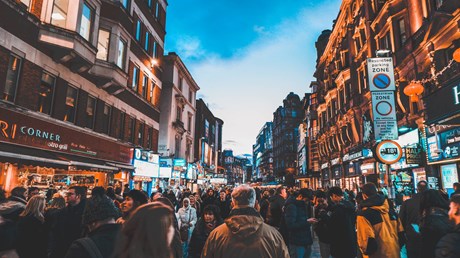
It’s a question Christians in China are now grappling with as the country experienced the largest protests in 33 years since Tiananmen Square. While typically the Chinese government quashes any nascent movement, a deadly fire in an Urumqi apartment building led to a national outpouring of frustration over China’s “Zero Covid” policy. In major cities like Shanghai, Beijing, and Chengdu, hundreds of people took to the streets. At times, calls expanded to freedom of speech and even an end to Chinese leader Xi Jinping’s rule.

Christians in Chinese house churches have long faced government persecution but historically tended to stay away from politics, focusing on shepherding believers and evangelism. Yet especially among the urban house churches influenced by Reformed theology, this attitude is changing.

This past weekend, members of a banned house church in Chengdu held up paper signs scrawled ...

Continue reading...


from Christianity Today Magazine https://ift.tt/EhTSaMX

Evangelical Giving Goes Up, Despite Economic Woes

Report: Nonprofits saw a sizable increase in donations, while many megachurches struggled.

Needs rose last year. But so did giving to evangelical ministries.

The annual State of Giving report from the Evangelical Council for Financial Accountability (ECFA) found giving to ministries increased more in 2021 than it had any year out of the last 10. Inflation and the pandemic both raised real concerns for ministry leaders trying to make ends meet, but evangelicals responded to the crises with generosity.

The ECFA survey of about 1,800 members found they received more than $19 billion in donations in 2021. Adjusting for inflation, giving went up by about 3 percent. In the last 10 years, the increase has been closer to 2 percent.

“Contrary to what many expected, giving during the pandemic to ECFA members was strong,” Michael Martin, ECFA president and CEO, wrote in the report. “The findings we unveil emphasize the good work that ECFA members are doing to serve and expand their services in the face of inflation and other challenges.”

If Christians are excited and optimistic about the work of parachurch organizations, though, the numbers reveal a different story when it comes to megachurches. The ECFA surveyed 87 churches that belong to the financial accountability organization. Giving to those congregations dropped by 6.6 percent in 2021, following a decline of 1.1 percent the year before.

Jake Lapp, ECFA vice president of member accountability, attributed the decline to the COVID-19 pandemic. Some churches have reported that they are still only at 50 percent of pre-pandemic attendance.

“One of the big impacts is with churches not being able to meet or maybe meeting with limited capacity again,” Lapp said. “Congregants had been slow to return to the pews.” The decline in giving ...

Continue reading...


from Christianity Today Magazine https://ift.tt/IGgkp5m

In England and Wales, Christianity Falls Below Half the Population

Analysis: The rise of the nonreligious raises questions for the faithful in a new era of pluralism and diversity.

Remember those math puzzles you used to do as a kid? What’s the next number in this sequence: 2, 5, 11, 23, … ? Or maybe try this one: 2, 4, 10, 28, … ?

Well, I’ve got another one for you: 71, 59, … ?

I’ll admit this one is trickier as you’ve got only two numbers to get going, but if you said “47,” you’d be on the right track.

The true answer is, in fact, 46—that being the percentage of people in England and Wales who, in the 2021 census, ticked the Christian box. Having been 71 percent in 2001 and 59 percent in 2011, it’s now 46 percent. Anyone want to take any guesses for 2031?

The decline in the proportion of adults in England and Wales (and in Scotland and Northern Ireland too) calling themselves Christian should shock no one who hasn’t been on Mars these last two decades.

Nor should the rise of the nonreligious category, reaching 37 percent this time and set to become the biggest single group in the country next time.

The demographic and cultural trends have been pointing in this direction for over half a century. What the census has done is clear up some of the uncertainty that always swirls around polling data, while also giving us a level of granularity that reveals how minority religious groups—Buddhists, Hindus, Jews, Sikhs, and others—have all increased in numbers over the last decade.

At this point, the usual lines of argument from the usual suspects will go forth and multiply. Some religious groups will try to claim that the nonreligious are actually, in fact, religious; they just don’t know it. That won’t wash. People tick the no-religion box for a reason. Nonreligiosity may be complex—but ...

Continue reading...


from Christianity Today Magazine https://ift.tt/3k2HvBW

Tuesday, 29 November 2022

There Is No Such Thing as a ‘Safe Space’

Our culture values self-protection. But true love demands that we move toward each other.

One particular argument will figure in our family lore for generations: the adults upstairs, lancing one another with loud accusations, while the children downstairs slowly realized the holiday movie, planned for the afternoon, would not be.

Years later, I can’t remember the reasons for our conflict among extended family members. I only know the conditions were right. The “most wonderful time of the year” was upon us, and expectations were at a fever pitch.

It’s a risky business, this thing we call love. Unfortunately, in our cultural environment today—when personal safety is prized so highly—I fear we grow less and less tolerant for the normal bruising that happens in the contact sport of human relationships. We will love insofar as we are never hurt.

A quick swipe through social media reveals a lot of relationship advice centered on self-protection. We are taught to be vigilant against injustice, to repudiate toxicity, and to avoid situations that make us feel unsafe. The law of no trespass has become inviolable.

To be clear, I celebrate the growing emphasis on accountability. It is good and right to protect victims from abusers, and I welcome the more precise ways we’ve come to name the violations of human trust. Importantly, the Christian gospel never diminishes the trauma of sin and the necessity of repair. With a crucified Messiah at its very center—a scapegoat made to suffer for the sins of the world—it is a story that upholds the necessity of justice.

Still, I worry we are growing unrealistic in our expectations for human relationships. We seek safety, by which we often mean invulnerability. We imagine that incurring wounds in a relationship signals reasons to quit, ...

Continue reading...


from Christianity Today Magazine https://ift.tt/QRA1P4I

Former Southern Seminary Prof Sues SBC Leaders for Labeling Him an Abuser

David Sills admitted to misconduct but claims he has been “falsely attacked” by Southern Baptists and their investigative firm.

A former seminary professor and missionary who admitted sexual misconduct has sued a group of Southern Baptist Convention leaders and entities, claiming they conspired with an abuse survivor to ruin his reputation.

In a complaint filed November 21 in the Circuit Court of Mobile, Alabama, David Sills, a former professor of missions and cultural anthropology at Southern Baptist Theological Seminary, admits he lost his job in 2018 due to what he called “morally inappropriate consensual intimate” conduct with a student.

Sills claims the situation was consensual and alleges that SBC leaders, including Southern’s president, Albert Mohler, turned his confession against him, labeling him as an abuser.

They did so, according to the complaint, as a public relations stunt, aimed at improving the SBC’s reputation during a national sexual abuse scandal. That public relations effort, according to the suit, included an investigation by Guidepost Solutions into SBC leaders’ handling of alleged abuse cases, which was made public earlier this year.

“David Sills was repentant and obedient to the rules of the SBC,” the complaint alleges. “Defendants saw him as an easy target; a bona fide scapegoat.”

The complaint names Southern seminary and Mohler, as well as the SBC’s Executive Committee, SBC President Bart Barber, and his predecessor Ed Litton as defendants, along with several other leaders. Also named as a defendant is Lifeway Christian Resources, a research and publishing arm of the SBC, and Guidepost Solutions.

It also names Jennifer Lyell, a former seminarian and vice president for Lifeway, who has repeatedly alleged that Sills was abusive, an allegation Mohler has also made on social ...

Continue reading...


from Christianity Today Magazine https://ift.tt/QZr2IiE

Monday, 28 November 2022

Died: Jason David Frank, Power Ranger Who Pointed to Christ’s Power

He trusted in God's strength because “Jesus didn’t tap.”

Jesus didn’t tap.

It wasn’t a joke to Jason David Frank. It wasn’t just a T-shirt or the first Christian line of mixed martial arts apparel or just the cool, multicolored tattoo he bore prominently on his forearm.

It was a statement of faith: We are weak, but he is strong; people are frail and fail and succumb to sin, but Christ bore all human weakness and conquered sin; dying he destroyed death. His love never fails. Jesus doesn’t tap.

“To me, he’s the true champion, he’s the only champion,” Frank told the Houston Chronicle in 2010. “There’s really only one true champion who’s been through, like, enduring pain, and that’s Jesus.”

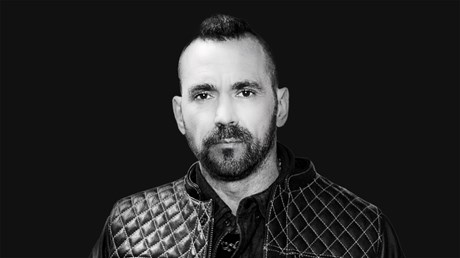
Frank—who became famous for playing the Green Ranger and the White Ranger on the kids’ TV show Mighty Morphin Power Rangers, developed and taught his own form of martial arts called Toso Kune Do, and launched the Jesus Didn’t Tap line of apparel—died on Saturday, November 19. He was 49. It has been widely reported that he died by suicide.

Fans reacted to news of his death with anger, disbelief, empathy, bitterness, sarcasm, and sadness.

“[I’m] in shock and sad and don’t know how to take this. … jesus didn’t tap remember jason? why did you tap out like this????,” one fan wrote on Twitter.

“That’s sad man!” another said. “He’s been fighting for a min[ute].”

Fans gathered on Frank’s official Facebook page on Monday morning after the Thanksgiving holiday to celebrate his life and share how much he meant to them. They talked about watching Frank on the Power Rangers and meeting him at comic-con events, and shared how he encouraged ...

Continue reading...


from Christianity Today Magazine https://ift.tt/zClZWyg

Thursday, 24 November 2022

Indonesian Churches Organize to Aid Earthquake Survivors

After a powerful quake hit the island of Java this week, a network of local Christians raced to help.

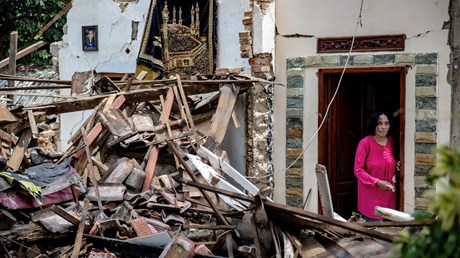
When Denny Tarigan arrived in the remote village of Gasol, the earthy smell of wet soil assaulted his senses.

The sound of ambulance sirens permeated the air. Cars and motorcycles filled the narrow dirt roads. As the Indonesian Christian aid worker looked around, he saw blue makeshift tents lined with mats and blankets that were full of earthquake survivors, including children and the elderly.

What he also saw: Smiles on the villagers’ faces.

“The people are strong enough to survive this,” said Tarigan, who took a 10-hour car ride from his hometown of Yogyakarta to Cianjur, the regency where Gasol is located, on Wednesday.

“Most of them just don’t know what to do after this,” he said. “For now, they think that they need help from the government and other [disaster relief] agencies.”

While it is common in the United States for churches to engage in disaster relief, in Indonesia most humanitarian aid is provided by government agencies, international NGOs, and Muslim aid groups.

It is only in the past several years that Indonesian churches have started to engage in disaster relief, said Effendy Aritonang, the Indonesia country director for Food for the Hungry and secretary of the executive team of Jakomkris, the Christian Community Network for Disaster Management in Indonesia.

Engaging the aftermath

When the 5.6-magnitude earthquake occurred on Monday morning, Aritonang, Tarigan, and other members of Jakomkris kicked into action.

Made up of Indonesian nonprofits and churches, the team called for a coordination meeting to begin identifying needs and figuring out who could provide assistance.

A Mennonite group showed up to provide clean water. About 10 doctors and 20 nurses from a Christian ...

Continue reading...


from Christianity Today Magazine https://ift.tt/OqioDa5