Wednesday, 8 February 2023

Let There Be Radio: Lebanese Evangelicals Launch FM Station

Persevering amid the world’s biggest economic crisis, BeLight has found an appreciative audience by offering hope and local Arabic worship.

Radio first brought Nolla Azar fame. Then it brought her Jesus.

Today she uses it to bring others to him, via a new ministry.

“I know how to get women’s attention,” said the host of Listening to You, an afternoon talk show on Lebanon’s BeLight FM. “I use the same methods here, but for a higher purpose.”

Once working with Dubai-based MBC, one of the largest media companies in the Middle East, Azar returned to Lebanon in 2009 after desiring the warmth of home. Frustrated by the lack of opportunities she found in the local industry, she turned instead to social media and became a celebrated influencer.

Doing a podcast for women, she accumulated 275,000 followers on TikTok, boasting 17 million views. Still, she felt empty, complaining often to her mother about dissatisfaction with her finances, career, and love life.

In 2021, COVID-19 isolation sparked a spiritual search. Maronite Catholic by background, she read books about God, watched religious TV, stumbled upon a new and unheralded radio station, and gave her life to Christ.

Today, she is one of its top-rated hosts.

“When I first came [to BeLight], it was hard to balance between entertaining people and being ‘Christian,’” said Azar. “But it is God who brought me here, and when lifting people’s spirits, I redirect them to Jesus.”

She has contributed to the increasing professionalism among a motley crew that is quickly growing in popularity. BeLight began on Thanksgiving Day 2020 as an initiative of Arabs determined to launch a Protestant-led FM station in Lebanon. Many had backgrounds in TV production, but none in radio.

It began with 90-percent worship music, culled from English-language favorites and the ...

Continue reading...


from Christianity Today Magazine https://ift.tt/fy3sNY0

Super Bowl Fans Don’t Need a Linebacker Jesus

Using sports to market Christ has a long history, but Sunday’s iteration might skip the muscles for heart.

This year during the Super Bowl, all eyes will be on Jesus—at least during the two ads sponsored by the He Gets Us campaign.

Aiming to make Jesus more relatable through a massive public relations campaign, He Gets Us has already received plenty of attention and criticism. What fascinates me, as a historian of American sports and Christianity, is its continuity with the past. By choosing the Super Bowl as the moment for its “largest splash” to date, the He Gets Us campaign is standing in line with Christian marketing efforts that date back a century, while also attempting to chart something new.

One hundred years ago, American Christian leaders worried about polarization and irrelevance in a rapidly changing culture. Division threatened to split churches, with modernists and fundamentalists battling for control of denominations. A surging white Christian nationalism, embodied in the second coming of the Ku Klux Klan, wedded a white supremacist understanding of American identity with Christian language and symbols. Meanwhile, many young Americans opted out of formal religion altogether, showing more interest in baseball games and prizefight boxing than church.

Into this moment of crisis stepped a leader in the advertising industry named Bruce Barton.

The son of a preacher, Barton looked at the Christian anxieties of his age through the eyes of his marketing expertise and saw a public relations problem. The image of Jesus had gotten tied up in narrow controversies and outdated modes of understanding. Americans, particularly men, did not find him compelling; Christ did not speak to their needs.

Barton’s solution? Write a book that could demonstrate the human Jesus’ relevance to a changing culture. Focus ...

Continue reading...


from Christianity Today Magazine https://ift.tt/AvNSoP5

Why Chinese Immigrant Pastors Avoid Preaching on the News

On Sunday mornings, congregations tend to focus on Scripture over current events, even after last month’s Lunar New Year shooting.

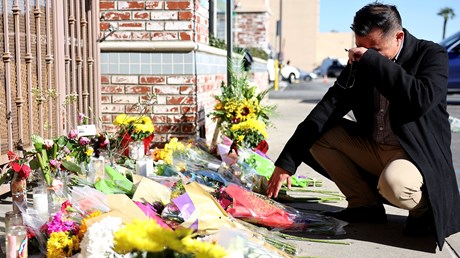
The morning after a mass shooting by a Chinese gunman killed 11 people in a predominantly Chinese suburb during Lunar New Year festivities last month, news and commentators buzzed about the weight of the tragedy for the Asian American community, but many Chinese churches in the US didn’t bring it up. Current events rarely make it into sermons or public statements from the pulpits at Chinese congregations, a reality that makes them outliers among American churches.

At James Hwang’s Chinese church in Southern California, the pastor brought up the shooting in the area only during the announcements, when he suggested that congregants pray for those affected by the tragedy.

“Most of the brothers and sisters didn’t seem to talk about it either,” said Hwang, a retired pastor and ministry leader.

The majority of Chinese churches in the US leave current events at the door. For some, it’s a deliberate decision to avoid politics in the pulpit for the sake of unity among their flock. They are concerned that discussion of current events may become a distraction or cause divisiveness. They believe that Sunday gatherings should focus on worship, God’s Word, and gospel proclamation, and it’s important to keep that a priority over what’s happening outside the church.

“Jesus’ focus was always on the gospel. He wanted to talk about sin and judgment,” said Kris Wang, who serves as an elder in a Chinese church in Lansing, Michigan. “He didn’t want to blur the focus of the gospel by talking about current events, theology, or political issues.

“I am not opposed to talking about current events in church, but I think we need to be careful about the negative effects ...

Continue reading...


from Christianity Today Magazine https://ift.tt/xEXmlU0

Tuesday, 7 February 2023

Turkish and Syrian Christians Rally Earthquake Relief

With one pastor dead, another saved, and churches of all denominations destroyed, local believers race to the frontlines of emergency response.

Local Christians were among the first responders to the massive earthquake in Turkey and Syria that left more than 5,000 people dead and more than 20,000 injured. They just don’t know how to make sense of it.

“God have mercy on us, Christ have mercy,” said Gokhan Talas, founder of the evangelical Miras Publishing Ministry in Istanbul. “This is our only spiritual reflection right now.”

His first instinct was to go. But as reports came in of deep snowfall and damaged roads, he shifted gears. His wife stayed up all night making phone calls to believers in Malatya, trying to coordinate aid. And with members of his church and Protestant congregations throughout Turkey, they bought blankets, medicines, baby formula, and diapers to send onward to the afflicted areas.

“From this side of eternity, nothing is clear,” Talas said. “But our sweet Lord is suffering with us.”

He warned of scams preying on the outpouring of generosity from around the world, even among the small Turkish evangelical community of roughly 10,000 believers.

Their own supplies are being donated through İlk Umut Derneği—in English, First Hope Association (FHA), a Turkish Protestant NGO working closely with the local Red Crescent and AFAD, Turkey's Disaster and Emergency Management Authority.

Officials said more than 5,000 buildings have been destroyed by the 7.8 magnitude quake. More than 13,000 search and rescue personnel have been deployed, supplying 41,000 tents, 100,000 beds, and 300,000 blankets. Almost 8,000 people have been rescued so far.

This includes pastor Mehmet and his wife Deniz in Malatya, longtime friends of Talas, who spent half the day freezing under the rubble until neighbors succeeded ...

Continue reading...


from Christianity Today Magazine https://ift.tt/BtIXjmS

A Mighty Controversy Is This Book

The Lutheran Church–Missouri Synod resumes distribution of Large Catechism after “far right” critics push back on essays.

The Lutheran Church–Missouri Synod (LCMS) has resumed distributing its new annotated edition of Luther ’s Large Catechism over the objections of some of the denomination ’s most conservative members and pastors.

Luthers Large Catechism with Annotations and Contemporary Applications contains the unaltered text of Luther ’s Large Catechism, a core Lutheran doctrinal statement, with 80 essays applying Luther ’s ideas in modern society. The book is over 700 pages long.

Concordia Publishing House released the work in mid-January, but two weeks ago, LCMS president Matthew Harrison announced that he had asked the denominational publisher to stop distribution so they could “evaluate the comments and critiques received and revisit our doctrinal process.”

Critics raised concerns that some of the essays, which are not Lutheran doctrine, mishandle current issues like racial justice, human sexuality, and gun rights.

In an email to Christianity Today, Harrison described the controversy as a “handful of quotations were taken out of context to allege some conspiracy to import CRT, sexual ambiguity, and woke issues in general into the LCMS.”

By February 2, he had asked Concordia Publishing House to resume distribution.

Harrison said he does not have the authority to halt a publication that has been through the doctrinal review process, and that “while some things might have been expressed more clearly, nevertheless, there is nothing in the content of the volume promoting critical race theory (CRT), confusion of sexuality issues, or any theological position at odds with biblical and confessional Lutheranism.” ...

Continue reading...


from Christianity Today Magazine https://ift.tt/dSoGRCj

Monday, 6 February 2023

People Perish for Lack of Religion

Deaths of despair are on the rise in our country. What is the role of the church?

Today our society is suffering from an epidemic of self-harm, culminating in the most final form of suffering on this earth—in “deaths of despair.”

These deaths speak to the harm inflicted on oneself through overdosing, suicide, or health issues from alcoholism. They manifest despair as a way of coping (or trying to end) one’s suffering of physical or mental pain.

A new study makes the case that a loss of religion has played a significant part in this rise. This does not necessarily entail atheism, as many of these people may continue to believe in God or some other kind of spirituality. Rather, it involves no longer participating in organized religion within a faith community.

Previous research has shown that men and women who regularly attended religious services at least once a week were less likely to die of despair. Which means, as Tyler VanderWeele and Brendan Case point out in a CT article, “Empty pews are an American public health crisis.”

The individualization of religion and the isolation of its experience are two factors contributing to this trend. We live in times of great confusion regarding how God created us—and among the lies we struggle with is believing that community is something we can take or leave.

When God declared of Adam “It is not good for the man to be alone” (Gen. 2:18), he revealed that he’d created human beings to be inherently social by nature. What was good for Adam was community, of which his marriage to Eve was the first manifestation.

The partnership of marriage, as well as other communities today—including neighborhoods, civic organizations, and political affiliations—all lack sufficient or healthy participation. This results ...

Continue reading...


from Christianity Today Magazine https://ift.tt/KXwLgop

New Life Rising

Welcome. This year, you are invited on a journey through the somber season of Lent, into the dark depths of Good Friday, and out into the marvelous light of Easter and the resurrection of Jesus Christ. In these pages, you will be led through the landscape of Jesus’ homeland and the journey he takes through times of confusion, despair, hope, and into everlasting joy.

As you know, the church is at a pivotal point where it seems like familiar ideas, methods, and comforts are dying. It is natural to fear a sense of decay—whether physical, moral, political, or relational—but the season of Lent and Easter show that sometimes things must die in order to bear a new fullness of life.

Through the devotional writings and artistic illustrations in this special issue from Christianity Today, a variety of pastors, theologians, and thinkers offer their perspective on what we must let die in our day and age, in order to come to terms with reality and live in the renewal that Easter promises. The term memento mori is a Latin expression symbolizing the reminder that death is inevitable. As we journey through this season of Lent and Easter together, let’s wonder and discuss what we believe needs to die in order to lead to vibrant life in our unique contexts of vocation and community. We hope this helps you embrace the gift of the gospel and leads to deeper life and love, both in this world and the one to come.

This article is part of New Life Rising which features articles and Bible study sessions reflecting on the meaning of Jesus’ death and resurrection. Learn more about this special issue that can be used during Lent, the Easter season, or any time of year at http://orderct.com/lent.

Continue reading...


from Christianity Today Magazine https://ift.tt/7mSQMXe