Tuesday, 4 April 2023

In Times of Tragedy, I Find Solace in Scriptural Art

As the world reels from yet another school shooting, we can find a refuge in the Bible on canvas.

As a pastor serving a local church near my alma mater, Michigan State, I was invited to stand at a listening post along with comfort dogs the day after last month’s shooting.

Campus was unnervingly empty as yellow barricade tape flapped in the breeze, restricting our access to the buildings. Clusters of candles marked where each of the three victims had died—while a lone undergraduate student ran back and forth with a lighter trying, hopelessly, to keep them all lit.

Although campus was devoid of students, it was thronging with media crews and reporters. Everyone who was usually on campus had gone home to mourn, while those from outside had come in to gaze at us through their camera lenses and television screens—inviting the public eye to witness private moments of pain and hurt in our community.

A similar spectacle is playing out right now at the Covenant Christian School in Nashville, Tennessee—as it has at schools in Uvalde, Texas; Oxford, Michigan; and MSU. And the same scene will play out at the next mass shooting, an occurrence that seems mercilessly inevitable.

There is something real and peculiar about the human fascination with looking at pain and hurt, crisis and tragedy. For centuries, people have made pilgrimages to the theater to watch Hamlet hold up a skull or to see the misfortunes that befell Desdemona, Emilia, Roderigo, and Othello. More commonly, the highway becomes a stage whenever traffic slows to stare at a car accident.

Tragedy is magnetizing. And yet, it can also be healing. In times of personal pain and hurt, I have found solace in religious art depicting tragedy. It has helped me contemplate the raw pain of human life.

When my wife and I experienced multiple miscarriages, William-Adolphe ...

Continue reading...


from Christianity Today Magazine https://ift.tt/WXcVylu

Syria Has Six Months to Receive Your Earthquake Aid

US waiver temporarily allows for funds to bypass sanctions against the Assad government. Christian charities experience mixed results.

Syria has been suffering for 12 years, plagued by civil war, jihadist violence, foreign occupation, and autocratic governance. Yet widening US economic sanctions have made it increasingly harder to help—until now.

A February waiver offers a 180-day window for earthquake relief.

“If God has put it on your heart to give to Syria, be generous,” said Nabil Costa, executive director of the Lebanese Society for Educational and Social Development (LSESD), also known as the Baptist Society. “Find trusted organizations, because it is not easy to get it to the right place.”

On March 10, the World Evangelical Alliance (WEA) joined the World Council of Churches (WCC) and Catholic charity Caritas to detail the “chilling effect” sanctions have on the ability of faith-based and other NGOs to transfer money and goods to struggling Syrians. Most banks have deemed such transactions too risky to facilitate.

Therefore, unlike in neighboring Turkey, the February 6 earthquake was not followed by an immediate outpouring of international aid. Despite a death toll of 6,000 and an estimated 500,000 more displaced amid the rubble, United States and European Union policy—and distrust of the Bashar al-Assad government—prevented most nations and international humanitarian organizations from rushing to the scene.

A false step could result in a $1 million fine and 20 years in prison.

US sanctions against Syria began in 1979 with a declaration that it was a state sponsor of terrorism, and tightened in 2004 for its undermining of the war in Iraq. In 2011, Syria’s repression of civil protest resulted in additional sanctions, subsequently strengthened throughout its civil war—especially after the ...

Continue reading...


from Christianity Today Magazine https://ift.tt/nIVlaei

Monday, 3 April 2023

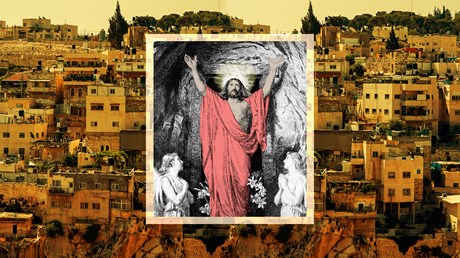
Why Jesus’ Resurrection Is So Important to Palestinian Christians in Israel

The dawning of a new kingdom heralds hope for reconciliation and relief from oppression.

During Holy Week, we consider how the Cross reconciles humanity with God. But for Palestinian Christians living in Israel who face oppression and discrimination on a regular basis, the Resurrection and its power to reconcile Jews and Gentiles offers them the greatest hope.

“The resurrection of Christ is the ultimate proof that the world can be changed,” said Palestinian Israeli theologian Yohanna Katanacho.

Palestinian Christians celebrate Easter on both Eastern and Western dates. Approximately 160,000 Palestinian Christians currently hold Israeli citizenship, and around a third of them live in the West Bank and Gaza.

Katanacho was born in 1967 and grew up amid the decades-long Arab-Israeli war that stoked hatred and enmity between Jews and Arabs. The former proponent of atheism accepted Christ at the age of 19 and is now the academic dean and biblical studies professor at Nazareth Evangelical College in Israel.

Katanacho’s book, Reading the Gospel of John through Palestinian Eyes, explores John’s reinterpretations of traditional Judaism in light of Christ. “John sees that having Christ is the biggest blessing ever, and without Christ, we have nothing (John 3:36). As a result, space, time, history, identity, and land are reread in light of the centrality of Christ,” Katanacho said.

Global books editor Geethanjali Tupps spoke with Katanacho about the significance of the Easter resurrection for Palestinian believers and how his reading of John’s gospel challenges the global church.

How did you become a believer?

My family was Roman Catholic, but I became an atheist as a teenager. When I was 19, I had a life-changing experience with God. At 3 a.m., I heard the sound ...

Continue reading...


from Christianity Today Magazine https://ift.tt/Ukn34Dv

The Bible Is Literature. It’s Also Your Boss.

We owe to Scripture something we don’t owe any other book: our obedience.

I grew up in a home that prioritized reading. My father was a first-generation college student, and he majored in business to support his family. He allocated a portion of his monthly wages to the Book of the Month club through Easton Press. He and my mom would dine on bologna boats (mashed potatoes and cheese on fried bologna) so that he could afford to receive a great book in the mail each month.

Those leather-bound copies with gilded pages made a strong impression on me as a kid. From those beautiful editions I read The Adventures of Tom Sawyer, Walden, Jane Eyre, and because of their beauty, I knew they were a different sort of reading from my R. L. Stine paperback novels.

Similarly, Christians recognize the Bible as a different sort of book from all other books. While God may inspire an artist, or the Holy Spirit draw a reader toward a divine revelation through art, the Bible is more than a mere literary experience.

Recognizing the Bible as literature opens us up to a fuller appreciation of the holy book than if we treat it like an instruction manual or to-do list. It is a bibliography of genres, including poetry, song, lament, prophecy, history, narrative, parables, letters, dreams, and so forth. We should practice reading to enjoy the fullness of that literary experience.

However, as a book divinely authored by God, the Bible also stands apart from all literature penned by human authors. God inspired human writers to pen the words, but God also authorized those pages. No matter what other beauty, truth, and goodness may be found elsewhere, other works of literature lack the authority that Scripture has over Christians.

In Paul’s second letter to Timothy, he assures the young disciple, “All Scripture is God-breathed ...

Continue reading...


from Christianity Today Magazine https://ift.tt/h65bzR3

Friday, 31 March 2023

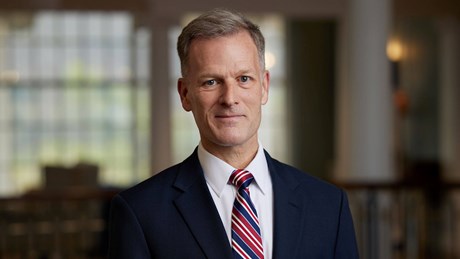
Liberty Appoints Retired General, Air Force Chaplain as New President

Alumnus Dondi E. Costin steps in to lead years after Jerry Falwell Jr.’s scandal.

Two and a half years after Jerry Falwell Jr. stepped down in scandal, Liberty University named its new president on Friday: Dondi E. Costin, the outgoing president at Charleston Southern University and a retired US Air Force major general and chaplain who earned a pair of master’s degrees from Liberty.

Costin is the school’s first president to not be named Jerry, succeeding interim president and longtime board chair Jerry Prevo and the two Jerry Falwells before him. Liberty’s founding family is still represented in leadership; pastor Jonathan Falwell—son of the late Jerry Falwell Sr. and brother to Jerry Falwell Jr.—has been appointed chancellor.

Costin, an Air Force Academy graduate who concluded a 32-year military career as chief of chaplains at the Pentagon, spent the past five years leading Charleston Southern, a Christian college of around 3,500 students in South Carolina.

“There are fewer differences than one might imagine between the processes and procedure of the military and higher education,” Costin told CT’s Creative Studio in 2019. “If you can survive and thrive in a complex bureaucracy like the Pentagon, then you can do it in a complex bureaucracy like higher education.”

At the Lynchburg, Virginia, campus, some high-profile challenges linger. Last year, Department of Education officials launched an investigation into the school’s handling of sexual assault claims, following a lawsuit from Jane Doe survivors and a campus movement calling for an audit of the school’s Title IX office. Former president Jerry Falwell Jr. continues to challenge the terms of his departure, suing earlier this month over millions in retirement benefits.

But Liberty remains ...

Continue reading...


from Christianity Today Magazine https://ift.tt/2KAZemi

Is Karma a 'Relaxing Thought'? For Many Buddhists, It’s Not.

The real-life impact of believing the law of cause and effect.

This is the second article in the Engaging Buddhism series which explores different facets of Buddhism and how Christians can engage with and minister to Buddhists.

What is karma?

Ask Taylor Swift and she’ll tell you, “Karma is my boyfriend / Karma is a god / Karma is the breeze in my hair on the weekend / Karma’s a relaxing thought.” It’s all the good things she gets for keeping “my side of the street clean.”

Justin Timberlake would respond that for his heartless ex, “What goes around, goes around, goes around / Comes all the way back around.”

Even Maria, the nun turned nanny from The Sound of Music, would argue that “somewhere in my youth or childhood / I must have done something good” to deserve the love of Captain Georg von Trapp.

Clearly, the idea of karma is part of the American consciousness. The idea of reaping what you sow is found in everyday life as well as passages in Scripture, such as Proverbs 22:8, “Whoever sows injustice reaps calamity, and the rod they wield in fury will be broken.”

Yet the worldview implications of the Buddhist belief in karma result in something far from a “relaxing thought.” For Theravada Buddhists, for instance, “karma means you get what you deserve, and we all know that we don’t want to get what we deserve,” said Kelly Hilderbrand, a missionary and Buddhism expert at Bangkok Bible Seminary.

In this installment of Engaging Buddhism, we will look at how the same concept of karma shapes two Buddhist worldviews—those of Thai Theravada Buddhists and Taiwanese Humanistic Buddhists—in very different ways. We will also see how Christians can speak into this Buddhist belief by providing ...

Continue reading...


from Christianity Today Magazine https://ift.tt/Qa8OAMg

Why My Church Partners With ‘He Gets Us’

As a Black pastor, I appreciate how the diverse campaign helps my congregation reach our neighbors.

If you’re on Twitter, you’re used to seeing hot topics trend for a few days and eventually fade into Twittersphere history. But there’s one recent cultural moment that continues to elicit discussion and opinions from across the board—the He Gets Us commercials about Jesus that aired during the Super Bowl.

The campaign’s 30-second ad called “Be Childlike” and a 60-second ad called “Love Your Enemies” were not preachy or heavy-handed—they simply conveyed the message that Jesus knows what it’s like to be human. And yet these ads have sparked a national conversation and have spurred strong reactions from every point on the political and theological spectrum.

Some people felt the ads were too liberal, or they were upset that the ads did not overtly share the gospel. Others objected to the conservative nonprofit organization behind the commercials and questioned their motives. Still more criticized the campaign’s spending, wondering why these millions of dollars were spent on these commercials rather than going toward helping the poor. However, many have pushed back against these criticisms and pointed out the positives.

All these debates may be worth having—but regardless of these objections, the campaign’s reach is undeniable.

About 189 million people saw the ads, and McQueen Analytics—an independent polling firm conducting research on the campaign—shows that they resonated with a wide range of people. This includes those who are not believers but want to know more about Jesus.

In spring of 2022, nearly a third (32%) of “spiritually open” people strongly agreed that the ads remind us that “Jesus ...

Continue reading...


from Christianity Today Magazine https://ift.tt/gXCr297