Thursday, 29 June 2023

The Word Made Fresh: Taglish Bible Translation Brings Streets of Manila into Church

After 16 years and plenty of controversy, the Philippine Bible Society completes its Pinoy Version.
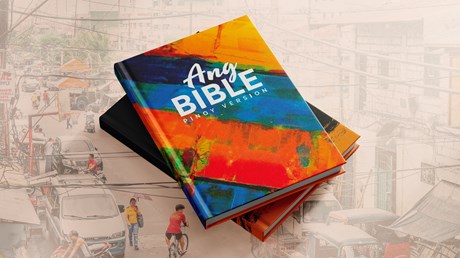
When the Philippines Bible Society (PBS) first released the New Testament translated into Taglish—a mix of Tagalog and English used by urban dwellers in the Philippines—five years ago, Filipino Christians were in an uproar on social media. Many decried it as irreverent or blasphemous to translate the Word of God into a colloquial language more commonly seen on the Internet or heard at the supermarket.

So Anicia del Corro, a PBS translation consultant who spearheaded the project, started holding talks, giving interviews, and writing articles outlining how her team conducted research and painstakingly translated the New Testament from the original Greek. She stressed that the Bible’s target audience was Gen Z and milennials in Metro Manila, a region made up of 16 cities and 13 million people.

In contrast, when PBS launched the entire Bible translated into Taglish earlier this month called Ang Bible Pinoy Version, Del Corro felt relieved that the burden was no longer on her to do the explaining: At a launch party attended by nearly 500 people, pastors and leaders shared their personal experience using and preaching from the Pinoy Version. Jayson Genanda, pastor of Malaya House Church, said that when he leads a Bible study he makes sure to look at the Taglish translation to get the meaning of a passage.

“The users themselves are the ones promoting it,” Del Corro said. “They know people who can’t understand the Word in other translations can use Ang Bible Pinoy Version.” (Ang mean “the” in Tagalog and Pinoy is an informal term referring to the Philippines or Filipinos.)

Ang Bible Pinoy Version, which took 16 years to complete, is the first completed Bible translation in ...

Continue reading...


from Christianity Today Magazine https://ift.tt/SQd4rZz

Died: Reiji Oyama Bible Translator Who Repented for Japan's Wartime Sins

The humble pastor made the Word easy to understand for modern Japanese and sought to heal the "bitter enmity" with Korea.

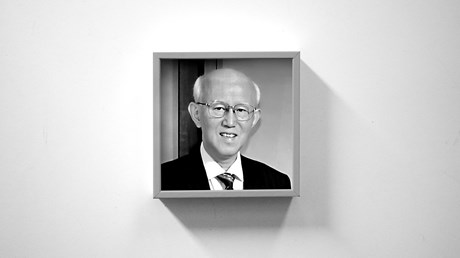
Reiji Oyama, the translator of the Modern Japanese Bible and one of the founders of the Japan Evangelical Association, died on May 16 at the age of 96 in Tokyo.

He started translating the Bible in 1960, beginning with the letter to Philemon and moving on to publishing the entire New Testament in Japanese in 1978. In Japanese, it was known as Gendaijin no Seisho or “Bible for Modern Man.” But Oyama preferred using this English title: “The Understandable Bible.”

He believed most people don’t read the Bible because they think it is too difficult. The difficulty is not the Bible itself, though, but how it has been translated, Oyama said. He argued that most Japanese versions of Scripture strove for faithfulness to the biblical text but, unfortunately, disregarded cultural differences.

Oyama believed that it was important that the meaning of the biblical text, as revealed to its original audience, should be equally clear in the Japanese language. As a result, his translations were often paraphrases rather than word-for-word translations.

“My father showed me the honest, humble faith of a child every day,” his daughter Negumi Okano said at his funeral. “I can see the faith of a humble little child who accepts what is taught by the Bible and believes that it is true.”

Reiji Oyama was born in Tokyo on January 15, 1927. His father, Tōji, was a manager at the Mitzukoshi department store and later opened a used bookstore, while his mother, Ikuko, was a housewife. When World War II began, Oyama became a high school cadet in the Japanese Imperial Army Accounting Academy, which trained elite officers in college-level courses, martial arts, and horsemanship.

After the war, Oyama entered Waseda ...

Continue reading...


from Christianity Today Magazine https://ift.tt/rbCqJky

Wednesday, 28 June 2023

Colonialism Brought Evangelicalism to the Philippines. Churches Are Now Untangling the Two.

Five Filipino Christian leaders weigh in on the American church’s influence on worship, culture, and politics.

The Philippines boasts of being the only Christian nation in Asia. Filipino Catholics make up 80 percent of the population while evangelicals make up another 3 percent.

The country’s large Christian population today is the result of 300 years of Spanish rule, which brought Catholicism to the Philippine archipelago. Then the United States colonized the Philippines for about 50 years until 1946. During this time, Americans introduced a universal education system, the English language, and Protestantism.

As a result, American evangelicalism has an outsized influence on the Filipino church today. From churches’ adoption of English-language Bibles and Hillsong worship songs to the embrace of US-based Christian NGOs working in the country’s urban slums and rural areas, Filipino evangelicals often look to their American counterparts to understand their relation to God.

CT interviewed five Filipino Christian pastors and ministry leaders in the Philippines and the diaspora to examine how American evangelicalism has shaped their view of politics, liturgy, culture, and gender; and what living under the painful reality of their country’s colonial past is like as a Filipino believer. (Answers have been edited and shortened for clarity).

Obed Relliquette, lead pastor of Crusade Bible Church in Quezon City, Philippines

The brand of Christianity in the Philippines is American. It has a long, deep root in our country. This is why I almost cannot distinguish what is culturally and theologically American or Filipino.

I studied in the Febias College of Bible, which American G.I.s founded in the 1940s and led until the ’70s. The church I grew up in was influenced by Americans who were pragmatic and democratic. Our church ...

Continue reading...


from Christianity Today Magazine https://ift.tt/uKLJVPd

Tuesday, 27 June 2023

My Church My Choice

How the modern concept of self-creation turns Christian community into personal identity.

The recent death of pastor-theologian Tim Keller sparked nostalgia for my young, restless days as part of the Young, Restless, and Reformed (YRR) movement he helped lead.

As someone raised in Christian fundamentalism, it offered me a kind of holy rebellion where free grace, contemporary music, and cultural engagement came packaged with God’s glory and power. But two decades on, I find myself less Young, Restless, and Reformed and more Old, Tired, and Reorienting.

I can’t help but wonder how I got from here to there. What path led me from the traditions of my childhood to and through other ones? How much of my spiritual path was chosen, and how much was given? Was my spiritual life “begotten or made”?

The idea that our faith journeys are larger than our choices challenges the very spirituality most of us take for granted. A committed personal relationship with God is a feature of most modern expressions of Christianity. My 17-year-old son, for example, finds it anathema that children could be baptized against their will. He’s not making a theological claim so much as an anthropological one, informed by a larger American culture that assumes self-creation through choice.

In fairness to him, the majority of low church traditions—including the one I was reared in—hold this same individualist assumption. Commitment to personal conversion and voluntary association may also explain why nondenominational churches now represent the largest segment of American Protestants.

These churches are deeply and inexhaustibly modern, not because of their sneakers and fog machines, but because they align with our contemporary understanding of choice. Without a denominational progenitor, they embody self-determination ...

Continue reading...


from Christianity Today Magazine https://ift.tt/TRQN1HG

For Worship Bands Auto-Tune Covers a Multitude of Sins

In the livestreaming era, church sound booths are upping their game.

According to the Prophet Isaiah, grass withers, flowers fade, but God’s word endures.

In the age of social media, so do the mistakes of church musicians.

Play the wrong chord, forget the words to a song or sing an off note, and a worship leader or singer may find themselves featured in Facebook videos or Instagram accounts like “Worship Fails” for years.

As a result, said Marc Jolicoeur, worship and creative pastor at Moncton Wesleyan Church in Moncton, New Brunswick, Canada, churches like his have paid more attention to how their music sounds online. That includes using Auto-Tune or other pitch-correcting software.

Widely used in the recording industry to smooth out the rough edges of vocalists, pitch correction has become fairly common in congregations.

The pitch correction process feeds the sounds sung into a microphone into a processor that aligns the singer’s pitches with pure versions of the note.

In worship contexts, pitch correction makes it easier for less talented or less rehearsed singers to still help lead congregational singing, said Jolicoeur. If they make small mistakes, they can be corrected easily.

Churches are also more aware of hitting the right notes because their services are going out on livestreams. People attending a service in person, said Jolicoeur, often have a better experience—the congregation’s singing resounds in the actual church building; those at home only hear what’s going into microphones and coming out of their computer speakers.

A 2023 study of online worship from Pew Research found that while remote worshippers rate online sermons and sermons they hear in person about the same, there’s a drop-off when it comes to music. Sixty-nine percent of those ...

Continue reading...


from Christianity Today Magazine https://ift.tt/WnC0hEI

Monday, 26 June 2023

Biden Administration Drops HHS Transgender Mandate

Evangelicals in medicine won’t be subjected to the contested federal requirement that faced years of legal backlash.

The Biden administration will not appeal an Eighth Circuit Court of Appeals decision from December 2022 that blocked the so-called transgender mandate.

The mandate was an attempt by the Biden administration to define sex to include “gender identity” for the purposes of Health and Human Services (HHS) regulations. Critics say the rule would have required doctors, clinics, and hospitals to perform procedures to which they object and insurance companies to pay for such procedures.

The Southern Baptist Convention’s Ethics and Religious Liberty Commission (ERLC) president Brent Leatherwood welcomed the news.

“The Biden administration’s decision to back down from the transgender mandate marks a significant victory in safeguarding the rights of medical professionals to operate in a manner consistent with their deepest held beliefs,” Leatherwood said in written comments.

“This is an important development we should take note of because it not only represents a win for conscience rights but also furthers efforts to shield vulnerable individuals who should never become pawns in the sexual revolution.”

The rule was first introduced in 2016 during the Obama administration’s implementation of a portion of the Affordable Care Act.

According to the ERLC, the 2016 HHS rule required doctors to perform gender-transition procedures for any child referred by a mental health professional, even if the doctor believed the treatment or hormone therapy could harm the child.’

Becket, a religious liberty law group, has shepherded lawsuits filed by medical groups opposed to the rule, as those suits have made their way through the courts.

“After multiple defeats in court, ...

Continue reading...


from Christianity Today Magazine https://ift.tt/x1sYXvV

No More Pentecost Monday? French-Speaking Evangelicals Debate Defense of Christian Holidays.

Proposal to secularize the civic calendar prompts controversy.

Debates about the place of Christianity in public life regularly resurface in Europe. Recently, after the Pentecost Monday holiday, the mayor of Grenoble, France, sparked controversy when he argued French society has evolved beyond religious days off. Pointing to the large number of secular people who dont follow the church calendar and Muslims who celebrate different religious days, Éric Piolle proposed removing Christian holidays from the civic calendar.

The French currently celebrate Easter Monday, Ascension Day, Pentecost Monday, the Assumption of the Virgin Mary, All Saints Day, and Christmas. Those days off could be replaced, Piolle said, by days to commemorate key moments in French history.

We asked five evangelical leaders from French-speaking Europe: Should Christians embrace proposals to replace public religious holidays with secular ones?

Pierre-Sovann Chauny, systematic theology professor at the Faculté Jean Calvin, Aix-en-Provence:

No. Removing Christian religious feasts from the civil calendar should be rejected. We need to maintain an awareness of what French history owes to Christianity and should continue to emphasize the public character of the spiritual life of Christians. These holidays also provide Christians with opportunities to bear witness throughout the year to the life, death, resurrection, and reign of Christ. Finally, the existence of these holidays consolidates our religious freedom. Their removal could, on the contrary, be a step toward persecution.

Fabien Fourcasse, pastor of the Evangelical Baptist Church of Amiens:

I'd say no. It’s our tradition. Besides that, the presence of religious holidays on the calendar expresses something of God's plan for society. ...

Continue reading...


from Christianity Today Magazine https://ift.tt/4zpJNim