Friday, 30 June 2023

Supreme Court Sides With Christian Who Wont Make Gay Wedding Sites

Ruling: Colorado can’t “force all manner of artists, speechwriters, and others whose services involve speech to speak what they do not believe.”
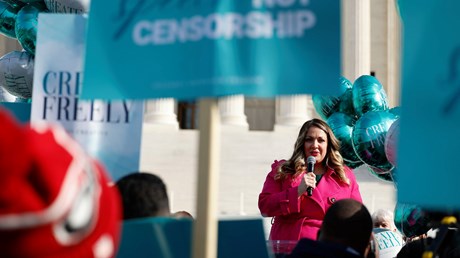
The US Supreme Court delivered a First Amendment victory Friday to a Christian designer who objects to creating custom websites for same-sex weddings.

The high court ruled in a 6–3 opinion the state of Colorado would violate the free-speech rights of Lorie Smith by requiring her to design a website for a ceremony that conflicts with her conscience. The decision provided an important legal win for the rights of Christians and other faith adherents in a series of cases involving the intersection of religious freedom and same-sex marriage.

In the majority opinion, Associate Justice Neil Gorsuch said the state “seeks to force an individual to speak in ways that align with its views but defy her conscience about a matter of major significance.”

As the Supreme Court “has long held, the opportunity to think for ourselves and to express those thoughts freely is among our most cherished liberties and part of what keeps our Republic strong,” he wrote. “The First Amendment envisions the United States as a rich and complex place where all persons are free to think and speak as they wish, not as the government demands.”

The high court’s decision broke along ideological/political lines. Nominees by Republican presidents made up the majority, while justices nominated by Democrats were in dissent. Chief Justice John Roberts and Associate Justices Clarence Thomas, Samuel Alito, Brett Kavanaugh, and Amy Coney Barrett joined Gorsuch in the majority. Associate Justices Sonia Sotomayor, Elena Kagan, and Ketanji Brown Jackson dissented.

The head of the Southern Baptist Ethics and Religious Liberty Commission (ERLC) applauded the justices’ action.

“If the government can compel an individual ...

Continue reading...


from Christianity Today Magazine https://ift.tt/halfo4O

Some Southern Baptist Women Worry About a Narrowing Complementarianism

Recent debates have left them discouraged and uncertain about what’s next for female leaders.

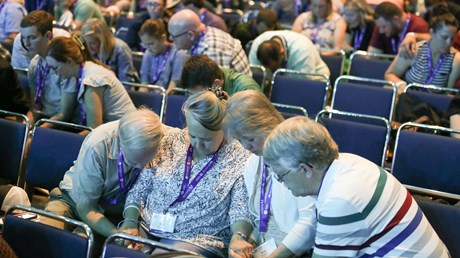
On the ten-hour drive home from the Southern Baptist Convention (SBC) annual meeting in New Orleans, Leah Finn had questions.

Finn felt like she should know enough to understand the changes that 12,000 Southern Baptists approved at their gathering in mid-June. She had been following the proposals for months, she knew the rules of parliamentary procedure, and her husband, Nathan Finn, serves as a trustee on the SBC Executive Committee.

With the rejection of Saddleback Church’s appeal, it was clear the convention held a strong consensus against women as lead pastors and preaching pastors and would be willing to break fellowship over the issue. But what about women in other roles?

The SBC moved to change its foundational documents to reiterate its stance: amending its constitution to explicitly state that cooperating churches must restrict “any kind” of pastor to qualified men and rewording its faith statement to say that “pastors/overseers/elders” are male.

Many Southern Baptist leaders advocating for the new wording saw it as a way to clarify their shared complementarian convictions. But some women have quietly worried that the changes, and the surrounding debate, could call into question or further limit their place in the denomination.

Leah Finn thought of her friends who serve as ministers at SBC churches, teach at SBC seminaries, and pursue degrees at SBC schools and wondered how the decisions would affect them in the years ahead.

She and her husband ended up writing an op-ed for Baptist Press, the SBC’s official outlet, lamenting how the annual meeting left female leaders “uncertain about their future in Southern Baptist life.” Some wonder what moves could come next, and others ...

Continue reading...


from Christianity Today Magazine https://ift.tt/vMnaGkK

Todays Arab Women Theologians Have Plenty of Past Exemplars

From desert mothers to modern scholars, the Middle East has long featured females leading from the margins—and sometimes near the center of patriarchal power.

The Middle East today is at a kairos moment in time. As women across the region fight for their rights and freedoms, the tectonic shift is felt also in Christian academia. What was once a trickle of female theologians has developed into a growing number of developing leaders, enabling and emboldening other women to rise in leadership.

While only Protestant churches have yet ordained female priests—in Lebanon, Syria, and the Palestinian territories—other similar bold figures are modeling an emerging path of spirituality within patriarchal Arab society.

But their own inspiration is found in the past.

As members of the first Christian communities, Eastern Christian women—deaconesses, historians, theologians, and martyrs—articulated their faith and theology centuries ago. However, their stories are not well known even in our region. But it is remarkable that two of the largest remaining Christian communities in the Arab world, Coptic and Maronite, have known historical female leadership. Within the rich and complex ecclesial context of the Middle East, their legacy continues to shape our theological thought as evangelical women today.

Desert mothers

Observing the full moon rise above today’s Egyptian desert in the land where Saint Anthony (A.D. 251–356) originally established monasticism as a lay movement, I am reminded how spirituality was crafted by asceticism. The desert fathers left a heritage of wisdom celebrated by many today who seek spiritual discipline.

But we often overlook the desert mothers.

These Ammas (from the original Syriac) were Christian ascetics who also inhabited the deserts of Egypt, Palestine, and Syria in the fourth and fifth centuries, whether in monastic communities or as ...

Continue reading...


from Christianity Today Magazine https://ift.tt/0Mwr8lO

Thursday, 29 June 2023

Died: Reiji Oyama Bible Translator Who Repented for Japans Wartime Sins

The humble pastor made the Word easy to understand for modern Japanese and sought to heal the "bitter enmity" with Korea.

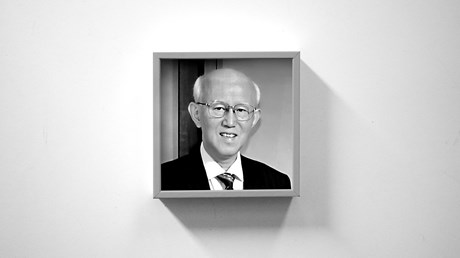
Reiji Oyama, the translator of the Modern Japanese Bible and one of the founders of the Japan Evangelical Association, died on May 16 at the age of 96 in Tokyo.

He started translating the Bible in 1960, beginning with the letter to Philemon and moving on to publishing the entire New Testament in Japanese in 1978. In Japanese, it was known as Gendaijin no Seisho or “Bible for Modern Man.” But Oyama preferred using this English title: “The Understandable Bible.”

He believed most people don’t read the Bible because they think it is too difficult. The difficulty is not the Bible itself, though, but how it has been translated, Oyama said. He argued that most Japanese versions of Scripture strove for faithfulness to the biblical text but, unfortunately, disregarded cultural differences.

Oyama believed that it was important that the meaning of the biblical text, as revealed to its original audience, should be equally clear in the Japanese language. As a result, his translations were often paraphrases rather than word-for-word translations.

“My father showed me the honest, humble faith of a child every day,” his daughter Megumi Okano said at his funeral. “I can see the faith of a humble little child who accepts what is taught by the Bible and believes that it is true.”

Reiji Oyama was born in Tokyo on January 15, 1927. His father, Tōji, was a manager at the Mitsukoshi department store and later opened a used bookstore, while his mother, Ikuko, was a housewife. When World War II began, Oyama became a high school cadet in the Japanese Imperial Army Accounting Academy, which trained elite officers in college-level courses, martial arts, and horsemanship.

After the war, Oyama entered Waseda ...

Continue reading...


from Christianity Today Magazine https://ift.tt/jfoMmA2

The Word Made Fresh: Taglish Bible Translation Brings Streets of Manila into Church

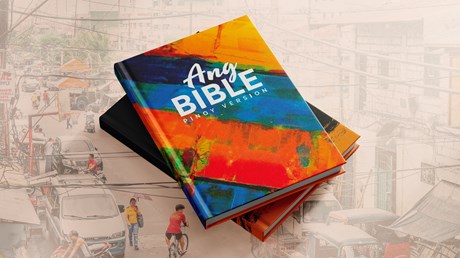
After 16 years and plenty of controversy, the Philippine Bible Society completes its Pinoy Version.

When the Philippines Bible Society (PBS) first released the New Testament translated into Taglish—a mix of Tagalog and English used by urban dwellers in the Philippines—five years ago, Filipino Christians were in an uproar on social media. Many decried it as irreverent or blasphemous to translate the Word of God into a colloquial language more commonly seen on the Internet or heard at the supermarket.

So Anicia del Corro, a PBS translation consultant who spearheaded the project, started holding talks, giving interviews, and writing articles outlining how her team conducted research and painstakingly translated the New Testament from the original Greek. She stressed that the Bible’s target audience was Gen Z and milennials in Metro Manila, a region made up of 16 cities and 13 million people.

In contrast, when PBS launched the entire Bible translated into Taglish earlier this month called Ang Bible Pinoy Version, Del Corro felt relieved that the burden was no longer on her to do the explaining: At a launch party attended by nearly 500 people, pastors and leaders shared their personal experience using and preaching from the Pinoy Version. Jayson Genanda, pastor of Malaya House Church, said that when he leads a Bible study he makes sure to look at the Taglish translation to get the meaning of a passage.

“The users themselves are the ones promoting it,” Del Corro said. “They know people who can’t understand the Word in other translations can use Ang Bible Pinoy Version.” (Ang mean “the” in Tagalog and Pinoy is an informal term referring to the Philippines or Filipinos.)

Ang Bible Pinoy Version, which took 16 years to complete, is the first completed Bible translation in ...

Continue reading...


from Christianity Today Magazine https://ift.tt/SQd4rZz

Died: Reiji Oyama Bible Translator Who Repented for Japan's Wartime Sins

The humble pastor made the Word easy to understand for modern Japanese and sought to heal the "bitter enmity" with Korea.

Reiji Oyama, the translator of the Modern Japanese Bible and one of the founders of the Japan Evangelical Association, died on May 16 at the age of 96 in Tokyo.

He started translating the Bible in 1960, beginning with the letter to Philemon and moving on to publishing the entire New Testament in Japanese in 1978. In Japanese, it was known as Gendaijin no Seisho or “Bible for Modern Man.” But Oyama preferred using this English title: “The Understandable Bible.”

He believed most people don’t read the Bible because they think it is too difficult. The difficulty is not the Bible itself, though, but how it has been translated, Oyama said. He argued that most Japanese versions of Scripture strove for faithfulness to the biblical text but, unfortunately, disregarded cultural differences.

Oyama believed that it was important that the meaning of the biblical text, as revealed to its original audience, should be equally clear in the Japanese language. As a result, his translations were often paraphrases rather than word-for-word translations.

“My father showed me the honest, humble faith of a child every day,” his daughter Negumi Okano said at his funeral. “I can see the faith of a humble little child who accepts what is taught by the Bible and believes that it is true.”

Reiji Oyama was born in Tokyo on January 15, 1927. His father, Tōji, was a manager at the Mitzukoshi department store and later opened a used bookstore, while his mother, Ikuko, was a housewife. When World War II began, Oyama became a high school cadet in the Japanese Imperial Army Accounting Academy, which trained elite officers in college-level courses, martial arts, and horsemanship.

After the war, Oyama entered Waseda ...

Continue reading...


from Christianity Today Magazine https://ift.tt/rbCqJky

Wednesday, 28 June 2023

Colonialism Brought Evangelicalism to the Philippines. Churches Are Now Untangling the Two.

Five Filipino Christian leaders weigh in on the American church’s influence on worship, culture, and politics.

The Philippines boasts of being the only Christian nation in Asia. Filipino Catholics make up 80 percent of the population while evangelicals make up another 3 percent.

The country’s large Christian population today is the result of 300 years of Spanish rule, which brought Catholicism to the Philippine archipelago. Then the United States colonized the Philippines for about 50 years until 1946. During this time, Americans introduced a universal education system, the English language, and Protestantism.

As a result, American evangelicalism has an outsized influence on the Filipino church today. From churches’ adoption of English-language Bibles and Hillsong worship songs to the embrace of US-based Christian NGOs working in the country’s urban slums and rural areas, Filipino evangelicals often look to their American counterparts to understand their relation to God.

CT interviewed five Filipino Christian pastors and ministry leaders in the Philippines and the diaspora to examine how American evangelicalism has shaped their view of politics, liturgy, culture, and gender; and what living under the painful reality of their country’s colonial past is like as a Filipino believer. (Answers have been edited and shortened for clarity).

Obed Relliquette, lead pastor of Crusade Bible Church in Quezon City, Philippines

The brand of Christianity in the Philippines is American. It has a long, deep root in our country. This is why I almost cannot distinguish what is culturally and theologically American or Filipino.

I studied in the Febias College of Bible, which American G.I.s founded in the 1940s and led until the ’70s. The church I grew up in was influenced by Americans who were pragmatic and democratic. Our church ...

Continue reading...


from Christianity Today Magazine https://ift.tt/uKLJVPd