Monday, 24 July 2023

Extremists Are Destroying Indian Christians’ Homes and Shattering Their Lives

For nearly two decades, mob violence has driven believers from their communities and upended their sense of security.

Since the beginning of May, ethnic and religious violence in Manipur, a state in northeast India, has resulted in the deaths of at least 142 people, the destruction of over 300 churches and hundreds of villages, and one of the largest violence-driven internal displacements in recent Indian history. A fact-finding team that visited earlier this month reported that the clashes were “state-sponsored,” and the violence has uprooted more than 65,000 people from their homes and forced them to seek shelter elsewhere.

India records the highest numbers of internal displacements annually, primarily due to natural disasters. But recent communal violence and persecution against religious minorities has wreaked havoc in numerous Indian states, including Gujarat, Madhya Pradesh, and Odisha.

While the government has an official legal framework for helping communities displaced by natural disasters and development projects, it has none for those displaced by violence or manmade conflict. Instead, the level of response has varied widely depending on public sympathy for the victims, media attention, and protests by those affected. Rehabilitation, including the provision of permanent shelter, jobs, and education, remains a significant challenge for the government and the church.

More than two months after the violence began in Manipur, at least 1,000 families are sheltering in Delhi, says L. Kamzamang, a pastor working with internally displaced persons (IDPs) from Manipur.

“Not only are most of the IDPs scattered in various cities and towns in India not wanting to go back to their homes, but young people who are in Manipur are planning to come out of Manipur,” said Kamzamang. “There is nothing to do there. There are ...

Continue reading...


from Christianity Today Magazine https://ift.tt/prjhKkv

Bishop’s Elevation May End Kenyan Methodist Turmoil

Isaiah Deye is elected to replace Joseph Ntombura, who was accused of mishandling church funds.

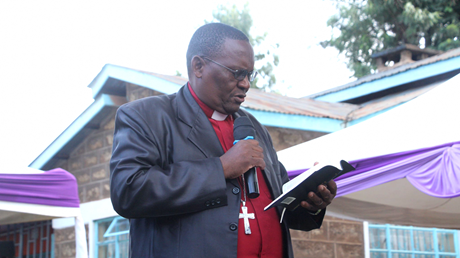
The Methodist Church in Kenya elected a new presiding bishop on July 20, three months after the last one was forced from leadership.

Isaiah Deye, 61, was elected with 76 percent of the vote at the 58th Annual Conference of the Church in Nairobi, raising hopes that recent turmoil and threats of schism will come to an end.

“I am greatly humbled and yet highly honored to be elected as the Presiding Bishop of the Methodist Church in Kenya and accept your decision that I should ascend to the office of the Presiding Bishop,” Deye said in his acceptance speech on Friday. “I pledge to be a leader who will seek to serve rather than to be served, and a role model for all the clergy and laity.”

The bishop has led the church in an acting capacity since April, when Bishop Joseph Ntombura was removed from office due to allegations of mishandling church funds and investments in a hospital, a resort, and a national university.

The allegations had put Ntombura in conflict with other church leaders. Methodist churches across the country had begun to make moves to create their own autonomous conference.

Deye garnered 281 votes, a majority of the 366 ballots cast. The race included three other candidates. His closest rival, Catherine Mutua, garnered 35 votes.

Deye is the second presiding bishop from the country’s coast region, which includes the region’s capital, Mombasa. Most church leaders have come from Meru, a region of Eastern Kenya.

Deye has said he hopes to be an example of Christian love and service in the church and asked for the church to unite behind him. “To succeed, I need your help in my efforts to bring unity in the church. For unity to take root there has to be harmony in the church,” ...

Continue reading...


from Christianity Today Magazine https://ift.tt/FyeAIET

Friday, 21 July 2023

Pro-Life Dispute Leaves Program for HIV/AIDS Patients in Peril

A negative score from groups accusing PEPFAR of supporting abortion threatens the program’s five-year renewal.

The President’s Emergency Plan for Aids Relief, or PEPFAR, has been a uniquely successful bipartisan effort, saving 25 million lives globally from HIV/AIDS since it was put into place 20 years ago. Congress and the White House have reauthorized it every five years, under different parties. It has been credited with sparing entire countries from demise.

Now it is in danger of succumbing to a political brawl.

The program must be renewed this fall. But domestic pro-life organizations, including Susan B. Anthony Pro-Life America and The Heritage Foundation’s action arm, Heritage Action, have said a vote in favor of PEPFAR’s five-year reauthorization would be a mark against a lawmaker in their scorecards for elected leaders. The Family Research Council told CT it will also score the vote.

The groups argue that the Biden administration is trying to use the program to fund the promotion and provision of abortions. Family Research Council’s vice president for policy and government affairs Travis Weber told CT that PEPFAR was “being used as a massive slush fund for abortion and LGBT advocacy.”

Pro-lifers working to combat HIV/AIDS overseas say that is not the case and have been surprised by the domestic pro-life opposition. Funding or promoting abortion through PEPFAR would be against US law. Abortion is also illegal or highly restricted in most countries with PEPFAR-funded programs, almost all of which are in Africa.

Pro-life organizations regularly score lawmakers’ votes on particular pieces of legislation as a way of assessing commitment to pro-life causes. Deeming a vote for a given measure as negative tends to scotch Republican votes for it.

“A five-year reauthorization to us is beyond ...

Continue reading...


from Christianity Today Magazine https://ift.tt/ZXoLJUx

Thursday, 20 July 2023

What Happens When Both Sides Secularize

The antidote to cultural Christianity on the Left and Right is true Anglicanism and Pentecostalism.

This piece was adapted from Russell Moore’s newsletter. Subscribe here.

In my new book (releasing Tuesday!), I mention a conversation I had years ago with an older man in ministry whom I respected. We had seen a string of what’s euphemistically called “moral failures” with pastors in our church tradition. I made some comment about their having “lost their ministries.”

But the older man corrected me. “Oh, they’ll be back,” he said. “After a scandal, blue-collar pastors become Pentecostals and white-collar pastors become Episcopalian.”

This was tongue-in-cheek, of course. This man and I could both name countless pastors in our tradition who, mid-career, had joined a Pentecostal church or sought ordination in the Episcopal church. These folks just changed their minds about liturgy or spiritual gifts or a thousand other factors.

This man also wasn’t talking about the mainstream of the Anglican Communion or of global Pentecostalism (such as the Assemblies of God). He meant, specifically, the most progressive environs of the Episcopal church in the USA and the most populist and extreme areas of prosperity-gospel Pentecostalism. Those places, he argued, were more tolerant of clerical misbehavior—though for very different reasons.

I’ve lived long enough to see that my denomination is hardly different when it comes to morally compromised people making a hasty comeback. Still, what sticks out to me is not the literal reality of this man’s statement so much as the metaphor of it all—a metaphor that explains a good bit of what’s going on in our current American social crisis.

We are not headed toward the religious ...

Continue reading...


from Christianity Today Magazine https://ift.tt/R5iDzS8

Legal Advocates Eye Next Big Victory for Religious Liberty

After a string of victories at the Supreme Court, focus turns to one major precedent that could be overturned.

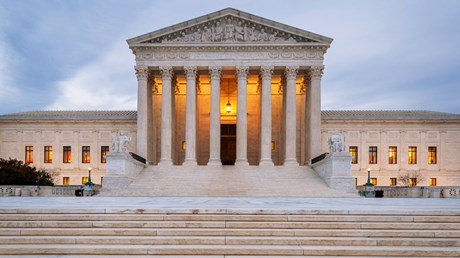
It is an auspicious time for advocates of religious liberty in the United States. Consider what they have accomplished at the Supreme Court over the past year: They defended the right of Americans to express their faith while on the clock for a public school district (Kennedy v. Bremerton School District), affirmed the right of religious schools to use government vouchers (Carson v. Makin), heightened the standards protecting workplace accommodations for religious beliefs (Groff v. DeJoy), and expanded free speech protections for business owners who don’t want to make statements that go against their religious beliefs (303 Creative LLC v. Elenis).

What’s left to win? If you ask experts closely following the developments on the legal battlefield, they invariably give the same answer: Employment Division v. Smith.

“I predict that religious liberty advocates will ramp up their attack on Smith,” said Carl Esbeck, a professor of law at the University of Missouri. “They understand that 303 Creative was a wonderful victory, but it was a halfway victory. It only protects speech … so if they want full protection under the First Amendment free exercise clause, they need Smith reversed.”

In fact, it’s already begun. First Liberty and Alliance Defending Freedom, two religious liberty law groups, have already petitioned the Supreme Court to hear cases that call for Smith to be overruled.

To understand why Smith matters, one has to go back more than three decades. In the late 1980s, two counselors from a rehabilitation center in Oregon were fired after they ingested peyote as part of a Native American religious ceremony. The counselors applied for unemployment but were denied by the state because ...

Continue reading...


from Christianity Today Magazine https://ift.tt/bEUgHN9

Wednesday, 19 July 2023

‘The Chosen’ Will Film Through Hollywood Strike with Indie Show Exemption

The crowdfunded show received approval writers’ and actors’ unions to wrap on Season 4.

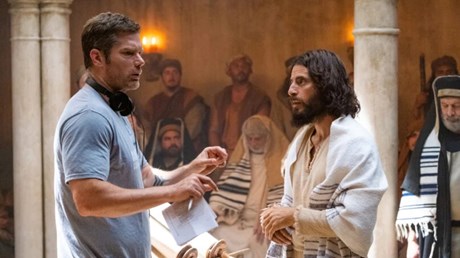
The wildly popular series based on the life of Jesus Christ has crossed what its creator dubbed a “Red Sea Moment” after a labor strike threatened to halt the filming for Season 4 of The Chosen.

On Friday (July 14), director and co-writer Dallas Jenkins sent an email telling viewers The Chosen hadn’t yet received an exemption to continue filming during the strike by the Screen Actors Guild-American Federation of Television and Radio Artists. “This is very expensive, unfortunately, and especially frustrating because we’ve only got two weeks of filming left. Let’s pray we can get back on schedule quickly.”

Jenkins also tagged SAG-AFTRA in an Instagram post, urging the labor union to approve an exemption waiver. “We’re the good guys; we’ve treated your actors well. Please take the few minutes to approve our application so your actors can get back to work getting paid for the last two weeks of a season they want to finish.”

After one day of filming without the cast, on Sunday afternoon, the show’s official Twitter account announced it had been approved for a waiver and would resume filming on Monday. The account also noted Season 4 is “entirely independent and 100% funded by donations.”

“We’ve worked hard to accommodate all of SAG’s requests and their interim agreement. We appreciate their recognition of us as an independent as well as their hard work in this process,” Jenkins said in a statement provided to Religion News Service.

The Chosen was able to secure an exemption to continue filming because it is not affiliated with the Alliance of Motion Picture and Television Producers, the group representing studios such as Netflix, ...

Continue reading...


from Christianity Today Magazine https://ift.tt/QlRNxo1

Ancient Chinese Sacrificial Rituals Resemble Those of the Israelites. Does This Matter?

What Jesus’ death means for how I make sense of my culture’s traditional religious practices.

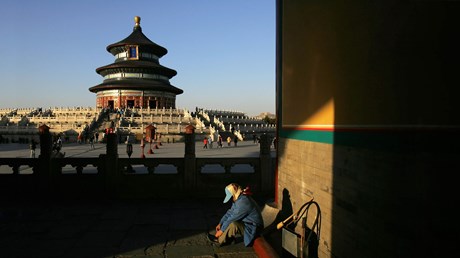
If you ever visit the Temple of Heaven in Beijing—ancient China’s largest center for high-level rituals—you might be struck by its lack of Buddhist and Taoist idols. The design of the Chinese place of worship displays some of the characteristics of the ancient Chinese tradition of ritual sacrifice to heaven, which seem to bear many similarities to the rituals for worshiping God recorded by Moses in the Pentateuch of the Old Testament.

No known records exist suggesting that Judaism inspired Chinese spirituality. In fact, a second-century B.C. Confucian classic, The Rites of Zhou (周禮 Zhouli), records these acts of worship, and archaeologists have discovered the bronze ritual vessels with Chinese characters depicting sacrifices of animals such as ox and sheep, confirming that these practices are thousands of years old.

Conducted by the royals until the end of the imperial dynasties in the early 20th century, these official rituals gradually drifted from their Confucian origins. But as a Chinese Christian, rather than grieve this separation, I’m grateful that I know Jesus, whose death supersedes these ancient sacrifices and whose resurrection offers redemption for eternity.

The will of heaven

In 1982, the Chinese American scholar Ray Huang released 1587: A Year of No Significance (萬曆十五年). The bestselling book highlighted the Ming dynasty’s religious practices, including a famous example from 1585 of an emperor using the Temple of Heaven to pray for rain. After months of drought, Emperor Wanli fasted for three days before leading his officials from the imperial palace to the temple and holding a special ceremony for the weather change. Upon arriving at the Temple of Heaven, the Ming dynasty emperor knelt ...

Continue reading...


from Christianity Today Magazine https://ift.tt/6zMsXQN