Showing posts with label christianity today. Show all posts

Monday, 24 July 2023

Extremists Are Destroying Indian Christians’ Homes and Shattering Their Lives

For nearly two decades, mob violence has driven believers from their communities and upended their sense of security.

Since the beginning of May, ethnic and religious violence in Manipur, a state in northeast India, has resulted in the deaths of at least 142 people, the destruction of over 300 churches and hundreds of villages, and one of the largest violence-driven internal displacements in recent Indian history. A fact-finding team that visited earlier this month reported that the clashes were “state-sponsored,” and the violence has uprooted more than 65,000 people from their homes and forced them to seek shelter elsewhere.

India records the highest numbers of internal displacements annually, primarily due to natural disasters. But recent communal violence and persecution against religious minorities has wreaked havoc in numerous Indian states, including Gujarat, Madhya Pradesh, and Odisha.

While the government has an official legal framework for helping communities displaced by natural disasters and development projects, it has none for those displaced by violence or manmade conflict. Instead, the level of response has varied widely depending on public sympathy for the victims, media attention, and protests by those affected. Rehabilitation, including the provision of permanent shelter, jobs, and education, remains a significant challenge for the government and the church.

More than two months after the violence began in Manipur, at least 1,000 families are sheltering in Delhi, says L. Kamzamang, a pastor working with internally displaced persons (IDPs) from Manipur.

“Not only are most of the IDPs scattered in various cities and towns in India not wanting to go back to their homes, but young people who are in Manipur are planning to come out of Manipur,” said Kamzamang. “There is nothing to do there. There are ...

Continue reading...


from Christianity Today Magazine https://ift.tt/prjhKkv

Bishop’s Elevation May End Kenyan Methodist Turmoil

Isaiah Deye is elected to replace Joseph Ntombura, who was accused of mishandling church funds.

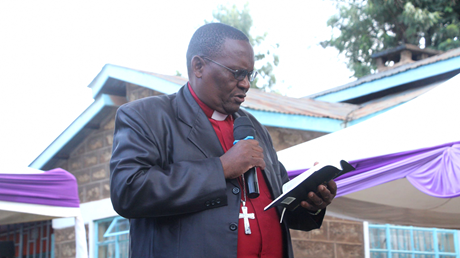
The Methodist Church in Kenya elected a new presiding bishop on July 20, three months after the last one was forced from leadership.

Isaiah Deye, 61, was elected with 76 percent of the vote at the 58th Annual Conference of the Church in Nairobi, raising hopes that recent turmoil and threats of schism will come to an end.

“I am greatly humbled and yet highly honored to be elected as the Presiding Bishop of the Methodist Church in Kenya and accept your decision that I should ascend to the office of the Presiding Bishop,” Deye said in his acceptance speech on Friday. “I pledge to be a leader who will seek to serve rather than to be served, and a role model for all the clergy and laity.”

The bishop has led the church in an acting capacity since April, when Bishop Joseph Ntombura was removed from office due to allegations of mishandling church funds and investments in a hospital, a resort, and a national university.

The allegations had put Ntombura in conflict with other church leaders. Methodist churches across the country had begun to make moves to create their own autonomous conference.

Deye garnered 281 votes, a majority of the 366 ballots cast. The race included three other candidates. His closest rival, Catherine Mutua, garnered 35 votes.

Deye is the second presiding bishop from the country’s coast region, which includes the region’s capital, Mombasa. Most church leaders have come from Meru, a region of Eastern Kenya.

Deye has said he hopes to be an example of Christian love and service in the church and asked for the church to unite behind him. “To succeed, I need your help in my efforts to bring unity in the church. For unity to take root there has to be harmony in the church,” ...

Continue reading...


from Christianity Today Magazine https://ift.tt/FyeAIET

Friday, 21 July 2023

Pro-Life Dispute Leaves Program for HIV/AIDS Patients in Peril

A negative score from groups accusing PEPFAR of supporting abortion threatens the program’s five-year renewal.

The President’s Emergency Plan for Aids Relief, or PEPFAR, has been a uniquely successful bipartisan effort, saving 25 million lives globally from HIV/AIDS since it was put into place 20 years ago. Congress and the White House have reauthorized it every five years, under different parties. It has been credited with sparing entire countries from demise.

Now it is in danger of succumbing to a political brawl.

The program must be renewed this fall. But domestic pro-life organizations, including Susan B. Anthony Pro-Life America and The Heritage Foundation’s action arm, Heritage Action, have said a vote in favor of PEPFAR’s five-year reauthorization would be a mark against a lawmaker in their scorecards for elected leaders. The Family Research Council told CT it will also score the vote.

The groups argue that the Biden administration is trying to use the program to fund the promotion and provision of abortions. Family Research Council’s vice president for policy and government affairs Travis Weber told CT that PEPFAR was “being used as a massive slush fund for abortion and LGBT advocacy.”

Pro-lifers working to combat HIV/AIDS overseas say that is not the case and have been surprised by the domestic pro-life opposition. Funding or promoting abortion through PEPFAR would be against US law. Abortion is also illegal or highly restricted in most countries with PEPFAR-funded programs, almost all of which are in Africa.

Pro-life organizations regularly score lawmakers’ votes on particular pieces of legislation as a way of assessing commitment to pro-life causes. Deeming a vote for a given measure as negative tends to scotch Republican votes for it.

“A five-year reauthorization to us is beyond ...

Continue reading...


from Christianity Today Magazine https://ift.tt/ZXoLJUx

Thursday, 20 July 2023

What Happens When Both Sides Secularize

The antidote to cultural Christianity on the Left and Right is true Anglicanism and Pentecostalism.

This piece was adapted from Russell Moore’s newsletter. Subscribe here.

In my new book (releasing Tuesday!), I mention a conversation I had years ago with an older man in ministry whom I respected. We had seen a string of what’s euphemistically called “moral failures” with pastors in our church tradition. I made some comment about their having “lost their ministries.”

But the older man corrected me. “Oh, they’ll be back,” he said. “After a scandal, blue-collar pastors become Pentecostals and white-collar pastors become Episcopalian.”

This was tongue-in-cheek, of course. This man and I could both name countless pastors in our tradition who, mid-career, had joined a Pentecostal church or sought ordination in the Episcopal church. These folks just changed their minds about liturgy or spiritual gifts or a thousand other factors.

This man also wasn’t talking about the mainstream of the Anglican Communion or of global Pentecostalism (such as the Assemblies of God). He meant, specifically, the most progressive environs of the Episcopal church in the USA and the most populist and extreme areas of prosperity-gospel Pentecostalism. Those places, he argued, were more tolerant of clerical misbehavior—though for very different reasons.

I’ve lived long enough to see that my denomination is hardly different when it comes to morally compromised people making a hasty comeback. Still, what sticks out to me is not the literal reality of this man’s statement so much as the metaphor of it all—a metaphor that explains a good bit of what’s going on in our current American social crisis.

We are not headed toward the religious ...

Continue reading...


from Christianity Today Magazine https://ift.tt/R5iDzS8

Legal Advocates Eye Next Big Victory for Religious Liberty

After a string of victories at the Supreme Court, focus turns to one major precedent that could be overturned.

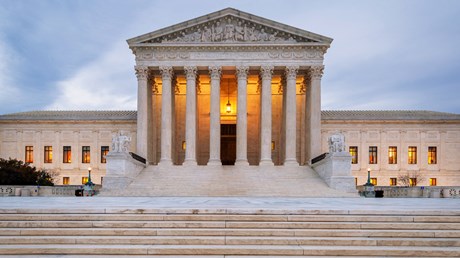
It is an auspicious time for advocates of religious liberty in the United States. Consider what they have accomplished at the Supreme Court over the past year: They defended the right of Americans to express their faith while on the clock for a public school district (Kennedy v. Bremerton School District), affirmed the right of religious schools to use government vouchers (Carson v. Makin), heightened the standards protecting workplace accommodations for religious beliefs (Groff v. DeJoy), and expanded free speech protections for business owners who don’t want to make statements that go against their religious beliefs (303 Creative LLC v. Elenis).

What’s left to win? If you ask experts closely following the developments on the legal battlefield, they invariably give the same answer: Employment Division v. Smith.

“I predict that religious liberty advocates will ramp up their attack on Smith,” said Carl Esbeck, a professor of law at the University of Missouri. “They understand that 303 Creative was a wonderful victory, but it was a halfway victory. It only protects speech … so if they want full protection under the First Amendment free exercise clause, they need Smith reversed.”

In fact, it’s already begun. First Liberty and Alliance Defending Freedom, two religious liberty law groups, have already petitioned the Supreme Court to hear cases that call for Smith to be overruled.

To understand why Smith matters, one has to go back more than three decades. In the late 1980s, two counselors from a rehabilitation center in Oregon were fired after they ingested peyote as part of a Native American religious ceremony. The counselors applied for unemployment but were denied by the state because ...

Continue reading...


from Christianity Today Magazine https://ift.tt/bEUgHN9

Wednesday, 19 July 2023

‘The Chosen’ Will Film Through Hollywood Strike with Indie Show Exemption

The crowdfunded show received approval writers’ and actors’ unions to wrap on Season 4.

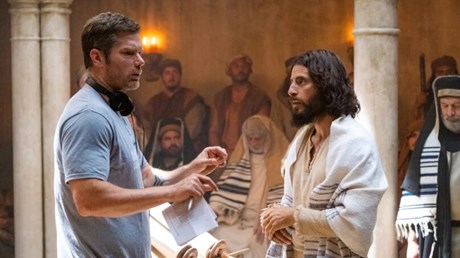
The wildly popular series based on the life of Jesus Christ has crossed what its creator dubbed a “Red Sea Moment” after a labor strike threatened to halt the filming for Season 4 of The Chosen.

On Friday (July 14), director and co-writer Dallas Jenkins sent an email telling viewers The Chosen hadn’t yet received an exemption to continue filming during the strike by the Screen Actors Guild-American Federation of Television and Radio Artists. “This is very expensive, unfortunately, and especially frustrating because we’ve only got two weeks of filming left. Let’s pray we can get back on schedule quickly.”

Jenkins also tagged SAG-AFTRA in an Instagram post, urging the labor union to approve an exemption waiver. “We’re the good guys; we’ve treated your actors well. Please take the few minutes to approve our application so your actors can get back to work getting paid for the last two weeks of a season they want to finish.”

After one day of filming without the cast, on Sunday afternoon, the show’s official Twitter account announced it had been approved for a waiver and would resume filming on Monday. The account also noted Season 4 is “entirely independent and 100% funded by donations.”

“We’ve worked hard to accommodate all of SAG’s requests and their interim agreement. We appreciate their recognition of us as an independent as well as their hard work in this process,” Jenkins said in a statement provided to Religion News Service.

The Chosen was able to secure an exemption to continue filming because it is not affiliated with the Alliance of Motion Picture and Television Producers, the group representing studios such as Netflix, ...

Continue reading...


from Christianity Today Magazine https://ift.tt/QlRNxo1

Ancient Chinese Sacrificial Rituals Resemble Those of the Israelites. Does This Matter?

What Jesus’ death means for how I make sense of my culture’s traditional religious practices.

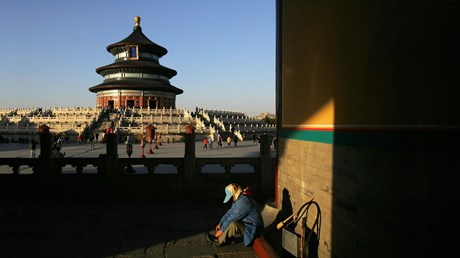
If you ever visit the Temple of Heaven in Beijing—ancient China’s largest center for high-level rituals—you might be struck by its lack of Buddhist and Taoist idols. The design of the Chinese place of worship displays some of the characteristics of the ancient Chinese tradition of ritual sacrifice to heaven, which seem to bear many similarities to the rituals for worshiping God recorded by Moses in the Pentateuch of the Old Testament.

No known records exist suggesting that Judaism inspired Chinese spirituality. In fact, a second-century B.C. Confucian classic, The Rites of Zhou (周禮 Zhouli), records these acts of worship, and archaeologists have discovered the bronze ritual vessels with Chinese characters depicting sacrifices of animals such as ox and sheep, confirming that these practices are thousands of years old.

Conducted by the royals until the end of the imperial dynasties in the early 20th century, these official rituals gradually drifted from their Confucian origins. But as a Chinese Christian, rather than grieve this separation, I’m grateful that I know Jesus, whose death supersedes these ancient sacrifices and whose resurrection offers redemption for eternity.

The will of heaven

In 1982, the Chinese American scholar Ray Huang released 1587: A Year of No Significance (萬曆十五年). The bestselling book highlighted the Ming dynasty’s religious practices, including a famous example from 1585 of an emperor using the Temple of Heaven to pray for rain. After months of drought, Emperor Wanli fasted for three days before leading his officials from the imperial palace to the temple and holding a special ceremony for the weather change. Upon arriving at the Temple of Heaven, the Ming dynasty emperor knelt ...

Continue reading...


from Christianity Today Magazine https://ift.tt/6zMsXQN

A Digital Hymnal Meets Its Demise

Once hailed as the future of Baptist church music, lifewayworship.com is shutting down.

Lifeway is closing the book on an online hymnal that was supposed to be the digital future of Baptist music.

The online resource lifewayworship.com, which provides church choirs and worship teams access to more than 3,000 songs as well as instrumental arrangements, sheet music, and chord charts, will shut down at the end of September.

Lifeway, the publishing arm of the Southern Baptist Convention (SBC), announced the decision Tuesday. The publisher said it has decided to “focus its resources on areas where we can faithfully serve more churches in greater breadth and depth.”

When Lifeway launched the site in 2008, it was envisioned as a modern hymnal that would continually grow and expand, making Baptist music widely available. The website struggled to compete against other services, though, that did not have the same denominational limitations.

“The reality is the vast majority of churches have chosen SongSelect and PraiseCharts as their preferred services,” said Brian Brown, current director of Lifeway Worship. “We are prayerfully considering how we might continue to serve leaders.”

The previous director, Mike Harland, said the development of lifewayworship.com began with a conversation about the future of the Baptist Hymnal. Harland and his staff wanted to imagine a new, online future for Baptist church music.

“Our goal was to create a hymnal with no back cover,” he said.

They started with the 674 songs in the Baptist Hymnal, which was also revised in 2008, and started adding to and curating the growing body of music on the site. It grew well beyond the number that could have been included in a physical book.

Churches could submit suggestions for new songs to include in the site’s ...

Continue reading...


from Christianity Today Magazine https://ift.tt/0lim6nK

Why Mercy Triumphs over Judgment

As Christians, our righteous anger at sin must never surpass our compassion for sinners.

In the Square of Saint Petersburg, a young Fyodor Dostoyevsky stood shivering in the snow alongside fellow convicts, arrested for belonging to a literary circle considered treasonous.

A priest carrying a cross led the convicts in a procession, arranging them in lines while their sentence was read—death by firing squad. But at the last second, a horseman arrived with a prearranged message from the tsar: Instead of execution, Nicholas “mercifully” commuted their sentences to hard labor.

While boarding the convict train to the work camp in Siberia, Dostoyevsky was given a copy of the only book he was permitted to read in prison: the New Testament. Over the next four years of his incarceration, he’d consider the injustices of 19th-century Russia in light of Christ’s mercy.

Dostoyevsky sought to understand how mercy restores human hearts—indeed, all of creation—into the righteous image of God. He wrote, “There are souls that in their narrowness blame the whole world. But overwhelm such a soul with mercy, give it love, and it will curse what it has done, for there are so many germs of good in it. The soul will expand and behold how merciful God is, and how beautiful and just people are.”

The need for mercy is just as relevant today—but it can be difficult to offer in a world worthy of judgment.

When our eyes are opened to God’s kingdom, we recognize injustices in the world that didn’t occur to us before. Hungering for the right ordering of life, we feel irritated by the fallen condition of humanity. We get unsettled, maybe indignant, or perhaps infuriated by the forms of wickedness and oppression we see around us.

As a result, anger can often be the besetting sin ...

Continue reading...


from Christianity Today Magazine https://ift.tt/xslIcyh

Tuesday, 18 July 2023

Early Americans Read the Bible in a Way That Nearly Destroyed America

Mark Noll surveys the effects of an “independence-first” approach to Scripture.

Thomas Paine threw gasoline-soaked ink on the fiery spirit of American independence by publishing his pamphlet Common Sense six months before the Declaration of Independence in 1776. Upon independence from King George III, Paine promised, “The birthday of a new world is at hand.”

This new world would be born free from a king. Citing the Gospel of Matthew, the Book of Judges, and 1 Samuel 8 (where Israel demands to be ruled royally like other nations), Paine argued that “the Almighty hath here entered his protest against monarchical government.” Common Sense was an enormous success; over 100,000 copies sold within months. You know the rest of the story about 1776: America echoed Paine’s call and claimed independence.

Eighteen years later, Paine authored more advice for his devoted readers. In 1794, he published the first of three parts of The Age of Reason, in which he trumpeted his deist beliefs about the Bible. It too was an immediate bestseller. As Paine declared on the opening page, “I believe in one God, and no more.” He added, “I do not believe in … any church that I know of. My own mind is my own church. … [Churches are] human inventions set up to terrify and enslave mankind, and monopolize power and profit.” Paine dissected the Bible, book by book, concluding, “Search not the book called the Scripture, which any human hand might make, but the Scripture called the Creation.”

As Mark Noll explains in America’s Book: The Rise and Decline of a Bible Civilization, 1794–1911, figures like Paine were instrumental in shaping America’s commitment to independence, which in turned shaped how its people engaged the Bible. In Paine’s ...

Continue reading...


from Christianity Today Magazine https://ift.tt/zmovkZX

Monday, 17 July 2023

6 Reasons Bedside Baptist and Church of the Holy Comforter Are So Popular

Survey examines how weather, sports, and sleep affect if and when churchgoers go to church.

Jesus said the gates of hell will not prevail against His church, but sleet and hail will keep many churchgoers out of the pew on a Sunday. In fact, some may even skip to get a little extra sleep or watch their favorite team.

A Lifeway Research study of U.S. adults who attend a religious service at a Protestant or non-denominational church at least monthly finds several reasons some will miss church at least once a year.

Respondents were asked how often they would skip a weekly worship service for six different scenarios—to avoid severe weather, to enjoy an outdoor activity in good weather, to get extra sleep, to meet friends, to avoid traveling when it’s raining, or to watch sports.

One in 10 Protestant churchgoers (11%) say they would never skip for any of these reasons. Twice as many (22%) say they would never skip due to the five options besides severe weather situations.

“Churchgoers are not on autopilot. Each week they are faced with a choice of whether to attend church, and there is more than one tradeoff when it comes to this decision,” said Scott McConnell, executive director of Lifeway Research.

Severe and sunny weather-related absences

Most regular churchgoers say they would miss a weekly worship service at least once a year to avoid traveling in severe weather (77%), to enjoy an outdoor activity (55%), or to get some extra sleep (54%). Half (50%) would do so to meet a friend or group of friends. Fewer say they’d skip to not have to travel when it was raining (43%) or to watch a sporting event or their favorite team (42%).

“Sometimes churchgoers conclude it’s safer to skip church and not be on the roads,” said McConnell. “But many will also skip church if they feel ...

Continue reading...


from Christianity Today Magazine https://ift.tt/wqIPlMR

Christians in Northwest India Want a Political Party to Speak for Them

Other believers warn that’s the wrong response to Hindu nationalism.

They wanted a party of their own.

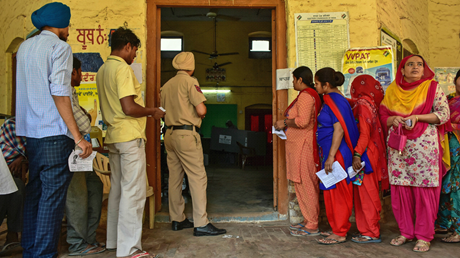
In a Pentecostal church in a village in northwestern India, a well-known pastor announced earlier this year that the time had come. Hindus, Sikhs, and Muslims all have their respective political parties, and now Christians would too.

As the number of Christians has grown in Punjab, a northern Indian state bordering Pakistan, they’ve faced increased scrutiny, criticism, and false accusations, not to mention insulting public statements about Jesus. Christians have existed in Punjab for nearly 200 years, but Pentecostal ministries with an emphasis on signs and wonders have drawn new crowds, new converts—and a new need for political representation.

In April, pastor Harpreet Deol at Open Door Church said the United Punjab Party (UPP) would be launched under the auspices of the Pentecostal Christian Parbandhak Committee, organizing Christians into an electoral force. They would start with state elections before going national.

“Christians in Punjab aim to forge a collective voice, advocating for their concerns and promoting harmony,” the president of UPP, Albert Dua, who is Catholic, told CT. “The launch of the United Punjab Party by Christians in Punjab represents a significant step forward in the quest for political representation and protection of the rights and interests of the Christian community.”

The UPP, however, was not welcomed with open arms by Christians across the country. Some Christians in India think that politics is dirty and that Christ followers should stay out of it. But even believers who are actively involved in winning elections and advancing an agenda did not greet the creation of this new party with joy.

Pushpanathan Wilson, a Christian member ...

Continue reading...


from Christianity Today Magazine https://ift.tt/cXJ0qYR

Friday, 14 July 2023

How Breath Prayers Helped Me ‘Pray Continually’

As a busy mom, I had to find new spiritual disciplines to connect with God.

I used to be a “prayer warrior.”

When I was single and had no kids, I would enjoy praying for long periods of time. Each morning, I would turn on worship music, sing, and meditate on God’s Word. Then I’d spend time interceding for my friends, my family, my neighbors, and for our lost world. I even went on a solo prayer retreat for three days once.

These spiritual habits were instilled in me by the Korean churches in New York and Maryland I attended growing up. Daily early morning prayer services would start at 5:30 or 6 a.m., allowing believers to start the day by gathering at church for a short worship service followed by an extended time of prayer before heading to work. This type of early morning prayer service dates back to 1907 and quickly spread across Korea. It ignited a revival in the country and became one of the most important spiritual disciplines to Korean Christians.

Today, I am a mom to two young children. As I listen to my preschooler screaming for Mommy and my toddler throwing a tantrum, I know there are no prayer retreats in my near future. When even taking a shower without interruptions seems like a luxury, finding a long period of time to pray feels impossible. When I finally find the time to be alone with God after my kids go to bed, I find myself too exhausted for extended prayer.

I started feeling guilty that I couldn’t spend long hours with God like I used to and felt my walk with God grow stale. At the same time, I realized that I needed God more than ever when my toddler made yet another mess at mealtime and my kids bickered and screamed at each other. I desired to come to God, but I struggled to find that chunk of time.

That is when my spiritual mentor reminded me that I ...

Continue reading...


from Christianity Today Magazine https://ift.tt/oFW2Cg5

Lessons on Living Locally

More Americans are staying put. But how can we live with intention?

Our church’s lament service took place in March; we had moved to Cincinnati the previous summer. I didn’t attend the service with my own sadness in mind—but it found me, in the dark and somber silence consecrated for those who showed up. The grief of our recent uprooting caught up with me in the pew that late winter night. Leaving home, even voluntarily, incurs a litany of losses.

I might have believed the COVID-19 pandemic contributed to an increase in geographical mobility, as companies—like my husband’s—sold their headquarters and opted for a fully remote workforce. Such flexibility allowed us to relocate to care for an aging parent, and the majority of Americans still report the desire to work from home full-time (while only 13 percent do).

Recent data, however, reveals that for four decades, geographical mobility has been on the decline in the United States. Although pandemic disruptions led to an initial increase in dislocation (often from urban areas to suburban or rural ones), these numbers have stabilized. More Americans are staying put.

Perhaps our national appetite for transience is waning. Still, I confess to feeling pessimistic about our collective commitment to geographical rootedness and responsibility. In our new telework, telehealth, telechurch environments, it seems nearly as easy to opt out of belonging to a place as it is to opt in. With socially mediated lives, there aren’t immediate and acute absences to fill if you change your address. With remote work arrangements, there are fewer opportunities to make new friends. In fact, what’s curious to me, in comparing our move in 2022 with that in 2011, is how little stands to change despite a change in geographical ...

Continue reading...


from Christianity Today Magazine https://ift.tt/SM6creJ

Robot ‘Church Fathers’ Might Curate New Canons

Generative AI and the rise of ‘Bible GPTs’ could radically shape our engagement with Scripture.

The pace of adoption for artificial intelligence is unprecedented.

By the end of January, ChatGPT—an AI chatbot that generates brand original content when prompted—had logged 100 million visitors to its site. Before that, it reached 1 million users in the first five days after its release in late November. By comparison, Instagram took 2.5 months to reach 1 million users, and Facebook 10 months.

Generative AI systems like ChatGPT, which can produce humanlike responses to users’ prompts, will undoubtedly shape how we, as the Book of Common Prayer puts it, “read, mark, learn, and inwardly digest” the Scriptures. Indeed, there are already multiple tailor-made AI-driven chatbot systems being used for Bible engagement—which I’ve dubbed “BibleGPTs”—including IlluminateBible.com, SiliconScripture.org, Bible.ai, and OpenBible.info’s AI-assisted Bible Study.

As a digital theology expert, I believe these kinds of “BibleGPTs” will continue to advance, proliferate, and eventually become proprietary systems. And as this happens, the church and its leaders will be prompted to make some momentous decisions about the Christian canon. This will, in turn, influence how we interpret the Bible and impact the future of our faith and practice.

AI-led Scripture engagement will generate new problems.

First, BibleGPTs could reify what I call “concentric canons.” Their databases will require us to precisely define what writings are included in our Christian traditions.

Scripture is our primary canon. When handwritten scrolls became recognized as distinct books, the early church fathers confirmed which writings were considered canon and which ...

Continue reading...


from Christianity Today Magazine https://ift.tt/Spb0WEl

Thursday, 13 July 2023

A Buddhist Nun Walked into an Anglican Church

How God pursued me even when I was certain I’d already found truth.

On a warm summer’s day in 1991, I sat in Amaravati Buddhist Monastery, a temple north of London, my heart full of confusion and inner turmoil. I had begun seriously to doubt my faith.

It didn’t make sense. I thought I had found the truth in Buddhism and had given up everything necessary to become a Buddhist nun seven years earlier. In the temple led by American monk Ajahn Sumedho, life was strict and disciplined, involving many ascetic practices designed to simplify daily existence and help us detach from earthly things. Our lives were based around meditation practice; we were celibate, slept little, and ate only one meal a day. I was known for my strong faith in Buddhism, and had not ever really doubted the purpose of living by its teachings.

Until now.

Suddenly I found myself, with my shaven head and robe, spontaneously rushing down to the traditional Anglican church in the nearby village. “I’ve got to talk to somebody, I’ve got to understand what’s happening to me,” I thought.

Upon entering, I looked around anxiously for the priest. “Could you pray for me, please?” I asked when I spotted him. “I’m very confused.” Unfazed, he graciously guided me to the Holy Communion rail and asked me to kneel. He laid his hands on my shoulders and prayed. As he did so, I broke down sobbing uncontrollably.

As the tears abated, the priest’s compassionate eyes met mine, and he said, “We need to talk.” We agreed to meet the following week.

After being prayed for, I felt a great release of the emotions and conflict deep inside of me. I was expectant that this man of God might be able to help me. How things had changed from my certainty about Buddhism to barely ...

Continue reading...


from Christianity Today Magazine https://ift.tt/oP9tck4

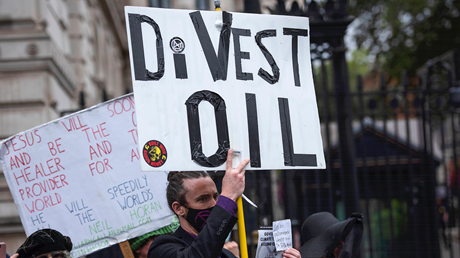
Evangelicals Rejoice at the Church of England’s Fossil Fuel Divestment

“Unless Jesus returns we face a catastrophic future.”

Sometimes, late at night, when her kids have gone to bed and Eleanor Getson is doing the dishes, she is hit with an almost crippling fear.

“Glaciers melting. Islands of plastic in the Pacific Ocean. Forest fires wiping out millennia of history,” said Getson, a 40-year-old evangelical living in Bradford, England, with her husband and two boys. “I can’t stop scrolling through stories about climate change. … It’s too much to think about, and I get this anxiety about what my children will suffer because of us.”

That’s why Getson was delighted to hear the news that the Church of England, which she grew up in, has made the momentous decision to divest from fossil fuels. Last month, the Anglican Church Commissioners and Pensions Board announced its decision to pull all financial investments from gas and oil companies because of the way burning fossil fuels is driving climate change.

Pressure on the Church of England to divest from fossil fuel companies has been building for several years, as an increasing number of clergy, bishops, and dioceses have made divestment commitments and called for fossil-free pension schemes.

Among them have been evangelicals bringing their own distinctive arguments and motivations to the campaign. For years, evangelically inclined organizations like Operation Noah, Tearfund, United Society Partners in the Gospel (USPG) and Christian Aid have been calling for the Church of England to fully divest from fossil fuel companies

Ruth Valerio, director of advocacy and influencing at Tearfund, a Christian relief and development organization based in the UK, told CT that the church has a huge role in calling on policies and practices that do not harm the natural world, ...

Continue reading...


from Christianity Today Magazine https://ift.tt/KvOZA60

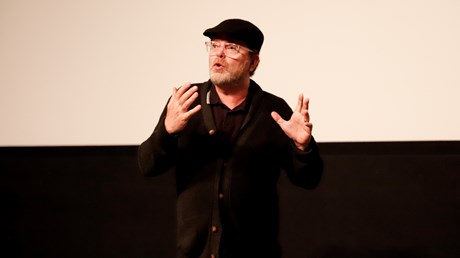
Rainn Wilson’s Spiritual Revolution Gets Spirituality Partly Right and Jesus Mostly Wrong

“The Office” star offers a welcome critique of privatized faith. His other ideas are harder to swallow.

I promised myself only one The Office reference in a review of Soul Boom: Why We Need a Spiritual Revolution, written by Rainn Wilson, the actor who portrays Dwight Schrute on the show. So here goes: In season five , Dwight and his longtime girlfriend, Angela, the most religious person on the show, break up. Dwight is crushed and confides to a coworker, “She introduced me to so many things. Pasteurized milk, sheets, monotheism, presents on your birthday, preventative medicine.”

Where Dwight was a latecomer to the merits of monotheism, Rainn Wilson has made promoting it a major part of his life’s calling, bending his significant celebrity and resources to projects that promote human spirituality in media, entertainment, and social activism. Soul Boom is his latest effort and, despite its shortcomings, is one of the most compelling non-Christian apologetical works I have read.

Anticipating shared values

Wilson is a member of the Baha’i faith, a religion introduced in the 19th century by Baháʼu'lláh (1817–1892), who claimed to receive a new revelation that, roughly speaking, placed him in the genealogy of “Manifestations of God” stretching back to Abraham and including Krishna, Zoroaster, Buddha, Jesus Christ, and Muhammad. The religion now claims around six million followers globally.

The teachings of Baháʼu'lláh, as well as his son and grandson and the Universal House of Justice, the faith’s governing body since 1963, are quite ecumenical. For starters, they draw widely from world religions to form the basis of their teachings. In addition—and more provocatively, at least from this Christian’s perspective—the faith rejects the ...

Continue reading...


from Christianity Today Magazine https://ift.tt/JCaqkGP

Wednesday, 12 July 2023

Can People Change? ‘Ted Lasso’ Revived an Ancient Debate.

Like the TV show’s characters, Pelagius and Augustine wrestled with this core human question.

In a time when societal consensus, let alone advancement, seems painfully unattainable, the quirky television comedy Ted Lasso has struck a chord—as evidenced by its previous four Emmy awards and third nomination for Outstanding Comedy Series.

This soccer-themed runaway hit, featuring an unwitting Kansas football coach turned British soccer manager, premiered on Apple TV+ in August 2020 in the eerily uncertain early days of the COVID-19 pandemic. Over three seasons, and even with a major drop-off in quality in the third, the show has offered some welcome comic relief and a strong tonic for pessimism.

The series acknowledges how helpless it can feel to be human: “Yeah, it might be all that you get. Yeah, I guess this might well be it. Well, heaven knows I’ve tried,” its theme song laments. But at the same time, Ted Lasso illustrates the transformation that can result when people resist acquiescence and challenge one another to grow. It resonates with viewers because it probes and, to some extent, gratifies a longing we all have: We want to see things get better.

At the heart of the show is a question one of the characters raises in the series finale. Roy Kent has just experienced a spectacularly abject failure in his efforts to improve himself. Overwhelmed with dejection and remorse, he is tempted to give up. Will he never learn? In despair, he confides his doubts to his friends and poses the question: “Can people change?”

Roy’s confidants do not leave his question hanging, proposing three different answers.

The first comes from the savvy and sardonic reporter Trent Crimm, a man whose profession is dealing in cold facts: “I don’t think we change per se as much as we just learn ...

Continue reading...


from Christianity Today Magazine https://ift.tt/Ii5oB3J

The Bible Story That Explains Australia: Jezebel and Ahab’s Violent Vineyard

The biblical story of Naboth's vineyard teaches non-indigenous Christians like me how God views the injustice that made Melbourne.

As an increasing number of Australians realize, our nation was founded on the legal lie that the continent was terra nullius, “nobody’s land.” The truth is that Aboriginal people had been living on the lands now called Australia for at least 65,000 years by the time the first Europeans arrived. However, since British law said no one was here, most settlers didn’t bother making treaties.

One exception was John Batman, who was born in Australia to a convict father and a free mother who had paid passage to keep the family together. After encountering challenges trying to access a land grant in other regions, Batman staked out land near Merri Creek, otherwise known as the home of the Wurundjeri nation, and signed a treaty with them that exchanged handkerchiefs, flour, and other supplies for most of what is now Melbourne.

Even if their signatures weren’t faked, the most the Wurundjeri people possibly agreed to was temporary hospitality. They considered the land as something they belonged to, not as a possession that could be sold as under English law.

In the end, it didn’t matter. In 1835 the governor responded to Batman’s treaty with a letter in the king’s name: The treaty was invalid because the land already belonged to the crown. Within a few years, most of the indigenous inhabitants in that region were either killed or forcibly displaced far from their ancestral home.

While the themes in this story show up across Australia’s history, this is the particular story of the land on which I live and work. I first learned about it while preparing to preach on 1 Kings 21 at a church near Merri Creek where the treaty was signed. I don’t often like to compare myself with biblical ...

Continue reading...


from Christianity Today Magazine https://ift.tt/tsqlrZG