Friday, 2 November 2018

James MacDonald: Why Suing Is Sometimes the Biblical Choice

1 Corinthians 6:1-9 does not apply to every situation.
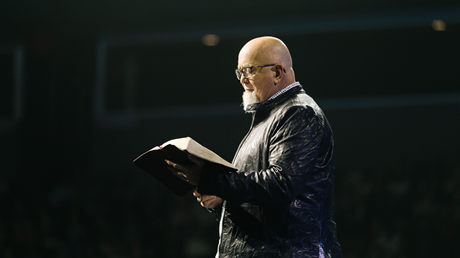
What could possibly possess a Bible church to file a lawsuit against three outspoken critics of their ministry?

Harvest Bible Chapel has not strayed from its 30-year commitment to the unapologetic preaching of God’s Word, nor have we forgotten the explicit teaching of 1 Corinthians 6:1-9. We’d like to share our biblical rationale for reluctantly deciding to take our critics to court.

A Deeper Understanding of Scripture

Throughout church history, cultural happenings have forced a more carefully nuanced consideration of biblical application. In the first centuries, major areas of Christology were refined to combat error. In recent decades, the charismatic movement brought a more nuanced study of the scriptural teaching on spiritual gifts and the baptism of the Holy Spirit.

Many of us remember the near unanimous evangelical stance on divorce prior to the 1970s, when most churches held strictly to “no divorce, no remarriage.” Then with the rise in divorce rates and a few high visibility Christian leaders getting divorced, all were pushed back into the Scripture for a view that considered all biblical teaching on the subject.

In just a few years, the prevailing view changed to include “exception language” from the teaching of Jesus (Matt. 19:9) and Paul (1 Cor. 7:15). The Scriptures had not changed, but cultural trends had again caused a more careful study of all biblical passages on divorce, versus the more simplistic “the Lord God … hates divorce” (Mal. 2:16).

The perfection of God’s holy Word is best seen in the way all relevant passages work together to form a consistent unity. Reductionism is the logical fallacy of “making the main thing the only thing.” ...

Continue reading...


from Christianity Today Magazine https://ift.tt/2F801Qu

What to Do About Persecution in China

Our most effective weapon against injustice is carried and concealed in our hearts.

The tanks don’t always stop in China, as they did when the world watched a lone, brave man stand in Tiananmen Square and face down tanks designed to quell opposition to the government.

Few were watching in 2016 when the Reverend Li Jiangong and Ding Cuimei, his wife, stood before a bulldozer ordered by the government to demolish their church.

“Bury them alive for me,” an angry member of the demolition team reportedly said.

The bulldozer did. Li managed to scratch his way out. But his wife didn’t make it.

That turned out to be a step too far even for the Chinese government at the time, which soon hauled the demolition team in for questioning. But the deed was done—and whether politically intentional or not, it is a symbol of a brutal repression of the Chinese church that is only gaining momentum.

Since the Communist takeover, the church has always been subject to repression by authorities. But slowly since 1982, the government had been giving the church space to breathe. As late as the spring of 2011, Chinese officials were saying publicly that “religion is good for development,” according to a 2012 report in Foreign Policy. The government donated land, built churches, and authorized research on positive Christian contributions to society.

Under the current administration of President Xi Jinping, however, the government is tearing down some churches (like the 50,000-member Golden Lampstand Church in Shanxi Province in January) and closing others (most notably, Zion Church, Beijing’s largest house church). The Chinese government is working furiously to recreate the church in its image. Regulations announced last year formalized policy that has, in practice, been in effect for some ...

Continue reading...


from Christianity Today Magazine https://ift.tt/2Qd2XfB

Do Methodists Have a Case Against Jeff Sessions?

Though the denomination is the least likely in the US to administer church discipline, critical voices have been swirling around its highest-ranking politician.

Earlier this week, US Attorney General Jeff Sessions was interrupted by a Methodist minister in a clerical collar who shouted verses from Matthew 25 during a religious liberty event in Boston.

“Brother Jeff, as a fellow United Methodist, I call upon you to repent, to care for those in need, to remember that when you do not care for others, you are wounding the body of Christ,” said Will Green, pastor of of Ballard Vale United Church in Massachusetts.

Green’s remarks, followed by another outcry from a Baptist pastor, led both clergy to be escorted from the event. The Trump cabinet member briefly responded, “Thank you for those remarks and attack, but I would just tell you we do our best every day to fulfill my responsibility to enforce the laws of the United States.”

In a news clip gone viral, Green said to Sessions’s face what some members of the nation’s second-largest Protestant body have articulated in statements, tweets, and casual conversation: They’re unsettled to see a fellow member of the United Methodist Church (UMC) enforcing policies their tradition opposes, specifically, the White House directive to apprehend and separate families crossing the US border.

United Methodist leaders have adopted resolutions in favor of comprehensive immigration reform and declared Sessions’s own zero-tolerance stance as “unnecessarily cruel.” More than 600 clergy and laypeople filed an official complaint against him with the UMC, though it was ultimately dismissed by his district this summer.

“I don't believe there's anything in the Scripture or anything in my theology that says a secular nation state cannot have lawful laws to control immigration,” ...

Continue reading...


from Christianity Today Magazine https://ift.tt/2qpJcWJ

Rumors of AI Wars: Where Google and the Bible Agree

An understanding of human dignity and responsibility belongs in the development of artificial intelligence for military uses.

Recently, Google hit the pause button on a military artificial intelligence project amidst thorny ethical questions raised by its own employees. Increasingly in new drone and surveillance systems, human knowledge and actions are augmented and soon might be sidelined altogether. Should we shirk our responsibility and pass authority onto these machines? For Christians, the complex conversation about how AI should be developed as weapons centers on a biblical understanding of human dignity and responsibility.

For Google employees, protest began in April 2018 over involvement in a program to continue work on an AI-based image recognition program for the Department of Defense arguing that Google should not be in the business of war since the company’s historic slogan has been “Do no evil.”

The program, simply referred to as “Project Maven,” is designed to be used in identifying enemy targets on the battlefield. The research would improve an AI system, which processes a massive amount of video data captured every day by US military drones and reports back to military and civilian analysts with potential targets for future military engagement. The New York Timesreported that the Pentagon has spent billions of dollars in recent years to develop these systems and often partners with leading technology firms.

Yet, thousands of Google’s employees, including many senior engineers, signed a letter to CEO Sundar Pichai in protest of the firm’s involvement in Project Maven. In June, Google announced that it would not renew the government contract for Project Maven. Employees rejoiced at this decision, but Amazon founder and CEO Jeff Bezos and others have criticized the move arguing that dropping the ...

Continue reading...


from Christianity Today Magazine https://ift.tt/2SDqPui

Thursday, 1 November 2018

The GC2 Summit on #metoo/#churchtoo to Challenge and Equip the Church to Address Sexual Violence and Harassment in Our Midst

Join Beth Moore, Christine Caine, Max Lucado, Nancy Beach, Belinda Bauman, and others on December 13 as we begin to address #MeToo / #ChurchToo in our churches today.

Churches have struggled with how to address sexual abuse, harassment, and more.

Many leaders, attendees, and pastors alike find themselves living in the aftermath of not just what happened a year ago, but what’s actually been happening for decades. Trust has been broken, power has been abused, and most importantly, people have been hurt.

Many have been deeply wounded by the hands of others—more than we’d ever want to count.

For those of you who haven’t caught on yet, I’m talking about #churchtoo—an extension of the #metoo movement that took the media by storm a year ago. In #churchtoo, churchgoers shared their own experiences of abuse and harassment—and for many in the church, these things have been at best uncomfortable to hear; at worst, detrimental to the local community of believers.

You see, many of us would like to believe that the abuse of women (and men) is a purely secular phenomenon that happens in the outside world—a realm far beyond the comfortable pews and pulpits we call home.

But this is simply not the case. Sexual violence and harassment take place in churches, ministries, and more. It is past time all church leaders deal with it as we are called to.

If the stats are right and roughly 1 in 4 women have been sexually harassed or abused at some point, then this reality is everywhere, likely even in your local church.

In #churchtoo and elsewhere, it has been overwhelming to say the least to see so many women come forward and share things like, “I was raped,” “I was groomed by my high school youth pastor,” “The pastor didn’t believe my story,” and “My church held no one accountable.” I even have several staff members ...

Continue reading...


from Christianity Today Magazine https://ift.tt/2RvaC9j

God's Generous Return Policy

We are obsessed with making progress, but the Bible reminds us it is often important to go back.

Returning does not resonate in 2018. Who wants to come back to something? We would rather push forward no matter what the cost, reach new heights, or at the least be a few steps farther along than where we started. Within this framework, to return is to regress or worse, to fail.

But returning can be beautiful. Great-hearted Odysseus, sitting on the shores of Ogygia, weeping, broken, with tears streaming down his weathered face as he looked homeward is a powerful picture of the beauty of the longing of returning. Odysseus wanted nothing more than to return to his home, his land, his child, and most of all his beloved wife; returning gripped him. Everything else became tasteless and colorless; even the beautiful nymph, Kalypso, with all she had to offer, became bland and washed-out.

Odysseus saw beyond the charms and allures of Kalypso. From an etymological perspective, his feat was even more pronounced because Kalypso comes from the Greek verb kalyptō, which means to conceal and, by implication, to deceive. Kalypso attempted to charm Odysseus, but she failed because Odysseus had a one-track mind. He was all about returning. Sirens, lotus-eaters, men, gods, suitors, nothing could get in his way. There is an insight here.

Returning is also an important idea in Scripture, especially returning to God. Perhaps we are missing what is most important in life because we have forgotten the importance of returning or even how to return. Like a lost ship at sea that eventually runs aground, we are stranded, isolated, and in despair not knowing what to do or where to go. We try to move forward, but since we have lost our orientation, forward may not mean progress. But here’s the good news: We can always return, and that is progress. ...

Continue reading...


from Christianity Today Magazine https://ift.tt/2DeVYjx

God Has a Plan for Your Life. But You Can't Find It Alone.

How community helps us discern our callings.

When the Emmy Awards honored Fred Rogers with a Lifetime Achievement Award in 1997, he did something that took everyone in the room off guard. The beloved public television star (and ordained Presbyterian minister) refused to make the moment about himself.

“So many people have helped me to come to this night,” Rogers told the audience of celebrities. “Some of you are here; some are far away; some are even in heaven. All of us have special ones who have loved us into being. Would you just take, along with me, 10 seconds to think of the people who have helped you become who you are? Those who have cared about you and wanted what was best for you in life. Ten seconds of silence. I’ll watch the time.”

Those in the audience began their brief invitation for reflection with laughter. But by the time their 10 seconds were up, many were wiping their eyes.

“Whomever you’ve been thinking about, how pleased they must be to know the difference you feel they’ve made,” Rogers said.

In a culture that lauds self-made success, a lasting gift of Fred Rogers's work is his subtle denial of the myth of self-sufficiency. He reminds us of what we all intuitively know after 10 seconds of silence: We arrive where we are because of God’s work in our lives, manifest in the relationships in which God places and calls us.

Lives Lived Together

For the past few years, I’ve been working with university students at UC Berkeley to develop an integrated vision of vocation, one that refuses to bifurcate God’s call on their lives from their work and relationships on a college campus or wherever their future leads. One unique aspect of our theological exploration of vocation is the insistence ...

Continue reading...


from Christianity Today Magazine https://ift.tt/2yMNpIE