Friday, 3 May 2019

Sabbath Rest: Not Just for Grownups

I want my children to know how to work hard. I also want them to know that hard work doesn’t define them.

The stories we hear when we’re young stay with us. They define us, tell us who we are. For good, and sometimes for ill, they inform the ways we live our lives. Sometimes we realize it. Sometimes we don’t.

When I was 16 years old, my youth group from First Mennonite Church of Pretty Prairie, Kansas, went on a service trip to Appalachia. (If the term “Mennonite” makes you think horses, buggies, and straw hats, then think again. Those are either Amish or a more conservative group of Mennonites than the ones I grew up with.)

We were a bunch of farm kids who knew our way around a hammer and a circular saw, and when we got to Harlan County in Kentucky, we did what we knew how to do best. We worked. We also knew how to eat.

At one point during the week, the people who ran the ministry had to make a choice. Our appetites were throwing off their budget. We were eating more than any other youth group they had seen. Should they try to make us eat less?

Ultimately, they decided not to attempt to curb our appetites. Why? As the story was told to me, the director of the whole ministry said something like, “I don’t care how much they eat. They’re getting more work done than any other group I’ve ever seen.”

We didn’t hear that story until after the fact, but when we did, we couldn’t have been prouder. You may have heard of the Protestant work ethic. I suppose it’s a thing, but I need to tell you a secret about Mennonites. Though most would never admit it, in their heart of hearts, many a Mennonite thinks the Mennonite work ethic puts the run-of-the-mill Protestant work ethic to shame.

This is a story I’ve been told. This is a story I’ve told. This is a story I’ve ...

Continue reading...


from Christianity Today Magazine http://bit.ly/2LkMAPW

Thursday, 2 May 2019

New HHS Rule Protects Pro-Life Health Care Workers

UPDATE: Under Trump, federal policy keeps shifting away from abortion rights in favor of religious conscience protections.

Update (May 2): A year after establishing a new division to safeguard health care workers’ freedom of religion and freedom of conscience, the Trump Administration has formalized protections for those who decline to participate in certain medical treatments like abortion, sterilization, or assisted suicide due to their faith or moral convictions.

The Department of Health and Human Services (HHS) proposed the new rule last January (see below) and issued a final version in a 440-page document on Thursday. The policy is meant to provide stronger protections and more guidance around enforcing conscience protections passed by Congress, according to HHS.

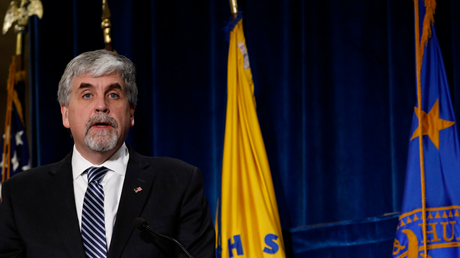
“This rule ensures that healthcare entities and professionals won’t be bullied out of the health care field because they decline to participate in actions that violate their conscience, including the taking of human life,” said Roger Severino, director of the HHS Office of Civil Rights and former legal council with the religious liberty group Becket Fund. “Protecting conscience and religious freedom not only fosters greater diversity in healthcare, it’s the law.”

This updated policy represents a major religious freedom victory, particularly for pro-life evangelicals who fear being forced to violate their conscience on the issue of abortion.

In a Barna Group survey released last month, the issue of “religious hospitals being required to perform abortions and other services they deem to violate their religious convictions” was US faith leaders’ top religious freedom concern (71% deeming it a “major or extreme” threat). A majority also worried about “religious organizations being required to provide healthcare ...

Continue reading...


from Christianity Today Magazine http://bit.ly/2ZNqrx7

US Report Bashes China’s Religious Freedom Violations

With its crackdown on Christians and other faiths, the communist country ranks as a top offender by USCIRF for 20 years in a row.

Barely a week after the bombing of churches and hotels in Sri Lanka killed nearly 300 on Easter Sunday, and a day after six Christians were killed at their church in Burkina Faso, the United States Commission on International Religious Freedom (USCIRF) made clear that the worst violators of religious freedom are gaining steam.

The findings are grim in 2019 report and echo the conclusions from this year’s Open Doors rankings, with China taking the brunt of the critique.

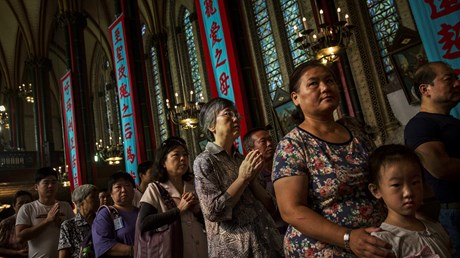
“As a Christian [living in China], your Bible may have been rewritten by the Chinese government, your church shuttered or demolished, and your pastor imprisoned,” the commission wrote. “As a human rights defender who works to protect people targeted for their faith, you may be arrested, or worse, disappeared.”

According commissioner Johnnie Moore this year’s report represents “the strongest stance against China in the history of the USCIRF.”

China was a primary focus of the first-ever USCIRF report released two decades ago, along with Russia and Sudan. The world’s most populous nation remains a Tier 1 “country of particular concern” (CPC) today, having made the list in each of the 20 annual releases. China also jumped to No. 27 on the 2019 World Watch List, which tracks the countries where it is hardest to be a Christian.

Christians and adherents of other faiths in China have seen an uptick in persecution as President Xi Jinping has consolidated power and abolished term limits, easing the way for a harsh government crackdown on believers and advocates of religious freedom.

Ministry leaders have weighed whether the moves represent “a step toward tighter government control, an opportunity to ...

Continue reading...


from Christianity Today Magazine http://bit.ly/2JcBAlg

CT Women: Our 15 Favorite Prayers

Women from across the country share words that shape their prayer lives.

Today marks the National Day of Prayer in the US. With that in mind, we asked a number of women to share prayers from Scripture and Christian history that hold significance for them as pastors, professors, community developers, writers, and parents. These 15 responses give a glimpse into the prayer lives of Christian women across the country who are on their knees on behalf of families, churches, and leaders.

1. One of my personal favorites is the prayer, “Great are you, Lord, and greatly to be praised.” Augustine uses this prayer—which draws on Psalm 48—to open his Confessions. He starts not with a reference to himself or even to what God can do or has done for him but simply by admitting his awe at God’s majesty: God is a great God! This prayer reminds us of the ultimate reason why praying is worth doing: not first and foremost because of what we need or feel but because God deserves our unstinting and unremitting praise. The wellspring of profound prayer is the greatness of the Lord.

— Han-Luen Kantzer Komline, a ssistant professor of church history and theology, Western Theological Seminary

2. The Celtic Christians who lived on the British Isles during the early Middle Ages practiced a faith that reflected simple lives lived close to the earth, absent the later pomp and hierarchy that would come from the Roman church. Many of the prayers these Christians offered in their Gaelic tongue were collected later in the 19th-century work Carmina Gadelica. The prayers are notable for the way they invoke God in every aspect of daily life—while kindling the morning fire, making the bed, and collecting the eggs. My favorite prayer seeks God’s blessing on the cow, her milk, and the milker. ...

Continue reading...


from Christianity Today Magazine http://bit.ly/2Wj0OlC

Wednesday, 1 May 2019

The Three-Letter Word That Undergirds Gospel Living

Loving across our differences requires the power of paradox.

“You and Ryan seemed tired Friday,” my friend Janey said when she saw me at church. “Everything okay?” We had been to their house for a Christmas party two days earlier.

“Oh, we weren’t tired,” I said, laughing. “We were fighting.” The sky had been falling in thick flakes that Friday, the city roads a congested crawl under a whitened sky. A few more stolen moments in the car alone had afforded us just enough time for an argument.

“When are you taking your vacation days?” I had asked Ryan a few days earlier. It wasn’t exactly his answer that I had been brooding about for days and finally took up on the way to Janey’s. He did, in fact, plan to catch up while the office was quiet over the Christmas holidays. Instead, it was more that he hadn’t asked me the same question, carelessly presuming that I had no pressing deadlines.

In the middle years of our marriage, we have often encountered this recurrent place of tension—how to share domestic responsibility and how to support each others’ professional ambitions. It’s a lot of muddled, messy work, trying to figure out whose needs are being met and whose are not, especially when you try doing it on the way to a dinner party.

Marriage is often held up as a model of Christian sacrifice—and of course, there’s truth in that. In Christian marriage, we choose to love, serve, and submit to one another, even on the days that wring us out bone-tired. But Christian marriage isn’t built on mute self-sacrifice alone. Our wedding vows don’t simply bind us to politeness; they also bind us to courage. In the midst of this tension, we find deep virtue in one little word: and. ...

Continue reading...


from Christianity Today Magazine http://bit.ly/2GVDPrl

The Three-Letter Word that Undergirds Gospel Living

Loving across our differences requires the power of paradox.

“You and Ryan seemed tired Friday,” my friend Janey said when she saw me at church. “Everything okay?” We had been to their house for a Christmas party two days earlier.

“Oh, we weren’t tired,” I said, laughing. “We were fighting.” The sky had been falling in thick flakes that Friday, the city roads a congested crawl under a whitened sky. A few more stolen moments in the car alone had afforded us just enough time for an argument.

“When are you taking your vacation days?” I had asked Ryan a few days earlier. It wasn’t exactly his answer that I had been brooding about for days and finally took up on the way to Janey’s. He did, in fact, plan to catch up while the office was quiet over the Christmas holidays. Instead, it was more that he hadn’t asked me the same question, carelessly presuming that I had no pressing deadlines.

In the middle years of our marriage, we have often encountered this recurrent place of tension—how to share domestic responsibility and how to support each others’ professional ambitions. It’s a lot of muddled, messy work, trying to figure out whose needs are being met and whose are not, especially when you try doing it on the way to a dinner party.

Marriage is often held up as a model of Christian sacrifice—and of course, there’s truth in that. In Christian marriage, we choose to love, serve, and submit to one another, even on the days that wring us out bone-tired. But Christian marriage isn’t built on mute self-sacrifice alone. Our wedding vows don’t simply bind us to politeness; they also bind us to courage. In the midst of this tension, we find deep virtue in one little word: and. ...

Continue reading...


from Christianity Today Magazine http://bit.ly/2GUIc61

One-on-One with Ronnie Floyd on the National Day of Prayer

“If we truly want unity and peace in America, we must return to God and remember that our highest calling is to love him and one another.”

Ed: A quick glance at the news tells us America is still struggling with division and polarization. From your perspective, what is the spiritual state of America?

Ronnie: I was recently reading a Gallup poll on the emotional state of America. Honestly, I wasn’t surprised the pollsters found that Americans are among the most stressed people in the world or that nearly half of the U.S. population — 45 percent — feel burdened by worry. I definitely wasn’t surprised to learn 1 in 5 Americans experienced a lot of anger last year. But I was surprised by one detail in the poll that in itself speaks volumes: despite an improving economy, Americans are more stressed, more worried and angrier than in years past.

The report says, “The disconnect between a strong economy and Americans' increasing negative emotions illustrates how GDP and other hard economic data only tell part of the story. In fact, the levels of negative emotions in the past several years are even higher than during the U.S. recession years.”

What this tells us is that happiness and personal fulfillment are not necessarily dependent on our circumstances. Being a pastor, this makes perfect sense to me. I’ve seen it in people’s lives, and I see it in America as a whole. I believe America’s political and social problems — all the division, hostility and polarization we see every day — are actually problems of the human heart, and fixing them requires a spiritual solution. If we truly want unity and peace in America, we must return to God and remember that our highest calling is to love him and one another.

Continue reading...


from Christianity Today Magazine http://bit.ly/2ZL5cvK