Wednesday, 2 October 2019

Church Planting Series: Creating a Culture of Multiplication

Multiplication always starts small.
In 1982, Heather Locklear did a shampoo commercial about a new product. As she tells viewers, she told two friends about the new shampoo. Then, those friends told two more. And so on and so forth. The video uses graphics to make it seem much cornier than it actually is, but the point is clear; Heather Locklear summarized what a culture of multiplication looks like.

It’s simple math, really. It’s not new. This way of spreading information has been around for as long as we can go back. Think of middle school, for example. One kid starts a rumor. He tells another person who tells another, and by fifth period the story has traveled around the entire school.

We also see this culture of multiplication when it comes to church planting.

Scripture sums it up pretty well. 2 Timothy 2:2 tells us, “These things you have heard from me in the presence of many witnesses, entrust these to faithful men who will be able to teach others also.” It’s clear that we are made to share the good news with others. We are made to grow one another for the sake of God’s kingdom.

This is the culture of multiplication.

Multiplying Churches

Imagine if this culture was somehow in every avenue of our churches. Imagine if disciples multiplied into new disciples. Imagine if each of our small groups doubled or quadrupled in size because its members constantly made new disciples. Imagine if we could use this model to eventually multiply churches.

It sounds perfect and easy on paper, but when people get involved, multiplication is not perfect. The idea is great, but the realities of bringing people to church, let alone making new disciples, often hold people back from fully embracing a culture of multiplication. Reaching out to people ...

Continue reading...


from Christianity Today Magazine https://ift.tt/2nG9kPD

Master’s Seminary Grad Takes Kanye’s Crowds to Church

How the pastor of small, nondenominational Bible church ended up in Kanye’s circle.

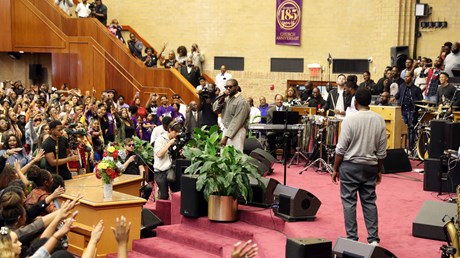
In between Kanye West’s sets during an impromptu, sold-out show in Detroit last week, a lean figure with a blonde pompadour took the stage and preached the gospel.

“I’m here to tell you that while our God is the judge over the universe, he’s also a God of mercy and he’s a God of love, and he sent his Son to die on a cross because he loves you,” said Adam Tyson, a graduate of The Master’s Seminary and the pastor of a small Bible church. “He wants to be exalted in your heart today.”

His 12-minute sermon focused on the prophet’s vision in Isaiah 6. It’s weird to hear a sermon at a Kanye concert, but then again not that weird if you’ve been following Kanye’s Sunday Services. These gospel music and fellowship gatherings that started among his family, friends, and elite guests at his Calabasas, California, estate, grew into a type of concert experience for the Jesus-seeking artist.

On the road with the rapper as he performs Sunday Services to promote his next album, Jesus is King, Tyson believes God is “being exalted and people are being moved.” The audience is receptive to his sermons, he said, and he has received positive feedback after the shows.

“I came to hear Kanye,” one fan told Tyson. “But then I heard the message of forgiveness from the Bible.”

From Yeezus to Jesus

Tyson’s ministry career took an unexpected turn the day Kanye happened to visit his congregation, Placerita Bible Church in Santa Clarita, California. The 43-year-old pastor has found himself not only discussing the gospel with Kanye, but thrust into the hip hop artist’s circle, flying to Cody, Wyoming, for Bible study with him and his employees, ...

Continue reading...


from Christianity Today Magazine https://ift.tt/2nV1FNp

Anne Graham Lotz Completes Cancer Treatment, Says the Spirit Was Her ‘Constant Companion’

The author and teacher opens up about answered prayers in the midst of grief, loneliness, and suffering.

Anne Graham Lotz’s journey has been a tough one lately: A year ago, three years after the death of her husband and six months after the funeral of her famous evangelist father, she was diagnosed with breast cancer.

But the 71-year-old Bible teacher and daughter of Billy Graham says she has refused to give up hope and her faith remains a constant.

“The Christian life is so much more than just being saved from hell and is so much more than just going to heaven—praise God for both of those things,” she said. “It’s more than just a checklist of do’s and don’ts. It’s a relationship that’s vibrant and alive and it’s sufficient to carry you through the hardest things.”

After she completed her cancer treatment last week, Lotz is free again to travel for public appearances—including a visit to the Billy Graham Library in Charlotte, North Carolina, on Thursday—as she promotes her latest book, Jesus in Me: Experiencing the Holy Spirit as a Constant Companion.

Lotz, who belongs to a church affiliated with the Southern Baptist Convention but calls herself simply a “follower of Jesus," talked to Religion News Service last week about facing cancer, being a widow and an orphan, and defining the Holy Spirit.

The interview has been edited for length and clarity.

Adelle M. Banks: How are you doing, especially given your diagnosis of breast cancer last year?

Lotz: I think I’m doing well. From what the doctor has said, there are no real markers for this kind of cancer. So I think they just finish the treatments and after five years, if I’m still clear, they consider it done with. I have my last infusion. So I’m very glad to get all that ...

Continue reading...


from Christianity Today Magazine https://ift.tt/2nQv37j

Interview: Forgiveness First, Restoration Later: Pastor Responds to Recanted Hair-Cutting Account

The incident is a chance for students to demonstrate gospel reconciliation and for leaders to take a deeper look at racial dynamics among the diverse student body.

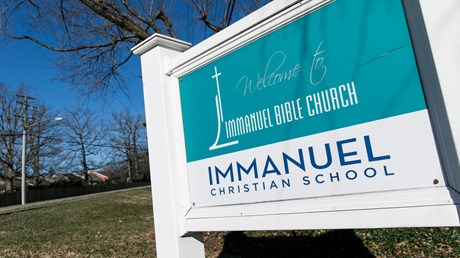
Last week Immanuel Christian School in Springfield, Virginia, found itself in the national news for all the wrong reasons. Amari Allen, a sixth grade student, claimed that three of her classmates attacked her on the playground, held her down, called her names, and cut her hair.

Then she recanted her story, acknowledging that she fabricated the story, though she says she has been bullied at school. In a statement released to the Washington Post, Allen’s grandparents said, “To those young boys and their parents, we sincerely apologize for the pain and anxiety these allegations have caused.”

With the retraction, the K-10 school, whose student body is nearly half (48%) nonwhite, has mostly faded from the national spotlight. But now, the school is working to address any bullying that may have taken place despite its zero-tolerance policy toward such behavior and to explore what could have led one of their own to fabricate such an account.

In the words of Immanuel Christian’s principal, “We recognize that we now enter what will be a long season of healing. This ordeal has revealed that we as a school family are not immune from the effects of deep racial wounds in our society.”

Immanuel Christian School is a ministry of Immanuel Bible Church and shares facilities with the Baptist congregation. About a third of the families enrolled in the school are church members. CT spoke with Jesse Johnson, the church’s lead teaching pastor, about how the incident has offered the student body an opportunity to express forgiveness, work towards restoration, and deepen gospel discussions around race and racism.

In your view as a pastor, what does healing look like in this situation?

Healing begins with repentance ...

Continue reading...


from Christianity Today Magazine https://ift.tt/2nRflcf

Tuesday, 1 October 2019

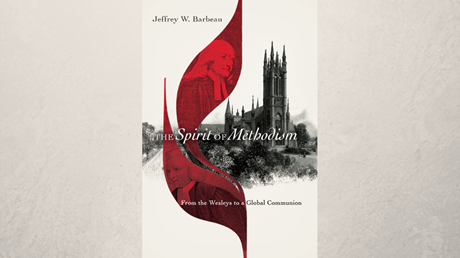
One-on-One with Jeffrey Barbeau on Methodism

“In many parts of the world, the teaching and preaching of Methodists set the stage for the astronomical growth of Pentecostalism.”

Ed: There appears to be a crisis in United Methodism today. Tell us more about the current problem.

Jeffrey: It all depends on who you ask! The short answer is there’s a battle over sexuality in the church. Traditionalists argue that the cultural shift in favor of same-sex marriage is a break in historic Christian doctrine. Progressives believe that refusing ordination to gay and lesbian clergy is an act of profound injustice.

A closer look at the issue might reveal other layers that contribute to the problem.

First, American Methodists have long valued collaboration in favor of shared ministry. Early American Methodists differed sharply over the question of slavery, but somehow managed to carry on despite some serious social and political differences. Finally, when charges of slaveholding were leveled against a bishop, the issue could no longer be ignored.

Second, and this is related, the church is coming to grips with the challenge of unity in a vast, global communion. For a long time, American Methodists enjoyed numerical dominance that allowed them to set the agenda on matters of faith and practice. But with the remarkable growth of Methodism in Africa, Asia, and other parts of the world, voices from the global church can no longer be hushed.

And here is where I think that, finally, the UMC has a crisis of ignorance. When people in a denomination or church fail to understand their own history, they are liable to confusion and misunderstanding.

United Methodists aren’t the first to face these issues, but their prominence in American public life makes the crisis more visible.

Ed: What experiences inside and outside of Methodism shaped your thinking about the movement?

Jeffrey: An important part of my own story involves ...

Continue reading...


from Christianity Today Magazine https://ift.tt/2nwlF8J

Pastors Don’t Do It For The Money, But Having Enough to Retire Would Be Nice

Bless Your Pastor campaign raises awareness around the financial strains of ministry.

When Brandon Shields left his full-time position as a pastor in West Palm Beach to start a church several states away, he did what most church planters do: He allotted his family as little money as possible to get by while in the fundraising stage.

As his home and salary shrank to what he believed to be appropriate size for a church planter, his children and expenses grew—and so did his anxiety over finances.

Shields has plenty of company; surveys have shown the vast majority of clergy, around nine in ten Protestant pastors in the US, experience financial stress.

Many churchgoers—and pastors themselves—assume these kinds of budget balancing acts come as part of the job. Just as churches must wrestle with the tension between generosity and being good stewards of the resources God has given, pastors too must work out how to provide adequately for their families while striving to live simply.

But in the end, American Christians might be surprised to learn how many pastors struggle to make ends meet, and how much those financial pressures can weigh on their personal lives and ministry careers.

With October being Pastor Appreciation Month, the National Association of Evangelicals (NAE) launched its Bless Your Pastor campaign to raise awareness about the state of clergy finances and provide resources for thoughtful ways churches can support their leaders.

“Over 70 percent of pastors know pastors that have left the ministry just from the stress of it, either the personal stress or the financial stress, and over one-third have said they themselves have considered leaving the ministry just because it’s too difficult on their family, especially with some of the financial challenges they face,” Brian Kluth, ...

Continue reading...


from Christianity Today Magazine https://ift.tt/2mGRCeg

Interview: Kate Bowler: Why Christian Women Become Celebrity ‘Influencers’

When the path to formal church leadership is blocked, they'll naturally look for other ways to reach an audience.

Tish Harrison Warren lit up the internet with an essay for Christianity Today that asked, “Who’s in Charge of the Christian Blogosphere?” In her piece, Warren addressed “a crisis of authority” resulting from so much de facto discipleship occurring on social media rather than in the church—a phenomenon that, for a variety of reasons, women have experienced most acutely.

Even before Warren’s essay was published, Kate Bowler, associate professor of the history of Christianity in North America at Duke Divinity School, was compiling years of research on the conditions within modern American evangelicalism that helped lead to this state of affairs. She discovered that evangelical women, denied traditional means of authority within the church (and sometimes the culture), were becoming increasingly adept at tapping into newer forms of authority brought about by the age of mass media and the cult of celebrity it has wrought. In The Preacher’s Wife: The Precarious Power of Evangelical Women Celebrities, she examines how Christian women—within both conservative and liberal church traditions—have exploited the power of beauty, therapy, family, and pop art to exert authority of their own. Author and Liberty University English professor Karen Swallow Prior spoke with Bowler about her book.

One of the unique qualities of your research and writing is that you bring the sort of personal experience to your subject that many scholars, particularly in the field of religion, lack. You have roots in a conservative Christian tradition—but you’re not mad about it. Can you talk about that?

I grew up among the Mennonites in the plains of Manitoba in a broadly evangelical tradition, ...

Continue reading...


from Christianity Today Magazine https://ift.tt/2O5S9BA