Thursday, 3 October 2019

He Hugged the Woman Who Shot His Brother. The Power of the Gospel in the Botham Embrace.

Forgiveness, at the end of the day, puts the amazing power of the gospel on display.
Botham Jean was killed by Amber Guyger. The off-duty police officer walked into what she believed to her apartment and shot Botham. By now, many have seen the heart-wrenching story of Botham’s brother (Brandt) delivering a courtroom speech of love. He forgave Amber Guyger.

He overflowed with the love of God.

While this act of forgiveness is shocking to the world, it has been the centerpiece of the Christian faith for 2,000 years. When Christians are actually living out the truths of the gospel, they show the world a better way.

The etymology of “Botham” means “he who lives in a broad valley.” It means hitting bottom, or depression. Yet, his life speaks from the top—from the life-giving mountaintop of the gospel. From the testimony of Brandt, Botham’s brother, Botham’s life points to a better way, a life-giving way—the way of Jesus.

To much of the world, however, such a heinous act of violence would plant a deep seed of anger that would eventually yield the fruit of bitterness and hatred—leading one down the path toward depression and bitterness.

However, that wasn’t the way of Botham. That wasn’t how he thought. Although deceased, his life declares a radical forgiveness that could only come through the life and heart of Jesus.

When I was reading the story and watching the testimony, the only thing that came to my mind was #Jesus. So, that’s what I tweeted.

I understand there are other issues to consider. “What about justice?” “What about the issue of systemic racism, white supremacy, and the abuse of power” etc? I understand there are many underlying issues here.

Brandt, while on the stand, didn’t address everything—and ...

Continue reading...


from Christianity Today Magazine https://ift.tt/2V9ER8K

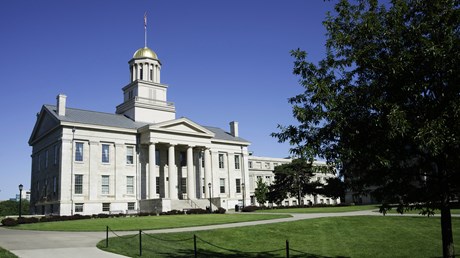
Judge: U of Iowa Officials Have to Pay for Repeated Discrimination Against Christian Groups

The recent ruling in favor of InterVarsity Christian Fellowship was the second time the court called out inconsistent policies on campus.

For the second time this year, an Iowa federal judge has ruled that the University of Iowa violated students’ First Amendment rights when various religious student groups lost their official status.

And this time university administrators will be held financially liable for InterVarsity Christian Fellowship’s fight to stay on campus.

Last Friday, federal judge Stephanie M. Rose determined that the university inconsistently applied its Human Rights Policy by exempting campus groups like fraternities, sororities, and some affirming faith-based groups while penalizing certain religious groups—including InterVarsity—that require its leaders to agree to its statement of faith.

While the university argued that administrators Melissa Shivers, William Nelson, and Andrew Kutcher had qualified immunity in this case, Rose disagreed. The three Iowa officials—vice president for student life, associate dean of student organizations, and coordinator for student organization development—will have to pay any damages awarded to InterVarsity at a trial currently set for January.

Almost 40 student groups—including the Sikh Awareness Club, the Chinese Student Christian Fellowship, the Imam Mahdi Organization, and the Latter-day Saint Student Association—were also expelled by the university along with InterVarsity in July 2018. The university temporarily reinstated the groups after InterVarsity filed suit the following month. The recent ruling allows them to keep their campus recognition even if they require leaders to sign a statement of faith.

“We must have leaders who share our faith,” said Greg Jao, InterVarsity spokesman. “No group—religious or secular—could survive ...

Continue reading...


from Christianity Today Magazine https://ift.tt/34ZvYmV

In Abuse Cases, Don’t Trust Your Gut

Malcolm Gladwell’s new book leans too much on private interpretations of truth.

It’s understandable if you think Malcolm Gladwell’s latest book Talking to Strangers is a foray into the subtle art of conversation and bridge building in an increasingly fractured society. After all, the subtitle promises to clarify “what we should know about the people we don’t know,” and for readers familiar with Blink! and Outliers, such positive fare would be natural fit for Gladwell. But Talking to Strangers is a surprisingly darker book. Gladwell’s main focus is on underscoring the limits of our ability to make sense of strangers in the first place.

Coming almost six years after his last book David and Goliath, Gladwell can be forgiven for his more pessimistic tone. After all, the western world is a markedly different place where public trust is increasingly vulnerable and the sinister forces of racism and sexism have taken center stage. In fact, Talking to Strangers emerged from Gladwell’s own struggle to make sense of the 2015 arrest of Sandra Bland in Prairie View, Texas, after failing to signal a lane change—an arrest that eventually led to her death. While Gladwell hopes to understand what escalated the encounter between Bland and police, he also views the story paradigmatically, illustrative of the ways we misunderstand strangers in our increasingly polarized, fear-driven society.In classic Gladwellian fashion, Talking to Strangers takes readers on an expansive and winding journey through history, psychology, and media headlines in an attempt to weave the threads of seemingly disparate histories. I say “attempts” because Gladwell often loses the thread, leaving readers tangled in conflicting advice about how to relate to those around them.Gladwell begins ...

Continue reading...


from Christianity Today Magazine https://ift.tt/2OhMpVq

Living with Bacteria, Dying to Self: My Life with Crohn's

An ordained scientist reflects on God's grace and his gut biome.

Eight years ago, my intestines stopped working. They’d been grumbling for years, but who really expects their body to go on strike. It was painful and, occasionally, messy. My body ached and my life contracted. Doctors told me it was stress, or the flu, or food poisoning, but the pain grew worse and I started missing work. My personality changed.

After three years, I got a diagnosis: Crohn’s disease. Communication can break down between the immune system and bacteria living in the gut. We usually get along with these “symbiotes,” these creatures living with us and within us. Even the famous E. coli usually lives in harmony with human hosts, part of a vast digestive ecosystem. Countless tiny organisms—bacteria, archaea, and protists—help us tackle our food. Except, sometimes they don’t.

In Crohn’s disease, something disrupts the delicate balance, causing inflammation and allowing bacteria to grow out of control. In severe cases, they eat their way out of the intestines, cutting holes that doctors have to stitch together. More often, drugs can keep them contained, though no one knows exactly how. Much of biology, even human biology, remains a mystery. Five years experimenting with medicine and diet restored some normalcy, but I have become more mindful of “my” body and my relation to it.

Body and Soul

At first, the Christian view seemed simple. My earthly body is a temporary home for my eternal soul. When everything worked, I viewed my soul as a mind, driving a body. Like my car, my body might be unresponsive, but I always knew the difference between me and it. Didn’t Jesus say that the spirit is willing, but the flesh is weak (Matt. 26:41)?

But with Crohn’s, ...

Continue reading...


from Christianity Today Magazine https://ift.tt/2IkP39a

In a Tiny House on a Remote Mountainside, David Platt Saw the Church as God Designed It

Those who come have very little. But they have everything they need.

From my knees, I’m startled as I turn around and see that Sigs has joined me on this flat spot. He’s breathing hard but has a smile on his face. “This is a good place to stop,” I tell him as I get up, reflecting on the time I’ve just spent with God. “You can get some great pictures here as well. I’ll let you have this rock.” I pick up my pack and slide it on my back and say, “I’ll see you at the top.”

“For sure,” he answers, still catching his breath and grabbing his water bottle. “Maybe I’ll even pass you—I won’t be here long.”

“Yeah, right,” I answer. We both smile, because he knows how competitive I am—with a head start, there’s no way I’ll let him catch me!

I step out on the last half of the hike up the mountain. Buoyed by rest, I find new momentum on the trail. I can now average about 20 steps per intermittent pause, and it ends up taking about another hour to finally reach the crest. Aaron is waiting (he’s been there a while), and he’s already found a teahouse in a village that overlooks several valleys.

“This is where we’ll stay for the night,” he says, “and the timing is perfect.”

“What do you mean?”

“The only church that exists in these villages is meeting here tonight, and it looks like we’re going to be able to worship with them. Would you mind encouraging them with a message from the Word?”

“I would love to!”

“Great. For now, go ahead and put your pack down in a room,” Aaron says. “Then rest for a bit. We’ll have dinner in about an hour. Later, once it’s dark, the church ...

Continue reading...


from Christianity Today Magazine https://ift.tt/2MbqzjL

Gen Z Evangelicals Still Express Their Faith at School, But Few Others Pay Attention

Teenage “nones” are less likely to notice Bible-reading, prayer, or evangelistic outreach in public schools.

Has faith faded from public schools, or do today’s religiously unaffiliated teens simply overlook it?

Evangelical students notice far more Christian expression in US public schools than their peers do overall and are more willing to engage in conversations with their friends about what they believe, according to a new report out today from the Pew Research Center, the first of its kind.

The release coincides with Focus on the Family’s sixth Bring Your Bible to School Day, when half a million teens are expected to bring a Bible to school as a way to celebrate First Amendment freedoms and share their faith. If the survey is any indication, evangelical public school students are far more likely than their religiously unaffiliated peers to notice the flood of Bibles.

Pew found that evangelical teens are six times more likely than religiously unaffiliated teens to notice students reading Scripture in school outside of class (18% vs. 3%) and nearly three times more likely than the unaffiliated to witness student prayer before lunch (25% vs. 9%) or to see someone invited to a youth group or worship service (45% versus 17%).

“There are substantial differences in what [religious expressions] students tend to see in public school depending on the student’s religious affiliation,” Pew’s report states. But “it is not completely clear what accounts for such large differences.”

Evangelicals’ heightened awareness of faith expressions could be influenced by a “tendency to have religiously similar friendship circles,” according to Pew researchers. Alternately, “religious and nonreligious teens may perceive the world somewhat differently: What may appear as a religious expression ...

Continue reading...


from Christianity Today Magazine https://ift.tt/31GDJMs

Wednesday, 2 October 2019

Died: Cain Hope Felder, Scholar Who Lifted Up the Black People in the Bible

His pioneering work showed Scripture is full of racial diversity.

Cain Hope Felder, a groundbreaking Bible scholar who called attention to the presence of black people in the Old and New Testaments, has died at the age of 76.

Part of the first wave of black Bible professors in the US, Felder’s research challenged generations of scholarship that ignored or downplayed race in Scripture.

By showcasing the numerous people with dark skin mentioned in the Bible, the longtime Howard University School of Divinity professor argued that white interpreters had erased black people from the text. That erasure, he said, enabled modern, racist readings of the Scripture.

“Black people are not only frequently mentioned,” he wrote, “but are also mentioned in ways that are favorable in terms of acknowledging their actual and potential role in the salvation history of Israel.”

Based on his textual and linguistic analysis, as well as his research into the cultures of the ancient Near East, Felder concluded that Moses’s wife Zipporah was black; there were black people in King David’s army in 2 Samuel; and Ebed-Melek, the royal official who saved the prophet Jeremiah’s life in Jeremiah 38, was also black. Felder said it was possible the prophet Zephaniah was black too.

He said Jesus was a person of color who might look black in modern America—and certainly didn’t look like a “white Hollywood star.”

The world of the Bible was full of racial and ethnic diversity, according to Felder, a United Methodist. Noting the pluralism, he believed, was a first step towards correcting “Eurocentric” interpretations, which can impose modern racial attitudes, including white supremacy, onto the text.

His death was announced by Howard, where Felder taught ...

Continue reading...


from Christianity Today Magazine https://ift.tt/2oB6cEQ