Monday, 4 November 2019

The Road Ahead: 10 Characteristics of a Future Church Planter, Part 2

Here are five more key changes we must make if we want to see movement.

Last week we reflected on the first five of ten shifts that are mission critical for those engaging in the missionary work of church planting in North America in locales that are essentially bereft of Christian memory. They were:

  1. A Different Filter: From Entrepreneurial Übermensch [1] to Apostolic Catalyst
  2. A Different Frame: From Sunday-centric to Christ’s Body
  3. A Different Fascination: From Ecclesiastical Supremacy to Kingdom Submission
  4. A Different Focus: From Drafting Free-Agents to Developing Disciple-Makers
  5. A Different Family-Tree: From Replication to Multiplication

This week we will continue this conversation by focusing on five other key changes we must make if we want to see movement.

6 – A Different Force: From SoloClerics to Co-Vocational Teams

The mission force that is deployed in the vast majority of planting situations is a solo lead planter with a big heart for Jesus’ mission. As this planter arrives on the mission field, the financial realities soon overwhelm the romantic missionary notions that once preoccupied his imagination.

The pressure is on. Because of this, the unstated goal often degenerates into building a worship service following that can pay a salary before the start-up supporters move on. Quite understandably, all romantic missionary notions will be flushed in order to compete for the paying customers. After all, there is a family to feed and bills to pay.

As secularity continues to erase Christian memory from much of the landscape within North America, the possibilities of gathering and assembling displaced evangelicals into a financially sustainable professional startups will become a less-likely reality for most. Future church planters will retain their missionary imagination by ...

Continue reading...


from Christianity Today Magazine https://ift.tt/34uM6f4

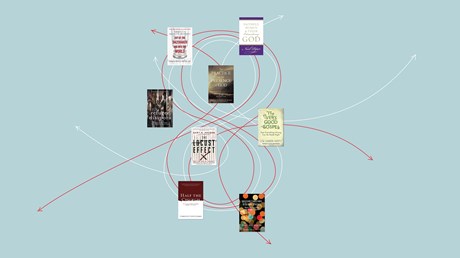
Want to Expand Your Global Vision? Read These Books.

8 reading recommendations for a ministry-focused life.

Leaders in missions, missiology, evangelism, and global ministry reveal the titles that shaped their vision and equipped them to better proclaim the gospel.

Out of the Salt Shaker & Into the World: Evangelism as a Way of Life by Rebecca Manley Pippert (InterVarsity Press)

I first came across Out of the Salt Shaker & Into the World as a student in Brazil. It had a huge impact on me because it addressed my biggest obstacle when sharing Jesus with my friends: fear of rejection. Pippert encourages us to be authentic with our friends and dependent on Jesus. Little did I know how this was going to be crucial to the calling God had for my life. As I now travel across Europe training students in evangelism, fear of rejection is still the number one obstacle for students, just as it had been for me. This book is a must-read for any Christian who desires to be salt and light in their context. It teaches us how to partner with God in what he is doing in the lives around us, equips readers with communication skills to have natural conversations, and calls us to depend on the Holy Spirit in his work of salvation.

—Sarah Breuel serves as director of Revive Europe, evangelism training coordinator for IFES Europe, and as a member of the Lausanne Movement’s board of directors.

Faithful Women and Their Extraordinary God by Noël Piper (Crossway)

Faithful Women and Their Extraordinary God offers the church two needed narratives. The first is a theology of suffering and risk. Christians are a called and sent people. This book helps us understand that suffering is part of our story. The second narrative is the gifting and calling of women in God’s mission. The women featured in this book were powerfully used by God to ...

Continue reading...


from Christianity Today Magazine https://ift.tt/2NedGHt

Sunday, 3 November 2019

Remembering Pastor Samuel Lamb and His Faith in the Face of Persecution in China

On this International Day of Prayer for the Persecuted Church, please pray for those who cannot worship freely.

As we remember our brothers and sisters around the world today on the International Day of Prayer for the Persecuted Church, I want to share about one special man who was a giant among men of faith and who had an incredible impact on my life.

He was threatened, beaten, and tortured for sharing the gospel, but he never wavered in his devotion to Jesus Christ.

I was eager to meet Pastor Lamb, one of China’s well-known house church leaders. I had traveled to Guangzhou, a city of more than three million, where he lived in a tiny apartment under house arrest. He endured more than 21 years in prison for his faith all because he refused to register his church with the Chinese government. Fifteen of those years, he did hard physical labor in a coal mine as punishment for trying to make a copy of the New Testament.

When I arrived at Pastor Lamb’s house for the first time, his house church meeting had just dismissed, so I had to wait outside while hundreds of Chinese believers made their way down the narrow staircase and filed past me into the night. I’ll never know how that many people fit inside that small apartment. I had to push past armed guards to make my way up the stairs. When I reached the third floor, I met my hero for the first time.

Pastor Lamb was short; I towered over him. With a contagious smile, he invited me to come in. The first thing I remember seeing was a long table with about 20 young Chinese people writing feverishly. Nearly 80 percent of the pastor’s congregation was comprised of young people who were hungry for the Word of God and eager to share it with their friends.

I asked Pastor Lamb what they were doing. He matter-of-factly explained, “They are making handwritten copies of the ...

Continue reading...


from Christianity Today Magazine https://ift.tt/2JKACMt

Friday, 1 November 2019

Interview: Armenian Orthodox Leader: ‘We May Forgive One Day, But We Will Never Forget.’

Aram I, Catholicos of the Great House of Cilicia, on what comes next after US House recognizes Armenians’ “legitimate claim” of genocide.

The Armenian Orthodox Church is one of the oldest Christian denominations in the world. According to tradition, Armenia was evangelized by Jesus’ disciples Bartholomew and Thaddeus. In 301 A.D., it became the first nation to adopt Christianity as its official religion.

An Oriental Orthodox denomination, the Armenians are in communion with the Coptic, Syriac, Ethiopian, and Malankara (India) churches. They differ with Catholics and Protestants over the 451 A.D. Council of Chalcedon decision to recognize Christ as one person with two natures: human and divine. Oriental Orthodox Christians declare Christ has one nature, both human and divine.

The Armenian Church is governed by two patriarchs, entitled Catholicos. One, Karekin II, is Supreme Patriarch for all Armenians and sits in Armenia.

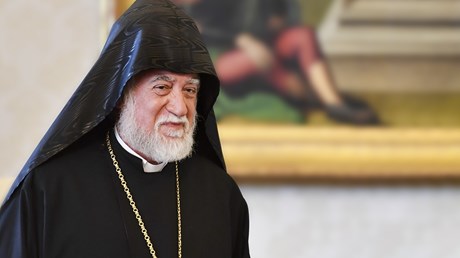
CT interviewed Aram I, Catholicos of the Great House of Cilicia, which was once located in modern-day Turkey but since the Armenian Genocide relocated to Antelias, Lebanon, five miles north of Beirut. His jurisdiction includes the Armenians of the Middle East, Europe, and North and South America.

Aram I discussed the genocide, the US House of Representatives resolution to finally recognize it, and Armenians’ desired response from Turkey.

How do you respond to the US resolution recognizing the Armenian Genocide?

Yesterday I made a statement welcoming warmly this action taken. I believe it is very much in line with the firm commitment of the United States of America in respect to human rights. The rights of the Armenian people are being violated. After more than 100 years, we tried to bring the attention of the international community that the Armenian Genocide is a fact of history.

Whether we call it genocide or massacre or deportation, ...

Continue reading...


from Christianity Today Magazine https://ift.tt/337yI0b

White House Appoints Paula White to Oversee Faith Outreach

Trump’s longtime prayer partner has considered the move since President Trump took office.

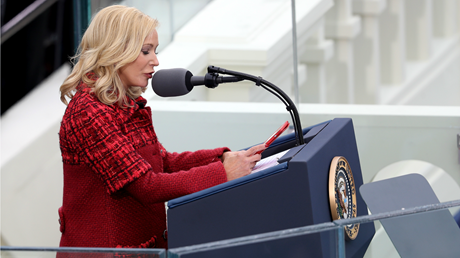
President Donald Trump’s go-to spiritual adviser and longtime prayer partner, Paula White, has been named to an official White House position in the Office of Public Liaison, the New York Times reported Thursday and Religion News Service confirmed on Friday.

White, a Florida televangelist often associated with the prosperity gospel, joins the administration’s outreach efforts through the Faith and Opportunity Initiative, the Times wrote. Formed last year through an executive order, the initiative set out to deepen faith-based partnerships, particularly around poverty relief, and to protect religious liberty on the federal level.

White, who met Trump 17 years ago through her televised sermons, was among the 25 evangelical advisers who joined his campaign in 2016. She visits with the president regularly to pray and discuss faith and politics. This year, she appeared with the president during several official events, including his religious liberty address to the UN and a White House gathering of persecuted religious minorities from around the world. She also participated in a day of prayer on behalf of the president in June.

White has not made an announcement or confirmed the appointment on social media. She stepped down from her church in Orlando in May.

Before praying at Trump’s inauguration in 2017, she told CT there was a “possibility” she would assume an official White House role. After more than two years of prayer breakfasts, National Day of Prayer ceremonies, and Oval Office prayer meetings, the controversial but popular preacher has reportedly done just that.

The Faith and Opportunity Initiative was announced in May 2018, the first move to formalizing the Trump administration’s faith ...

Continue reading...


from Christianity Today Magazine https://ift.tt/2JHcMkA

Will US Genocide Resolution Satisfy Armenian Christians?

The Middle East diaspora appreciates the House’s recognition at last. But what they really want is repentance.

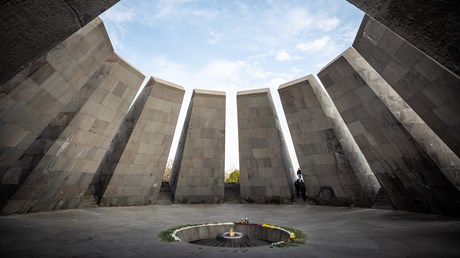
Armenian Americans breathed a sigh of relief this week when the US House of Representatives overwhelmingly approved Resolution 296 to recognize the Armenian Genocide.

Around 1.5 million Armenians were killed between 1915 and 1923, as the defeated Ottoman Empire transitioned into the modern Republic of Turkey. Less than half a million survived.

The resolution mentions also the Greek, Assyrian, Chaldean, Syriac, Aramean, Maronite, and other Christian victims who lived in Asia Minor and other Ottoman provinces at the time.

If the House legislation is passed in the Senate and signed by President Donald Trump, the United States will be committed to commemorate the genocide, to reject its denial, and to educate people about it in order to prevent similar atrocities in the future.

The 405–11 tally reversed what had long been an uphill battle in American politics to even present recognition of the Armenian genocide for a vote.

Representative Adam Schiff, a Democrat from California and co-sponsor of the bill, worked 19 years on its behalf. Pressure against the resolution from Turkey, a NATO ally of the US, quashed previous efforts in 2000 under Bill Clinton, in 2007 under George W. Bush, and in 2010 under Barack Obama.

During the Bush administration, nearly 70 percent of air supplies to the US military in Iraq went through Turkey’s Incerlik airbase.

According to Open Secrets, Turkey spent $13.4 million to lobby against the bill in 2017–18.

“We cannot pick and choose which crimes against humanity are convenient to speak about,” said Schiff, as reported by Reuters. “We cannot be cowed into silence by a foreign power.”

But if Armenian Americans are finally pleased, the diaspora in the Middle East—much ...

Continue reading...


from Christianity Today Magazine https://ift.tt/338VEvM

11 Places Where Persecuted Christians Need Our Prayers

The International Days of Prayer for the Persecuted Church draw attention to China and other countries where Christian minorities have suffered blows over the past year.

As Christians prepare for the International Days of Prayer for the Persecuted Church on November 3 and 10, advocates have increasingly turned their attention to China.

Christian persecution is not new in China, but it is growing. According to Open Doors—which ranked the country 27th on its 2019 World Watch List, a 16-spot jump from 2018—Chinese authorities are removing young people from church, monitoring worship via CCTV, and prohibiting teachers and medical workers from maintaining any religious affiliation.

David Curry, CEO of Open Doors, told CT that many Americans see China as a global superpower, but don’t recognize the extent of the restrictions by the Communist government . “Right now, in 2019, Christians are walking into churches where there are signs posted at the door that say ‘No Children Allowed,’ and where they are being video taped as they worship,” he said.”

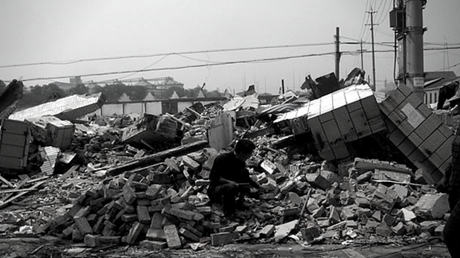
Church closings, arrests, surveillance, a crippling rating system, and church demolitions are part of life for China’s 97 million Christians. In October video emerged showing a wrecking ball demolishing a church during a worship service. ChinaAid reports that authorities later detained the pastors.

Todd Nettleton, host of Voice of the Martyrs’ VOM Radio, says that while unregistered house churches have endured persecution for years, the church in the October video was a registered church, marking a new wave of religious oppression.

Over 245 million Christians live in the 50 countries ranked on the World Watch List as worst for Christians. Between November 2017 and October 2018, 4,136 Christians were killed for their faith in these countries, over 1,266 churches or Christian buildings were attacked, ...

Continue reading...


from Christianity Today Magazine https://ift.tt/2JGKiHG