Tuesday, 5 November 2019

Harvest Elders Say James MacDonald Is ‘Biblically Disqualified’ From Ministry

Statement comes nine months after his firing and weeks after he appeared at another Chicago-area church.
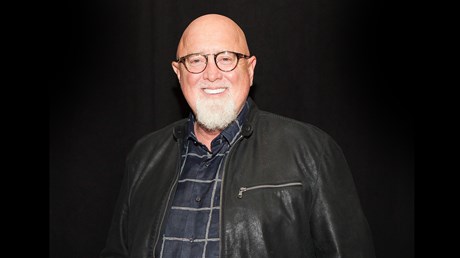
The elders of Harvest Bible Chapel have concluded that their former pastor James MacDonald is biblically disqualified from ministry and can never return to leadership at their congregation.

A church investigation into charges against MacDonald—who was fired in February— found he failed to meet the elder qualifications laid out in Scripture and instead “had a pattern of being disruptive,” “insulting, belittling, and verbally bullying others,” “improperly exercising positional and spiritual authority,” and “extravagant spending utilizing church resources resulting in personal benefit,” according to a statement released Sunday.

The announcement said while the Bible doesn’t teach that disqualification from ministry is permanent, his damage to Harvest would prevent him from serving again as an elder or pastor there.

“We believe James could be restored to ministry someday, but in order for that day to come, the fruits of repentance must be evident. Based on Harvest Bible Chapel’s interpretation of the Scripture, we have not yet seen evidence of this,” wrote the eight-member elder board (all of whom assumed their positions earlier this year, when the elders who served during MacDonald’s leadership stepped down).

MacDonald was dismissed from the church he founded after a string of controversies over his leadership and Harvest finances, concluding with an October 2018 defamation suit against his critics, an exposé by Julie Roys in World magazine, and a leaked recording of inappropriate remarks.

He did not respond to an email from CT requesting comment. In a statement announcing his sabbatical back in January, MacDonald acknowledged “I ...

Continue reading...


from Christianity Today Magazine https://ift.tt/2POM7q3

Harvest Elders Say James MacDonald Is ‘Biblically Disqualified’ From Ministry

Statement comes nine months after his firing and weeks after he appeared at another Chicago-area church.

The elders of Harvest Bible Chapel have concluded that their former pastor James MacDonald is biblically disqualified from ministry and can never return to leadership at their congregation.

A church investigation into charges against MacDonald—who was fired in February— found he failed to meet the elder qualifications laid out in Scripture and instead “had a pattern of being disruptive,” “insulting, belittling, and verbally bullying others,” “improperly exercising positional and spiritual authority,” and “extravagant spending utilizing church resources resulting in personal benefit,” according to a statement released Sunday.

The announcement said while the Bible doesn’t teach that disqualification from ministry is permanent, his damage to Harvest would prevent him from serving again as an elder or pastor there.

“We believe James could be restored to ministry someday, but in order for that day to come, the fruits of repentance must be evident. Based on Harvest Bible Chapel’s interpretation of the Scripture, we have not yet seen evidence of this,” wrote the eight-member elder board (all of whom assumed their positions earlier this year, when the elders who served during MacDonald’s leadership stepped down).

MacDonald was dismissed from the church he founded after a string of controversies over his leadership and Harvest finances, concluding with an October 2018 defamation suit against his critics, an exposé by Julie Roys in World magazine, and a leaked recording of inappropriate remarks.

He did not respond to an email from CT requesting comment. In a statement announcing his sabbatical back in January, MacDonald acknowledged “I ...

Continue reading...


from Christianity Today Magazine https://ift.tt/2NmXdB3

Does God Have a Funny Side?

The more we take Scripture seriously, the more we’ll find ourselves laughing along with it.

When discussing Christianity and comedy, it’s usually not long before someone brings up G.K. Chesterton, who was renowned for his wit, playfulness, and love of paradox. (Even the great man’s physique—he was very tall and very plump—lent him a comedic air.) It is no surprise, then, that Steve Wilkens’s book What’s So Funny About God?: A Theological Look at Humor quotes Chesterton to make the point that “funny” and “serious” are not polar opposites.

Yet Chesterton, in his rhetorical masterpiece Orthodoxy, makes a somewhat out-of-character comment about Jesus Christ: “There was one thing that was too great for God to show us when He walked upon our earth; and I have sometimes fancied that it was His mirth.” The Bible, of course, teaches that God will not be mocked or taken for a fool (Gal. 6:7), and that he laughs at our rebellious rage (Ps. 2:4). Even so, it seems odd for Chesterton to suppose that Almighty God coming to earth as a helpless baby lacks something of a comic touch.

Christians, especially Protestants and evangelicals, are not renowned for their sense of humor. In medieval England (and across Europe), guilds would get together to stage stories from the Bible, which were often funny. These were casualties of the (otherwise much-needed) Reformation. As it took full effect in England, mystery plays disappeared, church walls were whitewashed, and Oliver Cromwell, despite a close friendship with master poet John Milton, shuttered every theater in the land.

Centuries later, it’s not just Christians suffering a humor deficit. It’s everyone. We live in strange times in which Snopes insists on fact-checking Babylon Bee headlines and presidential ...

Continue reading...


from Christianity Today Magazine https://ift.tt/2BsXb3x

The Opportunity of a Lifetime: Reflections on Link Between Prison and Diaspora Ministries

God is raising up a new supply of workers for the harvest in the most unexpected places.

My friend Rickie Bradshaw from KSBJ Radio Houston once said, “There are two clear signs of God’s work in America today.” I leaned forward in anticipation to hear what he would say. He continued, “The first is the revival breaking out in our prison system, and the second is how God is bringing the nations of the world to our cities.”

I sat back in awe to consider the profundity of his observations and whispered to myself, “These two signs provide the opportunity of a lifetime toward finishing the task of the Great Commission.”

I knew Rickie was right about his first observation. Over the last ten years my wife Cathy and I have visited dozens of prisons across America where thousands of prisoners are being transformed by the Word of God.

The impressive results of ministry training programs like The Urban Ministry Institute (TUMI) are not limited to the prisoners receiving training. They extend to the healing of broken families, improving society through declining recidivism, and reducing discipline problems within the institutions (to the point where even prison officials have taken notice).

From one state and federal prison to another, the outcomes are consistent: prisoners are maturing through years of marinating in the Scriptures, becoming effective ambassadors for Christ in dangerous and diverse environments.

They are being equipped to disciple people from a variety of ethnic and religious backgrounds while sharpening the use of their spiritual gifts. Year after year, they are bearing fruit both inside the walls and among their friends and family on the outside. God is raising up a new supply of workers for the harvest in the most unexpected places.

I also attest to Rickie’s second ...

Continue reading...


from Christianity Today Magazine https://ift.tt/2NLZjtf

Monday, 4 November 2019

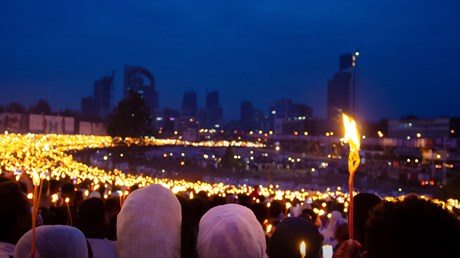
Ethiopians Protest Church Burnings as Ethnic Tensions Rise

After a dramatic October, some say Prime Minister Abiy Ahmed must earn his Nobel Peace Prize.

Last month, Abiy Ahmed won the Nobel Peace Prize for his “efforts to achieve peace and reconciliation” as prime minister of Ethiopia. Today, he announced that the unusual unrest and ethnic violence which also marked last month had killed nearly 90 of his citizens.

A reformer and a reconciler, the 43-year-old head of state has made unprecedented changes in just 18 months in office, including: ending a longstanding border war with neighboring Eritrea; appointing women to half his cabinet posts; releasing thousands of political prisoners; and diffusing a tense situation with insubordinate military officers by doing push-ups.

“I see Abiy as an answer to prayer,” said Frew Tamrat, principal of Evangelical Theological College in Addis Ababa, the capital city. “He tries to live by biblical values. He is a preacher of peace, reconciliation, and forgiveness.”

Though he has a Muslim father and an Ethiopian Orthodox mother, Abiy [Ethiopians go by their given names] attends a “Pente” church whose denomination—Mulu Wongel (Full Gospel Believers)—belongs to the Evangelical Churches Fellowship of Ethiopia.

“His style of leadership relies a lot on a kind of positive mindset, word-of-faith-type Pentecostal charismatic religion,” said Meron Tekleberhan, a graduate of the Ethiopian Graduate School of Theology currently finishing her PhD at the University of Durham. “He considers that to be the source of his political philosophy.”

Abiy’s peacemaking has not been limited to the political sphere. In August 2018, he successfully reconciled two factions of the Ethiopian Orthodox Tewahedo Church, the largest religious group in Ethiopia.

The Tewahedo church comprises ...

Continue reading...


from Christianity Today Magazine https://ift.tt/36zvuEP

Cyborg Church: One Body, Many People

Science offers insight on how the church can be more than just loosely associated individuals.

Recently I posted this on Facebook, “Answer with the first thing that comes to your mind, why do you go to church?” The vast majority of the answers were related to obtaining some kind of experience: closeness with God, worship, to be fed, to obtain knowledge. The far and away number one answer was “for community/fellowship.”

Yet I wonder whether what these experiences have in common, even the desire for community, is the focus on what the church gives me. Can that thing be relational yet ironically still individual?

While this Facebook post is not a scientific study, it made me wonder. Is the evangelical church in North America today truly the Body of Christ, or is it more a “loose association of the independently spiritual persons?” Do we ultimately attend as individuals searching for experiences to shore up our individual selves?

Of course, God works through the Holy Spirit to do amazing things in individual lives, but for some reason, as the New Testament writers remind us, he works through the church, the Body of Christ.

We come to church for many reasons, but we come to be formed as a congregation into the image and likeness of Christ—his Body on earth. The New Testament describes Christ’s representation as one but composed of many individuals (1 Cor. 12). How does God, through the Holy Spirit, enact this communal process, not for individuals, of being formed into Christ’s body?

We’re all cyborgs

We live in a world of new digital tools that are reshaping our lives. We carry around “smart phones” with all sorts of applications that enhance our daily lives in important ways. Apps remember phone numbers, access online information, guide us around ...

Continue reading...


from Christianity Today Magazine https://ift.tt/2PKsBuI

The Road Ahead: 10 Characteristics of a Future Church Planter, Part 2

Here are five more key changes we must make if we want to see movement.

Last week we reflected on the first five of ten shifts that are mission critical for those engaging in the missionary work of church planting in North America in locales that are essentially bereft of Christian memory. They were:

  1. A Different Filter: From Entrepreneurial Übermensch [1] to Apostolic Catalyst
  2. A Different Frame: From Sunday-centric to Christ’s Body
  3. A Different Fascination: From Ecclesiastical Supremacy to Kingdom Submission
  4. A Different Focus: From Drafting Free-Agents to Developing Disciple-Makers
  5. A Different Family-Tree: From Replication to Multiplication

This week we will continue this conversation by focusing on five other key changes we must make if we want to see movement.

6 – A Different Force: From SoloClerics to Co-Vocational Teams

The mission force that is deployed in the vast majority of planting situations is a solo lead planter with a big heart for Jesus’ mission. As this planter arrives on the mission field, the financial realities soon overwhelm the romantic missionary notions that once preoccupied his imagination.

The pressure is on. Because of this, the unstated goal often degenerates into building a worship service following that can pay a salary before the start-up supporters move on. Quite understandably, all romantic missionary notions will be flushed in order to compete for the paying customers. After all, there is a family to feed and bills to pay.

As secularity continues to erase Christian memory from much of the landscape within North America, the possibilities of gathering and assembling displaced evangelicals into a financially sustainable professional startups will become a less-likely reality for most. Future church planters will retain their missionary imagination by ...

Continue reading...


from Christianity Today Magazine https://ift.tt/34uM6f4