Monday, 1 June 2020

Race, Gospel, and Justice, Part 2: Esau McCaulley on Racism and Cultural Power

When you add racism to political or economic power, then the racist is able to put in place systems or policies that disadvantage African Americans or other people of color.

Ed: Can you start with your own personal journey?

Esau: I come from a family of ministers. My grandfather was a black pastor; he still is a black pastor. He's retired, but he still preaches. Black preachers never retire. I have aunts and uncles who are in the ministry. I grew up in a largely African American neighborhood and I knew about the gospel.

I also grew up in Alabama in a racially-divided city. There is a black part of town, and there's a white part of town. I know what it's like to be treated differently. I was pulled over by the police for nothing other than driving while black.

I have been searched and humiliated in a variety of ways. Part of what it meant for me to be a Christian growing up in America was making sense of the fact that, especially in a place like Alabama, we all believed or claimed to believe the same gospel about who Jesus is. But it seemed that some of the white Christian brothers and sisters who believed in Jesus were also the people who were oppressing us.

Or when something happened in our community, they were often slow to partner with us in pushing back on that oppression.

Ed: But, when a lot of people hear that and knowing your age, they might ask, "How would you see oppression in the '90s?"

Esau: I'll try to tell you one of 15 stories that I could tell. I'm driving from my home back to my college, about an hour away. A cop starts following me. I have a seatbelt on, and I'm following the law completely. A friend of mine is in the car with me. The policeman follows us for a couple of miles. We went from one city to the next. The city went from 50 miles an hour to 35 miles an hour. The cop pulls me over and says, "You had a sudden change in speed, so I ...

Continue reading...


from Christianity Today Magazine https://ift.tt/2XqAdGm

Race, Gospel, and Justice: An Interview with Esau McCaulley, Part One

I don't know what it is to be a minority in America. That's why this series will focus on the thoughts of those who do.

May 25. Memorial Day.

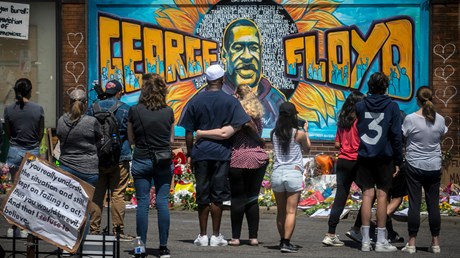
A holiday set aside to remember with gratitude and pride all the valiant soldiers who lost their lives throughout history in service to the United States. But this Memorial Day, we watched a video that reminded us instead of the horror and shame of racism that continues in America—the horror of watching George Floyd pinned down, a knee to his neck, until he no longer had breath, and as bystanders called for the police to let him up, will not be easily forgotten.

Nor should it.

"I Can't Breathe"

Videos of the officers and their treatment of George Floyd have gone viral globally. We have since seen the termination of all four officers involved and the arrest of Derek Chauvin, the officer whose knee caused Floyd to cry, "I can't breathe." We pray for justice on behalf of a man who died needlessly and cruelly.

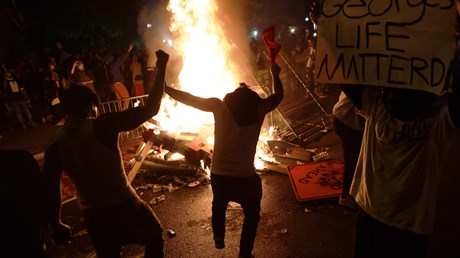
We saw the unrest that followed. Now, we see protests in cities across our country. Many of the protestors, seeking to do so peacefully, were also opposing others who invaded the protests, inciting riots as well. We heard articulate calls for peaceful marches from Mayor Bottoms of Atlanta.

She called on protestors: "What I see happening on the streets of Atlanta is not Atlanta. This is not a protest. This is not in the spirit of Martin Luther King, Jr. This is chaos."

Social distancing measures were quickly forgotten as thousands gathered in cities nationally, portending a potential spike in the coronavirus in the middle of the outcries for justice.

We saw Ahmaud Arbery killed in February, followed by the arrest and murder charge of father and son Gregory and Travis McMichael. On March 13, just as the pandemic's impact was beginning to be fully realized, Breonna ...

Continue reading...


from Christianity Today Magazine https://ift.tt/2BoDs8B

African American Alumni Call on Jerry Falwell Jr. to Step Down

Thirty-five faith leaders who went to Liberty University released a letter criticizing the college president's rhetoric, including his recent blackface mask tweet.

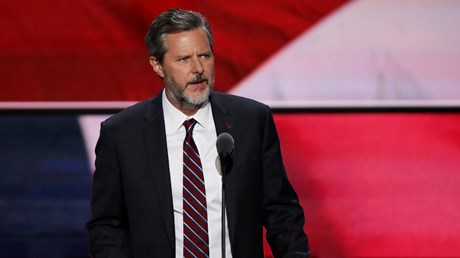
Nearly three dozen black alumni of Liberty University denounced school President Jerry Falwell Jr. on Monday, suggesting he step down after he mocked Virginia’s mask-wearing requirement by invoking the blackface scandal that engulfed the state’s governor last year.

In a letter to Falwell, 35 faith leaders and former student-athletes told Falwell that his past comments “have repeatedly violated and misrepresented” Christian principles. They said they would stop urging students to attend Liberty, would no longer donate to the university, and would urge fellow people of faith to avoid speaking at the school unless Falwell changes his behavior or steps aside.

“You have belittled staff, students and parents, you have defended inappropriate behaviors of politicians, encouraged violence, and disrespected people of other faiths,” they wrote, advising Falwell that “your heart is in politics more than Christian academia or ministry.”

Falwell, a stalwart backer of President Donald Trump, is the son of the late evangelist Jerry Falwell, whose legacy the alumni invoked in imploring the younger Falwell to “stop this infantile behavior.”

In response, Falwell said his comment about the blackface scandal was made in defense of Liberty students, including minorities, who would be affected by tuition assistance cuts proposed by Gov. Ralph Northam, a Democrat. Falwell said his involvement in politics was the spirit of Jesus Christ, “who was not silent about the establishment political folks of his era.”

“All they need to do is read the Gospels—Jesus got involved in politics,” Falwell said in an interview.

Last week, Northam issued an order that masks be worn ...

Continue reading...


from Christianity Today Magazine https://ift.tt/2XTXMq5

A Nation on Fire Needs the Flames of the Spirit

As racism tears the country apart, the message of Pentecost can help the church find its voice.

This weekend, churches around the globe gathered virtually to celebrate Pentecost, that miraculous moment when tongues of fire descended on the followers of Christ and the gospel was heard in the varied languages of the world. Pentecost is the miracle that follows another miracle (the Ascension), which occurs in the aftermath of a wonder (the Resurrection).

In contrast to Christ’s disciples, we experienced Pentecost this year in the aftermath of a woe, following a trauma, in the context of a tragedy. The protests and riots of Minneapolis (and so many other cities) follow the death of George Floyd, who was choked to death while handcuffed and pleading for his life. For nine minutes, a police officer kept his knee on Floyd’s neck while the man called for his mother. This occurred in the wake of the killings of Breonna Taylor and Ahmaud Arbery. And all this takes place within the wider context of a global pandemic that has killed 100,000 people. It feels more like we are in the middle of an extended Lent rather than the end of Eastertide.

Some will assume that I’m bringing politics into the church. They’ll wonder why I’m not upset about black-on-black crime, or the breakdown of the black family, or abortion, or looting, or whatever topic that helps us avoid looking at the thing itself. That “thing” is the 400-year history of racial trauma and oppression still plaguing blacks in this country.

What do protests, riots, and police brutality have to do with Pentecost and the passage in Acts 2:1–21? Does the death of the Messiah for our sins have anything to do with how we approach the flames of Minneapolis? Does the church have something to say, or will we be discipled by Fox News on ...

Continue reading...


from Christianity Today Magazine https://ift.tt/2XPeWVx

Efrem Smith: White Evangelicals Need to Humble Themselves

“Allow the church that has been deemed the other, the marginalized church, to be the teacher at this moment.”

Watching the video of George Floyd’s death broke Efrem Smith’s heart.

Again.

Floyd died slowly after a police officer constricted his airway with a knee on the back of his neck. His death was another case of an unarmed black American killed in an encounter with police, following other high-profile deaths like Breonna Taylor in Louisville, Botham Jean in Texas, and Philando Castile in St. Paul, Minnesota.

“Another unarmed African American killing,” Smith wrote on Twitter. “This time in South Minneapolis in the neighborhood where I grew up. The heartbreak continues. I shouldn’t have to fear for my life because of the color of my skin.”

Growing up, Smith lived not far from Cup Foods, the shop near where Floyd died, and he has fond memories of visiting the drug store that used to occupy the same space that Cup Foods now stands.

He later became a church planter and served as founding pastor of Sanctuary Covenant Church, a multiethnic congregation in North Minneapolis. Author of The Post-Black and Post-White Church: Becoming the Beloved Community in a Multi-Ethnic World, he is now co-pastor of Bayside Church Midtown, an intentionally diverse congregation of 3,500 in Sacramento. He spoke by phone with Religion News Service editor in chief Bob Smietana.

This interview has been edited for length and clarity.

What did you experience when you watched the video of George Floyd?

It broke my heart. Because you’re listening to a man that is losing his life. And it doesn’t have to be. I don’t understand. If a guy is unarmed and he’s handcuffed and there are multiple officers on the scene with weapons. He’s saying he can’t breathe. He is saying that his stomach hurts. ...

Continue reading...


from Christianity Today Magazine https://ift.tt/2ZSliX0

The Magnetic Power of Shared Burdens

“And we exhort you, brothers and sisters: warn those who are idle, comfort the discouraged, help the weak, be patient with everyone. See to it that no one repays evil for evil to anyone, but always pursue what is good for one another and for all.” — 1 Thessalonians 5:14-15 (CSB)

Life feels heavy these days. The weighty burden of everyday life seems to be exacerbated by a relentless stream of headlines that range from the unique (murderous hornets) to the fear-inducing (a global pandemic) to the shockingly horrific (videos of racism and murder). The natural impulse in the face of this unyielding bad news is to cower down and pursue self-preservation. Today’s pandemic has certainly exposed—not caused—our own proclivity toward selfish individualism and isolation.

In First Thessalonians, chapter five, Paul calls the church to a bold faithfulness in light of the certain return of Christ and the assured persecution they will face until then. This passage provides a reminding context that, while it may seem like everything has changed in the span of a few months, that God’s church is sovereignly designed for troubling times. But it is in these unsure moments, that his people, then and now, are tempted to hunker down in isolation and fear resembling those without hope and without the gospel. But that impulse is not the way of Jesus. In the worst of days, Christ calls us into relationships.

All of the commands found in verses 14 and 15 are relational in their very orientation. We can’t obey any of them individually. They require human relationships. It’s as if Paul knew that the secret to facing life in a fractured world necessarily involved others.

There is only one challenge given to all: “be patient with everyone.” The other commands require a degree of intimacy to gain personal knowledge. Somehow, we must be invested in the daily lives of others to know who is idle, who is discouraged, who is weak, and who has done evil. Once I know who fits these descriptions, ...

Continue reading...


from Christianity Today Magazine https://ift.tt/2ZWdFid

Efrem Smith: White Evangelicals Need to Humble Themselves

“Allow the church that has been deemed the other, the marginalized church, to be the teacher at this moment.”

Watching the video of George Floyd’s death broke Efrem Smith’s heart.

Again.

Floyd died slowly after a police officer constricted his airway with a knee on the back of his neck. His death was another case of an unarmed black American killed in an encounter with police, following other high-profile deaths like Breonna Taylor in Louisville, Botham Jean in Texas, and Philando Castile in St. Paul, Minnesota.

“Another unarmed African American killing,” Smith wrote on Twitter. “This time in South Minneapolis in the neighborhood where I grew up. The heartbreak continues. I shouldn’t have to fear for my life because of the color of my skin.”

Growing up, Smith lived not far from Cup Foods, the shop near where Floyd died, and he has fond memories of visiting the drug store that used to occupy the same space that Cup Foods now stands.

He later became a church planter and served as founding pastor of Sanctuary Covenant Church, a multiethnic congregation in North Minneapolis. Author of The Post-Black and Post-White Church: Becoming the Beloved Community in a Multi-Ethnic World, he is now co-pastor of Bayside Church Midtown, an intentionally diverse congregation of 3,500 in Sacramento. He spoke by phone with Religion News Service editor in chief Bob Smietana.

This interview has been edited for length and clarity.

What did you experience when you watched the video of George Floyd?

It broke my heart. Because you’re listening to a man that is losing his life. And it doesn’t have to be. I don’t understand. If a guy is unarmed and he’s handcuffed and there are multiple officers on the scene with weapons. He’s saying he can’t breathe. He is saying that his stomach hurts. ...

Continue reading...


from Christianity Today Magazine https://ift.tt/2MkdOEk