Friday, 2 October 2020

Preaching Takeaways from the Latest in Social Science

Our research roundup for pastors.

“Long-term Persuasive Effects in Narrative Communication Research: A Meta-Analysis”

Corinna Oschatz and Caroline Marker, Journal of Communication, August 2020

“A single narrative message has a stronger persuasive impact than a non-narrative message on attitudes and intentions at immediate [measurement] as well as on attitudes, intentions, and behaviors at delayed measurement. Both message types did not differently affect the participants’ beliefs.”

Our read: Narrative preaching is probably effective at helping put beliefs into action but may not be great at forming those beliefs in the first place.

“Do good causes leave bad impressions? Exploring the impact of photo frames and newsfeed updates on social impressions of Facebook users”

Kylie J. Wilson and Elizabeth L. Cohen, Communication Research Reports, September 2019

“Showing support for social causes on social network sites using photo frames or newsfeed posts could make users seem benevolent, but paradoxically, these displays could also make users seem inauthentic and self-involved. … Results show posting multiple expressions can make users seem less socially attractive. Some expressions of support can enhance users’ social attractiveness by making them seem more authentic and less self-involved, but only for female users.”

Our read: As you address social issues in your preaching, take care to avoid “cause of the week” syndrome. And if you’re addressing them to make yourself look good, people will sense it.

“The Best Laid Plans: Why New Parents Fail to Habituate Practices”

Tandy Chalmers Thomas and Amber M. Epp, Journal of Consumer Research, October 2019

“Consumers regularly ...

Continue reading...


from Christianity Today Magazine https://ift.tt/3jpkEY3

Why We Get Up in the Morning Shouldn’t Differ from Sunday to Monday

Steven Garber envisions lives marked by greater coherence between our deepest commitments and our everyday cares.

In late 2014, I began consulting with the College of Entertainment and the Arts at Lipscomb University in Nashville, Tennessee. The college’s dean was considering adding a commercial music program. He was curious to know how I’d sustained meaningful work, artistry, and commercial success in the music business for over four decades. “If we wanted to replicate a musician like you in a degree program,” he asked, “what would the curriculum look like?”

I was curious too. How had I been able to survive, and often thrive, in an industry that favors the young, requires repeated commercial success, and has an attrition rate like no other? In short, if you’re 58 years old (as I was then) and you’ve just had a number one Billboard hit, you have beaten astronomical odds. Could I create a university curriculum that would prepare young musicians to walk a similar path?

Against this backdrop, I set out to aggregate and analyze my musical life, my vocation, from birth to present. It was a privileged exercise. With the help of two real academics, all my discoveries and descriptions were shaped into a four-year bachelor of arts degree. Before I could blink, I’d founded the commercial music program, had become the director of the School of Music, and was teaching in the classroom.

The course closest to my passion was a freshman seminar, Identity and Artistry. Before any music got made, I wanted my students to know two things: that the art of music is rooted in their identity and that the kind of people they become while creating is just as important as the music they create. Identity and artistry, I would say, are meant to be seamlessly integrated.

As part of the course, students would choose ...

Continue reading...


from Christianity Today Magazine https://ift.tt/33lTBHe

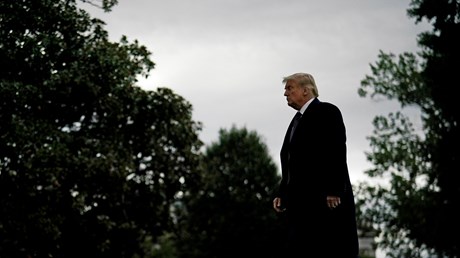
Christians Call for Prayer After Trump Tests Positive for COVID-19

Leaders urge Americans to “put aside partisan politics” and pray in the spirit of 1 Timothy 2.

Instructed in Scripture to pray for “all those in authority,” Christians offered their prayers for President Donald Trump after he shared on Twitter late Thursday night that he and First Lady Melania Trump had tested positive for coronavirus.

Many pastors and ministry leaders encouraged Americans that this was a time to pray for the president and the country regardless of political stances.

Trump’s coronavirus infection comes a month before the election and following a busy campaign week that included multiple out-of-state events and the first presidential debate.

Twitter petitioners included pastor and evangelist Greg Laurie of Harvest Christian Fellowship in California. Laurie has previously prayed with the president in the White House and has spoken up about the need for the church to “respond appropriately” to the threat of the coronavirus.

Eugene Cho, a former Seattle pastor who now leads the Christian advocacy organization Bread for the World, asked Twitter followers to “put aside partisan politics and genuinely lift up the President and FLOTUS in prayer.”

In their messages on Thursday night, some—like Joe Carter of The Gospel Coalition and McLean Bible Church outside Washington—quoted from 1 Timothy 2:1–4: “I urge, then, first of all, that petitions, prayers, intercession and thanksgiving be made for all people— for kings and all those in authority, that we may live peaceful and quiet lives in all godliness and holiness. This is good, and pleases God our Savior, who wants all people to be saved and ...

Continue reading...


from Christianity Today Magazine https://ift.tt/2Sk2vik

Thursday, 1 October 2020

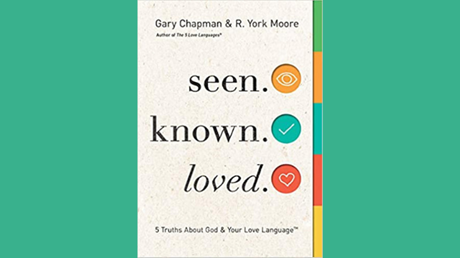
One-on-One with R. York Moore on ‘Seen.Known.Loved.’

How to use the 5 love language to deepen your relationship with God.

Ed: What is the basic message of Seen.Known.Loved?

Moore: We want people to learn how to feel God’s love—to actually experience it. We believe it isn’t good enough or God’s plan that we should just merely know about His love, but rather that we should be in love with Him and experience His love in meaningful, tangible ways. Through this book, we help readers connect the unique way in which they experience love (The 5 Love Languages) with their deepest hope and aspiration and then show them how God has already been working specifically in these areas throughout their lives to draw them into relationship with Himself. Our ultimate hope is that readers come to faith in Christ, begin to love the Bible, practice prayer, and find authentic and transformative Christian community. This is the perfect book to gift to non-Christians and through extensive field testing, we have recorded that most readers as a result of the book make a commitment to Bible reading and many have given their lives to Christ.

Ed: What was the inspiration behind the book?

Moore: It is no secret that Dr. Gary Chapman’s ‘5 Love Languages’ is a global phenomenon. It has impacted millions of lives and countless marriages. I (York) have also been deeply shaped by the 5 Love Languages early in my marriage and owe a great deal of my success in marriage to Dr. Gary Chapman’s work. Over the last 30 years as an evangelist, I have come to believe that there is a corresponding concept to the 5 Love Languages I call the ‘5 Heart Hopes.’ The 5 Heart Hopes are the deep core drivers that shape and define people and their decisions. Their Heart Hope is directly correlated to their Love Language. When Gary and I got ...

Continue reading...


from Christianity Today Magazine https://ift.tt/33lA0XP

The City That Never Stops Worshipping

Though some have likened it to Sodom and Gomorrah, New York City has a long history of religious vibrancy.

Anarchy! Violence! Destruction! All the talk of how American cities are turning into hellscapes is a good reminder that, truly, “there is nothing new under the sun.”

This vein of cultural imagination has a history. In fact, it long predates the nation itself. The medieval poet Dante located the deepest, darkest circles of hell entirely inside city gates. Satan was not only “The Emperor of the Universe of Pain.” He was the ruler of “hell’s metropolis.”

A metropolis was hard to find in the United States prior to the Civil War. Cities were small and in most cases run by wealthy white Protestants, who loved urban America before they left it. Their change of heart was driven, first and foremost, by their inability to see an unprecedented influx of European immigrants as anything other than a dire threat to American democracy. In 1885 leading minister Josiah Strong sounded the alarm about “the dangerous classes,” writing, “It goes without saying, that there is a dead-line of ignorance and vice in every republic, and when it is touched by the average citizen, free institutions perish.”

Thirty years later the pugnacious revival preacher Billy Sunday homed in on the nation’s largest city and delivered one of his signature punches. “There is little hope that the Lord ever will be able to save such a hell hole as New York,” Sunday informed the crowd at the Philadelphia Tabernacle in the dead of winter 1915. He heaped on a laundry list of pejorative adjectives for good measure: “rotting, corroding, corrupt, hell-ridden, God-defying, devil-ridden.” The next week The New York Times published a response by a woman worried that Sunday’s comments ...

Continue reading...


from Christianity Today Magazine https://ift.tt/2Siii1c

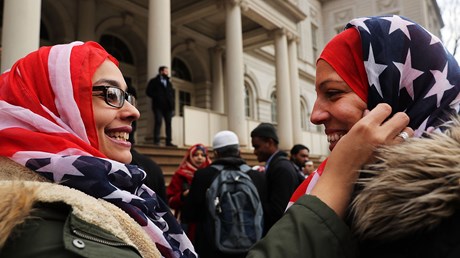
Interview: To Elect Trump, Evangelicals Could Find Common Cause with Muslims

Surprising points of political commonality found between religious groups in fifth annual American Muslim Poll.

In a tightly contested presidential race, might Muslims swing the US election?

Referencing the release of President Donald Trump’s tax returns in Tuesday’s debate, former vice president’s Joe Biden’s “inshallah” [Arabic for “if God wills”] may have been a nod to the strong support he receives from this community.

But according to data from the fifth annual American Muslim Poll, Muslims make up only 1 percent of the American population, only 74 percent are eligible to vote, and only 57 percent are registered.

Why then do they occupy such an outsized space in the mind of many American evangelicals? And what should evangelicals better understand about the American Muslim community and their political preferences?

CT spoke with Dalia Mogahed, director of research at the Institute for Social Policy and Understanding (ISPU), which commissioned the poll. Surveying 2,167 respondents—including more than 800 Muslims, 350 Jews, 200 Catholics, and 200 white evangelicals—ISPU aimed to showcase Muslim perspectives within the context of America’s landscape of faith.

Among the findings is that American Muslims disproportionately practice their politics at the local level. Over 1 in 5 has attended a town hall meeting (22%), compared to white evangelicals and the general public (12% vs. 15%).

And while only 27 percent of the general public reports satisfaction over the direction of the country, both Muslims (37%) and white evangelicals (42%) are more positive.

Are they satisfied with the same things?

CT and Mogahed discussed the social conservatism of many American Muslims, their willingness to build coalitions on pro-life and religious liberty issues, and the surprising numbers concerning ...

Continue reading...


from Christianity Today Magazine https://ift.tt/3cLEsC8

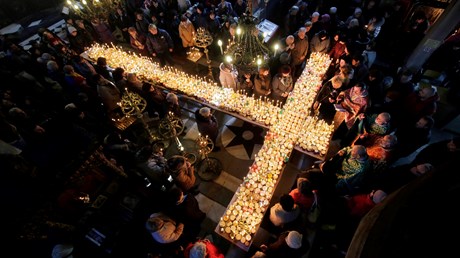
The Balkan Bright Spot in God-Linked Morality

As Americans lead decline in agreeing good values require belief in God, Bulgaria bucks the global trend.

To be moral, it is necessary to believe in God.

While this statement may be axiomatic to many American evangelicals, only three nations increasingly agree.

At the top of the list: Bulgaria.

According to a recently published survey of 34 countries by the Pew Research Center, in 2019 half of all Bulgarians said it was necessary to believe in God in order to be moral and have good values.

In 2002, only one-third of the Balkan nation agreed.

“Over the years, the generation that was brought up in non-religious morality has gone,” said Ivan Dimitrov, former dean of theology at Sofia University in the capital city, referring to the era when Soviet-imposed atheism dominated the Eastern European country.

“A second generation is now being brought up freely in the Christian religion.”

Bulgaria’s 17-point increase (from 33% to 50%) was rivaled only by Russia (from 26% to 37%) and Japan (from 29% to 39%).

The United States, by contrast, leads the world in decline. Though 75 percent of evangelicals still agree with the God-morality link, the overall share of Americans who say the same has decreased from 58 percent to 44 percent.

Greece was the only other surveyed European nation with a majority in agreement, at 53 percent. Germany polls at 37 percent, and the UK at 20 percent. Only 9 percent of Swedes believe God is necessary for good moral standing.

Percentages are far higher in Asia and Africa. Muslim-majority Indonesia and the Christian-majority Philippines both poll at 96 percent agreement. Nigeria, split roughly 50-50 between Christians and Muslims, polls at 93 percent.

Brazil records the highest percentage in the Western hemisphere, at 84 percent agreement. But the median score across ...

Continue reading...


from Christianity Today Magazine https://ift.tt/3l0uoIz