Monday, 4 January 2021

I Was Filming a Dangerous Action Scene When I Gave My Life to Christ

How a film and television stuntman met the Lord in the air.
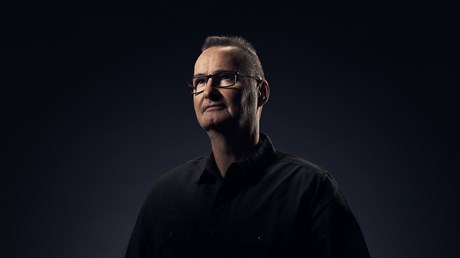
Some people complain that their jobs are boring and mundane. That was never a problem for me. Beginning in my 20s, I worked for decades as a film and television stuntman, facing injury and even death for a living. On the set, I rubbed elbows with celebrities and movie stars—and sometimes made more money in one day than previous jobs had paid in a month. I was living my dream.

My philosophy in those early years was to go as hard as I could, as fast as I could, for as long as I could. Outwardly, I maintained a façade of indestructibility, suppressing any fears or anxieties with various forms of distraction and self-indulgence.

At age 26, however, I received a gut punch when my 32-year-old brother suddenly collapsed dead from a heart attack after Thanksgiving dinner. For the most part, I successfully buried my pain by working and playing even harder. But in rare moments of quiet, usually after a considerable intake of alcohol, I would ponder the senselessness of his death. I also recalled a 10-year-old nephew who had perished years before from a deadly reaction to a children’s aspirin tablet.

When I was around my nephew’s age, belief in God had come easily. A neighbor had introduced me to Jesus, and I had attended church camp for a couple summers, absorbing the message that nothing bad will happen to you when you believe in him. Sometimes, in my search for answers, I would try to summon up that believing little boy, but he was nothing but a distant memory. At least, until I heard the name of Jesus in the last place I would have expected.

The Stone in My Shoe

It happened after moving across the country for film work. One day, I overheard someone talking about God with one of the stunt guys. To my utter surprise, ...

Continue reading...


from Christianity Today Magazine https://ift.tt/3pLKWGA

10 Fresh Ways to Read Your Bible in 2021

The need to engrave Scripture on our hearts feels all the more urgent this year.

Turning to Scripture should be an intuitive response for Christians when we feel anxious about the world we live in. Yet the American Bible Society’s annual State of the Bible 2020 report found an alarming trend: A mere 9 percent of Americans read their Bible each day in 2019—the lowest number in ABS’s decade of research and decreasing more in the first few months of the pandemic. But if 2021 carries even a fragment of the uncertainty we experienced in the past year, we need Scripture for guidance and reassurance even more. In my years of leading in-person Bible studies and an online Bible reading group, I’ve found sometimes we need practical ideas for getting started or picking the Bible back up again. Here are ten ways to read the Bible with fresh eyes in the new year.

1. Add a new translation to your bookshelf.

If you’ve primarily read one translation for many years, find a new one. After reading the New International Version (NIV) for years, I added the Christian Standard Bible (CSB). A friend recommended I get my hands on a Revised English Bible (REB), an English-language translation published by both Oxford and Cambridge publishing houses, so I use that one now as well. I’ve long turned to Eugene Peterson’s The Message paraphrase when I’m confused about what a passage says. Familiar verses grow in meaning as a differently translated word or two give me pause. Parallel Bibles—where you see two to four translations side by side—are excellent for reading the Bible in this new way as well.

2. Read Scripture out loud.

While it may seem simple, reading the Bible out loud can actually move us closer to the way Scripture was first presented to its original audiences. ...

Continue reading...


from Christianity Today Magazine https://ift.tt/3rN7SHn

Sunday, 3 January 2021

Turnover Rate Rising for Christian College Presidents

Replacements focus on new recruitment strategies and sustainability.

Todd Voss spends most of his week making decisions about COVID-19 for Southern Wesleyan University, where he’s been president since 2011. When he’s not doing that, he’s responding to the hundreds of emails he receives every day and figuring out how to raise more money for the school, recruit more students, and prepare for the crises that are sure to face evangelical higher education in the future.

It’s not a hard job, according to Voss. You just have to work all the time.

“You’re literally reading every night, you’re working on a proposal every weekend, you’re visiting donors or calling them every week. You’re just keeping all these plates spinning,” he said.

Voss said he loves being president, especially when he gets to be creative and go into his problem-solving mode. Still, there were times over the past 10 years when he thought to himself, “Okay, this is not healthy.”

He will retire in June, one of nine presidents of institutions associated with the Council for Christian Colleges the Universities (CCCU) who have already announced they are leaving in 2021. Sixteen CCCU schools appointed new presidents in 2020, continuing an upward trend in turnover rates. Thirteen left in 2019 and 11 in 2018, according to CCCU records. The schools seeking new leadership this coming year are Concordia University Nebraska, Crown College, Gordon College, Houghton College, Nyack College, Samford University, Southern Wesleyan University, Tabor College, and Taylor University.

The institutions face the challenges confronting all of higher education right now, with declining enrollments leading to revenue shortfalls and hard, controversial choices. A global pandemic has only made ...

Continue reading...


from Christianity Today Magazine https://ift.tt/2LkAqa8

Friday, 1 January 2021

We Should Remember the Scars of 2020

This year was painful. That doesn’t mean we should forget it.

As we close 2020, more than 81 million people total have tested positive for COVID-19. Nearly 1.8 million people have died of it. The virus has had significant economic effects and cost many their livelihoods. Prolonged distance from others, of course, has also triggered an increase in depression and other mental health issues. And the pandemic has revealed increasing divisions over masks, meeting in person, and what constitutes an essential business or service.

Of course, the pandemic was not the only thing that provoked anxiety in many this year. America will get a new president in January, but current president Donald Trump has refused to concede and made false statements about voting fraud for weeks.

In May, a police officer killed Minneapolis’ George Floyd weeks after officers shot Breonna Taylor in her home, actions which sparked demonstrations across the country, protesters fed up with police violence against black Americans. Protests lasted for weeks and were especially heated where protesters, counterprotesters, and outside agitators converged. Many cities suffered looting and some burned buildings.

In a year with so much trauma, we wanted to spend some time talking about how we should start to process and make sense of the year. What should we remember? How should we remember it? And what should we forget?

Sheila Wise Rowe is a writer, counselor, speaker, and spiritual director, and most recently the author of Healing Racial Trauma: The Road to Resilience for which she won a 2021 Christianity Today Book of the Year Award. She joined global media manager Morgan Lee and editor in chief Daniel Harrell to discuss how our bodies experienced the trauma of the year, what parts of it we should remember, and what Christians ...

Continue reading...


from Christianity Today Magazine https://ift.tt/3b12s5q

10 of the Best Books on Sports and Christianity from the Past 10 Years

How scholars, fans, and on-field stars have related faith and athletics.

Over the past decade, an increasingly diverse and inspirational range of new books combining sports and Christianity have begun to appear in print. These include works of fiction and nonfiction, aimed at scholarly and popular audiences alike. The authors and subjects include men and women, children, people of color, people from different socioeconomic backgrounds, and representatives of different Christian traditions.

Here are ten of the best American books about sports and Christianity of the past ten years, listed in no particular order.

The Closer: My Story

Mariano Rivera with Wayne Coffey

Mariano Rivera, the New York Yankees’ legendary reliever, writes this memoir in the tradition of a classic Christian testimonial. Rivera takes readers from his impoverished childhood in Panama through his storied big-league career. The centerpiece of the book, though, is Rivera’s description of how his Christian faith and commitment to family kept him grounded amid the glitz and glamour of professional sports. Few memoirs offer as vivid a portrait of the challenges faced by Christian athletes in the contemporary sporting landscape.

The Mentor

Ryan M. Shelton

Oklahoma-based journalist Ryan M. Shelton has authored a pair of exciting young-adult fiction books about Christian athletes, The Mentor and The Captain. In The Mentor, Shelton tells the story of Vincent Preston, a talented high school baseball player who has recently become a Christian. Preston faces a difficult home life and is frequently the target of bullying by his teammates. The young ballplayer perseveres through his faith and the relationship he develops with a former Major League Baseball scout named “Grandpa Dean” who lives in his small town. Readers who ...

Continue reading...


from Christianity Today Magazine https://ift.tt/2WZlnWf

Fight or Flight: Things Turbulence Produces

As we enter a new year, it's important to remember the lessons we've learned.

I am a frequent flyer.

Technically, I used to be a frequent flyer—before the pandemic.

I used to get on these things called airplanes at places called airports to go to things called meetings. But when I do or did fly, I actually have a fear of flying. So, becuase I think this way, I did some research and discovered that when you're on a plane, turbulence is generally only dangerous on takeoff and landing. So, those are the time when I'm most stressed. I don't drink, but if I did, that would be the time I would!

What happens on an airplane facing turbulence is short lived.

Once I was on a plane when the pilot was trying to land in Phoenix during a storm. He came down once and at the last minute pulled up. Everyone gasped. After a second attempt was aborted, he said we didn't have enough fuel to divert, so he was going to try a third time.

I have never been in a more tense moment, but the whole event was over in probably 20 minutes.

Our bodies are designed to have certain responses like flight or fight in sudden moments of upheaval or danger. The challenge for us now is that turbulence has become a regular part of life involving multiple facets over a period of months. It's no understatement to say that turbulence has produced stress in us. Long term stress is not good for us personally, interpersonally, or physiologically; nevertheless, here we are.

Turbulence produces stress

There are four things related to turbulence.

First, turbulence produces stress.

A certain amount of stress is good for us. We stress our bodies when we exercise, for instance.

There are actually two kinds of stress. There is distress. That's what we normally think of, and that kind of stress over the long haul is not healthy.

But there ...

Continue reading...


from Christianity Today Magazine https://ift.tt/384ziAL

The Global Church in 2020: CT’s Top 20 International Articles

Our most-read stories from abroad.

Read 20 of Christianity Today’s top stories about the global church this year. Articles are arranged in chronological order.

Check out the rest of our 2020 year-end lists here.

Continue reading...


from Christianity Today Magazine https://ift.tt/3rLFwwY