Wednesday, 6 January 2021

We Need to Be Better Losers

The legitimacy of US elections requires someone to lose. For Christians, that should be okay.
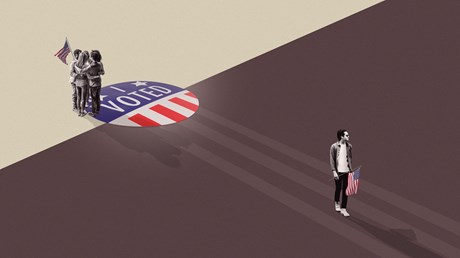
Nobody likes to lose. But Americans will need to get better at losing if we want to maintain our system of government in the years ahead. And Christians of all people should model losing well, based in our commitment to Christ’s victory through the cross and what we are told in Scripture about our nature as losers in the eyes of the world.

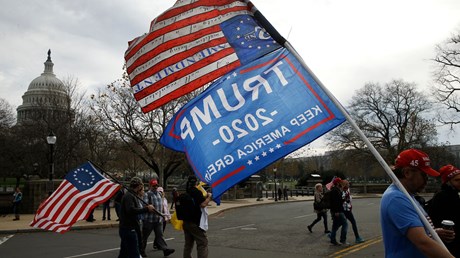
Neither Americans in general nor Christians in particular have demonstrated an ability to be good sports in defeat this week, though. When Congress certified the results of November’s presidential election, formally naming Joe Biden the winner, dozens of representatives and several senators objected to the results of the election in a number of states. These were unsupported claims with no chance of changing the outcome, but they did turn what is usually a formal and boring process into a partisan frenzy, and perhaps a litmus test for Republicans running for national office in 2022 and 2024.

Ever since the election concluded in November, there have been allegations that the election was taken from President Donald Trump. The president has long perfected the image of being a winner, and some Trump voters could not believe it was possible for him to lose. The only explanation was an insidious plot to steal the election and subvert the will of the American people. Fighting these results therefore became a matter of standing up for America itself.

These allegations were amplified by prominent national figures, including the president, members of Congress, and a variety of Christian voices. Franklin Graham said that “he tends to believe” Trump’s claim that the election was “rigged or stolen.” Greg Locke said he feels sorry for people “that are so ...

Continue reading...


from Christianity Today Magazine https://ift.tt/38hmjf1

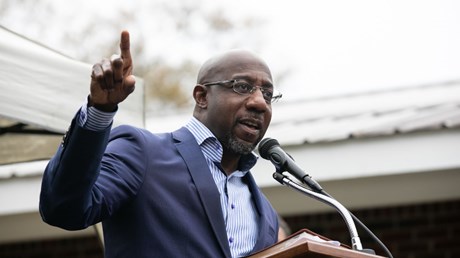
Like Preacher-Politicians Before Him, Senator Raphael Warnock Will Keep His Pulpit

The Ebenezer Baptist pastor becomes the latest in a line of African American ministers in Congress.

Raphael Warnock has won one of Georgia’s two runoff elections for US Senate: Will he be both a pastor and a politician?

Yes, says, Michael Brewer, a spokesman for the minister’s campaign, “if elected he will remain senior pastor.”

Marla Frederick, professor of religion and culture at Emory University’s Candler School of Theology, told Religion News Service that an active pastor would not be unknown in the political life on Capitol Hill. “There are models for doing both/and,” she said.

“The pastorate is one of these careers, these callings, if you will, where you have to stay in such close contact with everyday people and their concerns,” said Frederick.

“To the extent that the Senate (is) supposed to represent the concerns of people, it seems to me that someone who’s been a pastor has the capacity to be much more in tune with the kinds of struggles that people are dealing with in their everyday lives.”

Warnock, who has led Ebenezer Baptist Church in Atlanta since 2005, had something similar to say in a statement to RNS in November.

“It’s unusual for a pastor to get involved in something as messy as politics, but I see this as a continuation of a life of service: first as an agitator, then an advocate, and hopefully next as a legislator,” Warnock said as he was closing in on the top spot of a wide-open primary. “I say I’m stepping up to my next calling to serve, not stepping down from the pulpit.”

With Warnock’s election to the Senate, he can reflect on these other African American ministers who kept up a busy church life while serving in Congress:

Richard Harvey Cain, 1873-75, 1877-79

Prior to ...

Continue reading...


from Christianity Today Magazine https://ift.tt/3rXk9ZL

Tuesday, 5 January 2021

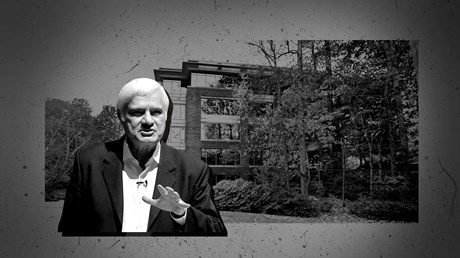
Inside RZIM, Staff Push Leaders to Take Responsibility for Scandal

Ravi Zacharias built a reputation for fearless pursuit of the truth. Now the ministry he founded grapples with accountability amid “toxic loyalty culture.”

Inside Ravi Zacharias International Ministries (RZIM), staff wondered for months whether the world’s largest apologetics ministry would be willing to tell the truth about its famous namesake.

In the final months of 2020, some pushed senior leadership to acknowledge the credibility of the detailed allegations raised against Ravi Zacharias after his death, demonstrate concern for victims of sexual abuse, and take responsibility for the corporate culture that prioritized his legacy over everything else.

Then, days before Christmas, RZIM officially recognized substantial evidence that Zacharias sexually abused multiple women. Zacharias’s daughter, RZIM CEO Sarah Davis, promised to release the full results of an ongoing independent investigation.

But the internal dissension is still roiling inside RZIM. Some staff members argue the $36 million global ministry—built on the late apologist’s reputation for faith and truth—could become a model for dealing with scandal or could be another example of an institution preserving its power at the cost of its Christian witness.

RZIM staff originally heard that the allegations against Zacharias were baseless attacks designed to hurt their gospel work. But some began to openly reject that narrative—first within the ministry, then publicly. Senior RZIM leaders and board members (whose names are not made public) now face pressure from within the ministry to demonstrate a new commitment to accountability.

“I think we need a total apology and total transparency,” Max Baker-Hytch, an RZIM speaker who also teaches philosophy at Oxford University, told CT. “I’m afraid we won’t really admit to the corporate complicity and the toxic loyalty ...

Continue reading...


from Christianity Today Magazine https://ift.tt/3ovTiC9

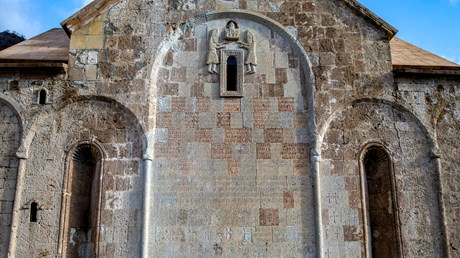
6 Christian Sites Armenia Fears It Has Lost to Azerbaijan

Photo gallery captures cultural heritage that concerns Armenians most after ceasefire in Nagorno-Karabakh.

In less than seven weeks of war last fall, fighting over the enclave of Nagorno-Karabakh, known to Armenians as Artsakh, cost thousands of lives and created tens of thousands of refugees.

It also left a wealth of Christian monuments in the balance.

Below, a photo slideshow of the six sites most at risk as their final status and access is still being negotiated. But first, a summary of why Armenians fear the fate of their heritage.

The mountainous region, smaller than the state of Delaware, has historically been home to a majority Armenian population. During the Soviet Union, it had been given special status as an “autonomous oblast”—a semi-independent region—placed within the Soviet Republic of Azerbaijan.

Putting an Armenian Christian region within the borders of an Azeri Muslim country was no accident. It was part of Josef Stalin’s “divide and conquer” strategy in the 1920s, deliberately drawing Soviet borders that would foment ethnic tension and make smaller republics easier to control. The Armenians, who were the first to declare Christianity as their national religion in 301 A.D., had a heritage of ancient churches, monasteries, and cross-stones dotting the landscape of Nagorno-Karabakh.

In 1991, just before the Soviet Union collapsed, the majority Armenian population of the region voted for independence and declared their own independent state. It accelerated violent tensions with their Azeri neighbors, resulting in an all-out war from 1992 to 1994. Scores were killed on both sides. Hundreds of thousands of Azerbaijanis were displaced from their homes in and around Nagorno-Karabakh. The two peoples, many of them longtime neighbors and friends, no longer trusted each other enough ...

Continue reading...


from Christianity Today Magazine https://ift.tt/3bayeNv

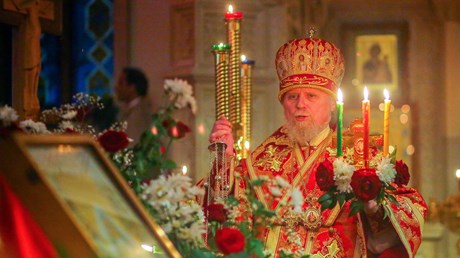
Azerbaijan Archbishop: Our Holy Mission Is to Keep Peace

In exclusive interview, head of Russian Orthodox Church in Baku invites defeated Armenians into economic cooperation after Nagorno-Karabakh conflict and laments lost ethnic fraternity.

The saying is clear: To the victor go the spoils.

And morally, with it comes the burden of peace.

In November, Christian-heritage Armenia surrendered to Muslim-majority Azerbaijani forces besieging the Caucasus mountain area of Nagorno-Karabakh. The ceasefire agreement ended a six-week war that cost each side roughly 3,000 soldiers, and left unsettled the final status of the Armenian-populated enclave they call Artsakh.

Azerbaijan, however, recovered the rest of its internationally recognized territory, including the historic city of Shushi. The first Karabakh war ended in 1994, and displaced hundreds of thousands from their homes on both sides.

Archbishop Alexander, head of the Russian Orthodox Church in Azerbaijan, reached out to CT to promote a process of reconciliation.

It will not be easy.

Azerbaijanis returning to Adgam, left in ruins by Armenian occupation for 25 years, will see for the first time the damage to their once 30,000-populated city. Its mosque was relabeled “Persian,” while 63 of Nagorno-Karabakh’s 67 mosques are said to be razed to the ground.

Meanwhile, Catholicos Karekin II, head of the Armenian Apostolic Church, issued a plea to save the ancient heritage of Armenian church properties lost in the war. In 2005, a gravesite containing sixth-century khatchkar crosses was destroyed in the Azerbaijani enclave of Nakhchivan.

Azerbaijan has pledged to preserve them. But the United Nations’s cultural arm UNESCO stated that its authorities have failed to respond to several requests to deploy an independent fact-finding mission.

Meanwhile, members of Azerbaijan’s Christian Udi minority were dispatched to hold services in the ninth-century Dadivank Monastery. The Udi are related to the Caucasian ...

Continue reading...


from Christianity Today Magazine https://ift.tt/391gVvz

Three Words for 2021

The new year offers us a time to reflect and to prepare a new approach for 2021.

While I was pastoring, I would pick a theme that would drive us for the year and then do a mini-series on it. I’ve also observed over the years that many leaders pick a word that speaks to how they want to approach the new year.

Given the abnormal year 2020 was, I figured it was appropriate to pick three words that describe my themes and approach to 2021.

“New”

I love the word new. Who doesn’t like new things? When I think about a new year, or a new day, I’m drawn to Lamentations 3:22–23:

“Because of the Lord’s great love we are not consumed, for his compassions never fail. They are new every morning; great is your faithfulness.”

If God’s compassions, or his mercies, are new every morning—what are they every year? If God breathes freshness into every day, I’m pretty sure he provides a fresh canvas for us every year.

For me, I always see each new year like a blank canvas.

Regardless of what did or did not happen the previous year, 2021 is a new year, with new possibilities, with new opportunities. When I think about new possibilities or opportunities, I’m reminded of Isaiah 43:19 where the prophet writes, “See, I am doing a new thing; now it springs forth, do you not perceive it?” Of course, God is talking about the new covenant he will initiate through the Savior. Nevertheless, I believe God is constantly working in us and through us to bring about something new.

If we are new creations in Christ, and if we are small windows for the world to peek through to see the new creation in which Jesus inaugurated and will one day consummate, then I’m constantly asking myself what new thing Jesus want to do in and through me and His church.

For ...

Continue reading...


from Christianity Today Magazine https://ift.tt/3rTCYwV

Monday, 4 January 2021

Jericho March Returns to DC to Pray for a Trump Miracle

Protesters are putting the pressure on Pence to act on the president’s behalf when Congress meets to confirm the Electoral College votes.

A die-hard group of Trump supporters hopes 2021 will start with prayer, fasting, and perhaps a miracle.

Organizers of the Jericho March, slated for Tuesday and Wednesday, have called on “patriots, people of faith and all those who want to take back America” to travel to Washington on those days for a pair of marches to overturn the recent presidential election.

Marchers plan to blow ritual Jewish horns called shofars on the first day before circling the Supreme Court building seven times in imitation of the Israelites’ siege of the city of Jericho described in the Bible’s Book of Joshua. On Wednesday, they plan to do the same around the US Capitol building.

The demonstrators will also pray that Vice President Mike Pence and members of Congress will reject slates of electors from Arizona, Michigan, Wisconsin, Georgia, and Nevada, where Trump loyalists claim there was rampant election fraud.

Courts in those states, along with federal courts, including the US Supreme Court, have rejected a series of lawsuits filed by supporters of President Donald Trump, ruling that there was no evidence of election fraud. Former US Attorney General William Barr told the Associated Press in early December that the Department of Justice had found no evidence of wide-scale election fraud.

Preceding the two days of protest, the organizers will hold candlelight prayer vigils and “self-led” marches in the nation’s capital. Similar marches will take place in the states where marchers claim the elections were fraudulent.

In mid-December, a rally in Washington organized by the same group of pro-Trump activists featured speakers such as Eric Metaxas, the evangelical author and radio host ...

Continue reading...


from Christianity Today Magazine https://ift.tt/38VDjXg