Friday, 2 April 2021

Capturing the Transcendent Heartbeat of Jerusalem’s Christians

Local photographer Ofir Barak documents the worship of the city’s religious stewards.
Israel leads most other nations in vaccinating against COVID-19. But foreign tourism to the Holy Land remains largely shut down, and Jerusalem this Easter will again be defined by much emptier streets, hotels, and restaurants than usual.

In the run-up to Holy Week last year, media producers released a slate of products to help homebound pilgrims experience the city virtually. Filmmakers debuted a documentary about the Church of the Holy Sepulchre, the traditional site of Jesus’ death, entombment, and resurrection. Museums and travel promoters released virtual reality tours of many of the spots on Christian visitors’ must-see lists.

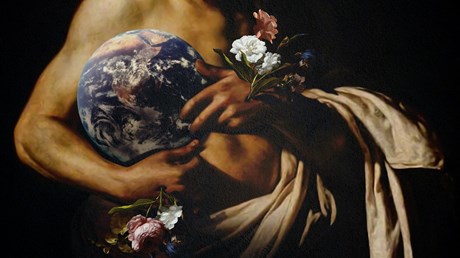
Jerusalem, however, has always been more than a destination. It is an ancient city with a transcendent heartbeat, the cradle of Judaism and Christianity, the center of both interfaith and intra-faith conflicts. “It is a place,” says photographer Ofir Barak, “where kings, prophets, and pilgrims have all stood through the ages.”

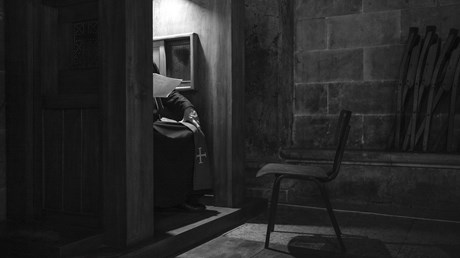
For years, Barak has documented local worshipers through whom those deep roots run. His images here, taken between 2016 and 2020, were included in his self-published book Stones and Bones. They center on the people who have been discipled in the shadows of the Old City, even as believers from abroad mingle among them.

The local Orthodox, Catholic, and Protestant Christians steward strains of faith that predate jet travel. In ways that a 360-degree digital walkthrough cannot, Barak’s choice of black-and-white imagery challenges the presumptiveness of our passport-acquired experiences. As enlightening as real-life and even virtual visits can be, they are but temporal glimpses of eternal realities. —CT editors

Continue reading...


from Christianity Today Magazine https://ift.tt/3dyUVKM

Thursday, 1 April 2021

Tim Keller: Hope for a Better World Starts with the Resurrection

Four reasons Christianity offers unparalleled confidence that history is headed somewhere good.

The American belief has long been that each generation will have a better life—economically, technologically, socially, personally—than the previous one. But this idea of linear historical progress did not exist in most other cultures. All ancient cultures—Chinese, Babylonian, Hindu, Greek, and Roman—had different views. Some saw history as cyclical, and others saw history as a slow decline from past golden ages.

The idea that history was moving in the direction of continual progress and improvement in the human condition simply did not exist.

Then, however, came Christianity. As Robert Nisbet writes in his book History of the Idea of Progress, Christian thinkers gave “to the idea of progress a large and devoted following in the West and a sheer power that the idea could not have otherwise [in the absence of Christian beliefs] acquired.” The Greeks thought that the accumulation of human knowledge led to a mild, temporary improvement in the human condition—but only between conflagrations. But Christian philosophers “endowed the idea of progress with new attributes which were bound to give it a spiritual force unknown to their pagan predecessors.”

Christianity, then, offers unparalleled resources for cultural hope. (We are not for the moment talking about individual hope—hope for life after death. We are talking about corporate hope, social hope, hope for the future of society, of the human race—hope for a good direction to history.) Looking at the arc of history through the lens of Christ’s resurrection, we can make four broad statements about the nature of Christian hope: It is uniquely reasonable, full, realistic, and effective.

Continue reading...


from Christianity Today Magazine https://ift.tt/2PuWp0y

Some Church Plants Launch on Easter After COVID-19 Delays

New congregations have put their initial public gatherings on hold for six months or more.

“Someone asked me the other day how I felt about launching a church this weekend,” Derrick DeLain, lead pastor of Proclamation Church said this morning during a phone call. “I’m hyped, but like it is when you’re getting ready to play in a big game, you almost feel like you’re about to throw up, too. We’re excited about it and ready – Hey, you mind holding on a second?”

Pulling in to the church parking lot, he spotted a man named David he’s befriended. David lives with other men at a nearby halfway house for those battling drug addictions.

“Hey David! How you doin’ bro?” he called out. “Are we going to see you Sunday? I hope so. Yeah, bring them on.” Back on the call, DeLain explained how relationships had been built with David and others as they walk across the church’s lot.

Such spur-of-the-moment ministry opportunities have become essential for pastors in general, and church planters like DeLain in particular, over the last year.

COVID-19 threw an innumerable number of plans out the window, leaving leaders of all kinds scrambling to adjust.

Proclamation Church’s official launch will take place this Sunday on Easter, for instance. But the original launch was supposed to be at the beginning of the year. When the number of positive COVID-19 cases spiked around Thanksgiving, those plans were altered. Instead, an eventual “soft launch” began in January consisting of Proclamation Church and invited guests from the community.

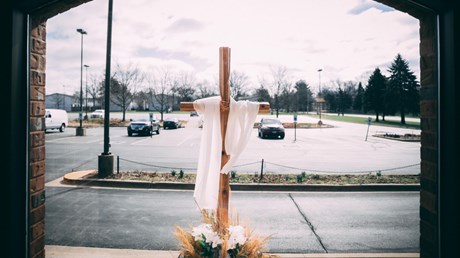
Due to shifting pandemic precautions, churches are ten times more likely to hold services this Easter than they were last Easter, when COVID-19 lockdowns first began. Some churches have held out due ...

Continue reading...


from Christianity Today Magazine https://ift.tt/2PiPUOD

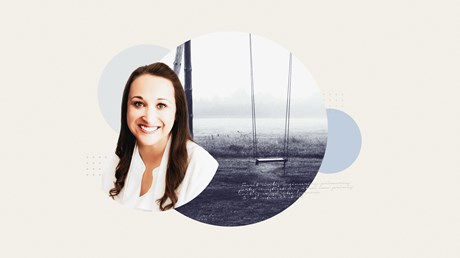
Meet the Pro-Life Activist Who Narrowly Escaped Being Aborted Herself

How Claire Culwell’s life changed when she discovered the shocking truth about her biological mother.

The most powerful stories are those that bring the hypothetical to life. In 1989, a reported 1,396,658 abortions took place within the United States. Claire Culwell may have been the only infant who survived the procedure that year. Her twin wasn’t so fortunate.

The Abortion Survivors Network reports only 365 documented cases of abortion survival in American history, though more survivors almost certainly exist. Like Culwell, many of them have grown up unaware of how they entered the world.

In her memoir, Survivor: An Abortion Survivor’s Surprising Story of Choosing Forgiveness and Finding Redemption, Culwell recounts her idyllic childhood spent in a loving adoptive family. As a young woman, she became interested in finding her biological mother, a search that would drastically change her life.

Raised in a compassionate Christian home by parents who worked for the evangelical organization Cru for over 40 years, Culwell was poised to receive the news of her unlikely birth sympathetically. After locating her birth mother, Tonya, and having a joyous first meeting, Culwell penned a note thanking her for choosing life. But the note compelled an astonishing admission.

Tonya was only 13 at the time of the 20-week abortion that killed Culwell’s sibling and nearly took her own life. “The day [my mother] took me to an abortion clinic, I was terrified,” recounts Tonya in the book. “I was alone and scared. The doctor never said a word to me … as if this were just another day in the life of a bad young girl.” Soon thereafter, Tonya discovered she was still pregnant. (She hadn’t known she was carrying twins.) Her mother took her for a second abortion, which never took place due to complications ...

Continue reading...


from Christianity Today Magazine https://ift.tt/3wh10UJ

Sin Makes Us Thirsty. Find Refreshment at the Cross.

Jesus went without water so we could drink eternally from the fountain of God’s grace.

To be human is to thirst.

The average adult man’s body is 60 percent water. From the time of our birth, even up to the moment of our death, more than anything, our bodies crave the most precious natural resource on earth—namely, water. It has been said that the average person can live 30 days without food but only three days without water. When there is a lack of water, the body naturally goes into self-preservation mode and thirst kicks in. Suddenly, there is nothing more important than quenching our thirst. It is among the most basic instincts. To be human is to need water. To thirst is human.

As the pangs of death closed in upon our Lord on the cross, Jesus once again demonstrated the sincerity of his humanity. He identified with the longings of humanity. He understood our deepest needs and sympathized with our inherent pangs. The suffering of the cross touched him in ways that caused him to long for fulfillment, long for refreshing.

Death was slowly arresting his vitality. His energy was waning, and his body grew weaker and weaker. Just as the Scriptures had foretold (Ps. 22:15; 69:3), the depth of our Lord’s suffering was manifested in every part of his being, including his thirst. The depth of our sin is the extent to which it has affected every aspect of our being; so too must the suffering of Christ be on our behalf.

Suffering is exhausting. Anyone who has endured pain for any length of time knows the toll suffering takes upon the body. It breaks the will. It cripples the mind and causes it to self-exhaust in finding relief. The Crucifixion was particularly painful, exhausting, and even dehydrating. Yet the thirst of Christ was not simply a reminder of the limitations of our bodies but even more so ...

Continue reading...


from Christianity Today Magazine https://ift.tt/31FjHmY

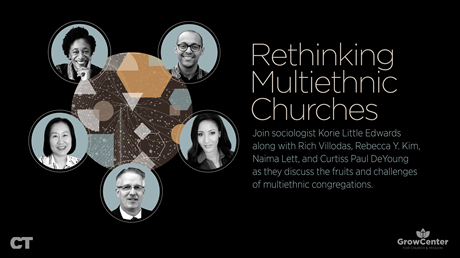
Rethinking Multiethnic Churches

A discussion on the fruits and challenges of multiethnic congregations.

Many evangelical churches have grown in diversity, but are they places of true unity and equity? In the March issue of CT, sociologist Korie Little Edwards explains why the multiethnic church movement hasn’t lived up to its promises–and how it still could.

Join Little Edwards along with Rich Villodas, Rebecca Y. Kim, Naima Lett, and Curtiss Paul DeYoung for a live discussion on the fruits and challenges of multiethnic congregations.

Our Speakers:

Korie Little Edwards

Korie Little Edwards, PhD, is associate professor of sociology at The Ohio State University. She is a leading scholar of race and religion in the United States and past president of the Society for the Scientific Study of Religion, an international, interdisciplinary association. She has written several books and articles on multiracial religious organizations. These include The Elusive Dream: The Power of Race in Interracial Churches (Oxford University Press) and Against All Odds: The Struggle for Racial Integration in Religious Organizations (co-author, New York University Press). Her current scholarship focuses on matters related to race and religious leadership. She has a forthcoming book called Smart Suits, Tattered Boots: Black Ministers Mobilizing the Black Church in the Twenty-First Century that draws upon black religious leaders’ engagement in the 2012 election to understand their engagement in civic and political activity. Little Edwards is also principal investigator of a national study of multiracial church pastors called the Religious Leadership and Diversity Project (RLDP). The RLDP is the most in-depth, comprehensive project ever conducted on leaders of multiracial congregations. A special journal issue featuring research from this ...

Continue reading...


from Christianity Today Magazine https://ift.tt/3m9OfGQ

Recommendations for Outreach Resource of the Year

A brief overview of Ed’s choices from Outreach Magazine’s Resource of the Year.

Each of the last few years, our team and I partner with Outreach Magazine to look through many resources on evangelism and apologetics. Once they have announced, I like to share a bit more here at The Exchange.

This year, I commended the following two books:

1.How to Talk About Jesus Without Being That Guy: Personal Evangelism in a Skeptical World by Sam Chan.

Sam Chan offers wise and practical advice on sharing Christ in our ever-changing, post-Christian world. Using pertinent biblical texts, encouraging real-life examples, and sociological and cultural information, Chan offers the reader a helpful way both to think about evangelism today and how to practice it. He writes with confidence in the gospel and personal humility. Building his content around eight "tips," Chan's approach is applicable for a pastor or layperson, for a church or individual, and for global contexts (his is Australia) and for the United States.

For example, tip 2, "Go to their things and they will come to your things," Chan describes being supportive of events that matter to unchurched friends. He shares a number of examples where friends and neighbors of he and his wife attended church after they attended events of their friends. This is a book a person can read and immediately begin to implement the ideas.

2. SENT: Living a Life That Invites Others to Jesusby Heather Holleman and Ashley Holleman.

The Holleman's work with Cru in Pennsylvania, where Heather teaches English at Penn State. This book offers numerous examples of how to make the shift to living as a sent person or family. A particularly helpful aspect of this book flows out of the married couple who wrote it: husband Ashley is the introvert, whereas wife Heather is ...

Continue reading...


from Christianity Today Magazine https://ift.tt/3cED59W