Tuesday, 6 April 2021

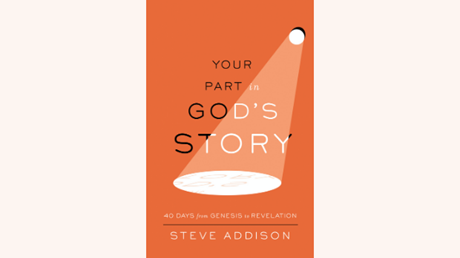
One-on-One with Steve Addison on ‘Your Part in God’s Story’

An interview with Steve Addison on his latest book “Your Part in God’s Story: 40 Days from Genesis to Revelation.”
Ed Stetzer: Why did you write this book?

Steve Addison: For years I’ve been struck by what happened when Jesus rose from the dead and discovered his disciples had scattered in fear, failure and despair. As far as they were concerned it was all over.

Yet Jesus was about to launch a missionary movement that will go to the whole world with these same disciples who have failed him. How did he do that?

Jesus restored them, then he walked them through the books of Moses, the Psalms and the Prophets over a period of forty days. He showed them why the Messiah had to suffer then rise from the dead. He gave them their mission to take the gospel to the world and then he promised them the power of the Holy Spirit.

That’s how Jesus turned failed disciples into a missionary movement. If he did it for them, he can do it for us today.

Ed: What’s the format?

Steve: Over the last few years I’ve been working through Genesis to Revelation asking these questions:

  • What do we learn about God and his mission?
  • How does God shape the people he calls?
  • What is God saying about my part in his story?
  • How will I think and act differently?

I wanted others to ask the same questions of the Scriptures and of themselves. That meant choosing forty decisive moments on the journey from Genesis to Revelation. Understand those moments, and you’ll understand God’s story and your place in it.

God’s story is the one story that unites all the stories of Scripture—from creation to the new heavens and earth. Along the way God chooses ordinary people to play their part in his story. Each one is an unlikely hero, but God shapes them and enables them to fulfill his purposes. There’s a grand story unfolding that includes individual ...

Continue reading...


from Christianity Today Magazine https://ift.tt/3upAg2G

Monday, 5 April 2021

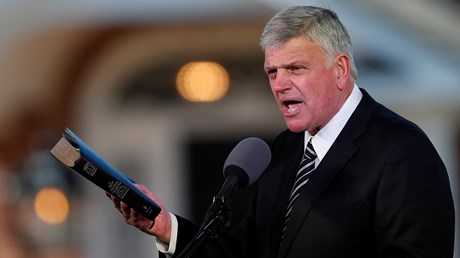
Franklin Graham Wins British Bus Ad Censorship Suit

Evangelist’s LGBT views are protected by UK Equality Act, court rules.

Franklin Graham’s British bus signs seemed innocuous. They said, “Lancashire Festival of Hope with Franklin Graham—Time for Hope.”

But the message, the messenger, and his history of controversial statements about homosexuality sent the seaside resort town of Blackpool into turmoil in 2018, as elected officials and administrators rushed to find a way to remove the advertisements from public transportation.

“Clearly this chap cannot be allowed a stage to promote this venom,” wrote one city official an email to the council. Another called the evangelist and the president of Samaritan’s Purse a “bile spewing preacher.” A third official didn’t know who Graham was, but looked him up on the internet and said she was “a bit shocked” at things Graham had said about LGBT people on Fox News.

The town removed the Festival of Hope signs just 24 hours after they went up on city buses, citing “heightened tension” and complaints from local residents.

Now, more than two years later, a British court has ruled that was an act of religious discrimination. Graham’s name and record of controversial statements might be offensive to some in Blackpool, according to Judge Claire Evans, but the town was wrong to censor him. The bus sign was protected by the British Equality Act of 2010 and the European Convention on Human Rights.

“All religions and beliefs are characteristics protected by law,” Evans wrote in a 35-page decision handed down last week. “The domestic courts and the European Court of Human Rights have consistently affirmed that a pluralistic tolerant society allows for the expression of many different and sometimes diametrically opposed ...

Continue reading...


from Christianity Today Magazine https://ift.tt/3uv6mdz

Churches Plunge Ahead with Easter Baptisms

New converts show the impact of distanced discipleship during pandemic shutdowns.

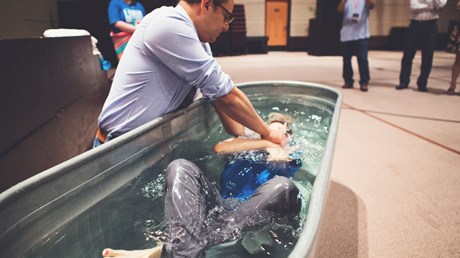
In February 2020, the Evangelical Free Church of Bemidji in Minnesota finally purchased a baptismal tank, eager to conduct baptisms in its building rather than offsite at a local university swimming pool or nearby lake.

After putting baptisms on hold during the pandemic, the church’s pastor asked a teenaged believer to take off his mask and plug his nose as he became the first to undergo the sacrament in the new wooden baptistry on Easter Sunday—14 months later.

In addition to some churches opening their doors for the first time in over a year, the holiday marked a delayed chance to celebrate new life through baptism, a practice that represents the death, burial, and resurrection of Jesus commemorated during Holy Week.

“We are thrilled that we not only are able to gather for worship in person this Easter but also that we are able to have these baptisms as a part of our Easter celebration,” said associate pastor Eric Nygren.

To reduce the risk of spreading COVID-19, the Evangelical Free Church baptized a set of two siblings during one of its services on Sunday; each shared their testimony by video before stepping up to be baptized before the congregation.

Last year, when only 7 percent of churches were meeting in person, churches had to call off baptisms or, in some cases, adapt the practice as they got creative with other aspects of Easter services. One Florida church held Zoom baptisms where new believers baptized themselves in bathtubs or swimming pools while the congregation watched online.

By the second Easter of the pandemic, church attendance for Easter had risen but wasn’t back to typical levels; around 2 in 5 Christians (39%) said they planned to go in person this year, compared to the 62 ...

Continue reading...


from Christianity Today Magazine https://ift.tt/3ukx2NZ

A New Global Leader for Evangelicals

Learn more about the World Evangelical Alliance's newest Secretary General.

Someone in the line of the Huguenots—the French Protestants who had to flee from persecution in the 16th and 17th centuries—has shown up to remind us what today’s priorities for Christian witness should be.

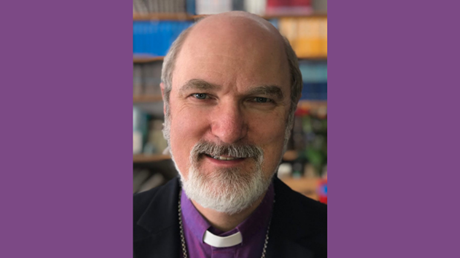
I refer to Thomas Schirrmacher, who became Secretary General of the World Evangelical Alliance (WEA) on March 1. His family lineage dates back to the Huguenots.

Symbolically, Schirrmacher’s inauguration ceremony took place just down the road from Wittenberg, where five centuries ago Martin Luther pried open the controls exerted by the Catholic Church and triggered the Protestant Reformation, from which today’s evangelicals are descendants. Now Schirrmacher, a German like Luther and a theologian, is leading this worldwide community of evangelicals.

Raised in a home of university professors, Thomas grew up meeting Evangelical leaders who visited his home. He went on to study theology and cultural anthropology, accumulating multiple earned Ph.D. degrees and honorary doctorates and publishing prolifically.

Schirrmacher is not just a theologian and author; he is also experienced as a diplomat. He knows politics as well as he knows theology. He has met with many prominent Muslim leaders in the world and has built respectful relationships with the full range of Christian denominations and movements.

I came to appreciate Schirrmacher’s style 16 months ago, when I joined him to spend a day with leaders of Nahdlatul Ulama, an Indonesian-based Islamic movement that seeks to foster respect and understanding between Muslims and non-Muslims. As intense and articulate as he is, his framing of our conversation that day was first built around friendship and understanding. His grasp of cultural differences, ...

Continue reading...


from Christianity Today Magazine https://ift.tt/3a0VbBB

Saturday, 3 April 2021

What Pastoring Seniors Teaches Me About the Resurrection

In 14 years, I’ve presided over more than 100 funerals. Easter gives me hope.

At the church I pastor, older folks in the congregation mostly just call me “Pastor,” because older folks still call their pastors “Pastor” or maybe my name isn’t all that important compared to my holy vocation or maybe they’ve seen so many pastors come and go that remembering names is a bit touch and go.

I, for my part, call them “senior saints.” It is a reminder to me that I am not the first one to walk down this narrow path (Matt. 7:13–14).

My calling as Christ’s shepherd is to proclaim his death and resurrection for the healing of the world. Although this gospel message seems familiar enough when I say it from the pulpit, it takes on new power when I visit parishioners whose bodies are failing.

Some years ago, I went to see a congregant named Tom in the hospital. I remember how his face lit up when I brought him communion—the same communion in the same type of beat-up, old, portable communion kit that he himself had brought to hospitals for years when he served the church as an elder. We mouthed the familiar words together:

The Lord Jesus, on the night he was betrayed, took bread, and when he had given thanks, he broke it and said, “This is my body, which is for you; do this in remembrance of me.” In the same way, after supper he took the cup, saying, “This cup is the new covenant in my blood; do this, whenever you drink it , in remembrance of me.” For whenever you eat this bread and drink the cup, you proclaim the Lord’s death until he comes. (1 Cor. 11:23–26)

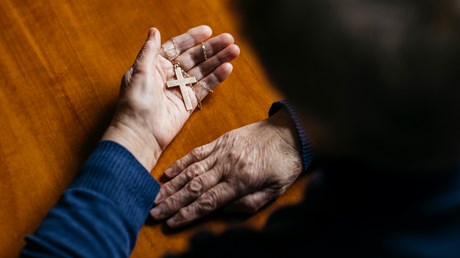
A couple of years later, my new wife, Rachel, and I found ourselves living next door to Tom’s widow, Charlene. She died clutching a small wooden cross that I ...

Continue reading...


from Christianity Today Magazine https://ift.tt/3rLNOnh

Easter Hope for a Post-Pandemic World

A special guest post from N.T. Wright to offer encouragement this Easter.

I knew from an early age there was something wrong. I listened to Easter sermons from good evangelical preachers, and they seemed to be missing the point. I suspect the same problem is getting in the way now, as we try to draw from the Easter message the hope that the post-pandemic world will need so badly.

The sermons I heard tended to stress two points. First, belief in Jesus’ resurrection could be supported by personal testimony: “You ask me how I know he lives? He lives within my heart!” Second, Jesus’ resurrection proved (we were told) that there really is “life after death.”

Nothing wrong with these at one level. Personal experience of the presence and power of the living Jesus is a vital part of genuine Christian living. And, of course, God the creator hasn’t made us in his image just to tease us with this present tantalizing life. We are made for more.

But “he lives within my heart” is the truth of Pentecost, not of Easter Day.

Easter is about something that happened, launching a new world, prior to any transforming effects on believers. You can’t explain the rise of Christianity historically unless you say that Jesus’ tomb really was empty and that his followers really did meet him alive again. The stories are strange; they are not what people might have made up from what they believed ahead of time. Thus, for instance, the risen Jesus, though identified by the mark of the nails and the spear, seemed somehow different. He was not instantly recognized. Paul grasps the point: what has happened at Easter is the launch of new creation. Jesus’ resurrection body was the first example of a new order of being: a heaven-and-earth reality. That’s what ...

Continue reading...


from Christianity Today Magazine https://ift.tt/31JuaOl

Friday, 2 April 2021

Capturing the Transcendent Heartbeat of Jerusalem’s Christians

Local photographer Ofir Barak documents the worship of the city’s religious stewards.

Israel leads most other nations in vaccinating against COVID-19. But foreign tourism to the Holy Land remains largely shut down, and Jerusalem this Easter will again be defined by much emptier streets, hotels, and restaurants than usual.

In the run-up to Holy Week last year, media producers released a slate of products to help homebound pilgrims experience the city virtually. Filmmakers debuted a documentary about the Church of the Holy Sepulchre, the traditional site of Jesus’ death, entombment, and resurrection. Museums and travel promoters released virtual reality tours of many of the spots on Christian visitors’ must-see lists.

Jerusalem, however, has always been more than a destination. It is an ancient city with a transcendent heartbeat, the cradle of Judaism and Christianity, the center of both interfaith and intra-faith conflicts. “It is a place,” says photographer Ofir Barak, “where kings, prophets, and pilgrims have all stood through the ages.”

For years, Barak has documented local worshipers through whom those deep roots run. His images here, taken between 2016 and 2020, were included in his self-published book Stones and Bones. They center on the people who have been discipled in the shadows of the Old City, even as believers from abroad mingle among them.

The local Orthodox, Catholic, and Protestant Christians steward strains of faith that predate jet travel. In ways that a 360-degree digital walkthrough cannot, Barak’s choice of black-and-white imagery challenges the presumptiveness of our passport-acquired experiences. As enlightening as real-life and even virtual visits can be, they are but temporal glimpses of eternal realities. —CT editors

Continue reading...


from Christianity Today Magazine https://ift.tt/3dyUVKM