Wednesday, 7 April 2021

Christ-centered Nonprofits and Churches Ended 2020 Surprisingly Well

85% said cash giving in 2020 came rather close to 2019 cash giving numbers—with a sizable portion of that group saying that 2020’s cash giving ended higher than 2019’s.

The pandemic’s much-feared financial toll on churches and nonprofit ministries failed to materialize in 2020. That’s the verdict from a survey of 1,292 members and friends of ECFA (the Evangelical Council for Financial Accountability) published March 4 in a 12-page illustration-rich report titled “Remarkable Resilience.”

Every three months since the nation’s coronavirus-driven financial upheavals began last spring, ECFA has polled its membership, plus other likeminded churches and nonprofits. After an initial dip in charitable giving, donations rose and held somewhat steady in the summer and fall. Donor fatigue apparently did not set in even across the end-of-year’s final appeals.

What did our survey uncover? For 85%, 2020’s income from cash giving was close to 2019’s. The breakdown of the 85% is instructive: while 18% said it was close—i.e., that 2020 was lower than 2019 by 1-10%, and 14% said the two years ended the same, 27% said that 2020’s cash giving was 1-10% higher than 2019’s, and an amazing 26% said that 2020’s cash giving was more than 10% higher than 2019’s. Thus 53% said that 2020 ended higher than 2019 for cash income.

For most churches and nonprofits, cash giving is their largest slice of the income pie. ECFA’s 2,546 member organizations average 58% of their revenue as coming from green cash, checks, online giving, etc. Another 27% of revenue comes from “other income” such as facility rentals, tuition, program fees, etc. The remaining 15% comes from non-cash giving such as gifts in kind, donated services, etc. This formula varies across many ministry types, with child sponsorship ministries averaging 99% of their income ...

Continue reading...


from Christianity Today Magazine https://ift.tt/3uuX80F

Evangelicals’ Vaccine Skepticism Isn’t Coming from the Pulpit

Conservative pastors and leaders are encouraging the shot while the people in the pews have been more divided.

The president of the Southern Baptist Convention posted a photo on Facebook last week of him getting the COVID-19 vaccine. It drew more than 1,100 comments—many of them voicing admiration for J. D. Greear, and many others assailing him.

Some of the critics wondered if worshippers would now need “vaccine passports” to enter The Summit Church in Durham, North Carolina, where Greear is pastor. Others depicted the vaccines as satanic or unsafe, or suggested Greear was complicit in government propaganda.

The divided reaction highlighted a phenomenon that has become increasingly apparent in recent polls and surveys: Vaccine skepticism is more widespread among white evangelicals than almost any other major bloc of Americans.

In a March poll by The Associated Press-NORC Center for Public Affairs Research, 40 percent of white evangelical Protestants said they likely won’t get vaccinated, compared with 25 percent of all Americans, 28 percent of white mainline Protestants, and 27 percent of nonwhite Protestants.

The findings have aroused concern even within evangelical circles. The National Association of Evangelicals, which represents more than 45,000 local churches, is part of a new coalition that will host events, work with media outlets and distribute various public messages to build trust among wary evangelicals.

“The pathway to ending the pandemic runs through the evangelical church,” said Curtis Chang, a former pastor and missionary who founded ChristiansAndTheVaccine.com, the cornerstone of the new initiative. With white evangelicals comprising an estimated 20 percent of the US population, resistance to vaccination by half of them would seriously hamper efforts to achieve herd immunity, Chang ...

Continue reading...


from Christianity Today Magazine https://ift.tt/3cZjWzY

Tuesday, 6 April 2021

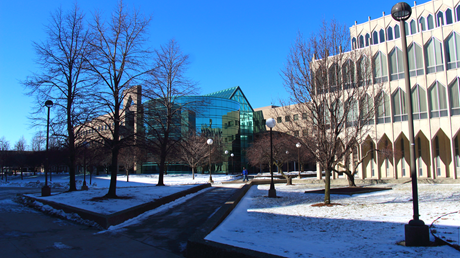
InterVarsity Wins Suit Against Wayne State

UPDATE: University’s nondiscrimination policy unconstitutionally discriminated against the campus ministry.

Update (April 7, 2021):

The fight for campus access for faith-based student groups scored another legal victory this week.

A district court judge ruled on Monday that Wayne State University violated the First Amendment with a 2017 decision that temporarily denied InterVarsity Christian Fellowship its status as a student group over the chapter’s requirement that its leaders be Christian.

Wayne State’s nondiscrimination policy, according the 83-page opinion by Robert Cleland, “violated plaintiffs’ rights to internal management, free speech, freedom of association, freedom of assembly, and free exercise as a matter of law.”

The judge ruled that the First Amendment protects religious organizations’ rights to select their own ministers, and that the InterVarsity chapter’s student leaders qualified as ministers. While InterVarsity is open to all students, it asks leaders to sign a statement of faith.

Cleland also agreed with InterVarsity’s argument that the school selectively applied its nondiscrimination policy, since other organizations had certain requirements for their leaders.

But the decision comes three years after Wayne State allowed InterVarsity to regain its recognition as a campus group and only resulted in a $1 in symbolic damages. In a statement to Detroit News, the university challenged the decision to pursue litigation when InterVarsity had already been “granted everything it requested in a timely manner.”

The ruling, though, stands to benefit other student groups or chapters at other schools by underscoring the importance of fair treatment and religious freedom. Lori Windham, who represented InterVarsity as senior counsel at Becket, said, “The law is crystal ...

Continue reading...


from Christianity Today Magazine https://ift.tt/31RWj5V

Women and African Americans Now More Likely to Leave the SBC, But So Is Everybody Else

Though data shows declines across the board, departing members aren’t going far.

The Southern Baptist Convention has been faced with a string of prominent departures last few months.

In December, several high-profile African American pastors left after denouncing a statement released by SBC seminary presidents that declared critical race theory incompatible with the denomination’s teachings. Then last month, Beth Moore—the most prominent female voice in the Southern Baptist Convention—said she too had departed the convention and would no longer be publishing through Lifeway.

These public exits come as the Southern Baptist Convention continues to report a precipitous decline in members. In 2006, SBC records indicated a total of 16.3 million members. Data released in 2020 notes that the membership has declined to 14.5 million, with a 2 percent decline reported between 2019 and 2020 alone.

The influential members making headlines aren’t the only ones leaving and may represent broader concerns for the people in the pews of the average Southern Baptist church. Is America’s largest Protestant denomination having a harder time retaining women, people of color, and younger members than in the past?

Data from the General Social Survey, which asks respondents about the denomination that they grew up in as well as their current denominational affiliation, offers a subtle and nuanced portrait of a denomination that is struggling to retain its membership regardless of their gender, race, or age. However, several of these factors do seem to make it more likely for some to leave the SBC.

Between 1985 and 1995, women were slightly more likely to leave the Southern Baptist Convention than men. That gender gap essentially disappeared in subsequent waves of the survey, but the decline in retention ...

Continue reading...


from Christianity Today Magazine https://ift.tt/3dIQ7CC

Pastoral Care Doesn’t Require Capes

Four practitioners discuss how to minister well without resorting to heroics.

Pastoral care sits at the center of our vocation as ministers. In addition to preaching and leading worship, celebrating the sacraments, and shepherding souls, we care for the sick, and we counsel the anxious, the fearful, and the grieving. But as pastors, to honor and revere and care for others is to be affected by the care that we give. We gathered four practitioners of pastoral care to reflect on the inherent challenges of this aspect of ministry.

Lindsay Rich is pastor of congregational care and faith development at SouthPark Church in Charlotte, North Carolina.

Ronnie Martin is lead pastor of Substance Church in Ashland, Ohio, and cohost of CT’s The Art of Pastoring podcast with Jared Wilson.

Toni Kim is a former pastor who now serves as a spiritual director, nonprofit administrator, and board member. She lives in Charlottesville, Virginia.

Derek McNeil is a psychologist and president of The Seattle School of Theology and Psychology.

CT's editor in chief Daniel Harrell, a former pastor, moderated this discussion.

This article has been edited for clarity and length. You can listen to the full conversation at this link.

I’ve always held that the best pastoral care does not aim to fix a crisis so much as to frame a crisis within the cross of Jesus. In your experience, how can we help the people we are caring for see God in what is happening in their lives?

Martin: If you’re somebody who preaches the Cross, it confronts some of the complexities of our comforts. And it confronts those complexities with the sobriety of our suffering Savior. We all face fragility. “In this world you will have trouble,” Jesus said. The Cross frames our crises by adjusting our expectations. How will I face the inevitable ...

Continue reading...


from Christianity Today Magazine https://ift.tt/2PILJvo

Why Black Pastors Still Stay Southern Baptist

Even with disputes over Trump and critical race theory pushing some minority leaders out, others stand by the missional advantage in the country’s largest Protestant body.

Fred Luter has been a Southern Baptist for 35 years. But the last four years “have been some of the most difficult times” to be black in the Southern Baptist Convention (SBC), he said, as white pastors appeared to support President Donald Trump uncritically despite character flaws for which they “would have crucified” President Barack Obama.

Noticing the disparity, members of the predominantly black New Orleans congregation Luter pastors told him they’re “almost embarrassed” to be Southern Baptist. They even asked to leave the SBC.

But Luter, the first African American SBC president, hasn’t wavered in his support for the convention.

“We’re not in this convention because of who the president of the United States is,” Luter said. “We’re in this convention because of our commitment to the Great Commission and the Great Commandment.”

Luter shared his story as part of a YouTube series titled Why I Stay, featuring testimonies from leaders of color who have remained in white evangelical circles—including the SBC—despite mounting pressure to leave. The series is hosted by Dhati Lewis, a North American Mission Board (NAMB) vice president who is among the highest-ranking black employees at any SBC entity.

“We have to be as loud as the detractors in letting people know all the positive that’s going on in the denomination” for black and brown Christians, Lewis said.

That positive message increasingly has been needed as high-profile black departures from the SBC spur Southern Baptists of color to question their own involvement in the convention. Thus far, most minority churches have stayed in the SBC. Black and brown Christians ...

Continue reading...


from Christianity Today Magazine https://ift.tt/3wuE0Sl

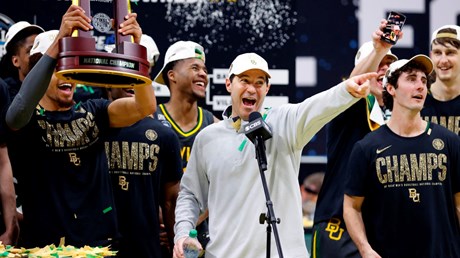
Baptists Can Dunk: 5 Facts About Baylor Basketball’s Historic NCAA Championship Win

A culture of joy is at the center of the 114-year-old program’s first national title.

In last night’s championship game, Baylor University beat Gonzaga University to become the first men’s team from a Baptist school to win the highest honor in college basketball.

Baptist fans—or bandwagon fans—chimed in on Twitter with churchy quips, saying the team played “like there’s a potluck after” and joking about a Baptist team being able to go to “the big dance.”

Baylor calls itself a Christian university “in the Baptist tradition,” and its win represents a historic mark not only for the school but for Protestant colleges competing in the sport.

As a staff member with Baylor’s Faith & Sports Institute, I’ve been cheering on the Bears with my colleagues; Tuesday morning we greeted each other with the lingering buzz of excitement overpowering the sleep deprivation from the late-night game. And as a historian, I also have a sense of how this year’s team fits in with the broader historical context of Christian engagement with basketball.

1. Basketball at Baylor goes back more than a century—but Catholic schools tend to win more championships.

Baylor began playing basketball in 1907, just 16 years after the sport originated at the YMCA International Training School in Springfield, Massachusetts. Though many Christian colleges took interest in the game invented by James Naismith, few have been able to rival Catholic schools with championship-level success.

Since the NCAA tournament began in 1939, Catholic schools have won 10 men’s titles. Compare that to Protestant schools—who can claim four only if Duke, originally founded as a Methodist school, is counted—and the battle for Christian men’s basketball supremacy ...

Continue reading...


from Christianity Today Magazine https://ift.tt/3cU5AR4