Thursday, 2 September 2021

Why I Voted For the Atheist President of Harvard’s Chaplain Group

Participating in interfaith work at this Ivy League university is a help not a hindrance to the exclusivist claims of Christian faith.
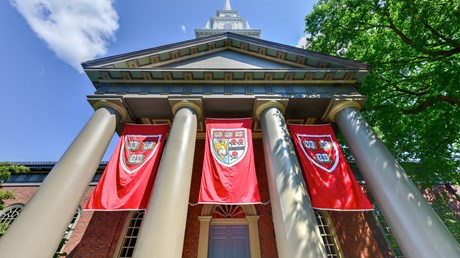
Last week, The New York Times ran a provocative piece stating that the new president of the Harvard Chaplains is an atheist. Greg Epstein was elected unanimously last spring by his fellow Harvard chaplains. I am one of the people who voted for him.

For seven years, I have worked at Harvard as an evangelical campus minister employed by InterVarsity Christian Fellowship (IVCF). I believe the Bible is authoritative and entirely trustworthy as God’s Word. I believe that Jesus alone is the way of salvation, and that no one comes to the Father except through him. So why would I vote for an atheist to lead the Harvard Chaplains?

The answer lies in the unique, decentralized approach of the Harvard Chaplains and how that group of leaders from many faiths (or no faith) has opened doors for gospel-centered ministry on the campus of a prestigious Ivy League school. The real Harvard Chaplains group—not the one poorly represented in the media—tells a different and very significant story of how evangelicals can flourish in interfaith spaces without compromising faith, truth, or mission.

In response to The New York Times profile, many Christian and conservative media outlets were quick to fuel the sense of aggrievement felt by religious people who are understandably trying to protect themselves against the rising tide of secularism. In so many words, they’re concerned that “even faith spaces will be ruled by secularists, should Harvard have its way.”

Had I not been in the room where it happened, I might have had a similar reaction to the news.

That room was of course a Zoom call. It took place in the spring. As a group of about 30, we voted on a slate of chaplains for next year’s executive board. I was ...

Continue reading...


from Christianity Today Magazine https://ift.tt/3jEKidJ

Native Christians: Indigenous Bible Version Is ‘Made By Us For Us’

The recently released New Testament translation adopts Native American descriptors for God—the Creator and Great Spirit.

It’s a Bible verse familiar to many Christians—and even to many non-Christians who have seen John 3:16 on billboards and T-shirts or scrawled across eye black under football players’ helmets.

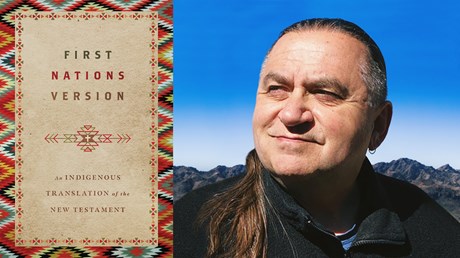
But Terry Wildman hopes the new translation published Tuesday by InterVarsity Press, First Nations Version: An Indigenous Translation of the New Testament, will help Christians and Indigenous peoples read it again in a fresh way.

“The Great Spirit loves this world of human beings so deeply he gave us his Son—the only Son who fully represents him. All who trust in him and his way will not come to a bad end, but will have the life of the world to come that never fades away, full of beauty and harmony,” reads the First Nations Version of the verse.

In the First Nations Version, “eternal life,” a concept unfamiliar in Native American cultures, becomes “the life of the world to come that never fades away, full of beauty and harmony.” The Greek word “cosmos,” usually translated in English as “the world,” had to be reconsidered, too: It doesn’t mean the planet Earth but how the world works and how creation lives and functions together, said Wildman, the lead translator and project manager of the First Nations Version.

They’re phrases that resonated with Wildman, changing the way he read the Bible even as he translated it for Native American readers.

“We believe it’s a gift not only to our Native people, (but) from our Native people to the dominant culture. We believe that there’s a fresh way that people can experience the story again from a Native perspective,” he said.

The idea for an Indigenous Bible translation first came to ...

Continue reading...


from Christianity Today Magazine https://ift.tt/38yE3lk

‘The Chosen One Will Make His Home in Your Heart’

The First Nations Version of Ephesians 3-4:16.

As he ministered among native tribes, pastor Terry Wildman would reword parts of Scripture to reflect the language and perspectives of his people. This year, his efforts to “indigenize” Bible translation turned into an official version of the New Testament published by InterVarsity Press.

The following is an excerpt from Ephesians in the First Nations Version, which released on Tuesday.

A Great Mystery Revealed

Because I, Small Man (Paul), follow the Chosen One and represent you Nations in this way, I have been arrested and put in chains. I am sure you have heard how the Great Spirit chose me, because of his great kindness, to be a wisdomkeeper to all Nations. Creator chose me, by a sacred vision, to make known this hidden wisdom that I have already spoken about.

When you hear this message, you will understand how I see the mystery of the Chosen One. This mystery was not made known to the generations of humankind that walked before us in the same way his Spirit has now told it to his holy message bearers and prophets.

This mystery is that the people of all Nations have equal share in the blessings promised to the tribes of Wrestles with Creator (Israel). They have full membership in the same body and are included in the promise through the Chosen One as told in the good story.

Chosen to Tell the Good Story

The gift of Creator’s great kindness came to me in a powerful way and created in me a desire to serve this good story. Even though I am small and weak among his holy people, he still chose me to tell all Nations about the mysterious treasures he has hidden in the Chosen One and about the unfolding of this ancient plan—a great mystery that was hidden away for many ages in Creator’s heart. So that ...

Continue reading...


from Christianity Today Magazine https://ift.tt/3yCnj7j

Why the UN’s Dire Climate Change Report Is Dedicated to an Evangelical Christian

Welsh Nobel Prize-winner John Houghton saw sin at the heart of this ecological crisis.

The sixth report from the United Nation’s Intergovernmental Panel on Climate Change is alarming—but not surprising.

The panel’s first assessment of scientific research on climate change in 1990 found that burning fossil fuels substantially increases the atmospheric concentrations of greenhouse gases—including carbon dioxide, methane, chlorofluorocarbons, and nitrous oxide—causing a rise in the global mean temperature and warming up the world’s oceans.

“Consequent changes,” the first report said, “may have a significant impact on society.”

The second, third, fourth, and fifth IPCC assessments found more evidence and growing consensus that human activity is causing climate change and that its impact will hurt a lot of people.

The sixth assessment, released in August, is more urgent and emphatic, but it reaches the same conclusion. The IPCC now says climate change not only may have a significant impact on society, it will.

Policy makers, scientists, and concerned citizens who pick up the final version of the report might be surprised by one thing, though: It is dedicated to an evangelical Christian who said the root problem of climate change is sin.

“Looking after the Earth is a God-given responsibility,” John Houghton once wrote. “Not to look after the Earth is a sin.”

Houghton, who died of complications related to COVID-19 in 2020 at the age of 88, was the chief editor of the first three IPCC reports and an early, influential leader calling for action on climate change.

His concerns about greenhouse gases, rising temperature averages, dying coral reefs, blistering heat waves, and increasingly extreme weather were informed by his training at as atmospheric ...

Continue reading...


from Christianity Today Magazine https://ift.tt/3yDDrp6

Wednesday, 1 September 2021

John MacArthur’s Church to Receive $800K COVID-19 Settlement

Ahead of the legal payments, the California pastor acknowledged that he and others contracted the virus last winter.

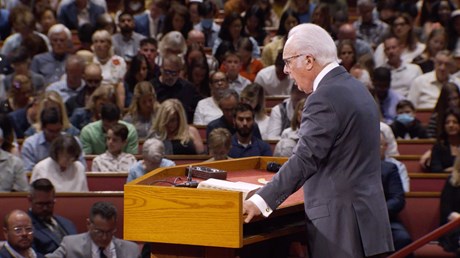
The Los Angeles County Board of Supervisors on Tuesday voted to authorize a $400,000 payment to settle a legal battle with Grace Community Church over lead pastor John MacArthur’s defiance of COVID-19 restrictions in the early months of the pandemic.

Under the agreement, which the board unanimously approved without discussion, the state of California will also pay the church $400,000.

This agreement, county officials said, was reached in the context of the US Supreme Court’s decision in February that told California it couldn’t enforce a ban on indoor worship because of the coronavirus pandemic. LA County modified its health order and lifted the indoor worship ban after the ruling.

“After the US Supreme Court ruled that some public health safety measures could not apply to houses of worship, resolving this litigation is the responsible and appropriate thing to do,” read a statement from county officials. “From the onset of the COVID-19 pandemic, Los Angeles County has been committed to protecting the health and safety of its residents. We are grateful to the county’s faith organizations for their continued partnership to keep their congregants and the entire community safe and protected from COVID-19.”

This decision also comes just days after MacArthur, during his Sunday sermon, confirmed he and his wife had contracted COVID-19 last winter. MacArthur also said “many people” contracted the coronavirus, adding “it probably went through our church in maybe December or January.”

“Patricia and I enjoyed our own bout with COVID for about a week and a half,” said MacArthur, who was absent from the pulpit late December.

MacArthur on Sunday said the settlement ...

Continue reading...


from Christianity Today Magazine https://ift.tt/3t4sax7

Is the Texas ‘Heartbeat Bill’ the End of Roe-v-Wade?

A recent abortion ban isn’t the victory it seems. But it is a test run for pro-life Christians.

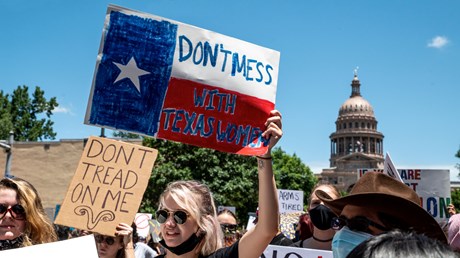
Many people counted down until midnight last night, waiting not for a New Year but for the possibility of a post–Roe v. Wade America. That’s because, due to a legal technicality, the Supreme Court of the United States had until then to overturn a new Texas abortion law before it went into effect on September 1.

The fact that the Supreme Court didn’t intervene has some Christians wondering: Is Roe now effectively gone?

The reason this case, in particular, is of such intense interest to both sides of the abortion debate is because the law in question, Senate Bill 8, seems to effectively ban abortion after about six weeks of pregnancy. Unlike the Mississippi law that will come before the Court this year, this law is different. It is not enforced by the state but rather by private persons who can sue anyone involved in an abortion—except the woman seeking the procedure.

Still, because a law seeming to prohibit abortion is now technically on the books, some have wondered if this means the almost fifty-year era of Roe v. Wade is at its end. And the answer to that is probably not—at least not yet.

Thought it’s hard to discern the motives of nine justices, it is well within the realm of possibility that the Court’s decision to stay silent was not a way of undoing Roe but rather a means of not making such a decision before the Mississippi Dobbs case.

Dobbs v. Jackson Women’s Health Organization pertains to the State of Mississippi’s law banning most abortions after fifteen weeks from conception. If the law is upheld, it would directly challenge Roe’s framework of an almost unlimited right to abortion, especially before fetal viability (as defined by the Court). That case does ...

Continue reading...


from Christianity Today Magazine https://ift.tt/3mSKHLv

Understanding Autism from the Inside

In a candid account of living on the spectrum, a Taylor University professor invites us to see his “deficiencies” as gifts.

Words are powerful, and often in subtle ways. Labels, for example, help us to distinguish things, and an important part of science consists of coming up with labels for newly discovered features of reality. But labeling gets complicated in the area of human sciences, especially when we’re dealing with different types of people.

I’ll never forget the advice I received from one of the professors in my doctoral psychology program: We never refer to people with schizophrenia as “schizophrenics,” he said, because it dehumanizes them by seeming to reduce them to their disorder. This resonated with my Christian belief that people with schizophrenia are made in God’s image.

If anything, labels are even more powerful in today’s world. For many, they serve as identity markers in an increasingly fluid political and cultural landscape. Poet and Taylor University English professor Daniel Bowman Jr. illustrates this dynamic in On the Spectrum: Autism, Faith, and the Gifts of Neurodiversity. The book, a fascinating and moving “memoir in essays” written by an unusually reflective and transparent evangelical, aims to reframe our thinking on autism by suggesting new labels to describe it.

Bowman defies certain stereotypes that many people associate with autism, which makes the book unusually compelling, even if it might make him a somewhat controversial spokesperson for the autistic community. Nevertheless, it is precisely his remarkable degree of self-awareness that enables him to give some stunning descriptions of what it’s like to be autistic.

Bowman shares honestly about social anxiety, “executive dysregulation,” a tendency to push others away, periodic meltdowns, and significant ...

Continue reading...


from Christianity Today Magazine https://ift.tt/3mNEO2m