Monday, 4 October 2021

Philip Yancey, as Few Could Have Imagined Him

The writer’s new memoir sheds light on an upbringing steeped in bigotry and a lifetime of “useful” pain.

Philip Yancey knew he would write a memoir the day he lay strapped to a backboard, not knowing if he would live or die. This was in 2007, after he had already written numerous books and won global acclaim as a journalist spotlighting issues of faith in the stories of other people. Yet it took a careening Jeep, five rolls down an embankment, and a broken neck to persuade him irrevocably to write the full truths of his own story.

I saw Yancey four years ago as he was writing it. We sat over lunch in an earthy café in Colorado sharing the challenges of writing memoir. How do we account for the span of our life? When do we break our silence? How much truth is enough?

Since then, I’ve been anxiously awaiting how Yancey would answer those questions for himself. Here’s my report: Where the Light Fell is in many ways a classic spiritual autobiography tracing one man’s conversion from cynic to believer. But it’s more. It’s a searing family story as revelatory as gothic Southern fiction. It’s an exposĂ©. It’s a social critique. It’s a tragedy. It’s a tale of redemption. More than anything, though, it’s a story few could have imagined.

Unmaking and remaking

Not everything in this memoir will come as a surprise, especially for readers familiar with Yancey’s prolific writings on matters of grace, the problem of evil, and the author’s Southern fundamentalist background, particularly its role in justifying racism and segregation.

Although such themes are recognizable in Yancey’s memoir, the stories have a different feel. No longer do they serve mainly as anecdotal ramps onto larger explorations of doubt, grace, prejudice, and pain. Instead, we stay inside ...

Continue reading...


from Christianity Today Magazine https://ift.tt/3izcTQC

Churches Threaten to Withhold Funds Over Southern Baptist Response to Abuse Inquiry

More leaders and state conventions are putting pressure on the Executive Committee ahead of this week’s meeting.

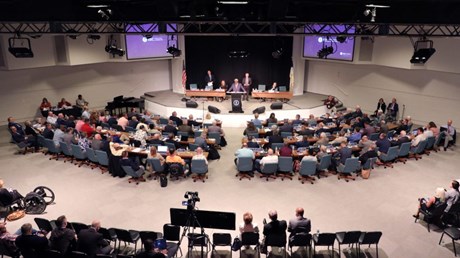
As controversy escalates surrounding an investigation into mishandlings of sexual abuse by the Southern Baptist Convention’s Executive Committee (EC), pastors and state conventions are calling on the committee to finally vote to waive attorney-client privilege at its upcoming meeting.

In official statements and social media threads, Southern Baptists condemned trustees’ failure to heed the directive of the messengers in the EC’s two previous meetings, and many threatened to withdraw giving or redirect monies.

“Should the Executive Committee fail to comply, we will lead our churches to consider how to reallocate funds away from the Executive Committee while continuing to fund the cooperative mission and education endeavors that have always made Southern Baptists great,” read a statement from South Carolina pastors. Among its signatories were two Executive Committee trustees and a member of the task force overseeing the investigation.

David Sons, one of the trustees who signed the statement, told CT that it was born out of a concern for the “egregious nature of the accusations” and worries that Southern Baptist polity is being violated.

“The EC has a responsibility to carry out, to the best of our ability, the will of the messengers,” Sons said. “Not to tell the messengers why we can’t, or won’t, comply.”

Withholding or reallocating funds “shouldn’t be used as a threat,” he added, “but [it] can be done as a last resort to express to an entity that they have violated the trust of the messengers.”

In June, 15,000 convention messengers overwhelmingly approved a motion to launch the investigation, conducted by a third-party and ...

Continue reading...


from Christianity Today Magazine https://ift.tt/3uGL2mI

Post Without Ceasing? How Social Media Reshapes Our Prayer Lives

Interceding on Instagram may seem like a uniquely 21st-century phenomenon, but Christians in the first century were already praying at a distance.

Thousands of people have prayed for Sarah Walton. Most of whom she has never met.

In the past ten years, Walton, the best-selling coauthor of Hope When It Hurts, has suffered through chronic illness, multiple surgeries for a debilitating foot injury, financial stress stemming from her husband’s job loss, and a cross-country move with four children who also have significant health conditions and special needs.

Every day, her social media channels ping with notifications that her friends are interceding for her.

“When I log on to Facebook or Instagram, I see people from around the country saying they are praying,” she told me. “They leave praying hands emojis. They send DMs with specific things they’ve prayed that morning.”

Walton’s praying friends are not all her friends in the traditional sense—she has never shared a coffee or a face-to-face conversation with many of them—but they are fellow Christians who care enough to ask God for Walton’s healing.

In an online age—and especially during a pandemic that has moved many interactions to virtual platforms—Walton’s experience is not unfamiliar. Most of us have seen a social media prayer request for someone, and many of us have taken a moment to pray.

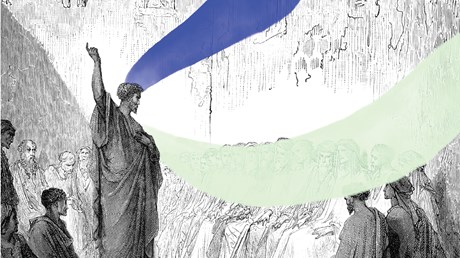
Interceding on Instagram may seem like a uniquely 21st-century phenomenon, but people were already praying at a distance in the first century. As his letters testify, the apostle Paul made a regular practice of praying for people he wasn’t with—and sometimes even for people he had never met.

Social media is an imperfect tool for prayer; its superficial and ephemeral interactions don’t readily lend themselves to the hard work of spiritual wrestling. ...

Continue reading...


from Christianity Today Magazine https://ift.tt/3j8UCug

Saturday, 2 October 2021

How a Jewish Evangelical Won Trust with Arab Muslim Leaders

Apocalyptic fiction writer Joel Rosenberg’s new book describes his behind-the-scenes interactions with crown princes and presidents in search of peace and religious freedom.

Fans of Joel Rosenberg’s Middle East apocalyptic fiction can now read his real-time account of real-world peace.

Through behind-the-scenes meetings with kings, princes, and presidents, the Jewish evangelical and New York Times bestselling author had an inside scoop on the Abraham Accords.

For two years, he sat on it.

His new nonfiction book, Enemies and Allies: An Unforgettable Journey inside the Fast-Moving & Immensely Turbulent Modern Middle East, released one year after the signing of the normalization agreement between Israel and the United Arab Emirates (UAE), finally tells the story.

During an evangelical delegation of dialogue to the Gulf nation in 2018, the Crown Prince of Abu Dhabi, Mohammed bin Zayed (MBZ), told Rosenberg of his groundbreaking and controversial plans—and trusted the author to keep the secret.

Named after the biblical patriarch, the accords were Israel’s first peace deal in 20 years. In the five months that followed, similar agreements were signed with Bahrain, Sudan, Kosovo, and Morocco.

Might Saudi Arabia be next? Mohammed bin Salman’s (MBS) comments to Rosenberg remain off the record. But asked if his reforms might include building the kingdom’s first church, the crown prince described where religious freedom falls in his order of priorities.

Enemies and Allies provides never-before-published accounts of Rosenberg’s interactions with these leaders, in addition to Egypt’s President Abdel Fattah al-Sisi and Jordan’s King Abdullah. Included also are exchanges with former president Donald Trump and vice president Mike Pence.

CT interviewed Rosenberg about navigating politics and praying in palaces and about whether he would be willing to lead similar evangelical ...

Continue reading...


from Christianity Today Magazine https://ift.tt/2YkE1Mj

Friday, 1 October 2021

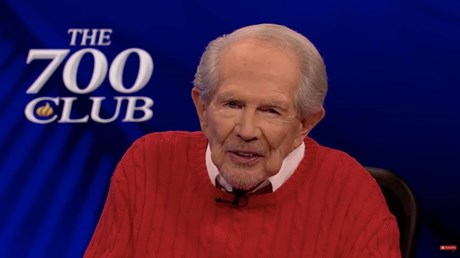
Pat Robertson Retires from The 700 Club at 91

The outspoken host and pioneering Christian broadcaster has been the face of CBN since its founding 60 years ago.

After decades of offering Christian viewers his commentary on natural disasters, 9/11, AIDS, pot, divorce, diplomacy, plastic surgery, homosexuality, Islam, secular colleges, the end of the world, critical race theory, and a range of other moral issues, Pat Robertson has signed off as host of The 700 Club.

On the 60th anniversary of the Christian Broadcasting Network (CBN), its 91-year-old founder announced that he would be stepping down and that his son, Gordon Robertson, would take over as full-time host of its flagship talk show.

Robertson, also the founder of Regent University and the Christian Coalition, has been a pioneer in evangelical broadcasting over the decades. He launched CBN as the country’s first Christian network in 1960, and CBN has grown to air in 174 countries and 70 languages. It added a 24-7 news channel in 2018.

At the helm of the Virginia-based network, Robertson was ambitious and creative, believing that CBN could grow to a place alongside major channels and thus have a greater impact for the kingdom.

As CT reported in 1982, “CBN began replacing pulpits and King James English with Johnny Carson-style sofas and soap-opera vernacular. Its anchor show, The 700 Club, assumed an upbeat, magazine format, complete with news spots from Washington, D.C. Other programs resemble familiar TV Guide lineups, with a top-quality soap opera, early morning news and chatter, a miniseries on pornography, Wall Street analyses, and entertainment for children.”

But particularly in the past couple decades, the long-running host became known for controversial declarations on politics and prophesy, which stirred even fellow evangelicals.

When Robertson called on the US to assassinate Venezuelan president Hugo Chavez ...

Continue reading...


from Christianity Today Magazine https://ift.tt/3D1Z4Cb

‘The Jesus Music’ Is a Love Letter to Fans

But like the CCM industry, it speaks an insider language.

I have a memory of being five or six years old and helping my mom prepare for a party with Amy Grant’s album Heart in Motion playing in the background. I knew (and still know) all the words to “Baby, Baby” and “Good for Me.” When I got married, my three sisters sang a parody of her song, “Lucky One” at the reception.

I know every song on Steven Curtis Chapman’s Speechless by heart. I saw DC Talk in concert at eight, tagging along with a friend whose parents led youth group. In high school, I worked in the music department of a Christian book store.

In other words, I grew up on Christian Contemporary Music (CCM).

The Jesus Music, a new film directed by Jon and Andrew Erwin about the rise of the genre, was made for me and for people like me—whose musical and spiritual worlds were formed and influenced by the music, musicians, and subculture of CCM. I enjoyed revisiting the music my parents and I played on repeat during the ’80s and ’90s, and I suspect that many viewers like me will as well. Viewers like me.

“This music,” musician Joel Smallbone (of the band For King & Country) says in the opening line of the trailer, “offers people a sense of hope and a sense of togetherness and a sense of joy, maybe that they’ve not experienced.”

That’s a sweeping claim, one echoed on the film’s website, which refers to the “universal power of music from these artists.”

Is this music really for anyone and everyone? Can everyone find in it a sense of hope, joy, or togetherness? No. Music isn’t a universal language, and the music featured in The Jesus Music comes from a brief fifty-year window and a small group of artists ...

Continue reading...


from Christianity Today Magazine https://ift.tt/3irA27B

Shame Is Often Toxic and Harmful. Sometimes, It's Just What We Deserve.

A Christian philosopher pushes back on attempts to rid ourselves of this unloved emotion.

As a schoolmaster at an English prep school in 1933, the American poet W. H. Auden was sitting with three fellow teachers when, out of nowhere, he found himself overwhelmed by the sense that their existence somehow had infinite value.

In a dramatic way, Auden was recognizing a truth that even most non-Christians affirm: Human beings possess an inherent dignity that can’t be reduced to dollars and cents. In a Christian understanding, human life has a pricelessness. People are made in the image of a God who loves them infinitely.

Yet to say that we have intrinsic moral worth is not to say that we are morally good. Malcolm Muggeridge once observed that human depravity is at once the most empirically verifiable and intellectually resisted reality. The Christian apologist Clay Jones has written that all of us, in the right circumstances, are “Auschwitz-enabled.” We feel guilty for our wrongdoing, and objectively speaking we are guilty, all of us being sinners who habitually fall short of God’s glory.

The history of moral apologetics includes many analyses of human guilt—this feeling of transgressing a moral standard or law, something each of us does with disappointing regularity. Closely related to guilt is its often-neglected sibling shame, whose dynamics Biola University philosopher Gregg Ten Elshof explores in his latest book, For Shame: Rediscovering the Virtues of a Maligned Emotion.

While guilt arises from what we have done, shame arises from who we are (or who we perceive ourselves to be). Guilt can fuel a sense of shame, but so can any number of things unrelated to moral failure, like physical incapacities, social disadvantages, or mistreatment by others. Wherever shame comes from, it can pose ...

Continue reading...


from Christianity Today Magazine https://ift.tt/3B47ubM