Wednesday, 6 October 2021

Hillsong Founder to Plead Not Guilty to Abuse Coverup

Brian Houston will go to court in Sydney over alleged child abuse by his late father.
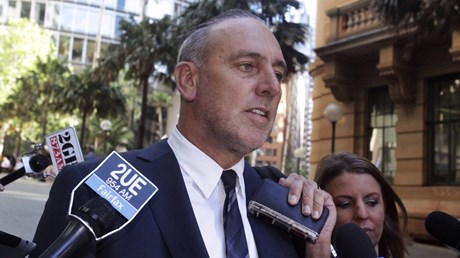
Hillsong Church founder Brian Houston will plead not guilty to illegally concealing alleged child abuse by his father, his lawyer told a court on Tuesday.

Houston did not appear at Sydney’s Downing Center Local Court when his charge was mentioned before a registrar for the first time. His lawyer told the court Houston would be pleading not guilty to the charge of concealing a serious indictable offense of another person, his late preacher father Frank Houston.

The case will next be before the court on November 23.

Police will allege that Frank Houston indecently assaulted a young male in 1970.

Court documents allege that Brian Houston believed his father had committed the crime. Police will allege that the younger Houston failed to disclose information to police that could help secure the prosecution of his father.

Since being charged, Houston has stepped down from the board of Hillsong, the church he founded with wife Bobbie in Sydney in 1983. Now a global empire, the church says 150,000 people in 30 countries attend its services and 50 million people sing its songs each week.

Houston, 64, was in the United States in August when detectives served his Sydney lawyers with a notice for him to appear in court.

He said in a statement at the time he welcomed the “opportunity to set the record straight.”

Houston returned to Sydney last month and was released from 14 days’ hotel quarantine last week.

An Australian government inquiry into institutional responses to allegations of child sex abuse found in 2015 that Houston did not tell police that his father was a child sex abuser.

The inquiry found that Houston became aware of allegations against his father in 1999 and allowed him to retire quietly rather report him ...

Continue reading...


from Christianity Today Magazine https://ift.tt/3DgQFuF

Why Church Shouldn’t Just Be on Facebook

The reasons worship services should be offline are all too human.

Every week, in the front lobby, the secretary of the church I attended in kindergarten updated the archive of sermon recordings. This was in the early 1990s, so the archive was a spice rack of cassette tapes, with maybe two or three copies for each sermon, in case multiple homebound church members wanted to listen simultaneously.

That sort of care for those who can’t make it to church on Sunday—whether occasionally or long-term, due to old age, chronic illness, or disability—is uncontroversial. Most churches have long since moved past cassettes to a podcast format or YouTube or CDs, but the basic idea of using technology to bring at least the sermon to those who can’t worship in person is here to stay, and so it should be. Though not a sufficient fulfilment of our duties on its own, it’s easily defensible as an outworking of the Christian responsibility to care for the sick (Matt. 25:36), “preach the word” (2 Tim. 4:2), and “look after orphans and widows in their distress” (James 1:27).

But what about conducting church—or, at least, its group worship and teaching—on Facebook? Many congregations tried this or something similar for the first time during the COVID-19 pandemic.

Facebook reported that the week of Easter 2020, when pandemic shutdowns were just becoming widespread was, “the biggest for group video calls on Messenger and the most popular week of Facebook Live broadcasts from spiritual Pages, ever.” People seemed to take quickly to its ways of connecting when separated by COVID-19.

On Facebook, churches can form “groups” or “pages.” They can host chats and post memes that members and followers will see and respond to. ...

Continue reading...


from Christianity Today Magazine https://ift.tt/3limBsk

Interview: William Lane Craig Explores the Headwaters of the Human Race

The philosopher and theologian ventures a new hypothesis on Genesis, human origins, and the historical Adam.

As head of the ministry Reasonable Faith and a prolific writer on topics of philosophy and theology, William Lane Craig has spent decades staking out sophisticated positions on the toughest questions of Christian faith. But for a long time, his beliefs on one controversial topic—the place of Adam and Eve in biblical and biological history—have remained unsettled. Craig considers this matter at length in his latest book, In Quest of the Historical Adam: A Biblical and Scientific Exploration. Science and religion scholar Melissa Cain Travis spoke with Craig about his views on Genesis, human origins, and the historical Adam.

You describe Genesis 1–11 as “mytho-history,” arguing that an ancient-Near-Eastern audience would not have understood this text as a literal historical narrative. How do you define mytho-history, and how does it function in divine revelation?

I’m not using the word myth in the popular sense of a falsehood, but rather in the folklorist’s sense of a traditional, sacred narrative explaining how the world and humanity came to be in their present form. History is a narrative concerning real people and events, and so a mytho-history would be a sort of fusion of the two: a narrative concerning real people and events told in the language of myth in order to ground a culture’s identity and institutions in events of the primordial past.

One reason you support the mytho-history classification is the presence of what you call “fantastic elements” in the text. What are these, and how do they differ from supernatural elements?

I define “fantastic elements” as those which, if taken literally, are so extraordinary as to be palpably false. Myths are typically ...

Continue reading...


from Christianity Today Magazine https://ift.tt/3a9Ouww

Tuesday, 5 October 2021

Southern Baptists Agree to Open Up to Abuse Investigation

Executive Committee decision comes after weeks of heated debate and division.

It took three weeks of scheduled meetings, at least three law firms, dozens of statements, hours of closed-door briefings, and extensive back-and-forth debates across boardooms, social media, and Zoom calls for the Southern Baptist Convention’s Executive Committee (EC) to agree to the terms of a third-party investigation into its response to abuse. But on Tuesday, it did.

The EC voted 44–31 on in favor of waiving attorney-client privilege in the investigation, after a half dozen members resigned and several switched their position in favor of the waiver. For a moment, it felt like the conclusion of a long and heated process, though the decision is only the start of a long investigative process.

EC chairman Rolland Slade, who oversaw the proceedings, expressed his relief after the tally was announced. Then he remarked, “I want to express sorrow over the conduct we have displayed as Southern Baptists.”

For the EC—the denominational body tasked with Southern Baptist business outside the annual meeting—the debate pitted the desire to open fully to the investigation against concerns that such transparency would threaten its financial solvency, insurance coverage, and other fiduciary duties to protect the entity.

As the clash played out, Southern Baptist voices including seminary presidents, state convention leaders, and thousands of pastors spoke out to put pressure on the EC to comply with the requirement to waive attorney-client privilege, which had been approved when the denomination called for the investigation at its annual meeting in June.

“Taking steps towards honesty, transparency, repentance, those are great things. Those are worthy of celebration,” said Georgia pastor Griffin ...

Continue reading...


from Christianity Today Magazine https://ift.tt/3DgTDPM

Generosity Is Liberation

How pastors can teach on money with confidence and conviction.

Money stands right alongside political strife and racial tension as one of the most challenging and complex realities I address from the pulpit as a local church pastor. This is true for many if not most church leaders. We often experience an intrinsic anxiety when it comes to the intersection of formation into Christlikeness and people’s finances.

We find it difficult or uncomfortable to ask people to give to the church for a number of reasons: fear of failure or rejection; fear of being that pastor or that church that’s always talking about money (particularly to those who are newer to our communities); and sometimes just simple, naive idealism, believing that money isn’t an issue for our people or our church. This evasion mirrors the culture at large, where people would rather talk about religion, politics, and even death than money, and over 40 percent of married Americans don’t know their spouse’s income—even though financial discord is one of the top predictors of divorce.

Pastors and church leaders long to help people become more like Christ, but we often limit that longing to the outer peripheries of money. The problem is that the Bible seems to care a great deal about that very intersection of formation and finances.

Consider these passages: “No one can serve two masters. Either you will hate the one and love the other, or you will be devoted to the one and despise the other. You cannot serve both God and money” (Matt. 6:24). “For the love of money is a root of all kinds of evil. Some people, eager for money, have wandered from the faith and pierced themselves with many griefs” (1 Tim. 6:10). “Keep your lives free from the love of money and be content ...

Continue reading...


from Christianity Today Magazine https://ift.tt/3FnH6Me

How Prayer and Science Prepared Palm Beach Atlantic’s New President for the Pandemic

After months of leading the school and holding Zoom calls with isolated students, Debra Schwinn will finally celebrate her inauguration.

At 5 p.m. every day, students in quarantine at Palm Beach Atlantic (PBA) University get a Zoom call.

The face that pops up on the screen is their school’s new president, Debra Schwinn, checking in on them.

The calls, which ran the entire 2020–2021 school year and have continued this fall, last about 20 minutes. Schwinn chats with the students about how they are doing, prays with them, and offers bits of motherly advice.

For Tom St. Antoine, the faculty representative on the committee that chose Schwinn to be the new leader of the university back in January 2020, it’s a perfect example of the personal approach she has taken since becoming president at the start of the pandemic.

“That just sends such a statement for the president to take time to build relationships and to get to know those students one by one,” he said.

Schwinn’s inauguration was delayed by COVID-19. The ceremony will be held on October 8, but she’s already spent more than a year and a half demonstrating her leadership in trying times at the Florida university with about 2,100 traditional undergraduates, 400 masters students, 350 professional students, and 200 adult students who take evening classes.

Schwinn was not planning to be a pandemic president, but when she thinks about how everything happened, she can’t help but see God’s hand in bringing her to the school: “I think God’s timing was perfect.”

The call to Palm Beach came before COVID-19 was even being talked about.

Schwinn was working as the associate vice president for medical affairs and professor of anesthesiology, pharmacology and biochemistry at the University of Iowa when she got the job offer. She and her husband, Bob, went to a ...

Continue reading...


from Christianity Today Magazine https://ift.tt/2ZXBZT0

Monday, 4 October 2021

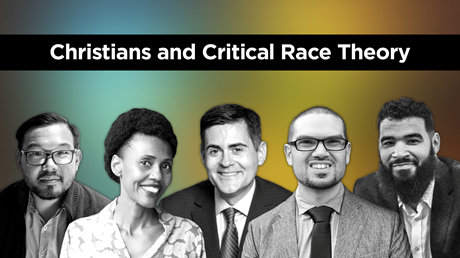
Christians and Critical Race Theory

A webinar about the facts, falsehoods, and theological implications of critical race theory—and the way forward for the church.

With hysteria and misinformation swirling all around it, critical race theory has become nearly impossible to discuss without stirring up ideological fears and partisan divisions. Yet many believe its ideas must be responded to if the church is ever going to take seriously issues of diversity, justice, and racial reconciliation.

Join Christianity Today’s Russell Moore and a diverse panel of evangelical leaders as they explore the facts, falsehoods, and theological implications of critical race theory.

Our Panelists

Nathan Cartagena

Nathan is an assistant professor of philosophy at Wheaton College, where he teaches courses on race, justice, and political philosophy. Nathan also serves as scholar-in-residence for World Outspoken, an organization committed to equipping Latin@ churches for godly living. He is currently writing a book about critical race theory with IVP Academic. Read his writings at nathancartagena.com, and follow him on Twitter @ProfeNLC.

Oneya Fennell Okuwobi

Oneya is a sociologist and junior fellow at Rice University’s Religion and Public Life Program. Her research interrogates how diverse organizations impact racial inequality. She is an ordained Assemblies of God minister and serves as teaching pastor at 21st Century Church, a church plant in Cincinnati, Ohio. She is also coauthor of Multiethnic Conversations: An Eight-Week Journey Toward Unity in Your Church. Oneya is a graduate of the University of Virginia (BA, Economics), Regent University (MDiv, Practical Theology), and The Ohio State University (PhD Sociology). She and her husband, Dele Okuwobi, have one daughter, Cadence. Find Oneya on Twitter @Ookuwobi or at Oneyaokuwobi.com.

Jeff Liou

Jeff serves on staff with InterVarsity Christian Fellowship ...

Continue reading...


from Christianity Today Magazine https://ift.tt/3uFZKKn