Monday, 12 December 2022

State Finds ‘Substantial Evidence’ of Retaliation at Illinois Church

A firing at Dane Ortlund’s Naperville Presbyterian Church spurred a rare legal determination that could be a useful case study for churches.
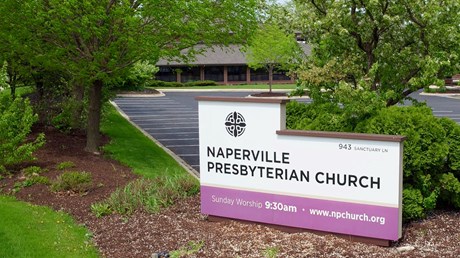
A 2021 firing of a female staff member from a Chicago-area church led by pastor and author Dane Ortlund was determined to have “substantial evidence” of retaliation, according to an investigation into alleged discrimination by the state of Illinois.

The former director of operations at Naperville Presbyterian Church, Emily Hyland, said her termination came days after privately complaining to two elders about gender discrimination from Ortlund. At the time, she had worked at the church for eight years, and he had been senior pastor for six months. After her firing, she filed charges over gender discrimination and retaliation at the state agency.

The Illinois Department of Human Rights (IDHR) did not find evidence that the church or Ortlund discriminated against her based on her gender. Evidence shows that “Ortlund … never made any discriminatory remarks directly related to [Hyland’s] sex,” the report said, nor was there evidence of discrimination that rose to the level of a “hostile work environment.”

But the agency found “substantial evidence” that she was fired “in retaliation for having engaged in prior protected activity.”

Even if there is no “actionable” discrimination found, employers cannot retaliate against an employee for making a report, said employment lawyer Ed Sullivan.

Ortlund, a pastor in the Presbyterian Church in America, is the author of Gentle and Lowly, a bestseller. A longtime member of the Naperville congregation, he became its pastor in October 2020, with Wheaton College president Philip Ryken leading the installation.

Ortlund declined to comment to CT on the allegations, but in the state filing, the church said that Hyland ...

Continue reading...


from Christianity Today Magazine https://ift.tt/LzeapPR

Facing Challenges, Chinese Churches in Europe Look to the Future

Ministries are starting to reach out beyond the diaspora community and pass the faith onto the next generation.

It’s early morning in the small tourist town of Cordoba in Spain. Eugenio Peña, a 76-year-old local, arrived at the Good News Charity Service Center at Platero Pedro de Bares and Carlos III Avenue, ready for his volunteer work at the “Charity Cafeteria” that offers free breakfast to refugees and homeless people. The Center is a ministry established and run by a small Chinese church in Cordoba.

Christian charities run by Chinese churches are extremely rare in Europe. Chinese churches only occupy a small fraction of Europe’s Christian landscape. Ivan Tao, a missionary who has served in the region for two decades, estimated that while there are three million Chinese immigrants in Europe, there are only 350 Chinese churches (including Bible study groups and Christian fellowships) and 200 full-time Chinese preachers.

The lack of churches to worship at isn’t the only problem that Chinese Christians are facing. Many Chinese churches in Europe are also trying to overcome challenges such as a “hometown association” mentality, a commercialist attitude toward church life, and difficulties in transmitting the faith to the younger generation.

Where your treasure is

In Spain, 90 percent of Chinese Christian immigrants are businessmen who have moved overseas with the primary goal of making money. Most hail from Wenzhou and Qingtian in Zhejiang Province and other cities in Fujian Province, which are cities well-known for their local peoples’ tendency to choose immigration over poverty.

The Chinese immigrant church community typically functions as an extended social network for Chinese Christians outside of their families. Even the leadership team of the church has geocentric characteristics: ...

Continue reading...


from Christianity Today Magazine https://ift.tt/rHzNeAP

Friday, 9 December 2022

King Solomon’s Advice to Americans in 2023

Thirty proverbs on power, justice, and politics.

The Book of Proverbs can be a humbling or even humiliating read. For every verse that lulls us into self-satisfaction of our righteousness comes another that aims its arrows at our own hearts too.

That incisive wisdom is particularly sharp when applied to election-year politics and our personal habits of political engagement. It’s uncanny enough to make us wonder whether King Solomon had foreseen cable news and Twitter. With another presidential election already underway, here are 30 proverbs for American politics in 2023.

On power

Proverbs doesn’t often directly address the subject of power, which is especially surprising for writings largely attributed to kings. Its authors envisioned a divinely appointed monarchy, a form of government far afield from our system, in which “many rulers” is not the result of rebellion (as in Proverbs 28:2) but constitutional design.

Yet that’s not to suggest the book has nothing to say of power as it works in our political context—far from it. Proverbs cautions us to be humble about our resources and abilities, to avoid grasping at power, and, if we find it in our hands, to remember it is often fleeting. Power can corrupt those who wield it, so we must take care to wield it justly.

Proverbs 16:32

Better a patient person than a warrior,
one with self-control than one who takes a city.

Proverbs 27:1, 24

Do not boast about tomorrow, and a crown is not secure for all generations.

Proverbs 31:4–5

It is not for kings, Lemuel—it is not for kings to drink wine, not for rulers to crave beer, lest they drink and forget what has been decreed, and deprive all the oppressed of their rights.

On tricks and transactions

We tend to think of political debates as arguments ...

Continue reading...


from Christianity Today Magazine https://ift.tt/QgW5J1t

Hallelujah! ‘Messiah’ Sing-Alongs Turn Audience into the Choir

The centuries-old tradition has returned to community theaters after a pandemic hiatus.

If you attend this year’s performance of Handel’s Messiah by the Des Moines Community Orchestra, you’ll walk into the sanctuary of Grace United Methodist Church and notice the orchestra, of course. But there’s no choir.

Isn’t Messiah famous for the exhilarating “Hallelujah” chorus? What about “For Unto Us a Child Is Born”?

This time, the choir is you—the audience, that is. You can borrow a score, and there are even markings among the seats to divide the audience by vocal part—soprano, alto, tenor, and bass, though sitting in your section is optional.

Messiah sing-alongs, also known as “Scratch Messiahs,” are a long-standing tradition in the United Kingdom and United States, dating back to the first half of the 19th century. Attendees get to step in and cocreate a centuries-old musical work that tells the story of Christ’s life from incarnation to resurrection.

For the Des Moines orchestra and many other community groups and ensembles around the country, this year is bringing a return of the tradition after a two-year pandemic hiatus.

“There’s nothing like conducting it,” said Carl Johnson, the conductor of the Des Moines Community Orchestra for the past 20 years. “It’s so big and powerful. And you look out at the audience, the looks on their faces … that’s worth it.”

Handel’s Messiah premiered in Dublin on April 13, 1742, as a charity concert benefiting two hospitals and prisoners’ debt relief. Although the work is now associated with Christmas, it is historically linked to Easter: Handel conducted annual Easter performances of Messiah at the Foundling Hospital in London beginning in ...

Continue reading...


from Christianity Today Magazine https://ift.tt/A6PGj2g

Thursday, 8 December 2022

Taiwan’s False Hope for Hong Kongers Disillusions Fleeing Christians

How a church is enduring uncertainty and disappointment as many struggle to find a home.

Since Wong Siu-yung opened a church for Hong Kong Christians in Taiwan last year, it attracted more than three dozen attendees. But in that time the only Cantonese-speaking church on the island has faced significant turnover.

A few congregants returned to their previous residence. But most of the 10 who departed moved to the United Kingdom.

“I watched them all give up and leave Taiwan,” Wong said. “Relocating for the second time in such a short period of time is very difficult.”

This week, Wong himself joined the exodus. The 48-year-old pastor boarded a flight Thursday to Nottingham, England, hopeful about making a new home more than 6,000 miles away. This wasn’t a journey Wong had anticipated when he left Hong Kong for Taiwan in July 2020. At the time, his involvement in the 2019 pro-democracy protests had made him a potential government target, so he decided to leave his homeland immediately.

Taiwan initially promised to provide “settlement and care” to thousands of Hong Kongers like Wong. But in the months since, the government has made it increasingly difficult for Hong Kongers to gain permanent residency, preventing many from working and settling on the island. Government officials fear that allowing Hong Kongers to resettle in Taiwan could provoke China and open the door to Chinese Communist Party (CCP) infiltrators.

Wong and his congregation have faced roadblock after roadblock: After selling their homes in Hong Kong, quitting their jobs, and pulling their kids out of school, they arrived in Taiwan to find the requirements to gain residency changed and their cases stuck in limbo. “Hong Kongers have fallen for [the Taiwanese government’s] great scam of the century,” ...

Continue reading...


from Christianity Today Magazine https://ift.tt/V63z9g0

Wednesday, 7 December 2022

Come Thou Long Expected Judgment

Advent prepares us for the Incarnation, but also for the gift of God's final justice.

A few days ago, I walked into a New Age, vegan grocery store in my Austin neighborhood and noticed something strange: an Advent calendar for sale. As far as I can tell, the store owners have not suddenly become interested in readying their customers for the feast of the Incarnation.

The awkward presence of the Advent calendar in a store devoted mostly to the healing power of mushrooms and crystals is part of the larger secularization of the season of Advent, now purring along to the same commercial hum as secular Christmas. The plethora of Advent calendar themes—from Legos, bath bombs, and teas, all the way up the price scale to Tiffany jewelry—indicates that the season has been overtaken in the long consumerist march from Black Friday to Christmas Day.

I’m not opposed to Advent calendars per se . Of the three “comings” of Christ—the Incarnation, his arrival by the Holy Spirit in the church, and his final coming as king and judge—Advent calendars can help us with the first two. But not the third. Yet, as Fleming Rutledge and others have written, it’s precisely Christ’s third advent that has always been the primary focus of this season of the church calendar. He will return “to judge the living and the dead,” as the Apostles’ Creed says.

When the early Christians began to pray, fast, and give alms in the four Sundays before Christmas, they were mostly preparing themselves to receive in glory the One who had first become their savior in the manger.

From the fourth century onward, hope for the coming judgment of Christ was embedded in the shape of the season. Advent hope is preeminently about hope for the return of Jesus. Even now, ...

Continue reading...


from Christianity Today Magazine https://ift.tt/VsJoXzF

Tuesday, 6 December 2022

5 Signs of Christian Revival in Europe

As a missionary to this “prodigal continent,” here's how I see church planting, the prayer movement, and diaspora churches making a difference.

Post-Christian. Secular. A prodigal continent. These are some of the words often used to describe Christianity in Europe.

Yet, a growing number of voices believe God is not done with Europe.

“Renewed spiritual hunger, new stirring of prayer, fresh expressions of the church, [and] migrant churches restoring faith” are signs of hope in our continent today, writes former Europe YWAM director Jeff Fountain.

Could it be that, in the midst of this spiritual desert, God might be springing new streams of living waters, or even seeds for revival?

It would certainly not be the first time that God changes the narrative of a continent.

Only decades ago, Protestants described Latin America as a mission field. Today, it's become a mission force, and the Brazilian church sends the second most missionaries in the world. In 1900, Africa was home to about nine million Christians. Who could ever have imagined that by the 2020s there would be half a billion Christians on the continent?

But the missional challenges for Christians in Europe are overwhelming.

“Europe is one of the toughest regions in the world in which to bear witness to Christ. The combination of the three-headed monster of secularism, pluralism and materialism make Christian witness difficult across the Continent,” says Lindsay Brown, former general secretary of IFES (International Fellowship of Evangelical Students).

The old continent has a complex and unique history with the Christian faith.

“No other continent has been exposed to Christianity for such a prolonged period and in such an extensive way,” wrote Jim Memory, the Lausanne Europe co-regional director, in the Europe 2021 Missiological Report. “Yet just as Europe was the first continent ...

Continue reading...


from Christianity Today Magazine https://ift.tt/pgUAhM5