Wednesday, 5 April 2023

In Nashville, Death Hangs Over Our Doorways

But our community also feels covered by the shadow of God’s presence.

On March 27, I dropped my kids off at their schools in Nashville. My youngest, who goes to preschool three days a week at The Covenant School, was home with me that day. As I drove home in the spring sun, I turned on a morning prayer meditation and heard Jesus’ words over my car speakers: “I am the light of the world. Whoever follows me will never walk in darkness but will have the light of life” (John 8:12).

As I listened, I pondered this paradox of light and dark and wondered how Christians are supposed to live into it during hard circumstances. Psalm 23 assures us that we can walk through the valley of the shadow without fear. Psalm 91:1 says we “rest in the shadow of the Almighty.” Different parts of Scripture reference this unique contrast: We walk in the shadow of death, yet in Christ, we’re covered by God’s protective shadow. Even in darkness, the only shadow over us is his.

At 10:18 a.m. that morning as I was thinking about these ideas, I received a text from my husband at his office at Covenant Church saying, “Pray for Covenant right now.” In the 10 minutes that followed that message, the terrifying shooting at our church and school unfolded. Fear and uncertainty gripped me, and as I prayed, my morning meditations became immediately and stunningly personal to our community. The shadow of death invaded our hallways, ushering in chaos that we haven’t yet been able to make sense of.

Since those moments, I have found few words to pray. But I have looked to the Psalms for comfort: “Be merciful to me, O God … for in you my soul takes refuge; in the shadow of your wings I will take refuge, till the storms of destruction pass ...

Continue reading...


from Christianity Today Magazine https://ift.tt/kcI9dyD

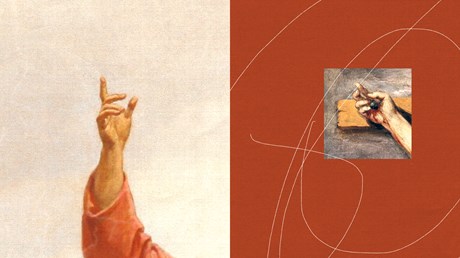
What Christ Accomplished Before ‘It Is Finished’

Don’t diminish Jesus’ ministry in your celebration of his work on the cross.

Good Friday services were well celebrated within my Afro-Baptist ecclesial tradition. And unlike liturgical settings, where gathered worshipers depart from the service in silence to await the jubilant praise of Easter Sunday, our Good Fridays were often the most energetic services of Holy Week. They were also the zenith of each preaching year and usually featured sermons on Christ’s seven last words.

Many of us have heard a sermon preached on the sixth word, “Tetélestai!,” which is commonly translated into the English phrase “It is finished!” It is one of the few transliterated Greek verbs many believers are familiar with. On that dark day, Jesus shouted this word from the cross shortly before giving up his spirit—conveying the hope of Good Friday.

Tetélestai comes from the Greek verb teleō. In most ancient Greek contexts, the verb means “to finish, accomplish, or complete.” We rightly view this proclamation as Jesus signaling that his death has satisfied the wrath of God fully and forever—that he alone has accomplished the work of atonement, of redemption, and of mediating the way to God.

This statement seems to be the peak of John’s presentation of the salvation story—the time to play the Hammond organ, grab the tambourines, lift holy hands, and sing “Hallelujah,” for Jesus has paid it all!

But there is another moment in John’s Gospel where Jesus states he has finished his work: just one day earlier, on Maundy Thursday—a day that was foreign to me before I stepped into my first pastorate.

Although my childhood church held revival services throughout Holy Week, there was no event held to celebrate the fifth day. And even when ...

Continue reading...


from Christianity Today Magazine https://ift.tt/OvL6Cf9

Seven-Hour Oratorio Sings the Gospel of Mark Word for Word

If any man have ears to hear, let him hear: “The KJV actually sang quite well.”

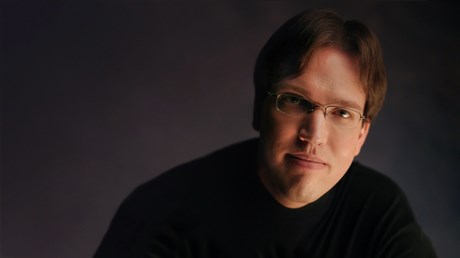
When composer Christopher Tyler Nickel set out to create an oratorio of Mark’s gospel, he made an ambitious decision to set not just the narrative but the whole text to music, word for word.

The resulting work is an expansive, seven-hour musical. Nickel’s composition leads the listener through Mark’s account of Jesus’ ministry, sculpting and shading the story through the use of voices, timbre, theme, and meter.

As many Christians around the globe observe Holy Week, The Gospel According to Mark offers a musical addition to the canon of artistic meditations on the suffering, death, and resurrection of Christ. The work will be released in its entirety on Good Friday by Avie Records, and excerpts are available in three EPs: Salvation, Prophecy, and Death and Resurrection.

Nickel’s composition contributes to a genre with historical roots dating back to the 17th century; Handel’s Messiah is one prominent example of a sacred oratorio, as is Bach’s St. Matthew Passion. Besides its length, The Gospel According to Mark differs from these older works in its exclusive use of the gospel text, without poetic elaborations or additions.

Nickel’s work invites listeners to meditate on the gospel text and open themselves to the ways that the marriage of the music and Scripture might move their emotions.

The conclusion of the work, “The Ascension and Amen” (Mark 16:19–20, KJV), isn’t a glorious crescendo or grand chorus. The orchestra and voices weave together, swelling and retreating as the amen repeats over and over, accompanied by deliberate and steady open chords. The voices and instrumentation subtly, peacefully fade away.

The passage “leaves the listener with an unfinished ...

Continue reading...


from Christianity Today Magazine https://ift.tt/05IVQBE

Tuesday, 4 April 2023

In Times of Tragedy, I Find Solace in Scriptural Art

As the world reels from yet another school shooting, we can find a refuge in the Bible on canvas.

As a pastor serving a local church near my alma mater, Michigan State, I was invited to stand at a listening post along with comfort dogs the day after last month’s shooting.

Campus was unnervingly empty as yellow barricade tape flapped in the breeze, restricting our access to the buildings. Clusters of candles marked where each of the three victims had died—while a lone undergraduate student ran back and forth with a lighter trying, hopelessly, to keep them all lit.

Although campus was devoid of students, it was thronging with media crews and reporters. Everyone who was usually on campus had gone home to mourn, while those from outside had come in to gaze at us through their camera lenses and television screens—inviting the public eye to witness private moments of pain and hurt in our community.

A similar spectacle is playing out right now at the Covenant Christian School in Nashville, Tennessee—as it has at schools in Uvalde, Texas; Oxford, Michigan; and MSU. And the same scene will play out at the next mass shooting, an occurrence that seems mercilessly inevitable.

There is something real and peculiar about the human fascination with looking at pain and hurt, crisis and tragedy. For centuries, people have made pilgrimages to the theater to watch Hamlet hold up a skull or to see the misfortunes that befell Desdemona, Emilia, Roderigo, and Othello. More commonly, the highway becomes a stage whenever traffic slows to stare at a car accident.

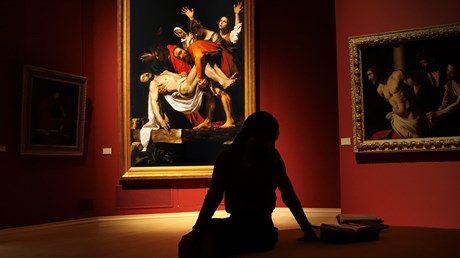
Tragedy is magnetizing. And yet, it can also be healing. In times of personal pain and hurt, I have found solace in religious art depicting tragedy. It has helped me contemplate the raw pain of human life.

When my wife and I experienced multiple miscarriages, William-Adolphe ...

Continue reading...


from Christianity Today Magazine https://ift.tt/WXcVylu

Syria Has Six Months to Receive Your Earthquake Aid

US waiver temporarily allows for funds to bypass sanctions against the Assad government. Christian charities experience mixed results.

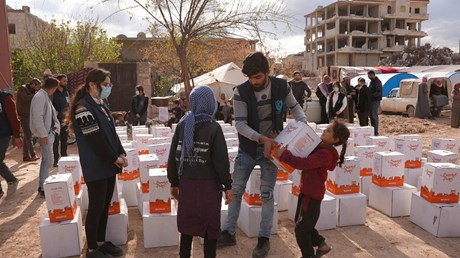
Syria has been suffering for 12 years, plagued by civil war, jihadist violence, foreign occupation, and autocratic governance. Yet widening US economic sanctions have made it increasingly harder to help—until now.

A February waiver offers a 180-day window for earthquake relief.

“If God has put it on your heart to give to Syria, be generous,” said Nabil Costa, executive director of the Lebanese Society for Educational and Social Development (LSESD), also known as the Baptist Society. “Find trusted organizations, because it is not easy to get it to the right place.”

On March 10, the World Evangelical Alliance (WEA) joined the World Council of Churches (WCC) and Catholic charity Caritas to detail the “chilling effect” sanctions have on the ability of faith-based and other NGOs to transfer money and goods to struggling Syrians. Most banks have deemed such transactions too risky to facilitate.

Therefore, unlike in neighboring Turkey, the February 6 earthquake was not followed by an immediate outpouring of international aid. Despite a death toll of 6,000 and an estimated 500,000 more displaced amid the rubble, United States and European Union policy—and distrust of the Bashar al-Assad government—prevented most nations and international humanitarian organizations from rushing to the scene.

A false step could result in a $1 million fine and 20 years in prison.

US sanctions against Syria began in 1979 with a declaration that it was a state sponsor of terrorism, and tightened in 2004 for its undermining of the war in Iraq. In 2011, Syria’s repression of civil protest resulted in additional sanctions, subsequently strengthened throughout its civil war—especially after the ...

Continue reading...


from Christianity Today Magazine https://ift.tt/nIVlaei

Monday, 3 April 2023

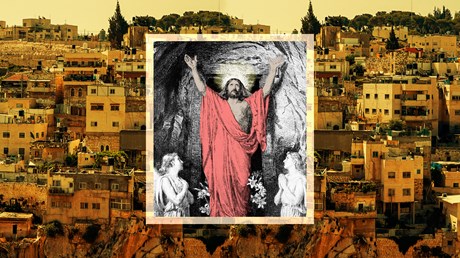
Why Jesus’ Resurrection Is So Important to Palestinian Christians in Israel

The dawning of a new kingdom heralds hope for reconciliation and relief from oppression.

During Holy Week, we consider how the Cross reconciles humanity with God. But for Palestinian Christians living in Israel who face oppression and discrimination on a regular basis, the Resurrection and its power to reconcile Jews and Gentiles offers them the greatest hope.

“The resurrection of Christ is the ultimate proof that the world can be changed,” said Palestinian Israeli theologian Yohanna Katanacho.

Palestinian Christians celebrate Easter on both Eastern and Western dates. Approximately 160,000 Palestinian Christians currently hold Israeli citizenship, and around a third of them live in the West Bank and Gaza.

Katanacho was born in 1967 and grew up amid the decades-long Arab-Israeli war that stoked hatred and enmity between Jews and Arabs. The former proponent of atheism accepted Christ at the age of 19 and is now the academic dean and biblical studies professor at Nazareth Evangelical College in Israel.

Katanacho’s book, Reading the Gospel of John through Palestinian Eyes, explores John’s reinterpretations of traditional Judaism in light of Christ. “John sees that having Christ is the biggest blessing ever, and without Christ, we have nothing (John 3:36). As a result, space, time, history, identity, and land are reread in light of the centrality of Christ,” Katanacho said.

Global books editor Geethanjali Tupps spoke with Katanacho about the significance of the Easter resurrection for Palestinian believers and how his reading of John’s gospel challenges the global church.

How did you become a believer?

My family was Roman Catholic, but I became an atheist as a teenager. When I was 19, I had a life-changing experience with God. At 3 a.m., I heard the sound ...

Continue reading...


from Christianity Today Magazine https://ift.tt/Ukn34Dv

The Bible Is Literature. It’s Also Your Boss.

We owe to Scripture something we don’t owe any other book: our obedience.

I grew up in a home that prioritized reading. My father was a first-generation college student, and he majored in business to support his family. He allocated a portion of his monthly wages to the Book of the Month club through Easton Press. He and my mom would dine on bologna boats (mashed potatoes and cheese on fried bologna) so that he could afford to receive a great book in the mail each month.

Those leather-bound copies with gilded pages made a strong impression on me as a kid. From those beautiful editions I read The Adventures of Tom Sawyer, Walden, Jane Eyre, and because of their beauty, I knew they were a different sort of reading from my R. L. Stine paperback novels.

Similarly, Christians recognize the Bible as a different sort of book from all other books. While God may inspire an artist, or the Holy Spirit draw a reader toward a divine revelation through art, the Bible is more than a mere literary experience.

Recognizing the Bible as literature opens us up to a fuller appreciation of the holy book than if we treat it like an instruction manual or to-do list. It is a bibliography of genres, including poetry, song, lament, prophecy, history, narrative, parables, letters, dreams, and so forth. We should practice reading to enjoy the fullness of that literary experience.

However, as a book divinely authored by God, the Bible also stands apart from all literature penned by human authors. God inspired human writers to pen the words, but God also authorized those pages. No matter what other beauty, truth, and goodness may be found elsewhere, other works of literature lack the authority that Scripture has over Christians.

In Paul’s second letter to Timothy, he assures the young disciple, “All Scripture is God-breathed ...

Continue reading...


from Christianity Today Magazine https://ift.tt/h65bzR3