Wednesday, 12 April 2023

Making Haste Slowly in Our Walk With God

In these hurried times, Christians are called to a steady journey of faith.

I have met with but one or two persons in the course of my life
who understood the art of Walking, that is, of taking walks—
who had a genius, so to speak, for sauntering.
—Henry David Thoreau, “Walking”


The restless, distracted energy of our technological age has risen to a fever pitch. With each advancement, we are bound closer together into a collective fragmentation without intimacy.

The loneliness and relational divides that flow back to the beginning of recorded history are being amplified rather than silenced. We engage in everything from religious practices, mindfulness, yoga, and exercise to television, sex, food, drink, and drugs. We do all this to escape.

As Don DeLillo wrote in his brilliant and funny novel White Noise, “That’s why people take vacations. Not to relax or find excitement or see new places. To escape the death that exists in routine things.”

The forsaken God has entered into and dealt with this cosmic loneliness, yet often followers of the crucified King are just as lonely as the rest. What is missing?

There is a classical adage that might prove helpful: festina lente, which means to “make haste slowly.” A crab and butterfly first symbolized this saying. Its meaning lies in the paradox that existence is not meant to be static or careless but defined by conscientious and careful movement.

As one who leans into life with a relatively free-spirited disposition, when I look at the crab-and-butterfly image, I find myself uneasy at the way the butterfly seems held back by the crab’s clamp on her wings. But that tendency has led me to make many grievous errors throughout my 48 years of life. The crab is a necessary reminder ...

Continue reading...


from Christianity Today Magazine https://ift.tt/V3DycaW

How Bethel and Hillsong Took Over Our Worship Sets

“If you have ever felt like most worship music sounds the same, it may be because the worship music … is written by just a handful of songwriters.”

On Easter Sunday, the worship band at Bethel Community Church in Redding, California, opened the service with “This Is Amazing Grace,” a 2012 hit that has remained one of the most popular worship songs of the past decade.

Chances are thousands of other churches around the country also sang that song—or one very similar to it.

A new study found that Bethel and a handful of other megachurches have cornered the market on worship music in recent years, churning out hit after hit and dominating the worship charts.

The study looked at 38 songs that made the Top 25 lists for CCLI and PraiseCharts—which track what songs are played in churches—and found that almost all had originated from one of four megachurches.

All the songs in the study—which ranged from “Our God” and “God Is Able” to “The Blessing”— debuted on those charts between 2010 and 2020.

Of the songs in the study, 36 had ties to a group of four churches: Bethel; Hillsong; Passion City Church in Atlanta; and Elevation in North Carolina.

“If you have ever felt like most worship music sounds the same,” the study’s authors wrote, “it may be because the worship music you are most likely to hear in many churches is written by just a handful of songwriters from a handful of churches.”

The research team, made up of two worship leaders and three academics who study worship music, made some initial findings public Tuesday. More details from the study will likely be released in the coming weeks.

Elias Dummer, a worship leader and recording artist, said he and his colleagues have been watching changes in worship music over the past decade. They wanted to know how worship songs become ...

Continue reading...


from Christianity Today Magazine https://ift.tt/ScTiy1x

Tuesday, 11 April 2023

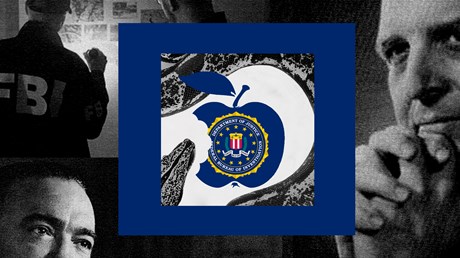
Carl Henry’s Temptation (And Ours)

What we can learn from Christianity Today's troubling history of working with J. Edgar Hoover.

Billy Graham tried.

He preached in the White House the first Sunday after Richard Nixon was inaugurated in 1969, and he tried to preach clearly enough that the new president would hear his message. Graham engaged directly with Nixon’s inaugural address and said Nixon was wrong to rely so much on himself, his own ingenuity, his own goodness. Nixon was wrong when he said, “We need only look within ourselves” to solve the country’s most pressing problems. The president and the American people, Graham preached, should humble themselves, turn, and put their trust in God.

Or at least that is what he meant to say. His critique was so subtle that no one in the East Room of the White House noticed. After the service, they all drank orange juice and coffee and commented how nice it was, winning an election, taking control of the White House, and having a worship service under the famous portraits of George and Martha Washington. They completely missed the call to humility, because Graham couldn’t quite bring himself to make it.

What the founder of CT was really saying is only clear if you look at what he quoted from the inaugural address and then look at what Nixon said next and compare that to what Graham said next and see Graham is directly countering the president. No one did that though, so one noticed. Not even the notoriously sensitive Nixon.

The new president just felt affirmed. Graham’s message was missed. And he kept getting invited to the White House, where he had access to power, as long as he continued to make morally devastating compromises.

The temptation to appease people in power is a strong one. The temptation to compromise for the sake of access isn’t new. For white evangelicals, ...

Continue reading...


from Christianity Today Magazine https://ift.tt/IlVqzB1

Youth Pastors Ditch Gross-Out Games and Help Student Ministry Grow Up

Today’s groups are becoming more integrated with the rest of the church.

In the 1990s and early 2000s, youth group culture relied on delivering fun and entertainment by any means possible: gross-out games, Christian rock concerts, hip hangout rooms, and pizza-party blowouts.

The activities were seen as vehicles to get kids in the door before sharing the gospel or offering Bible lessons.

Things have changed a lot since Jeremy Engbers grow up “playing games, getting dirty, and drinking blended Happy Meals” in church youth ministry.

Engbers, the 31-year-old director of worship, youth, and family at Olympia Christian Reformed Church, is trying to be the youth pastor he needed back then.

Like other pastors working in youth ministry today, Engbers focuses on relationship-building, intergenerational discipleship, and partnership with parents. His studies at Fuller Theological Seminary and access to resources at Fuller Youth Institute were helpful in building his current approach. Engbers also noted books like Sticky Faith and Growing Young as influential for him.

Prior to the past five or ten years, youth groups generally operated on their own schedule and programming within the church. In some churches, that even meant separate meetings during the church service on Sundays.

The siloed activities often isolated youth from the larger congregation, making it harder for them to integrate into grown-up ministry as a college student or adult. Engbers called it a kind of “spiritual daycare.”

Churches across denominations have seen young people stepping away from faith, and researchers at the Fuller Youth Institute say they don’t need a pastor in skinny jeans or a hip meeting space to make them stay. They need practices to root them in faith and community in a way that sticks.

Heather ...

Continue reading...


from Christianity Today Magazine https://ift.tt/Go4dLS7

Interview: The Bible Does Everything Critical Theory Does, but Better

Scripture offers a deeper analysis of modern society than modern society could give itself.

Many people become suspicious at the mention of critical theory, especially as it applies to controversial matters of race, gender, law, and public policy. Some see the ideologies traveling under that banner as abstruse frameworks only minimally related to real-world affairs. Others see critical theory as a ruse meant to confer unearned scholarly legitimacy on highly debatable political and cultural opinions.

Christopher Watkin, an Australian scholar on religion and philosophy, wants to reorient discussions of critical theory around Scripture’s grand narrative of redemption. In Biblical Critical Theory: How the Bible’s Unfolding Story Makes Sense of Modern Life and Culture, he shows how God’s Word furnishes the tools for a better, more compelling critical theory—one that harmonizes the fragmentary truths advanced by its secular alternatives. Mark Talbot, professor of philosophy at Wheaton College, spoke with Watkin about his book.

Let’s begin with a basic question: How do you define critical theory?

There’s more than one answer to that question. There’s a narrow sense and a broad sense. The narrow sense is probably the one that most people come across first today. People have heard of things like critical race theory that involve very particular ways of critiquing society through a specific lens. But critical theory, more broadly conceived, is a way of engaging with society that points out what’s wrong with the world on a deep level and then suggests what needs to change to make it better.

As I’ve studied critical theories over the years, I’ve noticed that almost all of them do three things. First, critical theories make certain things viable so that you begin to think ...

Continue reading...


from Christianity Today Magazine https://ift.tt/92wiKZu

Thursday, 6 April 2023

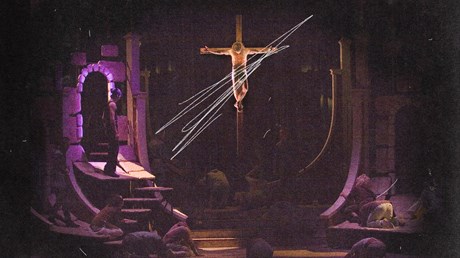
Jesus Christ Is Not a Superstar

Popular portrayals of the God-Man can draw admiring crowds, but they can’t create imitating disciples.

In the past couple of weeks, people have been talking once again about Jesus Christ Superstar.

Not only did a recent Ted Lasso episode feature a song from the 1970s musical, but the original film is airing on BBC—prompting countless reactions, including many from first-time viewers. It is also celebrating a 50th anniversary tour in both the UK and the US.

Taking place during Holy Week and ending just before the Easter resurrection, the production “casts a skeptical, and at times flamboyantly irreverent, light on the story of Jesus.” It reflects society’s fascination with the Jesus movement of the ’70s, just as Jesus Revolution and The Chosen reveal a growing resurgence of interest in the person of Jesus.

As believers, it is satisfying to see Christ brought to the forefront of the public’s consciousness. And as author Luke Burgis explains, these popular portrayals of Jesus can make us want to conform our desires to his. But memorializing any version of Jesus that appeals to a mass audience, whether in church or in culture, also comes with the risk that we might do the exact opposite and model Christ after our own desires.

That is, we’re in danger of casting Christ as whatever kind of superstar or superhero we value at any given time—a temptation faced by even Jesus’ earliest first-century followers.

The script for Jesus Christ Superstar is told from the viewpoint of Judas, “who thinks highly of Jesus as a political revolutionary figure but is disturbed by the idea of Jesus’ divinity.” In the play, the Judas character sings the famous song lyric, “Jesus Christ, Superstar, do you think you’re what they say you are?”—referencing ...

Continue reading...


from Christianity Today Magazine https://ift.tt/wzJUiLZ

NASA Astronaut Asks for Prayer for Moon Mission

A Christian who wants to see God’s will done “on earth as it is in heaven” is piloting the first lunar flight in more than 50 years.

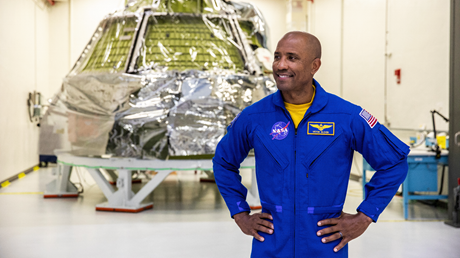
Victor Glover will pray his way to the moon.

When the Artemis 2 takes off sometime late next year, four astronauts will strap into a gumdrop-shaped capsule atop a tower of rockets taller than the Statue of Liberty. Mission control will count down—10, 9, 8, …—and a controlled explosion with 8.8 million pounds of force will fire, throwing the four astronauts from the coast of Florida into high-earth orbit, where another engine, setting spark to a mixture of liquid hydrogen and oxygen, will thrust them beyond the bonds of Earth for the first time in more than half a century.

And Glover, the pilot of the spacecraft, will say a few words to God.

He told CT he will listen to God, too, attending to the quiet stillness in his mind where he can lay down his own personal interests and desires and truly say, “Thy kingdom come, thy will be done, on earth as it is in heaven.”

“I know that God can use us for his purposes,” Glover said. “When Jesus was teaching the disciples to pray, he used that very specific prayer that we all know, ‘Our father who art in heaven, hallowed be thy name …’ So, listen, I am a messenger of his kingdom; his will be done.”

Glover was named Monday as one of the four people who will lead humanity’s return to the moon more than 50 years after we stopped going. The other members of the crew are Reid Wiseman, Jeremy Hansen, and Christina Koch, who will be the first woman to go to the moon.

Glover, 46, is a Navy captain who flew combat missions in Iraq before becoming a test pilot, a NASA astronaut, and a crew member of the International Space Station. He will become the first Black man to go to the moon, breaking a racial barrier the American ...

Continue reading...


from Christianity Today Magazine https://ift.tt/S3vrhQ7