Tuesday, 6 June 2023

Died: ‘The Hiding Place’ and ‘The Cross and the Switchblade’ Coauthor Elizabeth Sherrill

“She knew how to tell a story with power.”
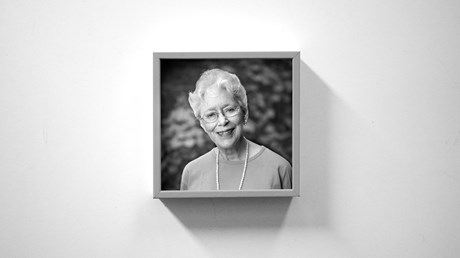
Few evangelicals know Elizabeth Sherrill’s name. But because of her, they know David Wilkerson, Brother Andrew, Corrie ten Boom, and dozens of other modern men and women who overcame by faith. Working closely with her husband John, she reported, wrote, and edited some of the most compelling, popular, and widely influential accounts of contemporary Christians on bookshelves today.

Sherrill had “an uncanny knack for always touching the heart strings,” according to the late Pentecostal leader Jack W. Hayford. She wrote more than 2,000 articles for Guideposts and coauthored more than 30 nonfiction titles. She founded Chosen Books with her husband and edited and published numerous Christian bestsellers, including Chuck Colson’s Born Again, Don Basham’s Deliver Us from Evil, and Bilquis Sheikh’s I Dared to Call Him Father.

Sherrill died in Massachusetts on May 20. She was 95.

“I marveled at the way the books she touched … inspired readers toward belief,” Jeff Crosby, president of the Evangelical Christian Publishers Association, told Publishers Weekly. “Elizabeth’s gifts as a manuscript stylist, editor, and publisher were enormous. She knew how to tell a story with power.”

Sherrill “found a perfect calling,” according to Rick Hamlin, former executive editor of Guideposts, “in coaxing stories out of others and then helping them share their highly personal accounts of God at work in their lives.”

She was born Elizabeth Schindler in Los Angeles, California, on February 14, 1928. She was raised in Scarsdale, New York, in what she recalled was a cold, nonreligious home with parents who got upset when she had any emotions. Her father, a private ...

Continue reading...


from Christianity Today Magazine https://ift.tt/wALc7OM

Seafarer Ministries See Spiritual Needs in Rough Economic Waters

Merchant marines are still struggling, body and soul, after COVID-19 and supply chain disruptions.

Gary Roosma can attest to the challenges of organizing a worship service onboard a cargo ship.

It’s a complicated process, reaching out to the rotating cast of captains aboard the ships in the Port of Vancouver, for a congregation of sailors who may or may not even want to gather.

But experience has taught him it’s a worthwhile effort.

He remembers one officer who accosted him with a question.

“Where were you yesterday?” the man said. “We needed you yesterday.”

When Roosma asked why, the sailor explained there was a horrible storm at sea and the captain had sent him to do something on the deck as the waves crashed around them. As he held onto a rail, a massive wave hit the ship and carried the man overboard, out to the open sea.

“I knew I was dead,” the seafarer told Roosma. “All I could think of was ‘Lord, please watch over my family.’ And then I prayed, ‘It would be really nice if you would save me too.’”

At the instant he prayed, the man recalled, a rope brushed across his chest, and he grasped it and held on with every ounce of his strength. He dislocated his arm, but his life was spared.

“We need a service onboard this ship,” the man said, and Roosma, a chaplain at the Port of Vancouver with the Christian Reformed Church (CRC) Ministry to Seafarers agreed to lead them in prayer and worship that day.

Roosma was reminded, yet again, of the point of this unusual ministry. As the psalmist said in Psalm 107, “They that go down to the sea in ships, that do business in great waters; these see the works of the Lord, and his wonders in the deep” (vv. 23–24, KJV). Seafarer ministry chaplains are called to point that out to ...

Continue reading...


from Christianity Today Magazine https://ift.tt/pTCQ6Jr

Nominate a Book for the 2024 Christianity Today Book Awards

Instructions for publishers.

Dear Publisher,

Each year, Christianity Today honors a set of outstanding books encompassing a variety of subjects and genres. The CT Book Awards will be announced in December at christianitytoday.com. They also will be featured prominently in the January/February 2024 issue of CT and promoted in several CT newsletters. (In addition, publishers will have the opportunity to participate in a marketing promotion organized by CT’s marketing team, complete with site banners and paid Facebook promotion.)

Here are this year’s awards categories:

1. Apologetics/Evangelism

2a. Biblical Studies

2b. Bible and Devotional

3a. Children

3b. Young Adults

4. Christian Living/Spiritual Formation

5. The Church/Pastoral Leadership

6. Culture and the Arts

7. Fiction

8. History/Biography

9. Marriage and Family

10. Missions/The Global Church

11. Politics and Public Life

12a. Theology (popular)

12b. Theology (academic)

Nominations:

To be eligible for nomination, a book must be published between November 1, 2022 and October 31, 2023. We are looking for scholarly and popular-level works, and everything in between. A diverse panel of scholars, pastors, and other informed readers will evaluate the books.

Publishers can nominate as many books as they wish, and each nominee can be submitted in multiple categories. There is a $40 entry fee for each title submitted in each category. To enter your nominations, please click on this link and follow the prompts. (Note: You will be directed to upload a PDF of each book you wish to nominate.)

Finalist Books:

If your book is chosen as one of the four finalists in any category, we will contact you and ask that you send a copy of the book directly to the four judges assigned to that category. We will provide mailing addresses ...

Continue reading...


from Christianity Today Magazine https://ift.tt/zU7TmDV

Monday, 5 June 2023

Welcome, Visitors! Here’s Our Church’s Take on Sex.

Hospitality demands that some things be clear from the start.

As Canadians living in Austin, Texas, my wife and I have a sign on our front door that reads, “Please take off your shoes.” The Northern experience of slush, grit, and mud, as well as a few years spent living in Japan, made us committed to the goodness of shoeless indoor living. (Slippers and indoor shoes allowed.)

We hung the sign several years into our time in Austin. After more than a few awkward greetings—an effusive welcome coupled with quick instructions about our footwear convictions—we decided that clarity was a necessary part of hospitality.

This same connection between clarity and hospitality has come to inform our practice in church as well, especially on the topic of marriage and sexuality.

As part of the Anglican Church of North America (ACNA), our church’s position is clear: We hold that God’s desire for faithful conjugal sexuality happens in the context of a covenant marriage between one man and one woman. But as a particular church in Austin seeking to embody the welcome of God in Christ, conveying that message is more difficult. Our community draws people who are surprised and even pained by this counter-cultural teaching.

I’m not totally sure why our small church often attracts people with more left-of-center perspectives. Part of it relates to the area of the city we’re in, where a lot of young families and professionals come to live. Part of it is simply generational, as these millennial and Gen Z Christians grapple with the legacy of their particular traditions.

For some in our community, the church’s teachings on marriage impinge on the most intimate and personal areas of their life. What does it look like for their own sexuality ...

Continue reading...


from Christianity Today Magazine https://ift.tt/YHU7aiW

Welcome, Visitors! Here’s Our Church’s Take on Sex.

Hospitality demands that some things be clear from the start.

As Canadians living in Austin, Texas, my wife and I have a sign on our front door that reads, “Please take off your shoes.” The Northern experience of slush, grit, and mud, as well as a few years spent living in Japan, made us committed to the goodness of shoeless indoor living. (Slippers and indoor shoes allowed.)

We hung the sign several years into our time in Austin. After more than a few awkward greetings—an effusive welcome coupled with quick instructions about our footwear convictions—we decided that clarity was a necessary part of hospitality.

This same connection between clarity and hospitality has come to inform our practice in church as well, especially on the topic of marriage and sexuality.

As part of the Anglican Church of North America (ACNA), our church’s position is clear: We hold that God’s desire for faithful conjugal sexuality happens in the context of a covenant marriage between one man and one woman. But as a particular church in Austin seeking to embody the welcome of God in Christ, conveying that message is more difficult. Our community draws people who are surprised and even pained by this counter-cultural teaching.

I’m not totally sure why our small church often attracts people with more left-of-center perspectives. Part of it relates to the area of the city we’re in, where a lot of young families and professionals come to live. Part of it is simply generational, as these millennial and Gen Z Christians grapple with the legacy of their particular traditions.

For some in our community, the church’s teachings on marriage impinge on the most intimate and personal areas of their life. What does it look like for their own sexuality ...

Continue reading...


from Christianity Today Magazine https://ift.tt/Cb04qOS

Christian and Missionary Alliance Will Ordain Women

Ministers may now use the title “pastor” regardless of gender.

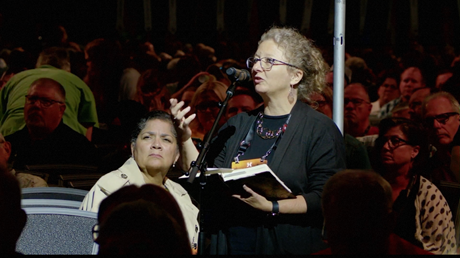
The Christian and Missionary Alliance (CMA) has decided to ordain women and allow them to carry the title of “pastor.” More than 60 percent of the denomination’s delegates approved the two changes at the Alliance’s annual conference in Spokane, Washington, last week, after four years of official discussion and debate.

John Stumbo, president of the Alliance, supported the changes but also urged the gathered delegates to respect different interpretations of the New Testament verses on church leadership.

“Do not think that just because someone disagrees with your biblical position that they don’t love the Word of God, honor the authority of the Word of God, and hold true to its core teachings,” he said. “Everyone I’ve spoken to across the country has come with a thoughtful position. … We have the right, privilege, and necessity of having a mutual respectability for each other.”

Stumbo said the Alliance, which includes about 2,000 churches in the United States, needs unity, but not uniformity. Churches that ordain women and those that don’t can work together to proclaim the gospel.

“A deeper life and missions movement—that has always been the Alliance at its best, experiencing the fullness of Jesus within us, the heart change of Christ within us, that sends us on mission to the world,” he said.

The denomination has trained both men and women for that mission to the world, but the women were previously “consecrated,” not ordained, and were told they should not use the title of pastor. Some women testified during the annual conference that calling themselves “Consecrated Woman of God” and using the acronym CWG creates ...

Continue reading...


from Christianity Today Magazine https://ift.tt/PSd7hGQ

Friday, 2 June 2023

What Happens When Christians and Muslims Translate Scripture Side by Side

Evangelicals in Chad are celebrating unexpected partnerships—and new converts—from recent projects in minority languages.

The Bible translation ministry unfoldingWord has engaged churches across countries and cultures, but a recent project in Chad brought a new dynamic to their work: The majority of the translators were Muslim.

“We can’t take credit for having thought this up or made this strategy,” said Eric Steggerda, field operations manager for unfoldingWord, which partnered in the Central African nation with the Church Growth Project of Chad (Projet Croissance des Eglises au Tchad), or PCET.

“God brought this together in a way that created an open door that neither one of us really expected would be as effective as it was,” Steggerda said. “What we learned was that this is actually a very effective way to bridge a gap with Muslims. Bible stories are understandable.”

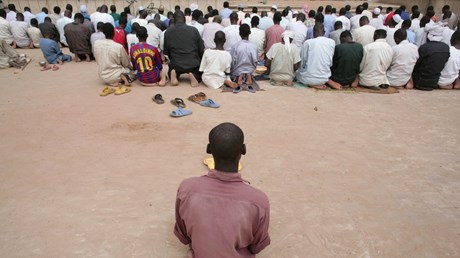
Muslims make up a little over half the population in Chad, and Arabic and French are the two official languages, though most people speak a variant called Chadian Arabic.

PCET identified 10 minority languages they wanted to translate and held informational workshops to recruit participants for the translation projects.

A Chadian evangelical involved with PCET—who asked that his name be withheld due to fear of violence in response to the work in Muslim communities—told CT that many initially attended the translation workshop because they were interested in the pay.

But Christians noticed that Muslims quickly latched on to the projects for reasons beyond the financial incentive. PCET and unfoldingWord were clear that the materials for translation would be Christian, but Muslim participants saw some of the stories, such as those about Abraham, as part of their religion, too.

The Chadian communities that lack Christian materials in ...

Continue reading...


from Christianity Today Magazine https://ift.tt/EfNTc1J